Ziz Gorge Echinoid Site Errachidia Fossil Hunting Guide
Image: Adrian Farwell via Wikimedia Commons
The Ziz Gorge south of Errachidia, Morocco exposes Cretaceous limestone with in-situ Micraster echinoids accessible from the main N13 road without a guide fee.
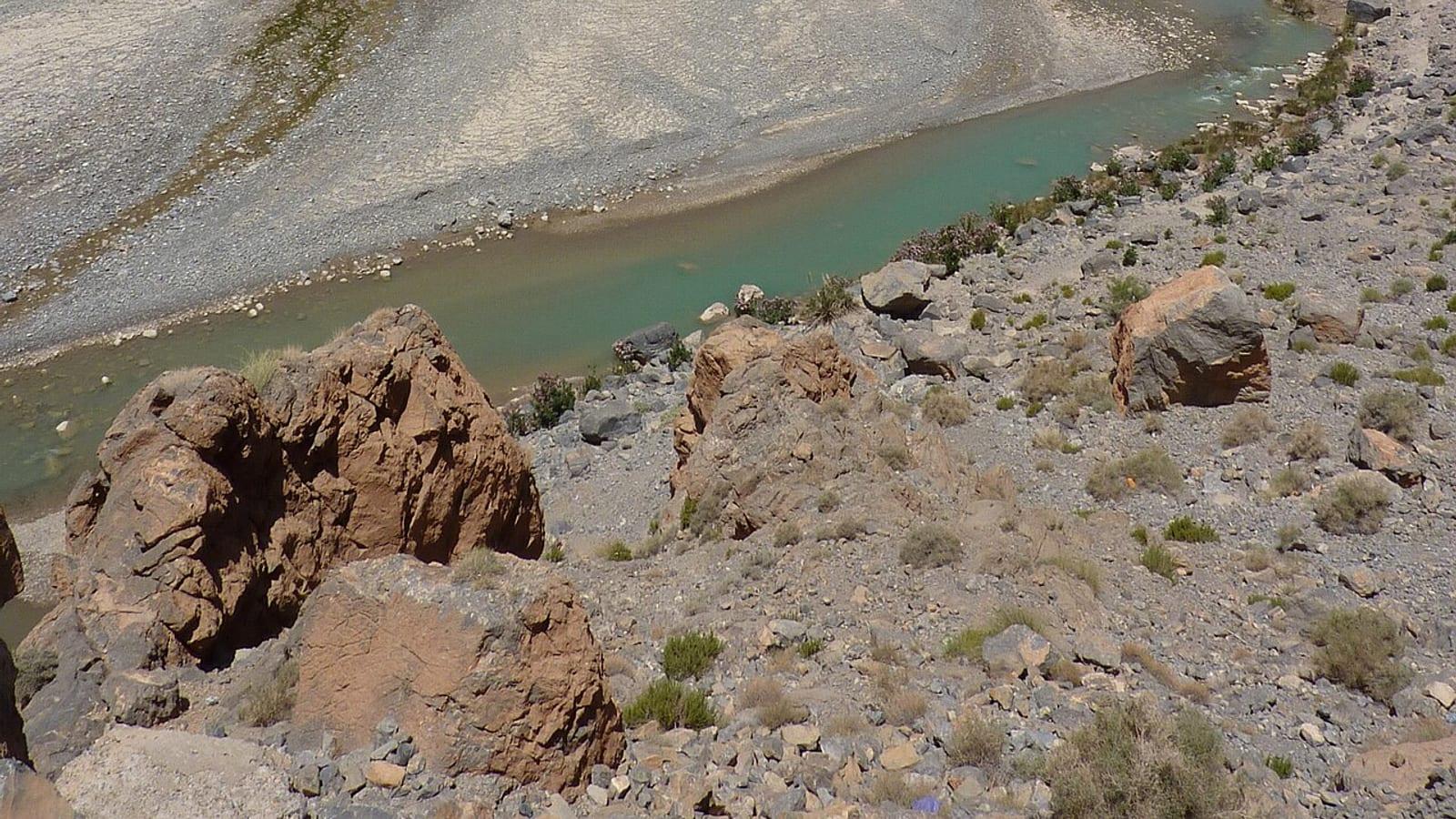
The Ziz Gorge cuts through Cretaceous limestone for several kilometers south of Errachidia, and along the gorge walls you can view and collect Micraster echinoids eroding directly from the rock. The Ziz River carved this canyon as it drained from the Atlas Mountains toward the Saharan lowlands, slicing through 75 to 85 million year old marine sediments that preserve heart-shaped sea urchins, bivalves, and occasional fish remains. The echinoids here are often found in situ in the cliff faces, where differential weathering of softer matrix around the harder calcite tests brings specimens into relief on natural rock surfaces. This is a site where you can walk the gorge, spot fossils projecting from the walls, and collect from the erosion debris on the canyon floor.
This guide covers the Cretaceous geology of the Ziz Gorge, what echinoids and associated fossils occur there, how to reach the site from Errachidia, and the practical details of collecting and visiting safely.
 Ziz Gorge, Morocco - 'S' is for Ziz - panoramio.jpg. Photo: Adrian Farwell via Wikimedia Commons (CC BY 3.0)
Location and Getting There
Location
The fossil-bearing Cretaceous limestones are exposed along the Ziz Gorge (also called the Gorges du Ziz) south of Errachidia in the Draa-Tafilalet region. Errachidia is the regional capital, approximately 340 km southeast of Meknes and 200 km north of Erfoud. The gorge is accessible from the main N13 road, which runs through the canyon between Errachidia and Rich, approximately 10 to 25 km south of the city center. GPS for the start of the accessible gorge section is approximately 31.80°N, 4.35°W.
Getting There
From Errachidia, head south on the N13 toward Erfoud. The Ziz Gorge begins approximately 10 km south of the city, where the road descends into the canyon. You can drive through the gorge along the N13 and stop at wide shoulders or informal pull-outs near accessible cliff sections. The gorge road is paved and accessible to standard vehicles. For specific echinoid-bearing sections, a local guide from Errachidia can direct you to the most productive areas along the canyon walls and floor. Guide services are available through hotels in Errachidia; a half-day guide trip to the best sections costs approximately 300 to 500 MAD (30 to 50 USD). The gorge is also accessible independently by car, with fossils visible from the roadside in multiple locations.
What Fossils You'll Find
Micraster echinoids are the signature fossil of the Ziz Gorge limestone. These are irregular echinoids, meaning they lack the five-fold radial symmetry of modern sea urchins and instead have a bilaterally symmetric, heart-shaped or sub-ovoid form adapted for burrowing through soft sediment. In the Late Cretaceous they were abundant seafloor burrowers across the Tethys Sea, and the Ziz Gorge sediments preserve them in large numbers. Specimens typically measure 3 to 8 cm in length and are found both in situ in the cliff faces and as loose tests on the gorge floor after natural erosion. The calcite tests are often well preserved, with the ambulacral grooves and apical disc visible on complete specimens.
 Worthington George Smith06.jpg. Photo: Worthington George Smith (1835-1917) via Wikimedia Commons (Public domain)
Bivalves are common associates in the same limestone horizons, including inoceramid bivalves whose distinctive concentric growth rings make them easy to identify even in fragmentary material. Rudist bivalve fragments, from the highly modified reef-building clams that replaced corals as reef constructors in the Cretaceous, appear in some sections of the gorge.
Occasional shark teeth weather from the limestone in the gorge area; these are typically small, measuring 1 to 2 cm, and represent the diverse selachian fauna that inhabited the Cretaceous Tethys. Fish vertebrae and scales also occur sporadically. The cliff faces themselves are worth scanning closely for echinoids in relief: the round to heart-shaped test outline stands out clearly against the pale grey limestone when the light angle is favorable.
Geologic History
The Ancient Environment
The limestones exposed in the Ziz Gorge were deposited during the Late Cretaceous, specifically the Santonian to Campanian stages, approximately 86 to 72 million years ago. At this time, the region was covered by the Tethys Sea, a warm, shallow epicontinental sea that extended from the Atlantic across North Africa and the Middle East. The seafloor was a soft carbonate mud inhabited by burrowing echinoids, bivalves, and various other invertebrates. The warm, clear waters also supported extensive rudist reef structures in some areas. Sea surface temperatures in the Cretaceous Tethys were 5 to 10°C warmer than the modern Mediterranean.
The Atlas tectonic movements that began in the Late Cretaceous and intensified through the Paleogene and Neogene uplifted these marine sediments to their present elevation and tilted them. The Ziz River then incised through the uplifted block during the Quaternary, cutting the gorge and exposing the fossil-bearing limestone in cross-section.
How the Ziz Gorge Became a Fossil Site
The gorge formed as the Ziz River progressively eroded downward through the limestone plateau during the Quaternary. This natural incision exposed the Cretaceous seafloor sediments in vertical cliff faces up to 200 meters high in some sections. Ongoing physical and chemical weathering continues to expose fresh echinoid tests and bivalve shells from the cliff faces, replenishing the supply of surface specimens on the canyon floor. No quarrying or human intervention is involved; the site is entirely the product of natural river erosion exposing a fossil-rich marine sequence.
Visiting and Collecting Information
Access and What to Expect
The Ziz Gorge is accessible to any visitor with a vehicle on the N13 road. You do not need a guide to enter the gorge; the road passes directly through it. Collecting loose specimens from the canyon floor is generally practiced without restriction. For working the cliff faces, a guide is helpful for safety and for identifying the most productive sections. The site does not charge an entry fee as it straddles the main road corridor. Local guide services from Errachidia typically cost 300 to 500 MAD for a half-day focused fossil walk.
Moroccan customs regulations allow tourist export of up to approximately 10 fossil specimens for personal non-commercial use. The echinoids and bivalves from this site are commonly collected and exported by tourists without issue.
What to Bring
Bring at least 2 liters of water. The gorge can be significantly warmer than the surrounding plateau due to the enclosed terrain and reflected heat from limestone walls, even in autumn and spring. Sun protection and a hat are essential. Wear sturdy footwear with grip for rocky canyon floor terrain. A geology hammer and cold chisel are useful for freeing partially exposed echinoid tests from the cliff face; safety glasses are essential when chipping limestone. Specimen wrapping materials (newspaper or foam) will protect any echinoid tests you collect, as the calcite is brittle.
Safety and Practical Tips
Stay well clear of the cliff base when there are signs of recent rock fall. The gorge walls are actively eroding and loose blocks occasionally dislodge. Do not attempt to climb the cliff faces. The road through the gorge is a main highway with fast-moving traffic; use established pull-outs and keep well off the roadway. The gorge is at its best in morning light when the sun illuminates the western-facing cliff sections, making surface fossils visible from a distance. Early morning visits from October through April also avoid the midday heat.
Sources
Nearby sites
 Ouzina Ordovician Graptolite Locality Fossil Hunting Guidegraptolite fossils, Graptolites
 Taouz Cretaceous Fish Fossil Hunting Guidefish teeth, shark teeth, mosasaur remains
 Boutchafine Mount Trilobite Quarry Erfoud Fossil Hunting GuidePhacops, Hollardops
 Erfoud Main Orthoceras Factory Quarry Fossil Hunting GuideErfoud Main Orthoceras Factory Quarry, Orthocerids