Draa Valley Ordovician Trilobite Site Agdz Fossil Hunting Guide
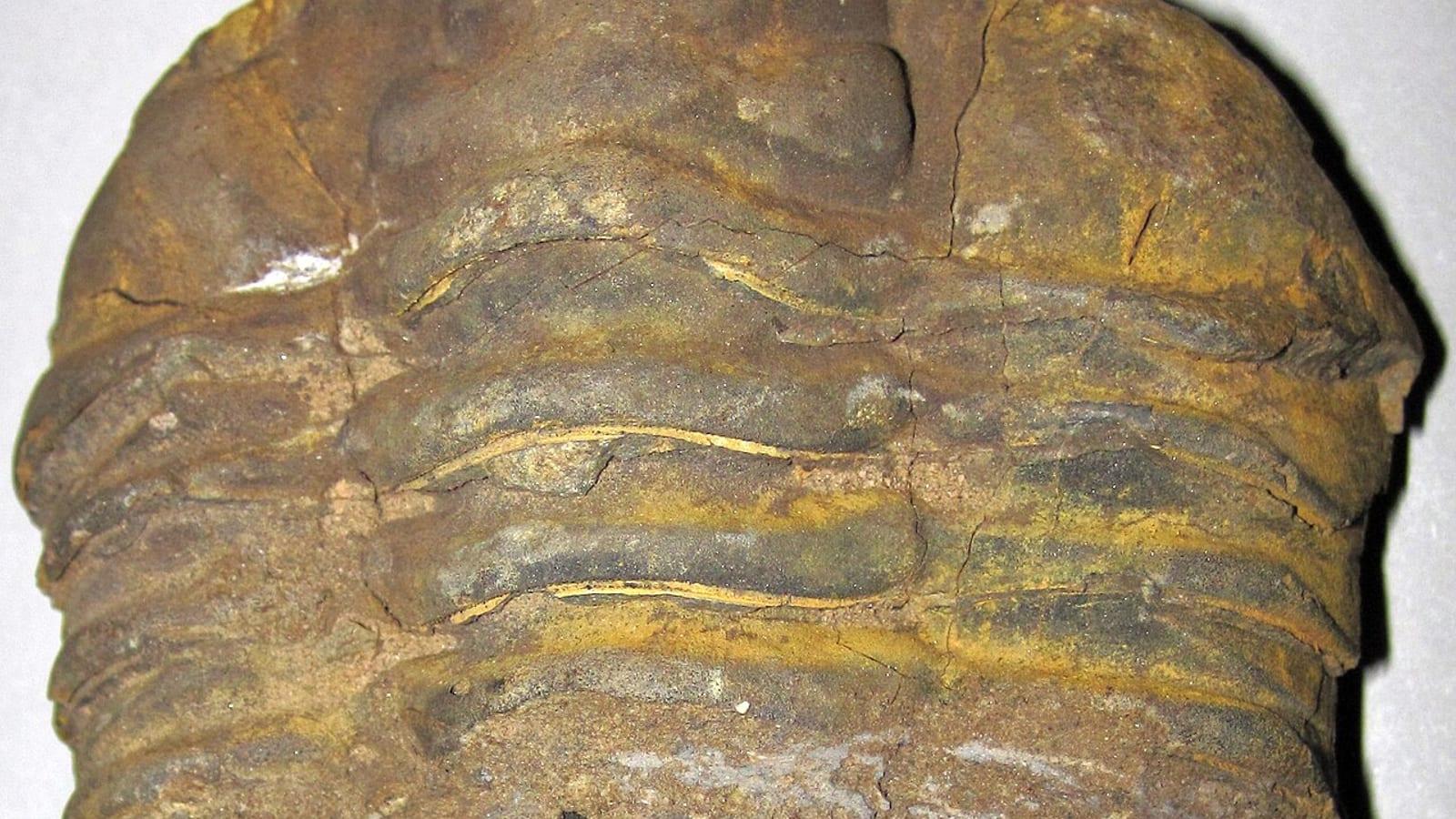
Image: Jon Lean from Bristol, United Kingdom via Wikimedia Commons
Collect Ordovician giant trilobites including Flexicalymene from Draa Valley shales near Agdz, Morocco — preserved 460 million years ago on Gondwana's cold margin.
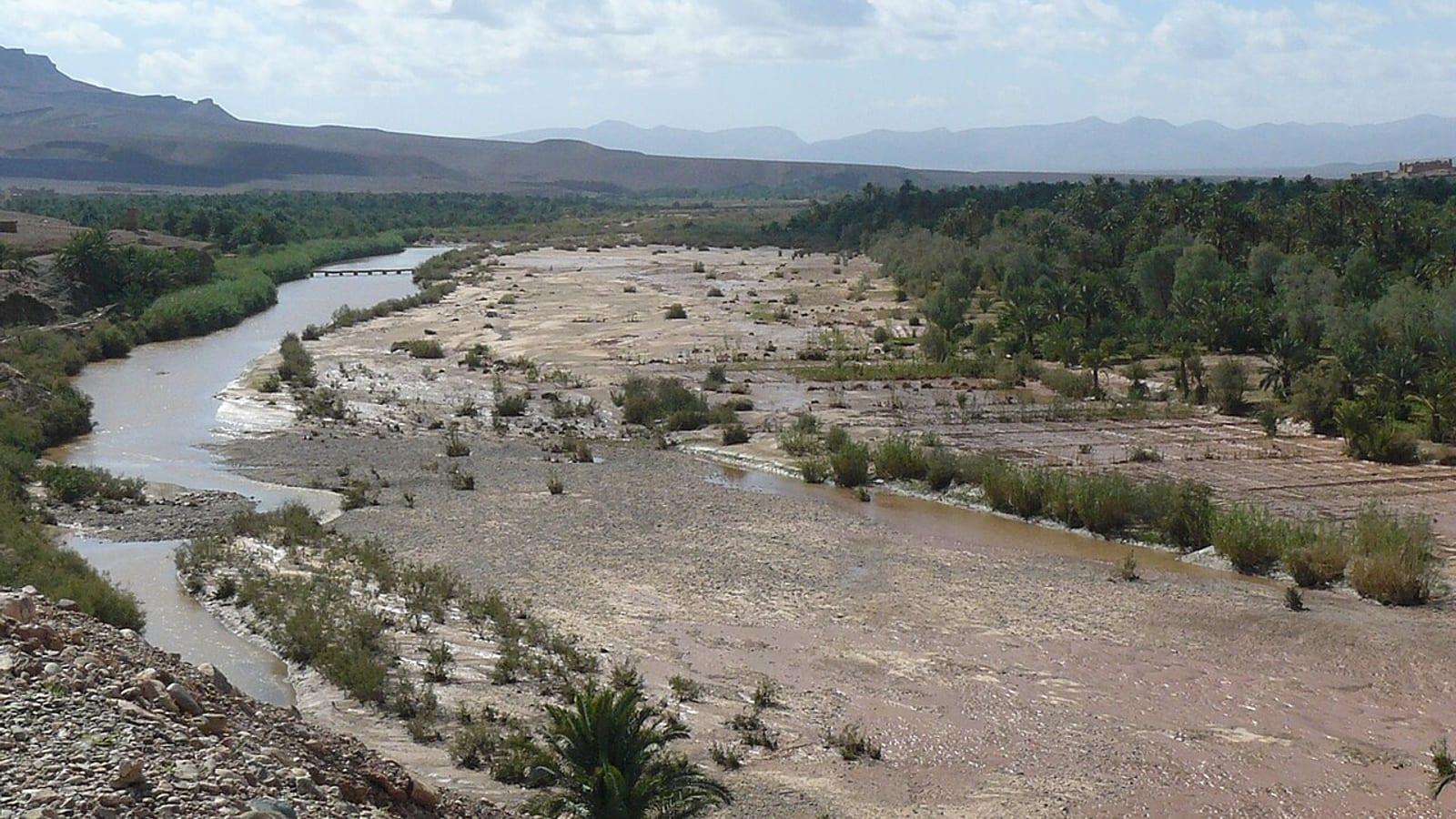
The Draa Valley runs northeast to southwest through southern Morocco, cutting through layers of Paleozoic rock that record hundreds of millions of years of geological history. Near Agdz, the valley walls and surrounding plateaus expose Ordovician shales and sandstones that contain some of the most striking trilobites in the Moroccan fossil record: large, complete specimens of Flexicalymene and related genera, preserved in a reddish-brown matrix that contrasts sharply with the grey shale. The Draa Valley Ordovician Trilobite Site is not a single quarry but a region of outcrop where local collectors have worked the Ordovician succession for decades, yielding giant trilobites, brachiopods, and associated fauna from sediments deposited approximately 460 to 450 million years ago.
This guide covers what the fossils here look like, the geological context that produced them, how to travel to Agdz and connect with a local guide, and what to expect when you visit.
 Draa River.jpg. Photo: Jon Lean from Bristol, United Kingdom via Wikimedia Commons (CC BY-SA 2.0)
Location and Getting There
Location
Agdz is a small town in the Draa-Tafilalet region of Morocco, situated in the Draa Valley approximately 68 kilometres south of Ouarzazate on the N9 national road. The fossil-bearing Ordovician outcrops occur in the plateaus and hillsides flanking the Draa Valley in the vicinity of Agdz, generally 10 to 30 kilometres from the town centre via unpaved tracks. The general GPS reference for Agdz is 30.70°N, 6.45°W. Specific productive zones change as quarry work advances; local guide knowledge is essential for reaching current collecting areas.
Getting There
From Ouarzazate, take the N9 south toward Zagora for approximately 68 kilometres to Agdz. The road is paved and in reasonable condition; driving time is approximately one hour from Ouarzazate. From Marrakech, the journey via the Tizi n'Tichka pass adds approximately three to four hours. Agdz has petrol stations, basic accommodation, and cafes. From Agdz, local guides provide 4WD transport to the Ordovician outcrops; the tracks are rough and require a vehicle with decent clearance. Guides can be found in Agdz through the local fossil shops, which are visible along the main road through town, or through tour operators based in Ouarzazate.
What Fossils You'll Find
Giant trilobites are the defining find at this locality. Flexicalymene is the most frequently cited genus: a calymeniid trilobite that could reach 8 to 12 centimetres in length and is commonly preserved enrolled (curled into a ball, a defensive posture) in the Moroccan Ordovician. The preservation in this area is often impressive, with original convex test surfaces intact and fine surface ornamentation visible on well-prepared specimens. Enrolled specimens show the meeting of the cephalon and pygidium cleanly, a diagnostic characteristic of the genus.
 Isotelus maximus fossil trilobite with healed bite mark (Flat Run Trilobite Lagerstatte, Arnheim Formation, Upper Ordovician; Flat Run Quarry, far-southwestern Highland County, southwestern Ohio, USA) 2 (15262685375).jpg. Photo: James St. John via Wikimedia Commons (CC BY 2.0)
Other trilobite genera present in Ordovician beds of the Draa Valley region include Nobiliasaphus and various asaphid forms, which tend to be flatter and larger than Flexicalymene. Asaphid trilobites can reach 15 centimetres and represent the largest individuals regularly found at this type of locality. Finding a complete, flat asaphid spread on a shale slab is the goal that keeps experienced collectors returning to this region.
Brachiopods occur throughout the Ordovician sequence and are among the most abundant fossils in the inter-trilobite beds. Orthid brachiopods are common, typically appearing as small ribbed valves on bedding plane surfaces. In some horizons, brachiopod shells are packed densely enough to form small shell beds.
Graptolite fragments and cystoid echinoderm plates appear in finer-grained shale intervals, adding variety to the assemblage and providing stratigraphic context for the trilobite-bearing beds.
Geologic History
The Ancient Environment
The Ordovician trilobite beds of the Draa Valley were deposited during the Ordovician period, most likely the Darriwilian to early Katian stages, approximately 460 to 450 million years ago. Morocco at this time sat on the cold, high-latitude margin of the supercontinent Gondwana. Palaeomagnetic data indicates the region was positioned at approximately 50 to 60 degrees south latitude, making this a subpolar marine environment by modern standards. Water temperatures were cool to cold, which is reflected in the fauna: calymeniid trilobites like Flexicalymene are characteristic of this high-latitude Gondwana margin province, distinct from the warmer-water faunas found in contemporaneous deposits further north.
Sediments accumulated as submarine fans and shelf muds derived from erosion of the Gondwana continent. The shales represent quiet deeper-water deposition below storm wave base; the sandstone intercalations record episodic higher-energy events, possibly storm surges that transported shallow-water material into deeper water. Rapid burial by event sedimentation is likely responsible for the preservation of complete enrolled trilobites: an animal curled in self-defence was buried quickly enough to preserve its posture intact for 460 million years.
How the Draa Valley Trilobite Site Became a Fossil Site
The Ordovician sediments of the Draa Valley were deformed and buried during Variscan mountain-building events in the late Paleozoic, then uplifted and eroded over the Mesozoic and Cenozoic. The Draa Valley itself formed as a structural feature that cut through the tilted Paleozoic succession, exposing progressively older rocks as you travel downstream. Local farmers and herders in the region have been aware of fossil-bearing rocks for generations; systematic commercial quarrying for the fossil market expanded significantly in the 1990s and 2000s, producing large quantities of prepared trilobites that circulate internationally. The local knowledge of which specific beds yield complete versus fragmentary material is considerable, built over decades of working the succession.
Visiting and Collecting Information
Access and What to Expect
Access to the Ordovician trilobite outcrops near Agdz is fee-based and arranged through local guides. Fossil guides in Agdz can be contacted through the fossil shops on the main road through town or through guesthouses. Half-day excursion fees typically run 350 to 650 MAD (approximately 35 to 65 USD) per person, including 4WD transport and guidance to current productive outcrops. At the site, you can collect loose specimens from surface deposits and work matrix with a hammer and chisel. Prepared specimens — complete enrolled trilobites and open trilobites on matrix slabs — are available for purchase from the guides or from the shops in Agdz. Moroccan export regulations permit tourists to take up to ten decorative specimens out of the country without special documentation; retain purchase receipts for customs.
What to Bring
Bring sturdy boots with ankle support for walking over uneven rocky terrain. Carry at least two litres of water for a half-day outing; more in warmer months. A geology hammer and cold chisels help free matrix-embedded specimens. Safety glasses protect against limestone and shale chips. A hand lens at 10x is useful for examining fine trilobite surface detail in the field. Pack specimens in newspaper or foam to prevent damage during transport back to Agdz. Cash in Moroccan dirhams is required for guide fees and purchases.
Safety and Practical Tips
The Draa Valley is hot from May through September, with temperatures regularly exceeding 40°C (104°F). October through April offers the most comfortable field conditions. The best light for finding fossils on rock surfaces is low-angle morning or late-afternoon sun; midday glare washes out fine detail. Some collecting areas involve traversing loose shale slopes; move carefully and avoid dislodging rock onto other people working below you. Agdz has enough services to support a comfortable base for fossil excursions, including accommodation and food. The N9 road between Ouarzazate and Agdz is one of the most scenic drives in Morocco, passing through the Draa palm groves, and is well worth the journey for its own sake.
Sources
Nearby sites
 Ait Benhaddou Echinoid Site Ouarzazate Fossil Hunting GuideCretaceous echinoids, Brachiopods
 Fezouata Biota Locality Zagora Fossil Hunting Guideanomalocaridids, Trilobites
 Jbel Gara el Zguilma Trilobite Site Foum Zguid Fossil Hunting GuideWalliserops trifurcatus, Psychopyge elegans
 Bou Dib Fossil Site North Jbel Isoumour Alnif Fossil Hunting GuideBou Dib, Phacops