Thurso Fossil Hunting Guide
Image: Claire Pegrum via Wikimedia Commons
Collect Devonian fish scales, teeth, and complete fish from the Caithness Flagstone Group foreshore at East Thurso. Free surface collecting on an SSSI site in north Scotland.
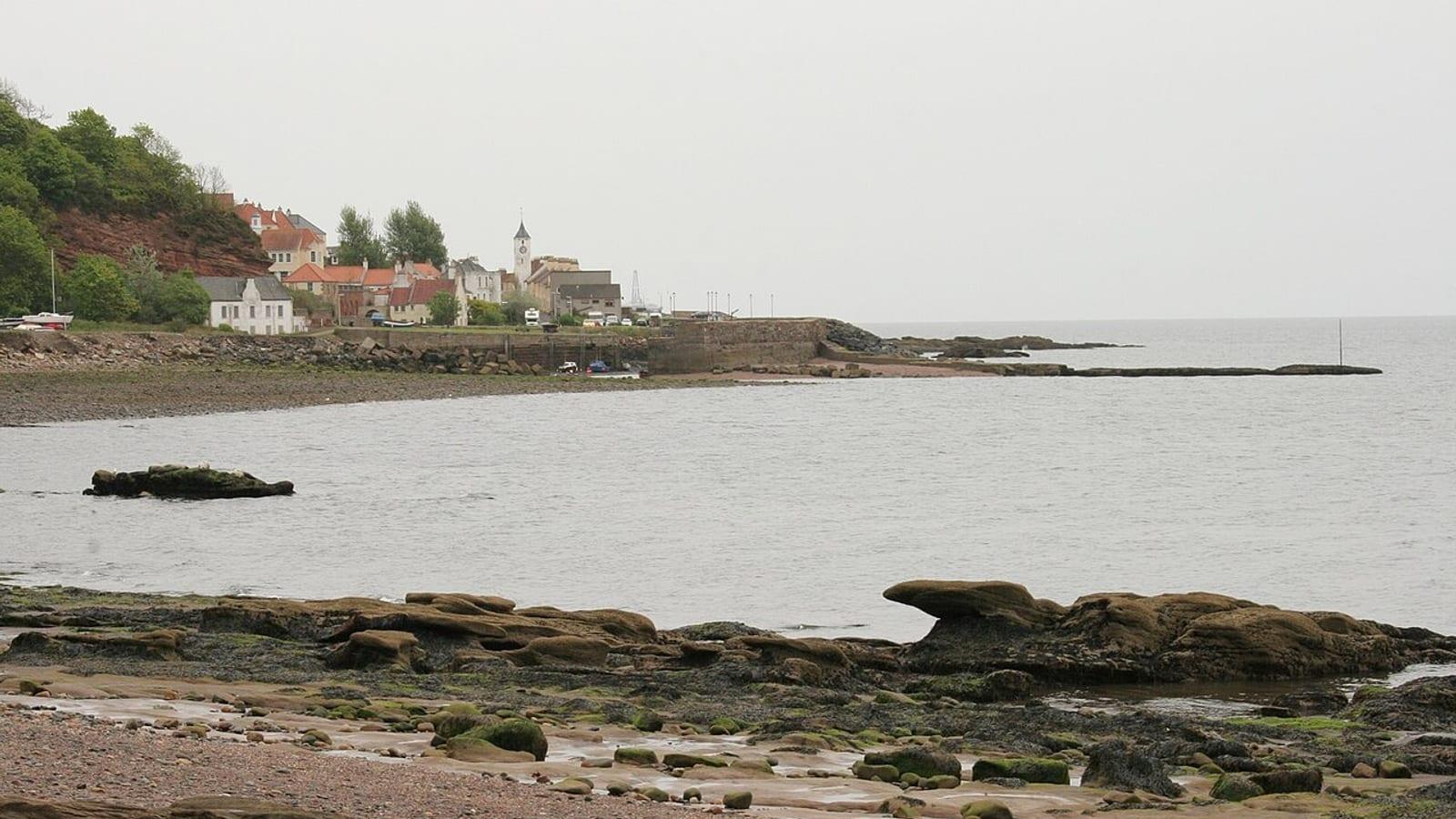
Thurso on the north coast of Caithness is where the Devonian fish beds of Scotland meet the sea, and the results are immediately visible. Walk onto the foreshore east of the town and the rocks beneath your feet are full of fish scales, bone fragments, and teeth, embedded in the finely laminated flagstones that the people of Caithness have cut for roofing and paving for centuries. The Middle Devonian flagstones belong to the Caithness Flagstone Group, deposited in a vast ancient lake system called Lake Orcadie between 385 and 395 million years ago. Fish scales can be found almost as soon as you reach the beach, and patience yields teeth and, occasionally, complete fish. Hugh Miller, Scotland's most celebrated geological writer, collected here in the nineteenth century and described the Devonian fish fauna that these beds contain. The site is an SSSI and hammering bedrock is prohibited, but surface collecting of loose material from the foreshore is permitted. This guide covers the approach to the site east of Thurso, what the flagstones yield, the story of Lake Orcadie and its Devonian fish populations, and the rules and safety considerations that apply.
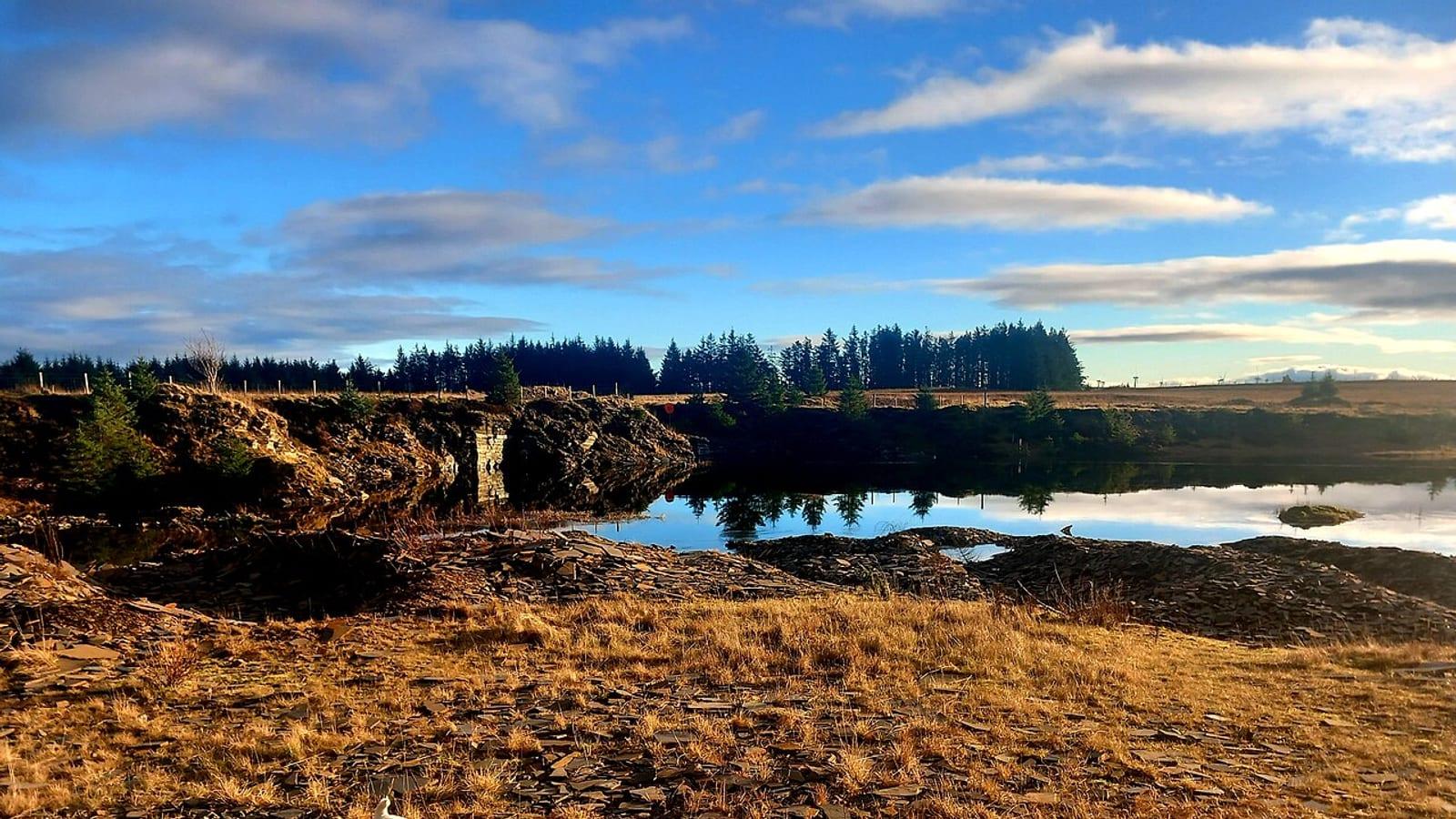
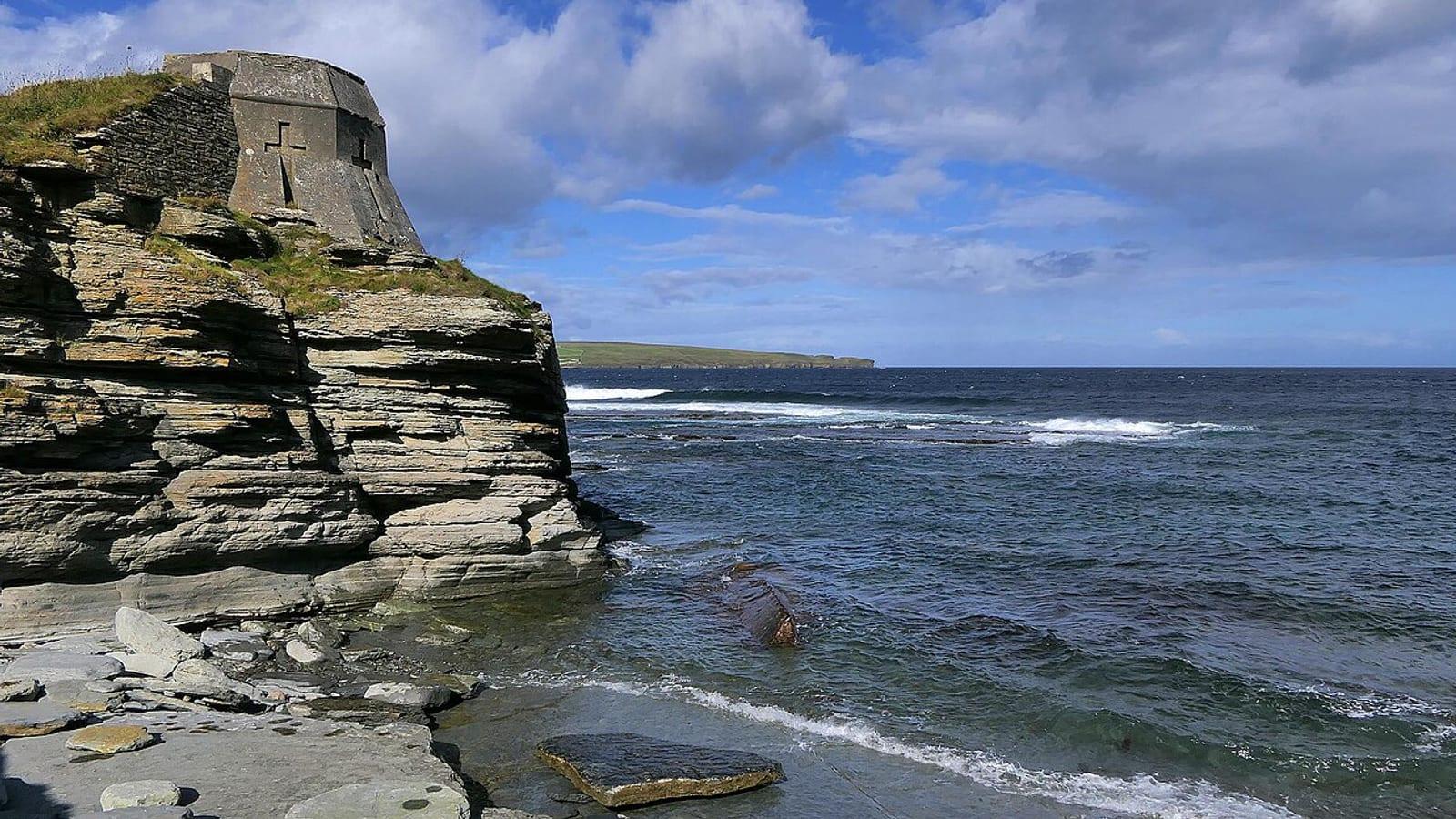
 Lady Janet's Seat, Thurso, Caithness - geograph.org.uk - 6622612.jpg. Photo: Claire Pegrum via Wikimedia Commons (CC BY-SA 2.0)
Location and Directions
Address
Beach car park, Scrabster Road area, East Thurso, Caithness, KW14, Scotland (nearest landmark: Thurso Castle ruins).
Directions
Head toward Thurso from the A9. As you enter the town from the south, keep to the eastern bank of the River Thurso and do not cross the bridge. Follow the A836 toward East Thurso and the ruined castle. The road runs straight; take the small turn-off at the end of the straight section. Follow this road around past Thurso Castle ruins and continue past a large farm where the road becomes a wide track leading to a large car park. Park here and walk east to the beach and foreshore. Fish fragments become visible in the rocks almost as soon as you reach the beach surface. The castle ruins are useful for navigation and serve as a visual reference when returning to the car. The North Coast Visitor Centre in Thurso town can provide additional local information, and the Flagstone Trail at Castlehill charts the history of the flagstone quarrying industry.
What Fossils You'll Find
Fish scales are by far the most abundant fossil at Thurso. The flagstones are so densely packed with scales in some beds that you can see them without bending down. The scales belong to the heavily armoured placoderms and other Devonian fish groups that populated Lake Orcadie. They vary from tiny rhomboid scales a few millimetres across to larger, thicker elements from the dermal armour of larger species. Scan the surface of flat flagstone beds for the distinctive reflective glint of preserved scales.
 Fish scales (1f109e2e-155d-451f-674f-87543fe24a10).jpg. Photo: NPS via Wikimedia Commons (Public domain)
Fish teeth require a sharper eye. They are three-dimensional, often sharply pointed or blade-like, and tend to be darker than the surrounding matrix. Look for them in areas of concentrated scale material, where a complete fish carcass may have disintegrated in place.
Complete fish are the ultimate find at Thurso and they do occur. The same fish-kill events that produced the dense accumulations of scales also preserved occasional complete or near-complete individuals. Complete fish are most likely to be found in the better-bedded, finer-grained flagstone beds where rapid burial occurred. They require splitting flagstone along the bedding planes to reveal interiors. Given the SSSI status, only loose material already separated from the bedrock should be split.
Fish bone fragments, including cranial plates, scale-covered dermal armour, and vertebral material, occur throughout the fish-bearing horizons. The cranial shields of placoderms are particularly recognisable once you have seen them, with their distinctive patterned external surface texture.
Geologic History
The Ancient Environment
The flagstones at Thurso belong to the Caithness Flagstone Group, specifically the Mey Subgroup west of the town and the John O'Groats Sandstone Group east of it, deposited during the Eifelian to Givetian stages of the Middle Devonian approximately 385 to 395 million years ago. These finely laminated siltstones and fine sandstones with visible annual varves were laid down in Lake Orcadie, an enormous freshwater to brackish lake system that covered much of what is now Caithness and Orkney during the Middle Devonian. Scotland at this time sat at approximately 20 to 30 degrees south of the equator, surrounded by the eroding remnants of the Caledonian mountain chain. The climate was warm and subtropical to tropical, with distinct wet and dry seasonal cycles. Lake levels fluctuated in response to these seasonal patterns, and the annual varves in the flagstone record these cycles directly, each pair of laminae representing one year of deposition. The fish-bearing horizons at Thurso represent catastrophic mass-mortality events within the lake, caused by temperature fluctuations, salinity changes, or oxygen depletion during algal bloom episodes. Large numbers of fish died simultaneously, sank to the lake floor, and were buried rapidly beneath fine lake sediments before scavengers could disturb them. The Thurso exposures represent lake margin to mid-lake environments and are slightly shallower in character than the central lake deposits at Achanarras, the other major Caithness fish locality.
How Thurso Became a Fossil Collecting Site
The Caithness flagstones have been quarried for roofing, paving, and flooring material since before recorded history, and the industry reached its peak in the eighteenth and nineteenth centuries. Thurso flagstone was exported across Britain and to other parts of the world. This industrial extraction exposed vast surfaces of the fish-bearing beds and made the site accessible to collectors. Hugh Miller, the Cromarty stonemason and geologist who did more than anyone to bring Scotland's Devonian fish to public attention, collected at Thurso and described its fauna alongside the related sites at Achanarras and Cromarty. Natural coastal erosion by the North Sea continues the work, releasing material from the foreshore beds each winter. The site carries SSSI designation for its geological significance, and type material for some Devonian fish species was collected from Thurso. The presence of slightly radioactive fossils was noted in a 1956 Nature journal article: uranium is concentrated in the phosphatic fossil material, a phenomenon documented from other Devonian lake sites worldwide. This is a scientific curiosity rather than any practical hazard for visitors.
Collecting Rules and Regulations
Is Fossil Collecting Allowed?
Surface collecting of loose fossils from the Thurso foreshore is permitted for personal, non-commercial purposes at no charge. The site is an SSSI; hammering the bedrock flagstone platforms is prohibited. You may split loose material already separated from the in-situ rock and you may collect material lying free on the beach or foreshore surface. Do not chisel into the in-situ flagstone beds. Scientifically significant finds, particularly complete fish or new species, should be reported to the National Museums of Scotland or the British Geological Survey. Commercial collection requires separate permission from NatureScot.
Recommended Tools
A geological hammer and thin chisels are useful for splitting flagstone material that has already become detached from the bedrock. The flagstones split cleanly along their bedding planes, making them well-suited to this approach. A hand lens for examining scale and tooth details is essential. Bring flat-bottomed containers or wrapped sheets of cardboard for transporting flagstone slabs containing fish material without breakage. The flagstone can be heavy; plan your transport accordingly.
Safety
The foreshore east of Thurso is flat and open, and the primary hazard is the incoming tide catching you further along the foreshore than you planned. Check tide times for Thurso before visiting. The rock surface is smooth in places and slippery when wet; wear footwear with good grip. The flagstone surfaces can also be sharp at broken edges. Weather on the north Caithness coast can change rapidly; bring appropriate clothing even in summer. The ruined Thurso Castle provides a clear landmark for navigating back to the car park.