West Wemyss Fife Scotland Fossil Hunting Guide
Image: Richard Sutcliffe via Wikimedia Commons
West Wemyss in Fife, Scotland, exposes in-situ Carboniferous Coal Measures with plant fossil-bearing shales. Tidal access; free to collect loose material.
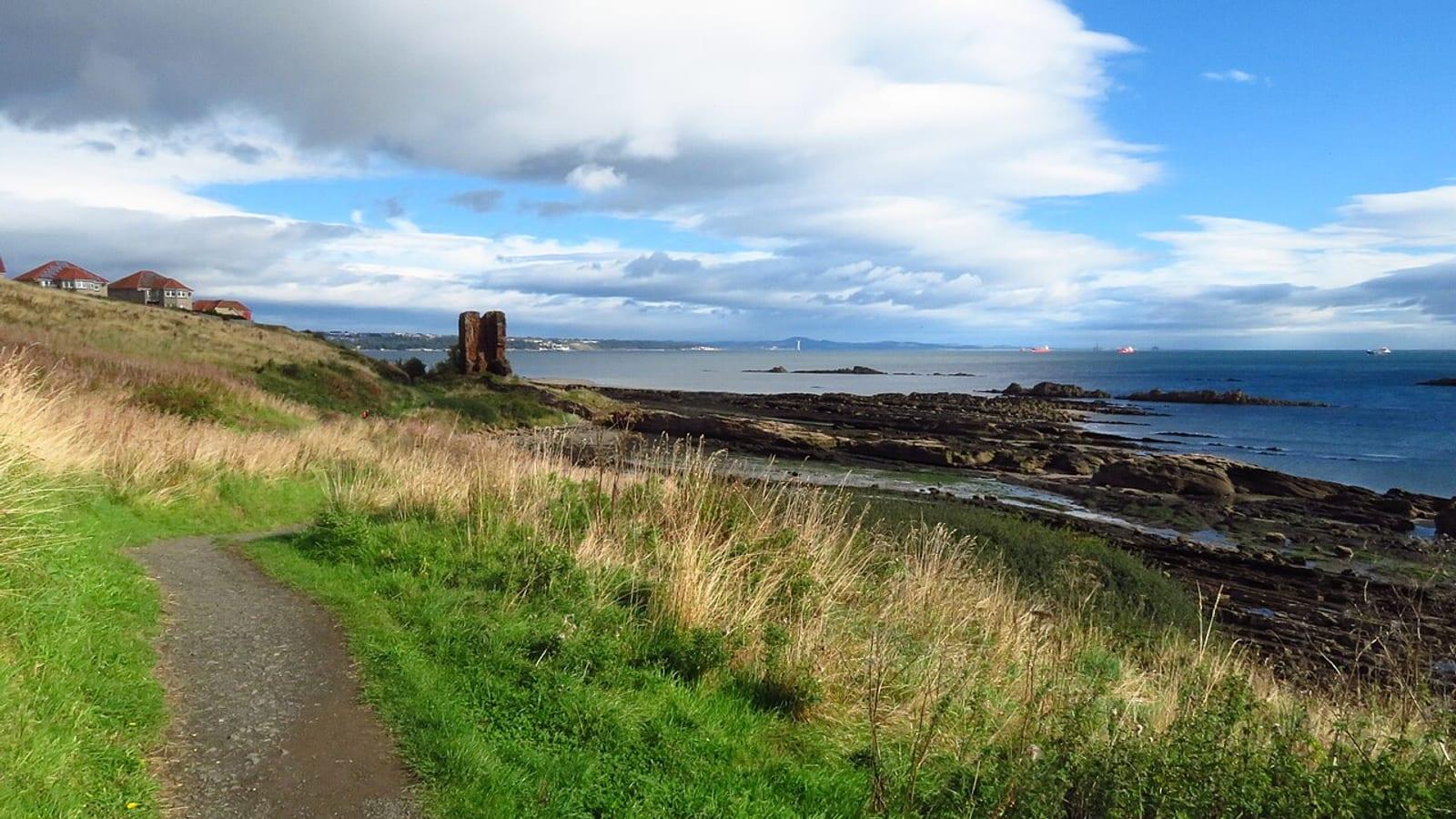
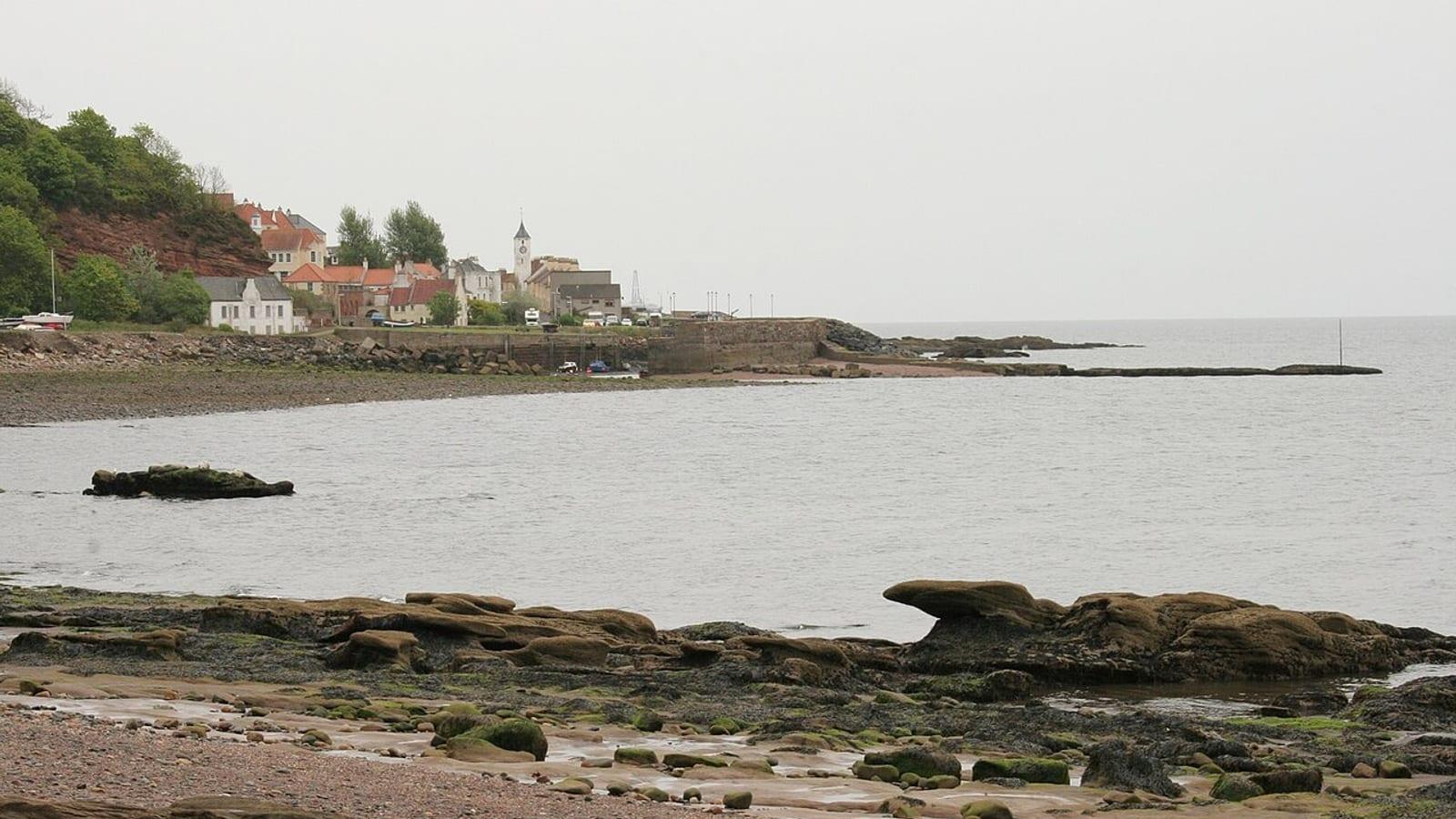
West Wemyss on the Fife coast is one of very few places in the United Kingdom where you can stand on a beach and examine coal seams and their associated plant-bearing shales still in their original position in the cliff. Unlike nearby East Wemyss, where the coastal cliffs are cut from old colliery spoil heaps, the cliffs at West Wemyss expose actual in-situ Carboniferous Coal Measures strata. The rhythmic sequence of sandstones, mudstones, shales, and coal seams visible here was laid down approximately 310 million years ago in a tropical delta plain covered by dense swamp forests.
The shales are highly fossiliferous, yielding plant remains including the characteristic fronds and stems of giant Carboniferous trees. This guide covers how to reach the site, which fossils occur in which layers, and the tidal access conditions you need to plan around before visiting.
 West Wemyss - geograph.org.uk - 6170390.jpg. Photo: Richard Sutcliffe via Wikimedia Commons (CC BY-SA 2.0)
Location and Directions
Address
West Wemyss coastal section, West Wemyss, Kirkcaldy, Fife, KY1 4RN, Scotland.
Directions and Parking
From Kirkcaldy, take the A955 east along the coast road through Coaltown of Wemyss, continuing to the village of West Wemyss. On-street parking is available within the village, though spaces are limited. From the village, follow the paths down to the shore and walk along the foreshore to access the cliff section. The coastal cliffs and foreshore expose the Coal Measures strata directly. Access is tidal: at high tide some sections of foreshore are cut off entirely. Check local tide times before visiting and allow sufficient time to complete your survey before the tide returns. The foreshore can be slippery on the rocks and shale ledges, so footwear with grip is essential.
What Fossils You'll Find
Plant fossils are the primary finds at West Wemyss, and the shale beds between the sandstone and coal horizons are the most productive layers. Lepidodendron is among the most common plants preserved here; its bark surfaces carry the distinctive diamond-shaped leaf-scar pattern that makes identification straightforward even for beginners. Sigillaria, another giant lycopsid tree, appears similarly, though its leaf scars are arranged in vertical rows rather than a diamond pattern.
 Lepidodendron leaf.jpg. Photo: Martin (Smith609 – Talk) via Wikimedia Commons (CC BY-SA 3.0)
Fern fronds, including species of Neuropteris and Pecopteris, are found on fine-grained shale surfaces. These appear as dark carbonised impressions against the grey-brown rock. Seed fern foliage also occurs in these beds. The coal seams themselves are not fossil-bearing in the conventional sense, but their presence alongside the plant-bearing shales completes the ecological picture: the swamp forests that produced the coal were the same forests whose debris accumulated in the quieter pond and lagoonal muds now exposed as fossiliferous shale.
Invertebrate fossils, including bivalves and occasional non-marine arthropods, can also occur in the lacustrine horizons, though plant material dominates.
Geologic History
The Ancient Environment
The strata at West Wemyss belong to the Scottish Coal Measures Group, deposited during the Westphalian stage of the Upper Carboniferous period, approximately 315 to 307 million years ago. At that time Scotland lay near the equator in a warm, humid tropical climate. The environment was a coastal delta plain with extensive swamp forests, meandering river channels, and shallow freshwater lakes and lagoons.
The characteristic rhythmic sequences visible in the cliff, called cyclothems, each record a repeated cycle of deposition: river channel sandstones at the base, overlain by floodplain mudstones, then lake or lagoon shales, then a peat-forming swamp horizon that became coal. The giant lycopsid trees such as Lepidodendron could reach heights of 30 metres and dominated the coal swamps. Their rapid growth in waterlogged conditions allowed enormous quantities of organic material to accumulate without decomposing fully, eventually compacting into coal seams. Mudstones and shales in between represent quieter water conditions in oxbow lakes and lagoons adjacent to the main channels.
How West Wemyss Became a Fossil Collecting Site
The Fife coalfield was extensively mined from the medieval period through to the twentieth century. The coastal position of West Wemyss meant that natural erosion by the Firth of Forth continuously cut into the Coal Measures, exposing fresh sections of the cliff face. Unlike many Coal Measures exposures in inland areas that are buried beneath superficial deposits, the marine erosion here keeps the sequence clean and accessible. The village of West Wemyss has deep mining heritage, with the local economy having depended on coal extraction for centuries. The natural coastal section now provides a rare opportunity to see the original rock sequence that those mines worked, in its undisturbed in-situ state.
Collecting Rules and Regulations
Is Fossil Collecting Allowed?
West Wemyss foreshore is publicly accessible. Collecting loose fossils from foreshore shale blocks and fallen material is generally permitted under Scotland's Land Reform Act, which grants extensive rights of responsible access. You should not hammer or damage the in-situ cliff faces, both because the site has scientific value and because the cliffs can be unstable. The site is not formally designated as an SSSI at the cliff face, but responsible collecting practices still apply. Collect only loose material already detached from the cliff.
Recommended Tools
A geological hammer and cold chisels for splitting shale blocks are the primary tools needed. Shale splits along bedding planes and the plant fossils are found on these surfaces. Bring newspaper or tissue paper to wrap impressions, as some can be fragile. A hand lens is useful for examining fine details of bark texture and leaf scars.
Safety
The key hazard at West Wemyss is the tide. The foreshore narrows significantly at high water, and some sections are inaccessible. Always consult tide tables before visiting and keep a careful eye on the water during your visit. The shale and sandstone ledges on the foreshore are slippery when wet. The cliffs can shed material after heavy rain or frost, so avoid standing directly beneath them.