Seafield Tower Fossil Hunting Guide
Image: Colin Park via Wikimedia Commons
Hunt crinoids, corals, and rare shark teeth on the Carboniferous limestone foreshore platforms at Seafield Tower in Kirkcaldy, Fife. Free surface collecting on an SSSI-protected site.
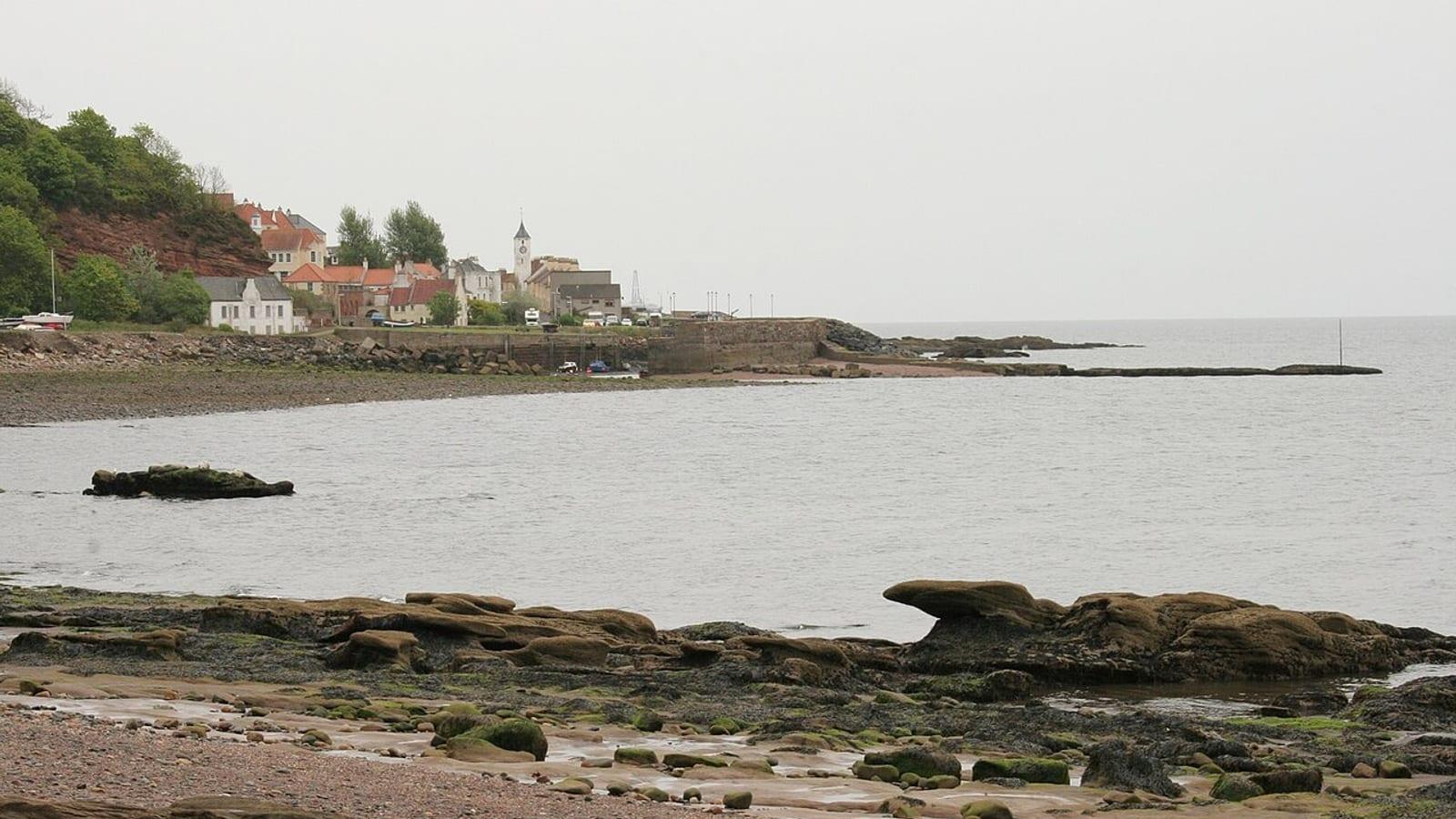
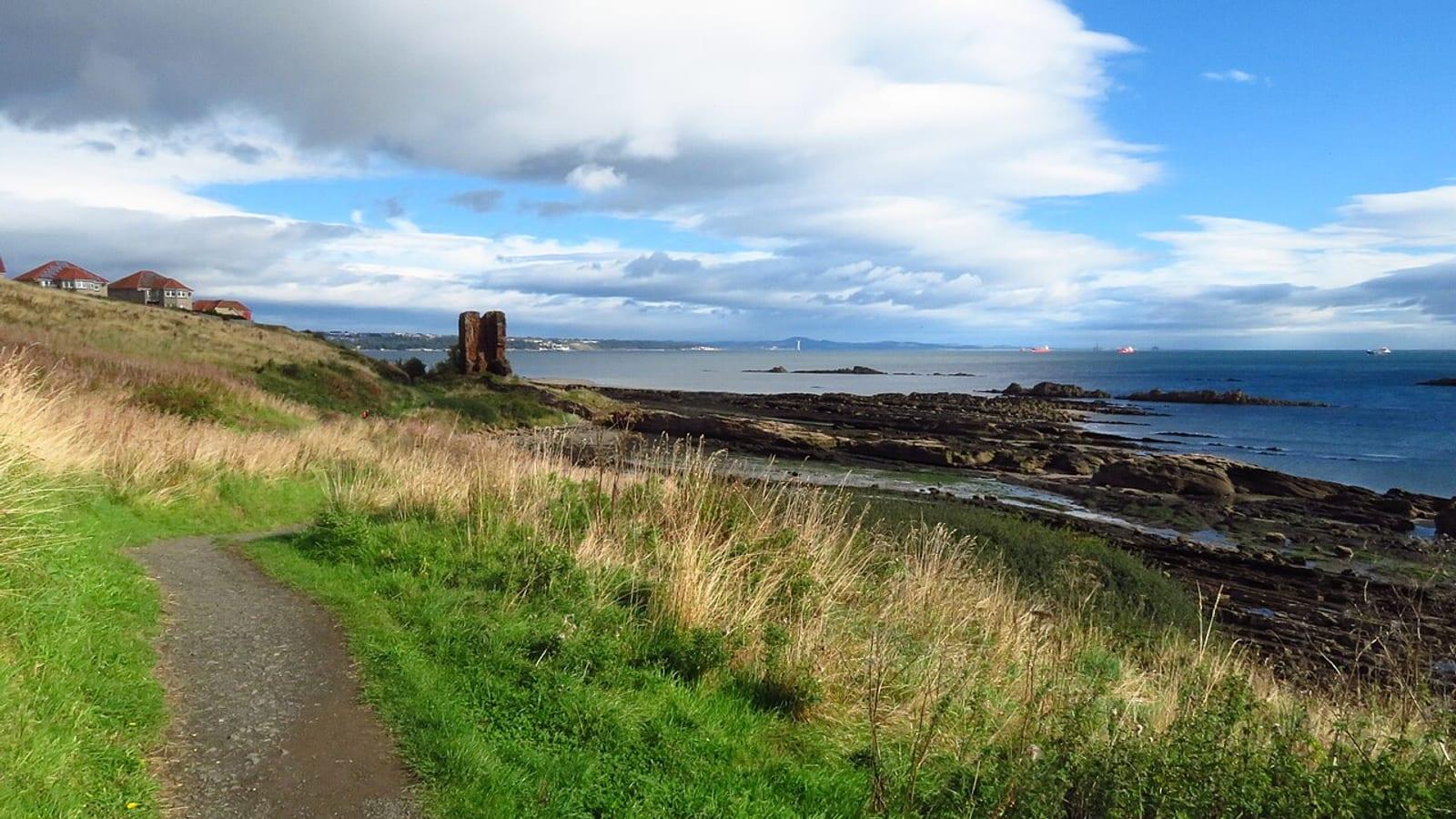
South of Seafield Tower on the Fife coast, a stretch of foreshore platform exposes one of Scotland's most productive Carboniferous limestone sections. The rocks here are packed with crinoid stems, bryozoan colonies, rugose corals, brachiopod shells, and occasional shark teeth that were deposited on a tropical reef platform roughly 325 million years ago, when Scotland sat near the equator. The ruined sixteenth-century tower, built from the same local red sandstone, serves as a useful landmark for locating the site from the coastal road. This guide covers how to reach the site, what fossils you are likely to find, the geological history of the Seafield Tower Limestone, and the collecting rules that apply on this SSSI-protected foreshore.
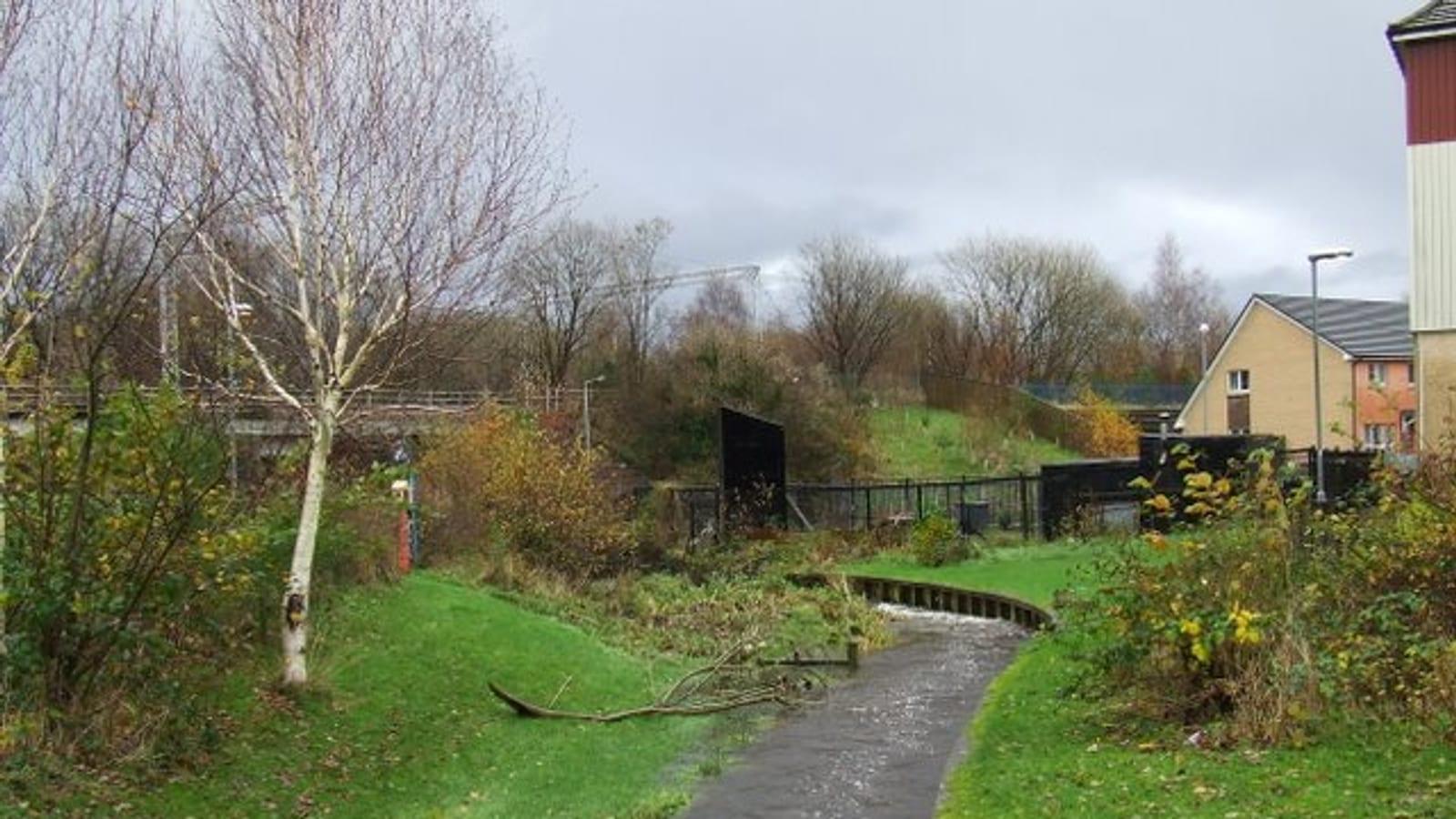
 On the Fife Coastal Path leading towards Seafield Tower, Kirkcaldy - geograph.org.uk - 7031891.jpg. Photo: Colin Park via Wikimedia Commons (CC BY-SA 2.0)
Location and Directions
Address
Seafield Tower, Kirkcaldy, Fife, KY1, Scotland.
Directions
From Kirkcaldy town centre, follow the Esplanade east along the coast, passing Ravenscraig Park on your left. Continue along the coastal road for approximately 1.5 kilometres until you can see the ruined tower ahead. There is limited roadside parking near the tower ruins; use passing places responsibly and do not block farm or service access. From the roadside, descend to the beach via the path beside the tower. The fossiliferous foreshore platforms are immediately south of the tower. Access is straightforward at low to mid tide on the exposed rock shelves; the platforms become slippery when wet, so wear footwear with good grip. Check the Fife tide tables before visiting, as the most productive exposures are only accessible within two hours either side of low tide.
What Fossils You'll Find
Crinoid stems are the most abundant fossils at Seafield Tower. The limestone is visibly packed with cross-sections and lengths of crinoid columnals, the disc-shaped plates that formed the stems of these sea-lily animals. You will find them both loose on the beach surface and cemented into the platform rock. Individual columnals range from a few millimetres to over a centimetre across, and articulated sections with multiple plates still connected are not uncommon.
 Carboniferous Fossils - geograph.org.uk - 938264.jpg. Photo: Anne Burgess via Wikimedia Commons (CC BY-SA 2.0)
Bryozoans appear as lacy or branching networks of small tubes visible in cross-section on broken limestone surfaces. They formed colonies on the seafloor and on the shells of other organisms. Look for them on flat rock surfaces and in fresh wave-washed exposures.
Rugose and tabulate corals occur as solitary horn-shaped specimens and as colonial masses. The rugose forms show characteristic internal septa when cut by weathering, appearing as radiating lines from the centre of a circular cross-section.
Brachiopod shells are common throughout the limestone. Both valves of ribbed productid and spiriferid brachiopods preserve well in the carbonate matrix. Loose specimens weather out of the rock and collect in pools and crevices on the platform surface.
Shark teeth are the most sought-after finds at Seafield Tower and they do turn up, though they require patience and a careful eye. The teeth are typically small, dark, and triangular. Concentrate your search in areas where fine-grained sediment has accumulated between the limestone ledges, and check gravel accumulations in rock pools.
Geologic History
The Ancient Environment
The Seafield Tower Limestone belongs to the Lower Limestone Formation of the Scottish Carboniferous sequence, deposited approximately 322 to 331 million years ago during the Visean stage. At that time, Scotland sat close to the equator as part of the supercontinent Pangaea, positioned within a warm, shallow tropical sea that extended across much of what is now northern Europe. The conditions were comparable to a modern-day carbonate platform: clear, warm, oxygen-rich water with abundant sunlight penetrating to the seafloor.
Crinoid meadows covered the seafloor in enormous numbers, their stems filtering plankton from the water column. Rugose and tabulate corals built patch reefs, while bryozoan colonies encrusted hard substrates. Sharks patrolled the reef margins, shedding teeth that eventually settled into the carbonate sediment. When these organisms died, their hard parts accumulated and were buried beneath successive layers of lime-rich sediment. Compaction and cementation over millions of years converted the sediment into the dense limestone now exposed on the foreshore.
How Seafield Tower Became a Fossil Collecting Site
The limestone beds that were deposited horizontally during the Carboniferous have been tilted and exposed by a combination of long-term geological uplift and coastal erosion. The North Sea and the Firth of Forth have been cutting back the Fife coastline for thousands of years since the last glaciation, stripping away overlying rock and exposing the fossil-bearing limestone as flat foreshore platforms. Wave action continues to polish the surface of these platforms and to break open nodules and weathered surfaces, steadily releasing new specimens from the rock. The foreshore geology at Seafield Tower is designated as a Site of Special Scientific Interest (SSSI) because of its significance to the understanding of Carboniferous marine ecosystems in Scotland.
Collecting Rules and Regulations
Is Fossil Collecting Allowed?
Surface collecting of loose fossils from the beach and foreshore is permitted at Seafield Tower. The site carries SSSI designation, which means that hammering the cliff faces or breaking up the bedrock platforms is prohibited. You may pick up specimens that have already been weathered free from the rock, and you may use a small hand tool to lever fossils from loose or already-detached material on the beach surface, but you must not chip at the in-situ limestone platforms or faces. Commercial collection requires permission from NatureScot. Personal non-commercial collection of surface finds is legal under Scottish law.
Recommended Tools
Bring a hand lens for examining small specimens in rock pools. A small geological hammer and chisel are useful only for splitting loose material already detached from the platform. Carry a field bag or small rucksack for specimens, and include a notebook and pencil so you can record where each find came from. Old toothbrushes are useful for cleaning specimens in rock pools before deciding whether to keep them.
Safety
The foreshore limestone platforms are extremely slippery when wet or covered in algae. Wellington boots or sturdy walking boots with grip are essential. The tide can come in quickly on these low-lying platforms, leaving you with no easy exit if you have moved far from the beach access point. Always check the tide tables for Kirkcaldy before visiting and plan to leave the foreshore at least an hour before high tide. The cliff face south of the tower is unstable in places and should not be approached closely.