Achanarras Quarry Caithness Scotland Fossil Hunting Guide
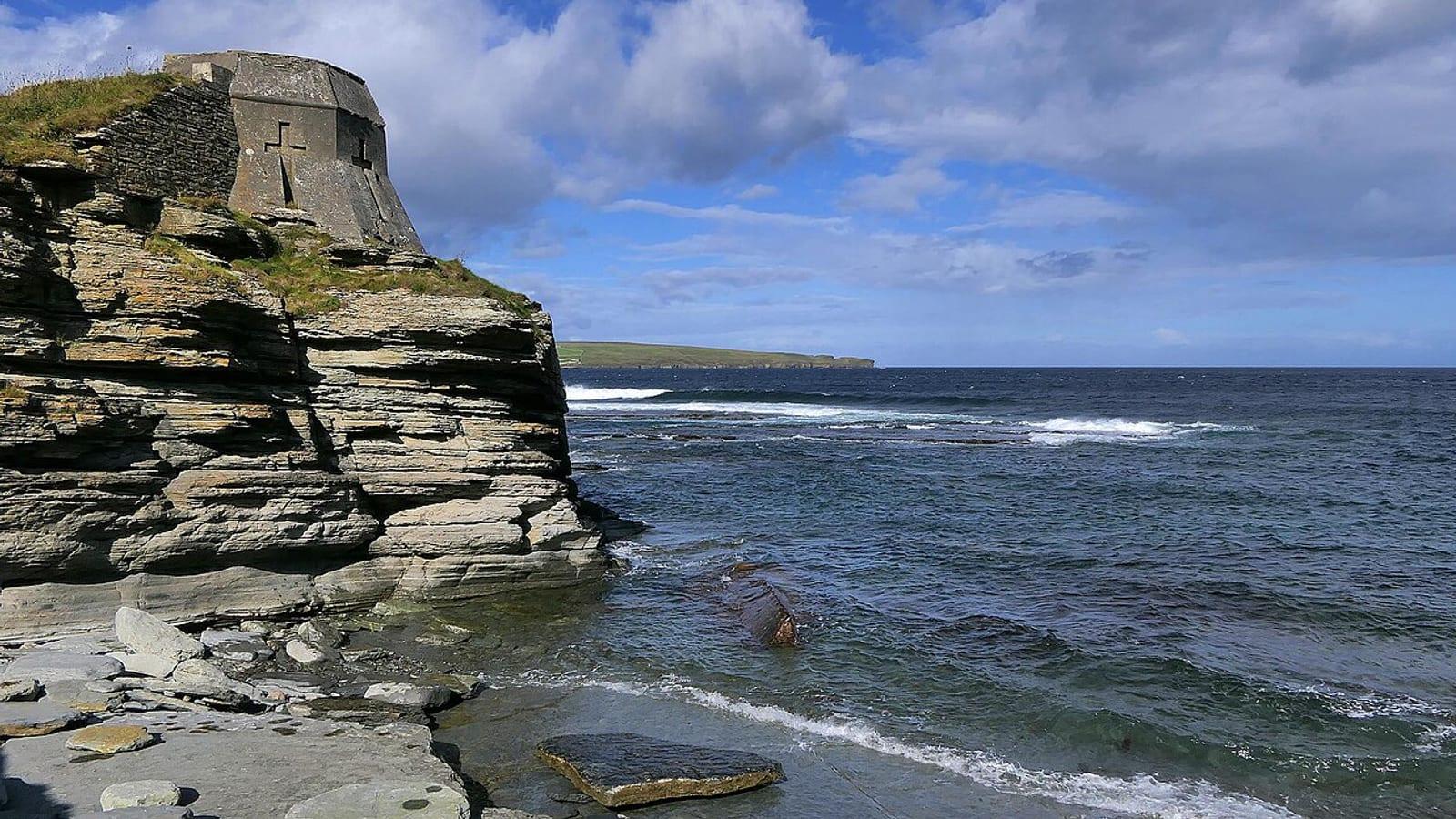
Image: Teanatspoon via Wikimedia Commons
Achanarras Quarry in Caithness, Scotland, exposes a world-class Middle Devonian fish assemblage. Surface collecting is permitted with a NatureScot permit.
Achanarras Quarry in Caithness, Scotland, holds one of the world's most celebrated Middle Devonian fish assemblages. Cut into the Upper Caithness Flagstone Group approximately 380 million years ago, the site has yielded at least 16 species of ancient fish, including Dipterus, an ancestor of modern lungfish, and the enigmatic Palaeospondylus gunni, a creature whose identity still divides palaeontologists. These were not sea fish but inhabitants of a vast subtropical lake system called Lake Orcadie that stretched from Caithness to Shetland when Scotland sat roughly 20 degrees south of the equator.
Achanarras is now a National Nature Reserve and a Site of Special Scientific Interest (SSSI). Surface collecting of loose material is permitted, but you must obtain a permit from NatureScot before visiting. This guide covers how to reach the quarry, which fossils you are likely to find, the geological story behind the site, and the current rules for collecting.
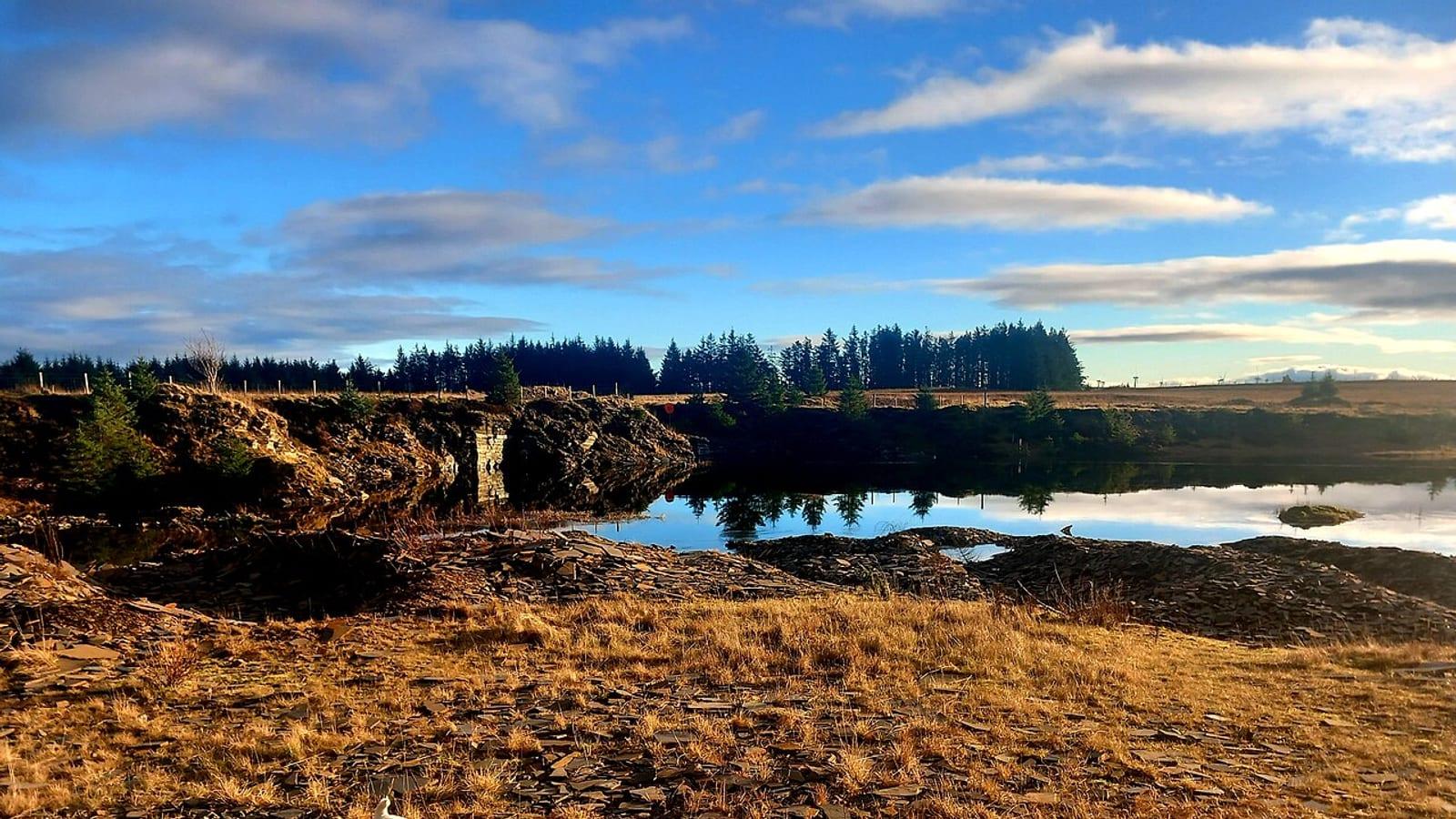
 Achanarras quarry SSI.jpg. Photo: Teanatspoon via Wikimedia Commons (CC BY-SA 4.0)
Location and Directions
Address
Achanarras Quarry Nature Reserve, near Spittal, Halkirk, Caithness, Scotland. The nearest postcode for navigation is KW12 6UY; the OS grid reference is ND 155 546.
Directions and Parking
From Halkirk, head northeast on the B870 towards Watten. After approximately 6 miles, watch for the brown tourist sign for Achanarras Quarry on the right (north) side of the road at the Mybster junction. Turn north and follow the track alongside the forestry plantation for roughly 1 kilometre to the car park at the quarry entrance. The site is signposted from the main road and the track is suitable for standard cars. Parking is free. Facilities on site include a shelter with interpretive panels and an educational timeline walk where every three metres represents one million years of geological time. There are no toilet facilities at the quarry itself, so plan accordingly before leaving Halkirk.
What Fossils You'll Find
The quarry is best known for its fish, and complete specimens, though now less common than in earlier decades, are still found by patient collectors. The most frequently encountered species include Coccosteus cuspidatus, a placoderm armoured fish whose bony head shield is often found intact, and Dipterus valenciennesi, a lungfish whose rounded crushing tooth plates are distinctive. Osteolepis macrolepidotus, a lobe-finned fish with large rhombic scales, turns up regularly, as does the smaller Cheirolepis trailli.
 WDC - Coccosteus cuspidatus.jpg. Photo: CryolophosaurusEllioti via Wikimedia Commons (CC BY 4.0)
Fish are found within specific limestone horizons called fish beds, which sit between the finely laminated flagstone layers. The laminations themselves represent annual depositional cycles, and the fish beds mark episodes of mass mortality, likely caused by toxic algal blooms or sudden changes in water chemistry. Look for these darker, more organic-rich horizons when splitting flagstone slabs. The type locality for Palaeospondylus gunni, a tiny creature of uncertain affinity, is here, though specimens are extremely rare. In 2021, trace fossils attributed to fish locomotion (ichnospecies Undichna) were also recorded from the site.
Geologic History
The Ancient Environment
The rocks at Achanarras belong to the Upper Caithness Flagstone Group and were deposited during the Middle Devonian period, approximately 380 million years ago at the Eifelian-Givetian boundary. At that time, Scotland lay at roughly 20 degrees south of the equator within the Orcadian Basin, a large continental lake system covering much of what is now northern Scotland and extending into Orkney and Shetland.
The climate was warm and subtropical, with seasonal wet and dry phases. During wetter periods the lake deepened and its waters stratified into an oxygenated surface layer and an anoxic bottom layer. Fine sediment settled continuously to the lakebed, producing the characteristic thinly laminated limestone now quarried as flagstone. Each pair of laminae represents one year of deposition, making these rocks a precise record of ancient seasons. The fish beds within this sequence preserve mass-mortality events when large numbers of fish died and sank into the oxygen-poor bottom waters, where decay was slow enough to allow exceptional preservation. At least 16 species and more than 15 genera have been recovered, representing 10 or more orders of fish. No amphibians had yet evolved; this was a world dominated entirely by fish.
How Achanarras Quarry Became a Fossil Collecting Site
The quarry opened in 1870 for the extraction of Caithness flagstone, a durable split stone used extensively for paving and roofing across northern Scotland and exported as far as London. Quarrying exposed the fish beds on a large scale and brought the fossils to the attention of Victorian geologists. By 1889 the site was internationally recognised as the most diverse Middle Devonian fish fauna known. The geologist Hugh Miller, born in nearby Cromarty, had already drawn attention to the Devonian fish of Caithness in the mid-nineteenth century. Achanarras became the type locality for several species and the name Achanarras horizon entered the stratigraphic literature as a marker bed recognisable across Scotland. Commercial quarrying ceased decades ago. NatureScot designated the site a National Nature Reserve, and it is now managed for both conservation and public education.
Collecting Rules and Regulations
Is Fossil Collecting Allowed?
Achanarras Quarry is a SSSI and National Nature Reserve. Fossil collecting from loose surface material is permitted, but you must obtain a permit from NatureScot (the Scottish Nature Agency, formerly Scottish Natural Heritage) before collecting. Contact NatureScot's Golspie office to apply. You must not hammer or chisel the exposed rock faces, and you must not damage the bedrock surfaces. Collecting is restricted to loose flagstone pieces already detached from the main beds. Significant scientific specimens should be reported to NatureScot or the National Museums Scotland.
Recommended Tools
Bring a geological hammer and cold chisels for splitting loose flagstone slabs rather than attacking the bedrock. Wrap finds carefully in newspaper or tissue paper, as complete fish specimens are fragile. A hand lens helps with identifying species in the field. Stout footwear is advisable as the quarry floor is uneven flagstone.
Safety
The old quarry faces are stable by Scottish standards but should be treated with caution. Do not stand beneath overhanging ledges. The site can be exposed and windswept in poor weather. Midges can be severe in summer months; bring appropriate repellent if visiting between May and September.
Sources
- https://www.nature.scot/enjoying-outdoors/scottish-outdoor-access-code/rules-everyone
- https://ukfossils.co.uk
- https://www.bgs.ac.uk/discovering-geology/fossils-and-geological-time/devonian/
- https://en.wikipedia.org/wiki/Achanarras\_quarry
- https://www.nms.ac.uk/explore-our-collections/stories/natural-world/hugh-miller/