Saltwick Bay Fossil Hunting Guide
Image: norman griffin via Wikimedia Commons
Find ammonites in nodules and belemnites on the Toarcian shale foreshore at Saltwick Bay, near Whitby. Dinosaur footprints in the Saltwick Formation viewed in situ.
Saltwick Bay lies a short walk east of Whitby Abbey on the Yorkshire coast, and it offers a productive combination of marine Jurassic shales and the overlying Middle Jurassic Saltwick Formation that together yield ammonites, belemnites, and the dinosaur footprints for which this stretch of coast is internationally known. The bay's foreshore exposures are extensive, accessible at low tide, and well-documented in the geological literature, making Saltwick one of the most visited fossil sites on the Yorkshire Dinosaur Coast. Ammonites emerge from nodules in the Alum Shale, belemnites weather out of the grey shale beds, and the harder sandstone surfaces of the Saltwick Formation preserve the distinctive elongated tridactyl tracks of Deltapodus brodricki, interpreted as an early stegosaur. Whitby provides all visitor services, and the town's fossil shops on Grape Lane are a useful first stop for calibrating what to look for. This guide covers the walk down to Saltwick, what the foreshore offers, the geological sequence from Toarcian marine shales to Middle Jurassic delta sands, and the collecting rules that apply at this SSSI-designated site.
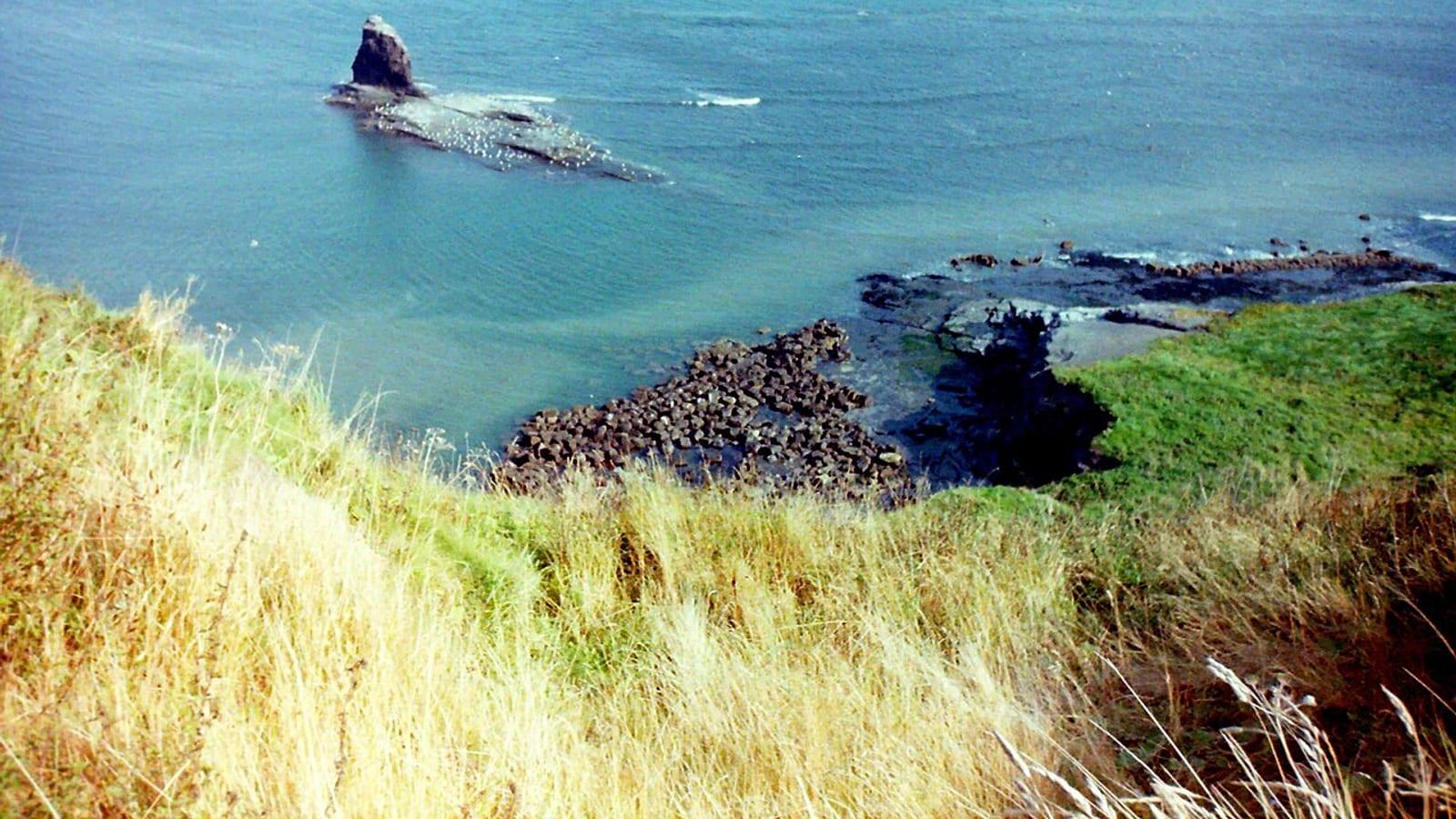
 Saltwick Bay, Whitby - geograph.org.uk - 5626453.jpg. Photo: norman griffin via Wikimedia Commons (CC BY-SA 2.0)
Location and Directions
Address
Saltwick Bay, near Whitby Abbey, Whitby, North Yorkshire.
Directions
From Whitby town centre, cross the swing bridge and follow the road uphill toward the Abbey on the East Cliff. Continue past the Abbey ruins on Abbey Lane and follow the coastal road toward Saltwick Bay Holiday Park. Turn into the holiday park lane and follow it to the end, parking at the wooden barriers. There is a charge for parking at the holiday park. From the barriers, follow the path east and descend via a long flight of steep wooden steps to the foreshore. Allow 10 to 15 minutes for the descent. The steps can be slippery; use the handrail. The foreshore is accessible for approximately two hours either side of low tide. Check Whitby tide tables before visiting. The East Cliff above the bay is undergoing active landslipping; new material on the beach surface is a positive sign for fossil hunters but the cliff base must be avoided entirely.
What Fossils You'll Find
Ammonites are the most reliably found fossils at Saltwick Bay. The Alum Shale Member and underlying grey shales of the Mulgrave Shale yield pyritised and calcite-replaced ammonites in nodules on the foreshore. Nodules appear as roughly oval, harder lumps on the shale platform surface. Split them across their long axis to check for interior fossil content. Whole ammonites, partial specimens, and impressions in the shale are all common, with sizes ranging from a few centimetres to dinner-plate scale for the larger forms.
 Pyritized Ammonite 4.jpg. Photo: HildLSmith via Wikimedia Commons (CC BY 4.0)
Belemnites are abundant and immediately recognisable as cigar-shaped, bullet-like guards of calcite. They litter the foreshore surface and emerge readily from weathered shale. Collecting a handful of belemnites takes minutes at this site; they make excellent introductory specimens for new fossil hunters.
Dinosaur footprints in the Saltwick Formation are the site's most scientifically significant feature. The elongated, three-toed Deltapodus brodricki tracks, interpreted as early stegosaur footprints, are preserved on the upper surfaces of sandstone beds within the Saltwick Formation. These prints cannot be removed and should be viewed and photographed in place. The sandstone beds of the Saltwick Formation are exposed in the cliff face and as resistant ledges on the foreshore. Large landslips from the East Cliff have brought Saltwick Formation material to the beach; treat this material with caution as falls can continue without warning.
Plant fossils from the Whitby Plant Bed within the Saltwick Formation preserve Jurassic vegetation including Williamsonia, Baieria, Coniopteris, and other species in sandstone blocks. The plant bed is a distinct dark layer visible in the cliff sequence above the bay.
Jet is found at some Yorkshire coast sites and Saltwick is within the relevant geological interval. Jet is fossilised driftwood from the monkey puzzle tree ancestors of the Jurassic, occurring as matt black material with a smooth conchoidal fracture, significantly lighter than coal. Check dark organic-rich shale bands for jet material.
Geologic History
The Ancient Environment
Saltwick Bay exposes two distinct Jurassic environments superimposed in the cliff section. The lower sequence, comprising the Grey Shale Member, Mulgrave Shale, and Alum Shale, belongs to the Upper Lias and was deposited in a warm, open marine setting during the Toarcian stage, approximately 180 to 190 million years ago. These dark, organic-rich shales with limestone nodules record quiet, anoxic seafloor conditions in which ammonites and marine reptiles were preserved with exceptional fidelity. The overlying Saltwick Formation, formerly known as the Lower Deltaic Beds, represents a dramatic environmental shift. During the Aalenian to Bajocian stages of the Middle Jurassic, approximately 170 to 177 million years ago, the sea gave way to a coastal plain and delta system. Rivers draining south from the eroding Scottish Highlands delivered sand and silt to a shoreline at roughly the latitude of modern-day southern France. Dinosaurs walked the firm, muddy shorelines of this delta, leaving the footprints now preserved in the siltstone beds. Forests of tree ferns, ginkgos, and cycads covered the coastal plain, their remains preserved in the Whitby Plant Bed. Five discrete episodes of footprint-bearing surface formation are recognised within the Middle Jurassic succession of this coastline.
How Saltwick Bay Became a Fossil Collecting Site
The East Cliff above Saltwick Bay is formed of the same soft shales and sandstones as the rest of the Yorkshire Dinosaur Coast, and it has been eroding continuously since the last glaciation removed the protective covering of boulder clay from the coastal edge. The Alum Shale takes its name from the alum industry that operated on this coastline from the seventeenth century, and extensive quarrying in the area accelerated the exposure of the shale sequence. Today, natural wave action and cliff falls continue the work, steadily releasing ammonites from the nodule-bearing shales. The footprint surfaces in the Saltwick Formation were first documented at this coast in 1895, and the site has been the focus of scientific investigation by Sheffield University researchers Martin Whyte and Mike Romano since the 1990s. SSSI designation protects the geological features.
Collecting Rules and Regulations
Is Fossil Collecting Allowed?
Surface collecting of loose fossils from the beach and foreshore at Saltwick Bay is permitted for personal, non-commercial purposes at no charge. The site is a Site of Special Scientific Interest within the North York Moors National Park. Hammering in-situ cliff faces or bedrock platform is prohibited. The dinosaur footprints in the Saltwick Formation are protected features and must not be interfered with; they should be viewed and photographed but not hammered, undercut, or removed. Ammonites and belemnites found loose on the beach or in detached nodules may be collected freely.
Recommended Tools
A geological hammer and chisel for splitting foreshore nodules are the main tools for ammonite collecting at Saltwick. Safety goggles are recommended when splitting nodules. A hand lens for examining small ammonite sutures is useful. Bring newspaper or foam padding for wrapping specimens. Wellington boots or waterproof hiking boots are essential on the wet shale foreshore.
Safety
The East Cliff above Saltwick Bay is severely unstable and has experienced major landslips in recent years. Approach the cliff face only to photograph the geological section, then move away immediately. Never shelter under any overhang and never approach fresh cliff falls. The steps from the holiday park to the foreshore are steep and slippery; take your time descending, especially in wet weather. The tide at Saltwick can cut off sections of the bay, particularly to the north toward the Black Nab headland, so plan your route carefully and keep the steps in view. Check Whitby tide times and build in a generous margin before high water.