Runswick Bay Yorkshire Fossil Hunting Guide
Image: mattbuck (category) via Wikimedia Commons
Runswick Bay on the Yorkshire coast exposes Early Jurassic Whitby Mudstone with ammonites, jet, and bivalves. Free to collect; guide to where and what to look for.
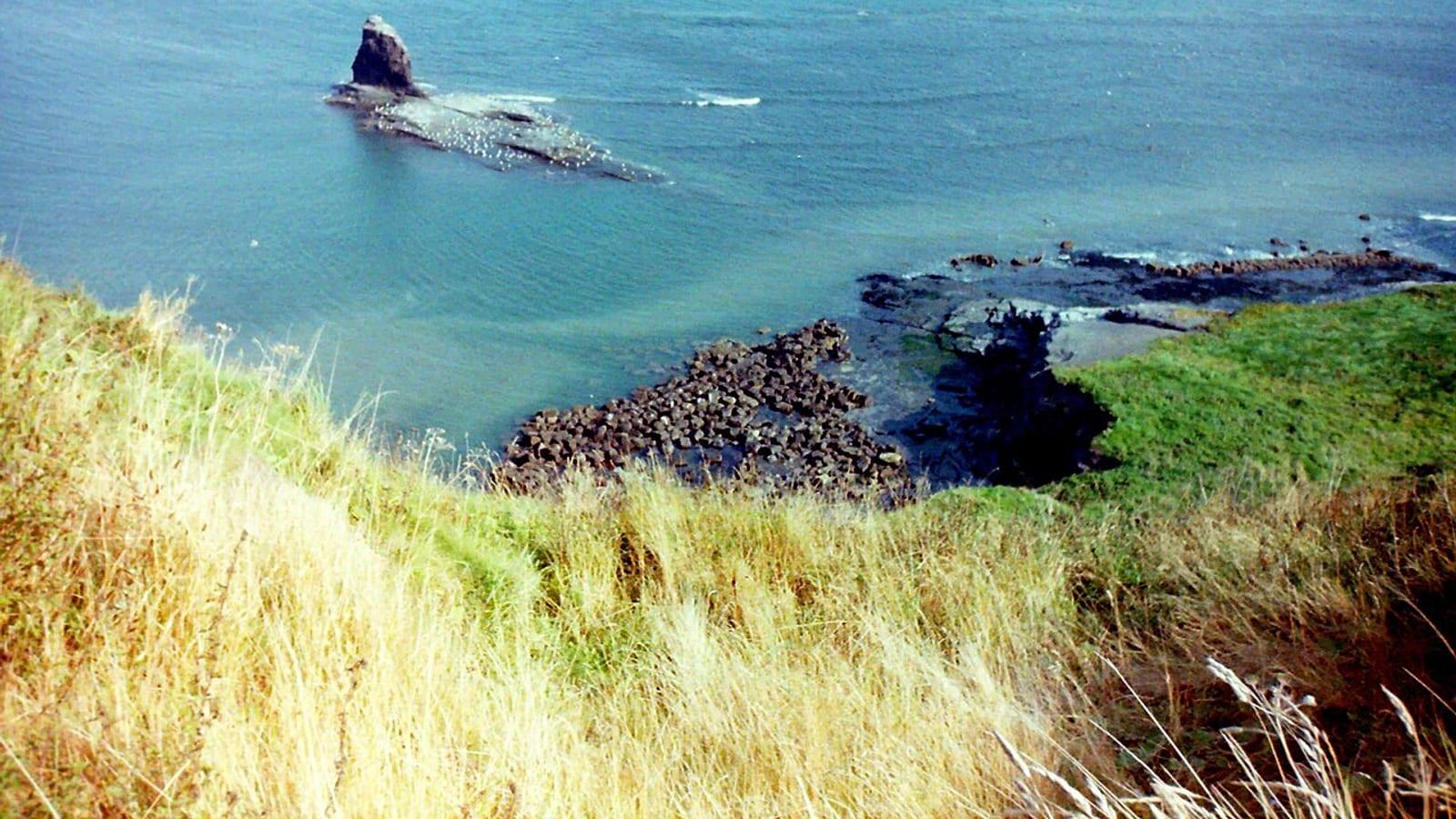
Runswick Bay is one of the first stops many people make when exploring the Yorkshire coast for fossils, and it divides collectors sharply: those who know the bay well come back with good material, while others leave wondering what the fuss was about. The central section of the bay is dominated by boulder clay from Quaternary glaciation and yields very little. The productive ground lies on either side, where the Whitby Mudstone Formation and Cleveland Ironstone Formation are exposed in the lower cliffs and on the wave-cut platform. Here, the Early Jurassic sequence, including the extraordinary Toarcian Oceanic Anoxic Event beds that record a mass extinction in the marine ecosystem, preserves ammonites, bivalves, plant material, and occasional vertebrate material.
The village of Runswick Bay is within the North York Moors National Park, and the site is partly designated as a SSSI to the north of the village. The beach is publicly accessible and collecting loose material is permitted across most of the foreshore. This guide explains exactly where to look, what to expect to find, and how to plan a productive visit.
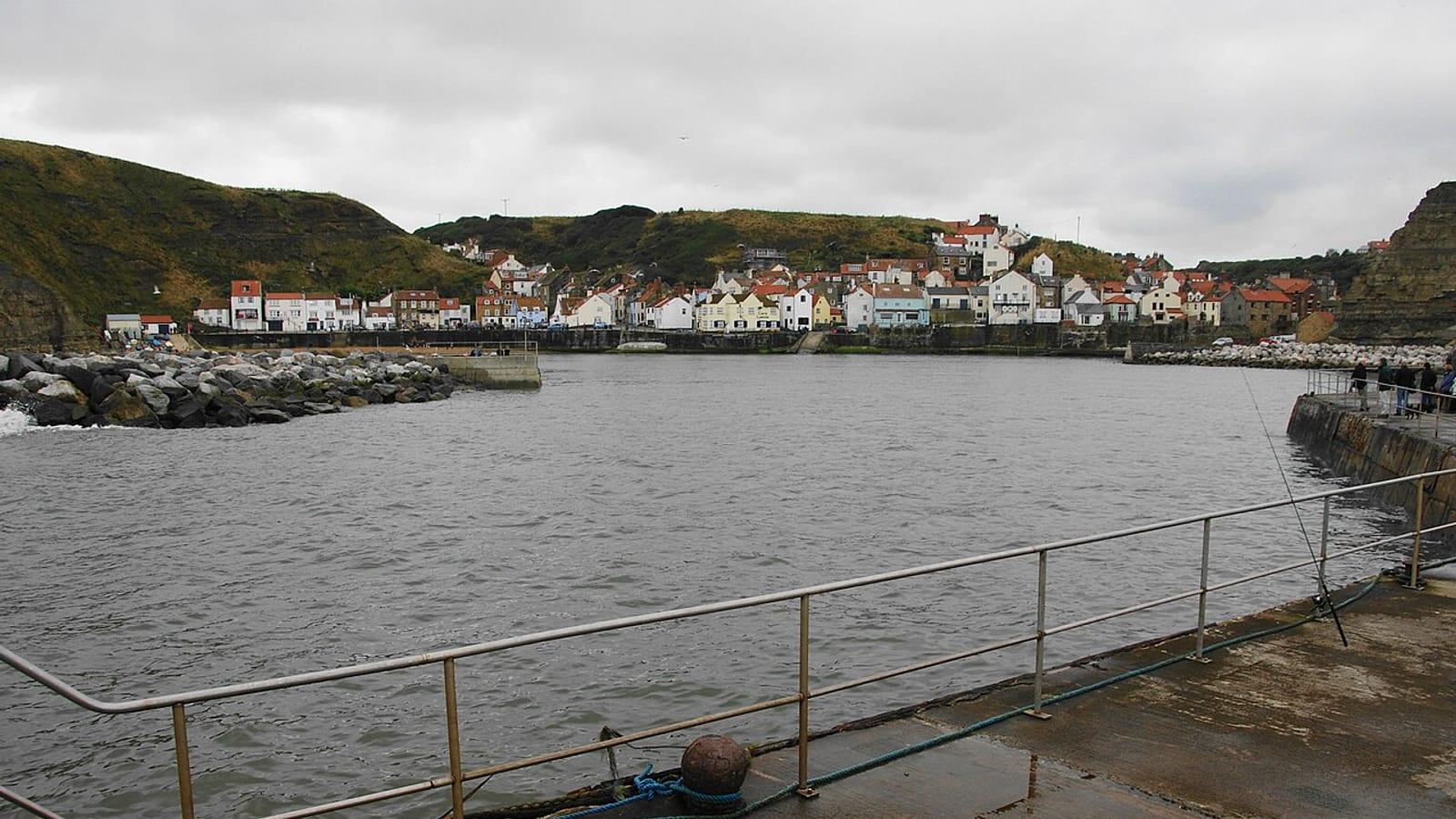
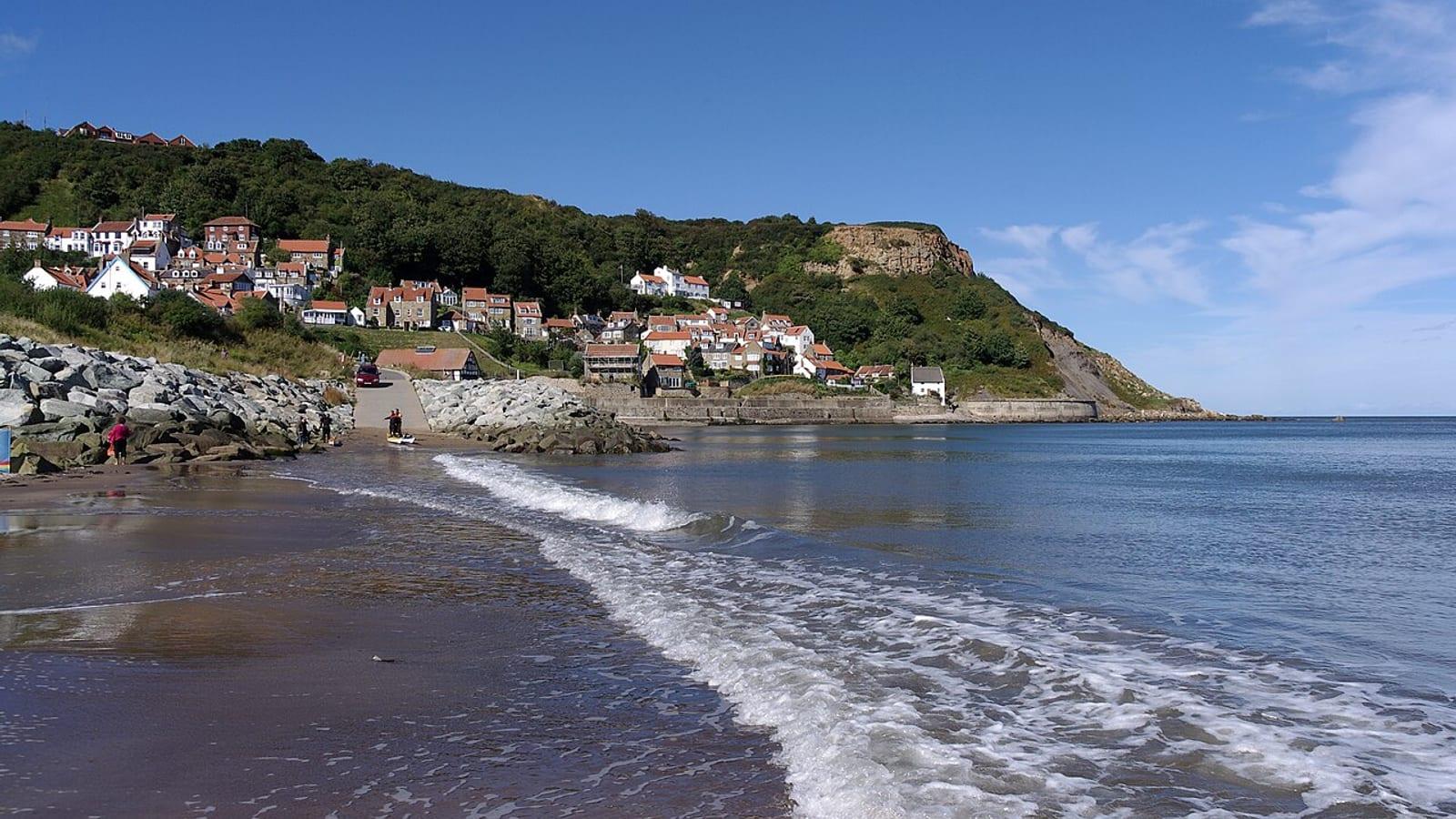
 Runswick Bay MMB 10.jpg. Photo: mattbuck (category) via Wikimedia Commons (CC BY-SA 3.0)
Location and Directions
Address
Runswick Bay, Runswick, near Whitby, North Yorkshire, TS13 5HT, England.
Directions and Parking
From Whitby, take the A174 south towards Sandsend and then west towards Hinderwell and Runswick Bay. Follow the signs to Runswick Bay village. Two car parks serve the bay. The main cliff-top car park (NZ 807 161, postcode TS13 5JF) sits above the village and is the larger of the two, with toilets nearby. The Bank Bottom car park (NZ 809 160, TS13 5HT) is behind the beach and is smaller. From the cliff-top car park, a steep concrete slip road descends through woodland to the beach, taking approximately 10 minutes on foot. The descent is steep; the return walk uphill is more demanding. The bay is also served by the X4 bus service from Whitby, running approximately every 30 minutes on most days. Facilities in the village include a small shop and seasonal refreshments. The beach is also accessible from Runswick Bay village centre, a short walk from the Bank Bottom car park.
What Fossils You'll Find
Ammonites are the signature find at Runswick Bay, and the Whitby Mudstone Formation is the productive horizon to concentrate on. The formation contains calcareous nodules weathering out of the dark mudstone, and these nodules often preserve ammonites in three dimensions. Dactylioceras tenuicostatum is the best-known species from the lower Toarcian beds here, preserved in the nodules with its characteristic tightly ribbed whorls. Further up the sequence, in the Jet Rock and Bituminous Shales, larger ammonites including species of Harpoceras and Hildoceras occur.
 Ammolite from Placenticeras fossil ammonite (Bearpaw Formation, Upper Cretaceous, 70-75 Ma; mine in St. Mary River Valley, Alberta, Canada) 5 (40448036885).jpg. Photo: James St. John via Wikimedia Commons (CC BY 2.0)
Jet, the dark fossilised driftwood that was the basis of Whitby's Victorian jewellery industry, occurs as dark, lightweight pieces on the beach. True jet comes from the Toarcian Jet Rock horizon and has a vitreous lustre when polished; it can be distinguished from coal and other dark material by its lower density and the brown streak it leaves when scratched on an unglazed porcelain surface.
Bivalves, including oysters and small pectinids, are common throughout the formation. Belemnite guards turn up regularly. Plant material including fragments of driftwood and occasional leaf impressions occurs in the finer beds. The Cleveland Ironstone Formation to the north of the bay is rich in bivalves and brachiopods and less productive for ammonites. Rare finds at Runswick have included an Early Jurassic crocodile skull and, from reworked Pleistocene deposits in the boulder clay, Quaternary mammal bones including mammoth and bison material washed from the North Sea floor.
Geologic History
The Ancient Environment
The Whitby Mudstone Formation was deposited during the Pliensbachian and Toarcian stages of the Early Jurassic period, approximately 195 to 175 million years ago. The Cleveland Basin, of which Runswick Bay is part, was a shallow subtropical marine embayment lying at roughly the latitude of the modern Mediterranean. Marine life was abundant and diverse in the initial Pliensbachian seas, with well-oxygenated bottom waters supporting bivalves, brachiopods, ammonites, and reptiles.
The Toarcian Oceanic Anoxic Event, caused by volcanism associated with the opening of the Gondwana rift (linked to the Karoo-Ferrar large igneous province in what is now southern Africa), flooded the global ocean with carbon dioxide and methane. This caused rapid ocean warming and widespread oxygen depletion in the deep and even shallow waters of the Cleveland Basin. The result was a mass extinction of the marine benthos and the creation of exceptional preservation conditions: the characteristic dark, laminated, organic-rich shales and Jet Rock horizon that define the upper Whitby Mudstone Formation. Organisms that sank into these anoxic conditions were preserved in near-perfect condition before scavengers or bacteria could destroy them.
Overlying the Jurassic sequence, the Quaternary boulder clay was deposited by glacial activity approximately 20,000 years ago. The ice transported erratic boulders and reworked sediment from across the North Sea basin, including occasional bones from Pleistocene mammals that lived on the floor of the North Sea when it was dry land during glacial periods.
How Runswick Bay Became a Fossil Collecting Site
The soft shales of the Whitby Mudstone Formation have always been susceptible to erosion. The village of Runswick itself was rebuilt after a catastrophic landslip in 1682 caused by the instability of the Jurassic shales on which the original settlement stood. The ongoing erosion of the bay cliffs by North Sea wave action continuously exposes fresh sections of the Jurassic sequence, bringing new material to the foreshore with each tide. The same erosive processes that make the cliffs dangerous to approach directly are what keep the beach supplied with fresh fossils season after season.
Collecting Rules and Regulations
Is Fossil Collecting Allowed?
Runswick Bay beach is publicly accessible and collecting loose fossils from the foreshore is generally permitted. A small section to the north of the village is designated as SSSI, and collecting in this section requires more care and should not involve any disturbance to in-situ bedrock. Across the broader foreshore, collecting loose material for personal use is accepted practice along the Yorkshire coast. Significant vertebrate finds should be reported to the Whitby Museum or the Yorkshire Museum in York. Jet collecting is traditional on the Yorkshire coast and permitted for personal quantities.
Recommended Tools
A geological hammer for splitting nodules on the foreshore, cold chisels, and wrapping material are the standard kit. For jet identification, a streak plate (unglazed porcelain tile) is useful. Wellingtons or waterproof boots are strongly recommended as the wave-cut platform and lower foreshore are frequently wet and slippery.
Safety
The Jurassic shales at Runswick Bay are notoriously unstable and cliff falls are common. The 1682 landslip that destroyed the original village demonstrated the scale of instability possible in this formation. Never approach the cliff base and do not sit or stand beneath any overhang. The descent to the beach via the concrete slip road is steep; take particular care on the return uphill walk, which can be tiring. Check the tide before descending; North Sea tides can come in quickly and the lower foreshore narrows at high water.