Boggle Hole Fossil Hunting Guide
Image: Roger Kidd via Wikimedia Commons
Boggle Hole on the Yorkshire coast exposes Lower Jurassic Lias with trace fossils in the platform and ammonites after scouring tides, south of Robin Hood's Bay.
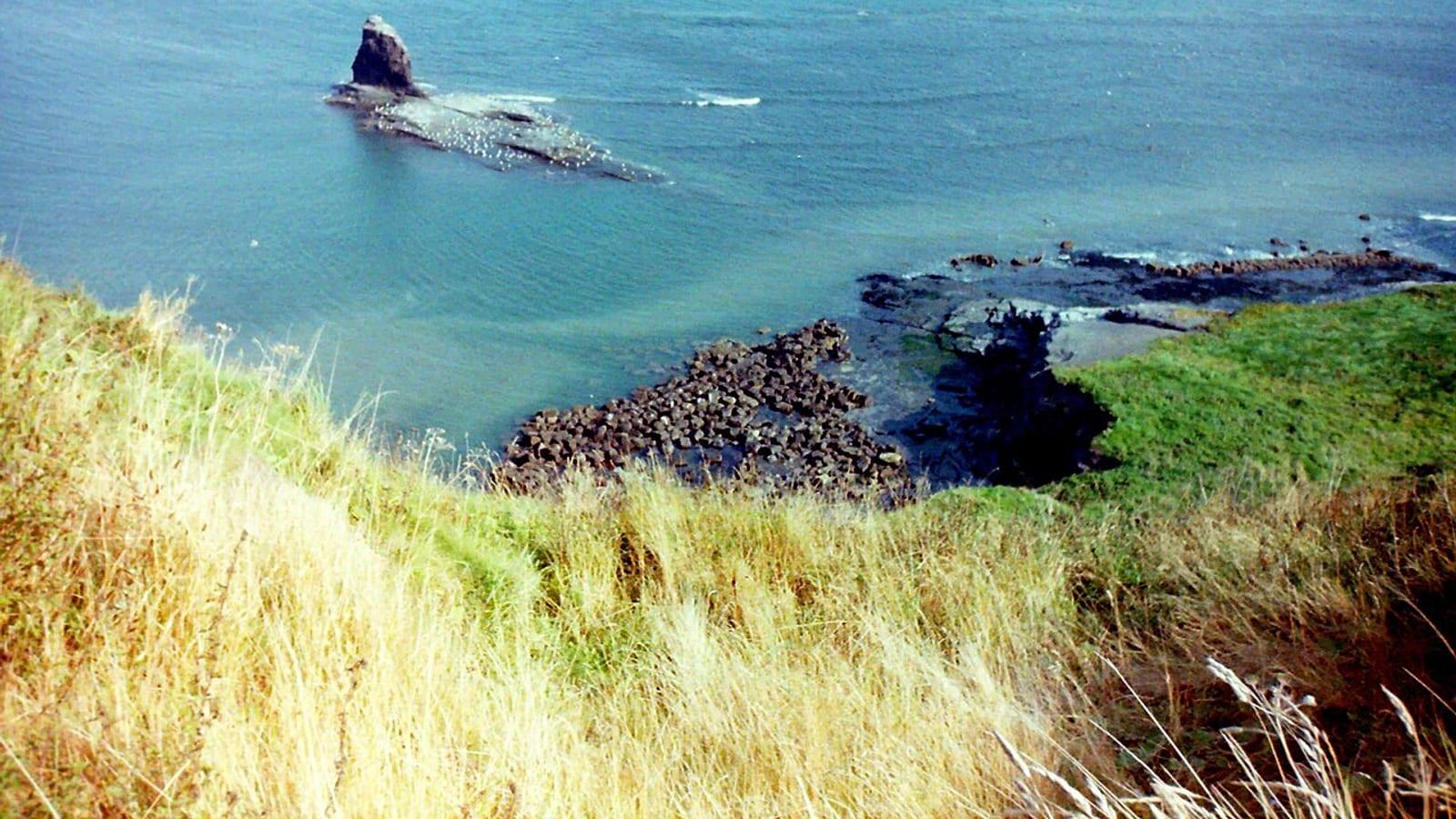
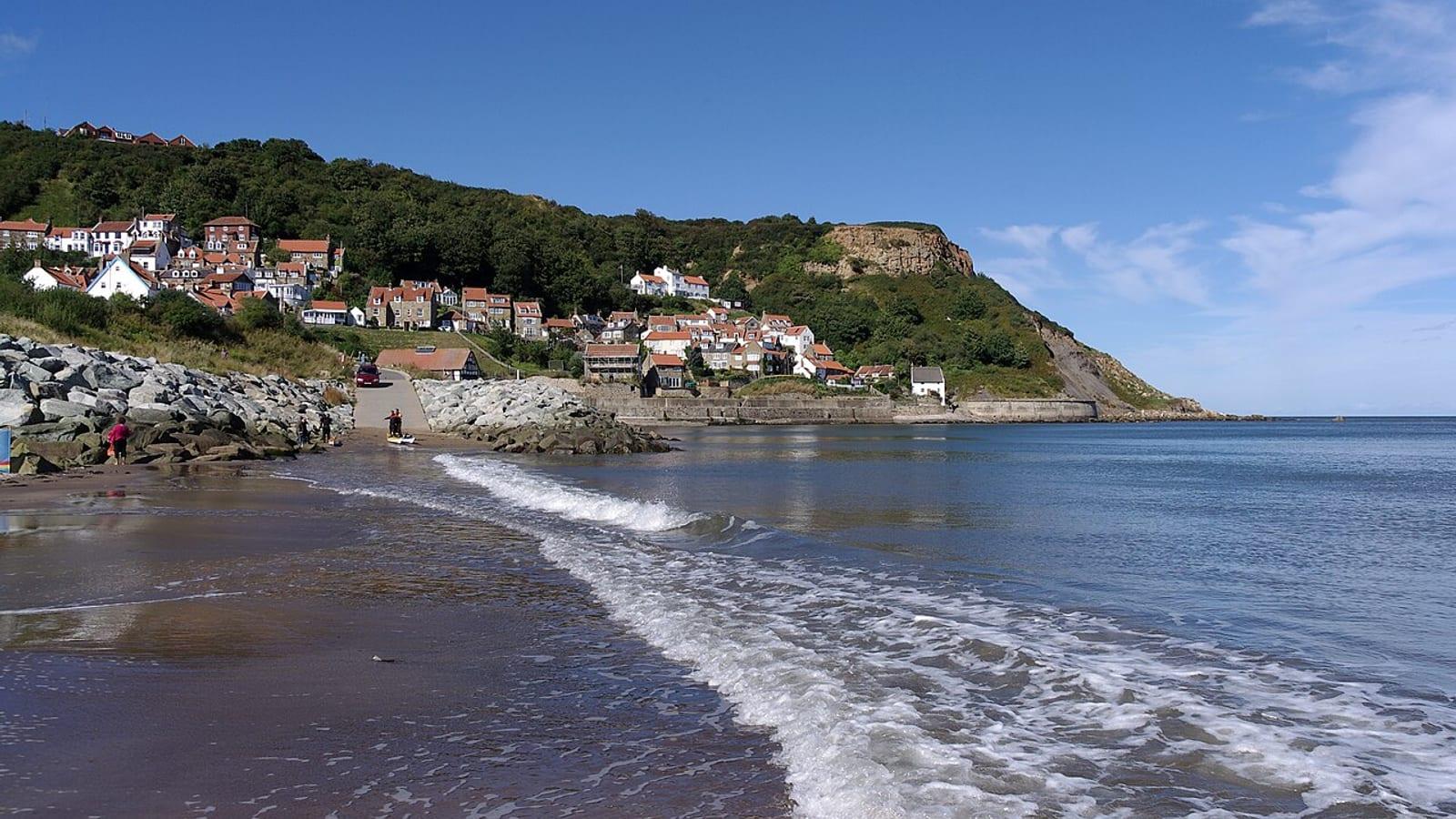
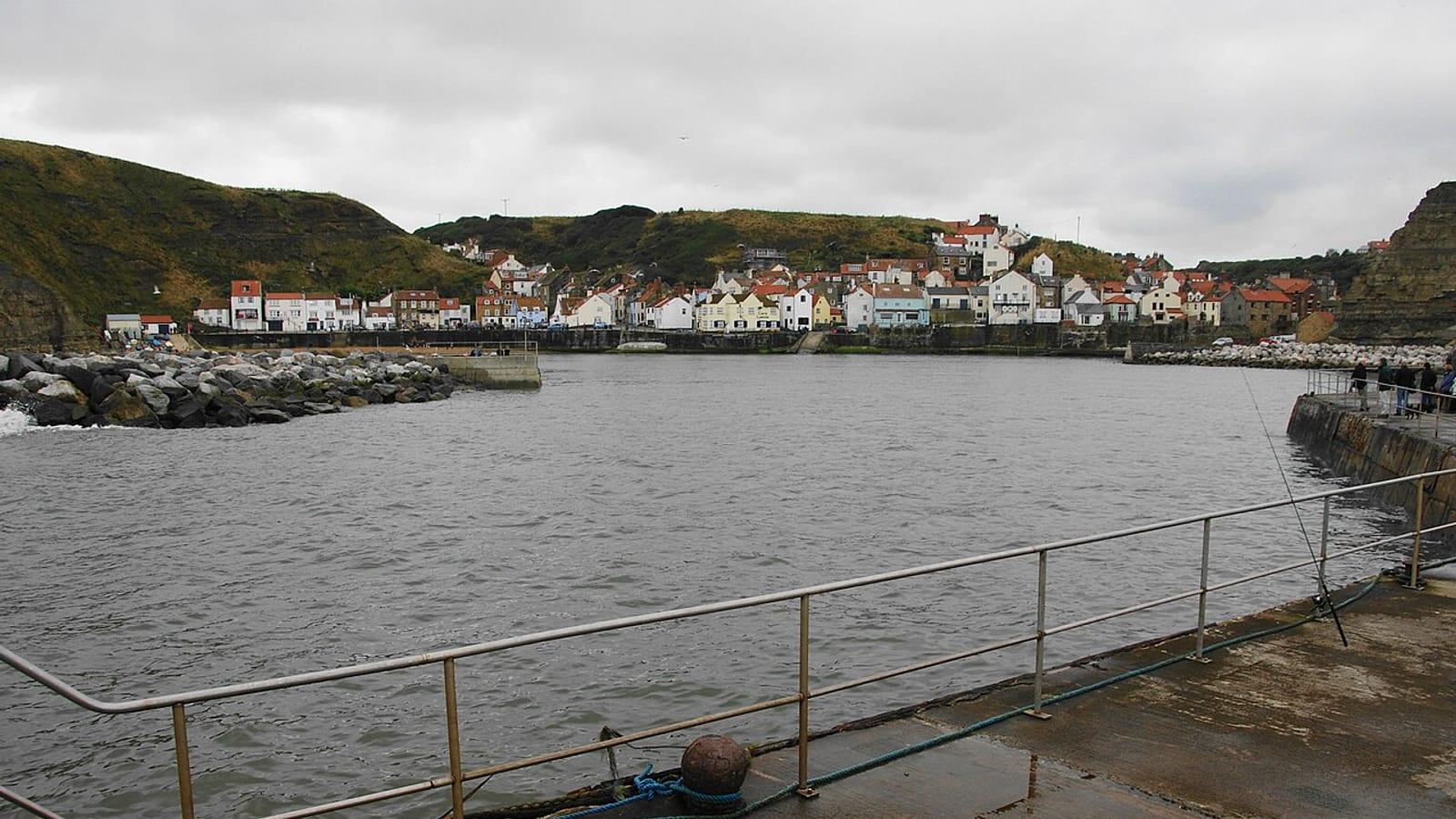
Boggle Hole sits at the southern end of Robin Hood's Bay on the Yorkshire coast, where Lower Jurassic Lias Group rocks are exposed across a broad wave-cut platform that is among the most productive foreshore collecting areas in northern England. The site takes its name from the local term for a goblin or spirit, a nod to the isolated, wind-scoured character of this section of coast between Robin Hood's Bay village and Ravenscar. The foreshore exposes siliceous shales and harder siltstone bands that yield trace fossils in excellent condition, and after storms or strong scouring tides, three-dimensional ammonites emerge from the softer shale layers. Boggle Hole is part of the Robin Hood's Bay SSSI, one of the most studied geological sections on the Yorkshire Dinosaur Coast. This guide covers how to reach the site, what the foreshore yields, and how to collect within the rules that apply here.
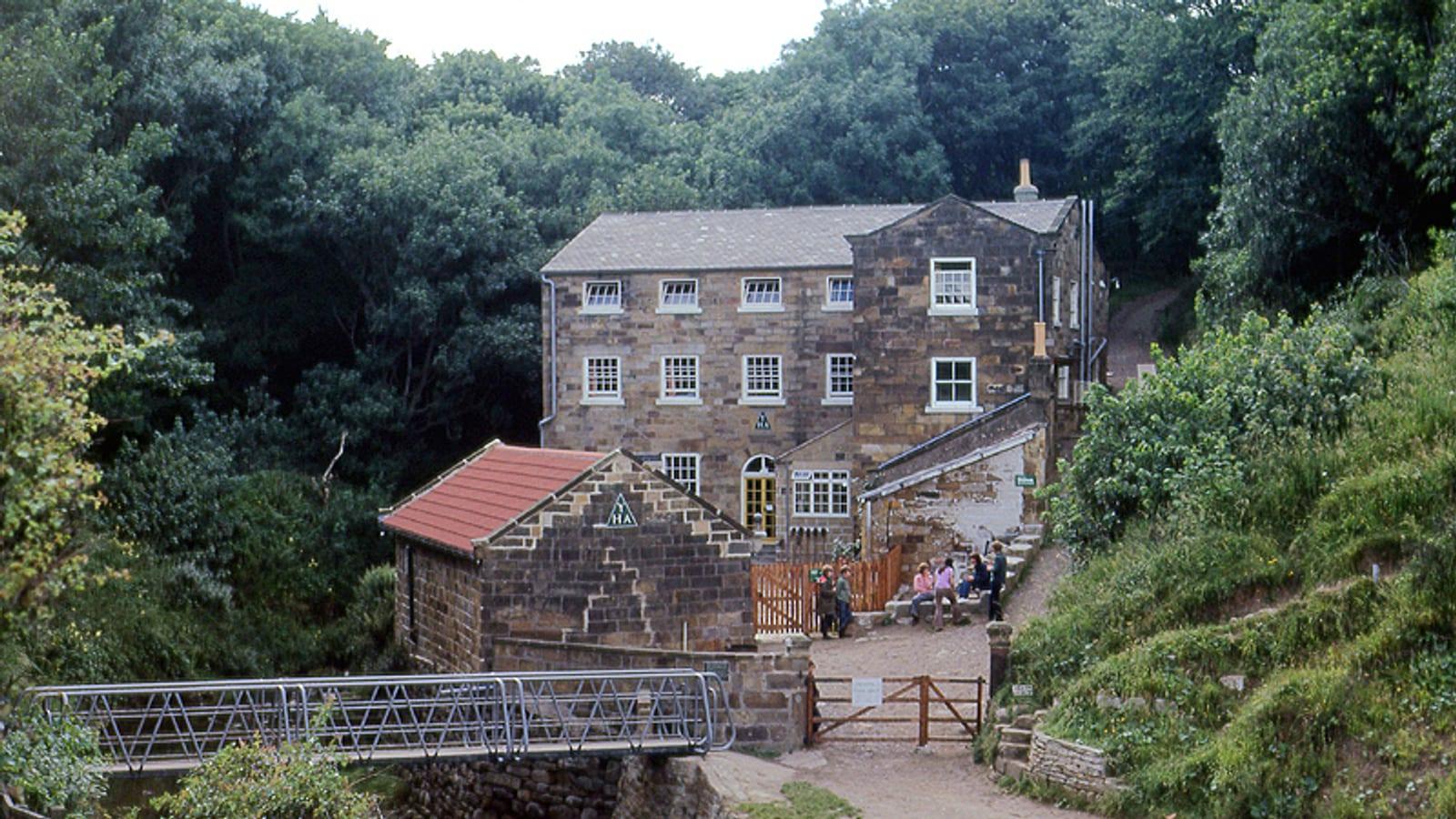
The site is accessible on foot from Robin Hood's Bay village or from the YHA Boggle Hole hostel above the cove. Both approaches involve steep descents, and the foreshore itself is best visited within two hours of low tide to access the widest collecting area.
 Boggle Hole Youth Hostel, North Yorkshire - geograph.org.uk - 2271219.jpg. Photo: Roger Kidd via Wikimedia Commons (CC BY-SA 2.0)
Location and Directions
Address
Boggle Hole, Robin Hood's Bay, Whitby, North Yorkshire YO22 4UQ, England.
Directions and Parking
From Whitby, take the A171 south towards Scarborough. Turn off towards Robin Hood's Bay village on the B1447. The village car park is pay and display and is the main parking option for visitors on foot. Coaches and large vehicles should use the upper car park before entering the village; the narrow lanes into the lower village are unsuitable for large vehicles. From the village car park, walk down the steep main street to the beach, then south along the foreshore at low tide for approximately one mile to reach Boggle Hole. Alternatively, take the coastal path from the village along the clifftop and descend the steep path near the YHA Boggle Hole hostel directly to the cove. The hostel path is the more direct approach to the Boggle Hole section specifically, but it is a steep descent on an uneven track. Parking near the hostel is very limited.
The Cleveland Way National Trail runs along the clifftop above, and Coast-to-Coast walkers pass through the area. The village of Robin Hood's Bay has cafes, a pub, and a fossil shop. Facilities at Boggle Hole itself are limited; the YHA hostel sometimes has a café but check in advance.
What Fossils You'll Find
Trace fossils are the most reliable find at Boggle Hole. The siliceous shales of the Lias Group here preserve Rhizocorallium, a U-shaped burrow typically attributed to crustaceans, in excellent condition in the harder platform layers. Other trace fossil genera including Thalassinoides (branching burrow networks) and Teichichnus (spreite-filled burrows) occur in the same beds. These are best seen in the flat foreshore platform at low tide, where the top surfaces of the siltstone beds are exposed. They cannot be collected under SSSI rules but are outstanding for photography.
 The Nab, Robin Hood's Bay - geograph.org.uk - 533177.jpg. Photo: Peter Church via Wikimedia Commons (CC BY-SA 2.0)
Ammonites are the highlight when conditions are right. After storms or strong scouring tides, three-dimensional ammonites emerge from the softer shale bands. Species present include Asteroceras obtusum, Arnioceras, Caenisites, Echioceras, Platypleuroceras, Tropidoceras, Acanthopleuroceras, and Androgynoceras, covering a range of Lower Jurassic zones across the Pliensbachian stage. Most are found as loose specimens on the foreshore surface after fresh scouring. Some are pyritised, giving them a golden metallic appearance.
Bivalves are common throughout the shale sequence. Large Pinna bivalves sometimes occur standing upright in the position in which they lived, an indicator of the original soft-sediment seafloor. Belemnites occur regularly as robust calcite guards. Crinoid ossicles and occasional partial stems are found in the limestone bands within the sequence.
Geologic History
The Ancient Environment
The Lias Group rocks exposed at Boggle Hole were deposited during the Early Jurassic, in the Pliensbachian stage, approximately 190 to 183 million years ago. Britain at this time lay in a warm, subtropical to tropical marine environment. The sea that covered the Yorkshire area was shallow, clear, and inhabited by a diverse fauna of ammonites, bivalves, belemnites, crinoids, and occasional marine reptiles.
Robin Hood's Bay forms part of a geological structure known as the Robin Hood's Bay dome, a roughly equidimensional fold in which older Lias rocks are exposed in the centre and younger rocks around the edges. This structure, truncated at the coast by the Peak Fault, means that a wide range of Lower Jurassic zones is accessible on the foreshore without travelling far along the coast. The cyclic shale and siltstone sequences visible in the foreshore platform reflect alternating conditions of calm muddy seafloor deposition and higher-energy or shallower episodes. The ironstone concretion levels within the sequence are particularly notable for ammonite preservation. The transition from cyclic to non-cyclic sequences higher in the section marks a global sea level rise at the start of the Pliensbachian age, recorded at this site and correlated to equivalent sections elsewhere in Europe.
The Wine Haven embayment immediately north of Robin Hood's Bay contains the Global Boundary Stratotype Section and Point (GSSP) for the base of the Pliensbachian Stage, making this stretch of coast an internationally significant reference section in Jurassic stratigraphy.
How Boggle Hole Became a Fossil Collecting Site
Boggle Hole and the wider Robin Hood's Bay foreshore are exposed by natural coastal erosion. The wave-cut platform is scoured by tidal action, removing softer shale and exposing the harder siltstone beds that contain trace fossils. After storms, the unconsolidated shale is broken down more rapidly, releasing ammonites and other macrofossils that have been preserving within the rock for nearly 200 million years. The broad, flat foreshore, exposed at low tide for a considerable distance, provides extensive searching area. The same erosion processes that make the foreshore productive also mean that the cliff sections above are subject to ongoing retreat.
Collecting Rules and Regulations
Is Fossil Collecting Allowed?
Boggle Hole and the Robin Hood's Bay foreshore are part of a designated Site of Special Scientific Interest (SSSI). Under SSSI rules, hammering in-situ bedrock, cliff faces, and platform exposures is prohibited. The trace fossil exposures in the platform are in-situ and must not be disturbed, chipped, or removed. Loose fossils on the foreshore surface, including ammonites that have eroded free from the shale, can be collected in reasonable quantities for personal non-commercial use. This is standard foreshore access law in England. If you are uncertain whether a specimen is loose or still embedded in bedrock, leave it; the distinction matters under SSSI rules. The Rotunda Museum in Scarborough and the Whitby Museum both accept significant local finds for identification and documentation.
Recommended Tools
Bring a hand lens, sealable bags or small padded containers for specimens, and a torch for examining the undersides of foreshore boulders. The foreshore is rough; wear waterproof boots with ankle support. A trowel can help shift loose shingle around surface specimens but should not be used to pry material from bedrock.
Safety
The descent to Boggle Hole from the clifftop path is steep and can be slippery in wet conditions. The foreshore at low tide extends a significant distance from the cliff base; keep an eye on tide times and begin returning before the tide turns. Boggle Hole is a narrow cove that can become enclosed on the incoming tide. Check a current tide table for Whitby before visiting. The clifftops above are eroding and unfenced in places; keep away from cliff edges. Mobile phone signal in the cove can be poor.