Rissani Goniatite Quarry East of Town Fossil Hunting Guide
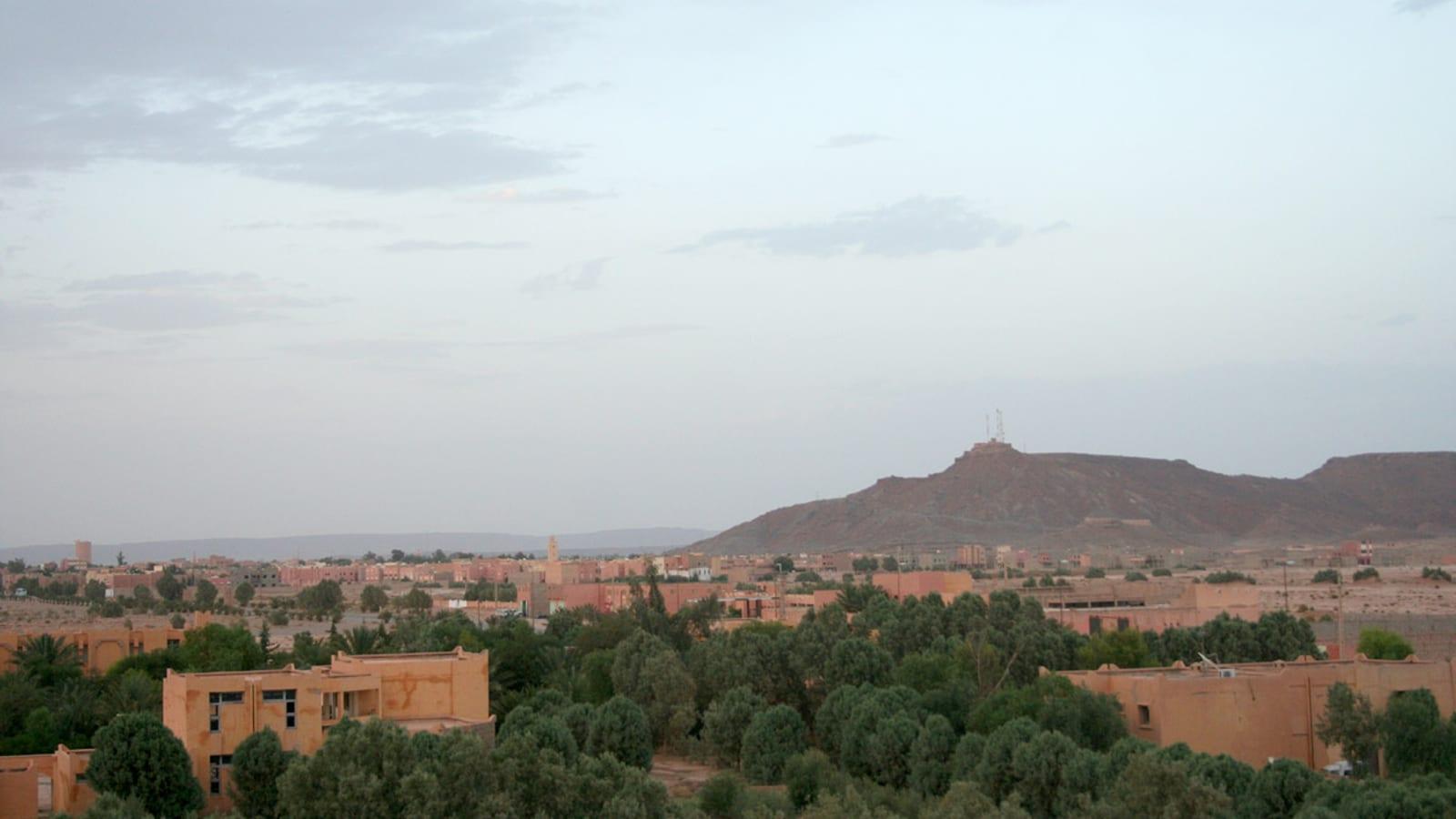
Image: Hanay via Wikimedia Commons
The Rissani goniatite quarry east of town yields Devonian cephalopods and Orthoceras from grey limestone, accessible via guided tours from Rissani or Erfoud.
The goniatite quarry east of Rissani cuts into grey Devonian limestones that preserve goniatites in abundance, the coiled, suture-ridged cephalopods that preceded true ammonites by tens of millions of years. Rissani sits at the edge of the Tafilalet oasis, a landscape of palm groves and ksour (fortified villages) on the Ziz River floodplain, and the surrounding desert exposures have been worked for fossils since at least the 1980s. The goniatites here, including genera such as Goniatites and Manticoceras, often preserve their original suture patterns in relief on polished cross-sections, making them some of the most visually striking paleozoic cephalopods available to collectors. The area also sits near the ruins of Sijilmassa, a medieval trans-Saharan trade city, giving the visit a depth of human as well as geological history.
This guide covers the geology of the Devonian sequence near Rissani, the specific fossils found at the quarry, how to get there and arrange a visit, and the practical details of collecting and purchasing specimens on site.
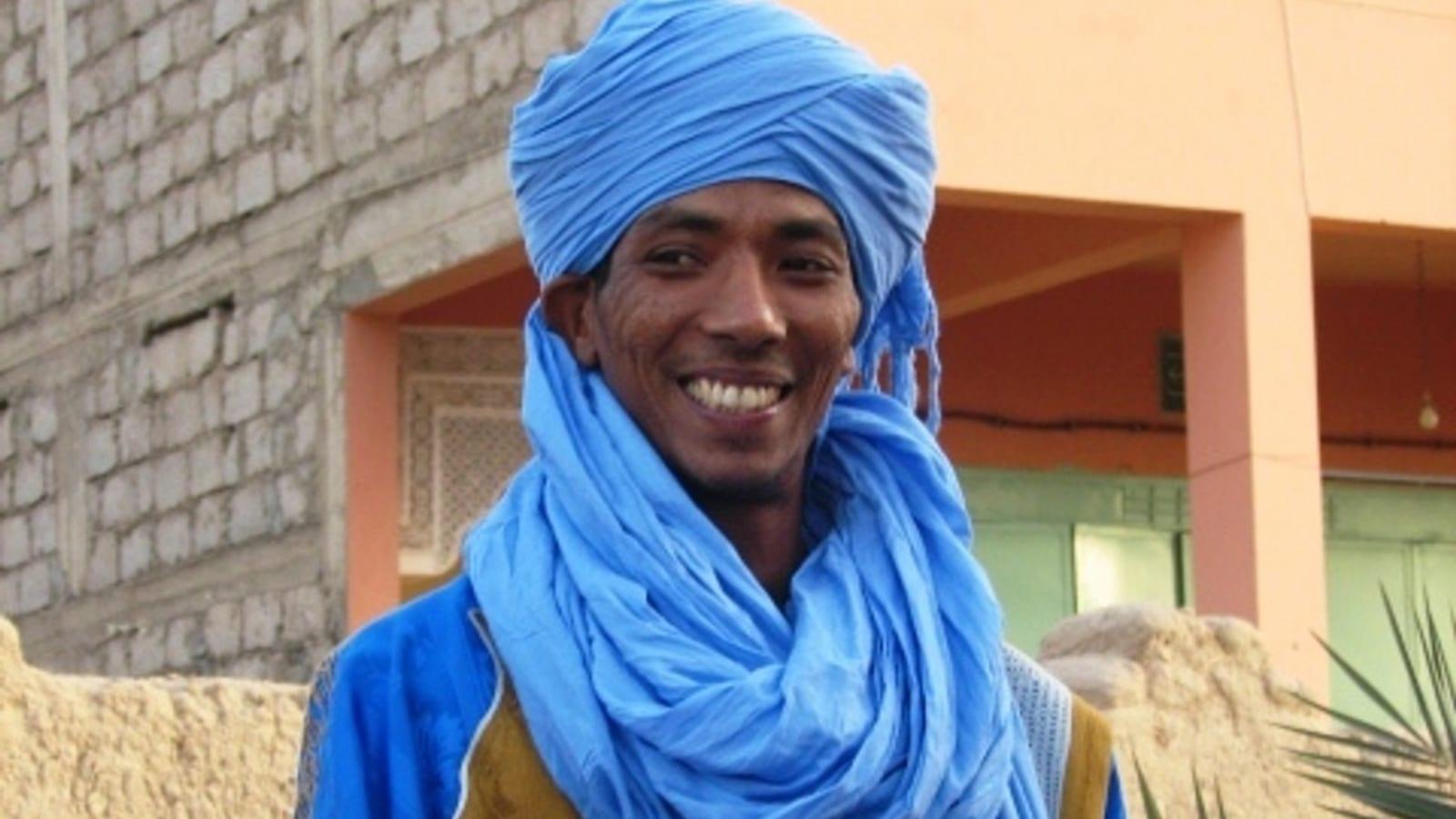
 Tuareg - In Rissani Morocco ca. 2008.JPG. Photo: Hanay via Wikimedia Commons (CC BY 3.0)
Location and Getting There
Location
The goniatite quarry is located east of Rissani town, within the Draa-Tafilalet region of southeastern Morocco. Rissani itself sits approximately 22 km south of Erfoud and roughly 165 km south of Errachidia via the N13 highway. The quarry site lies along the desert escarpment east of town, accessible via unpaved piste. Approximate coordinates for the general quarry area are 31.28°N, 3.95°W.
Getting There
From Errachidia, take the N13 south through Erfoud, then continue approximately 22 km to Rissani. From Rissani, local guide services and fossil dealers in the town market can arrange transport to the quarry, which is approximately 24 km away via unpaved desert tracks. The journey from Rissani takes between 30 and 50 minutes depending on track conditions. A standard 4WD vehicle is recommended. Guide contact can also be established through hotels in Erfoud, which is a more developed base for the region. No formal parking infrastructure exists at the quarry sites.
What Fossils You'll Find
Goniatites are the primary fossil at this locality. These Paleozoic cephalopods are identified by their coiled, externally ribbed shells and the characteristic angular suture lines visible where the internal septa meet the outer shell wall. In cross-section, the sutures appear as a series of sharply pointed zigzag lines, quite different from the complex frilled sutures of Mesozoic ammonites. Most specimens here measure between 3 and 15 cm in diameter, though larger individuals occur.
 Tornoceras uniangulare aldenense (fossil goniatite) (Alden Pyrite Bed, Ludlowville Formation, Middle Devonian; Alden, New York State, USA) 5.jpg. Photo: James St. John via Wikimedia Commons (CC BY 2.0)
Manticoceras, a Late Devonian goniatite genus with more complex sutures than early forms, is also reported from this locality. Orthoceras straight-shelled nautiloid cephalopods appear regularly in the same limestone horizons, often preserved as dark calcite internal molds in the grey matrix. Polished Orthoceras slabs are among the most common Moroccan fossil products sold across North African markets, and many originate from quarries in this general region.
Brachiopods, primarily spiriferids and productids, occur alongside the cephalopods in the limestone beds. Occasional coral fragments and crinoid columnals also turn up in the matrix. Surface collecting at the scarps produces loose eroded specimens, while quarry workers extract matrix blocks that are cut and polished to reveal the internal structure of the goniatites.
When purchasing polished sections, look for specimens that show the suture pattern clearly across a flat cut surface. The angular suture lines of genuine goniatites are distinctive; specimens with unusually regular or overly symmetrical sutures may have been enhanced or painted for aesthetic appeal.
Geologic History
The Ancient Environment
The limestones near Rissani that produce goniatites belong to Devonian-age carbonate sequences deposited during the Frasnian and Famennian stages, roughly 380 to 360 million years ago. At this time, the Tafilalet region formed part of a shallow tropical epeiric sea on the northern margin of Gondwana. Water depths were moderate, perhaps 20 to 100 meters, and the seafloor supported a productive community of cephalopods, brachiopods, corals, and crinoids. The goniatites were active swimmers in the water column, preying on smaller invertebrates and in turn hunted by fish and other cephalopods.
The Late Devonian is marked by the Frasnian-Famennian extinction event, one of the five largest mass extinction events in Earth history, which eliminated the majority of reef-building organisms and drastically reduced marine diversity. The goniatite lineage survived this event and continued to diversify through the Carboniferous, eventually giving rise to true ammonites in the Triassic.
How the Rissani Quarry Became a Fossil Site
The Devonian carbonates of the Tafilalet Depression are exposed across wide areas of the desert south and east of the Ziz River. Centuries of wind and water erosion have stripped away younger sediments, leaving the Devonian and Carboniferous limestones near the surface across much of this landscape. Local people observed fossils in the rock for generations before formal quarrying operations began. Commercial fossil extraction around Rissani accelerated in the 1980s and 1990s as the international fossil market developed and local entrepreneurs established polishing workshops in Erfoud to process the raw quarry material into finished products.
Visiting and Collecting Information
Access and What to Expect
The Rissani goniatite quarry operates as a tour-only site, meaning independent access without a guide is impractical. Guide-arranged half-day tours from Rissani or Erfoud typically cost 300 to 600 MAD (30 to 60 USD) per person and include transport, site access, and basic interpretation. At the quarry, you can collect loose surface material and purchase raw or polished specimens directly from quarry workers. Polishing workshops in Erfoud that process material from these sites welcome visitors and provide an informative look at how rough quarry blocks become finished collector pieces.
Export regulations under Moroccan law permit tourists to take up to approximately 10 fossil specimens for personal non-commercial use without special permits. Keep purchase receipts.
What to Bring
Bring at least 2 liters of water per person. Sun protection including a hat, sunscreen, and light long-sleeved shirt is essential from April through October. Wear sturdy closed-toe footwear for walking on loose limestone terrain. Bring Moroccan dirhams in cash. A loupe and UV flashlight are useful for evaluating specimens, particularly polished slabs where surface enhancement is sometimes applied.
Safety and Practical Tips
Rissani is a functioning market town with regular Wednesday and Thursday souks, making it a practical base for exploring both the fossil sites and the broader Tafilalet region. The town is also the departure point for day trips to the ruins of Sijilmassa. If you are purchasing polished goniatite or Orthoceras slabs, inspect the cut surface carefully under good light before committing to a price. The best value is often found directly at the quarry rather than in the tourist shops of Erfoud, where margins are significantly higher.
Sources
Nearby sites
 Atchana Trilobite Mine Rissani Fossil Hunting GuideAtchana Trilobite Mine, Devonian trilobites
 Guelb el Mharch Mud Volcano Fossil Site Rissani Fossil Hunting GuideGuelb el Mharch, Tabulate corals
 Jbel el Mrakib Devonian Reef Site Rissani Fossil Hunting GuideJbel El Mrakib Devonian Reef Site, Coral reef fossils
 Boutchafine Mount Trilobite Quarry Erfoud Fossil Hunting GuidePhacops, Hollardops