Guelb el Mharch Mud Volcano Fossil Site Rissani Fossil Hunting Guide
Image: Habib kaki via Wikimedia Commons
Collect Devonian corals, brachiopods, and crinoids at Guelb el Mharch mud volcano fossil site near Rissani, Morocco. Guided 4WD excursion; 300–600 MAD per half-day.
Roughly 18 km southwest of Rissani, a cluster of low mounds rises from the desert floor at Guelb el Mharch — a locality whose name refers to the ancient mud volcano structures preserved in the Devonian rock. This is not a trilobite site or a cephalopod quarry in the usual Tafilalt Basin sense. The geology here preserves a reef-adjacent Devonian community where tabulate and rugose corals, thick-shelled brachiopods, and crinoids dominate the assemblage, recording a shallow tropical seafloor that was structurally different from the deeper basinal settings that produced the famous orthoceras and trilobite faunas elsewhere in the region. For collectors who have already visited Alnif and Erfoud, Guelb el Mharch offers genuinely different material: substantial coral heads, densely ribbed brachiopods, and echinoderm fragments from a warm, well-lit Devonian reef margin.
This guide explains the route from Rissani, the distinctive geology of the mud volcano structures, what fossils you will find, and how to arrange a visit.
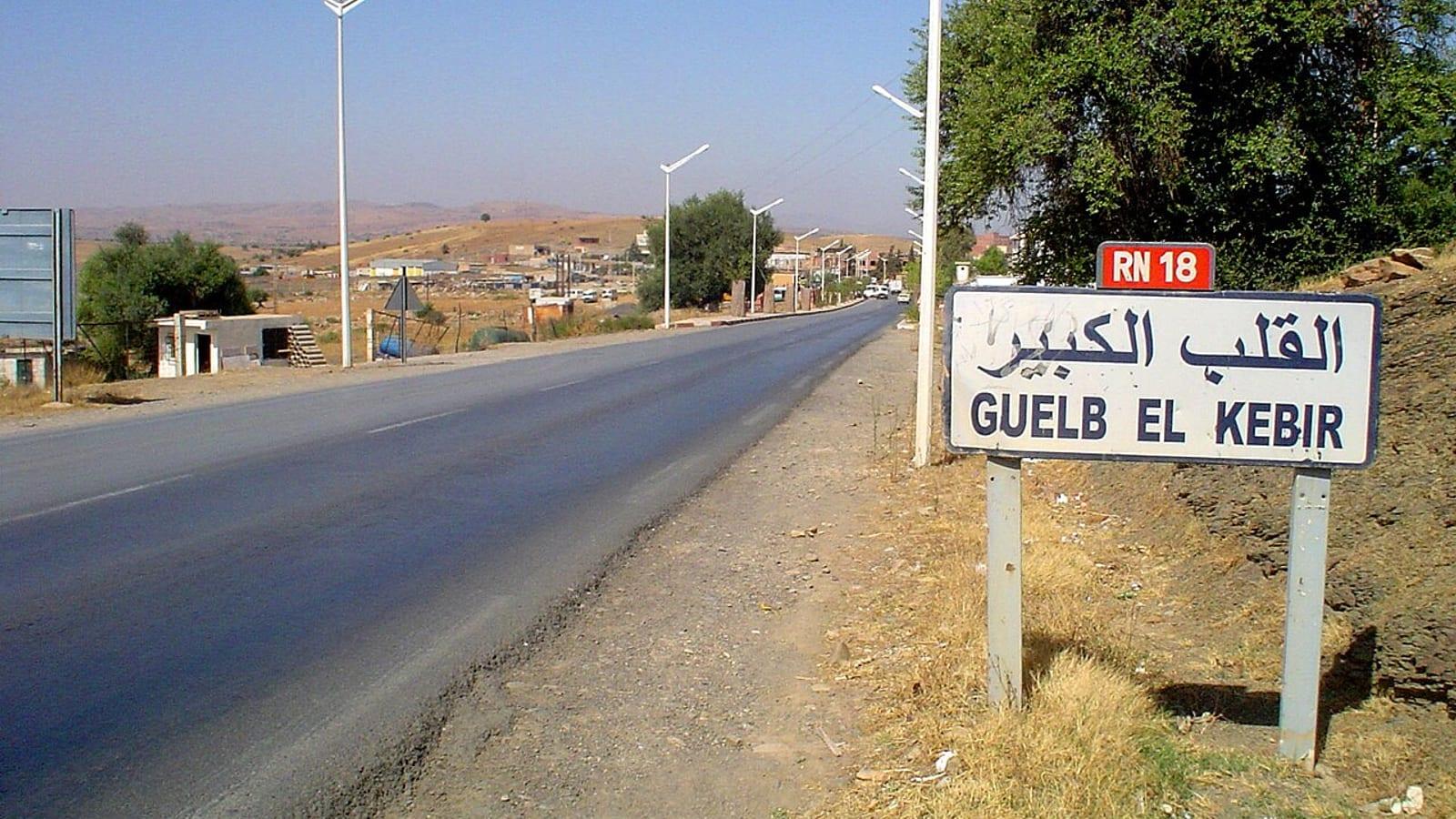
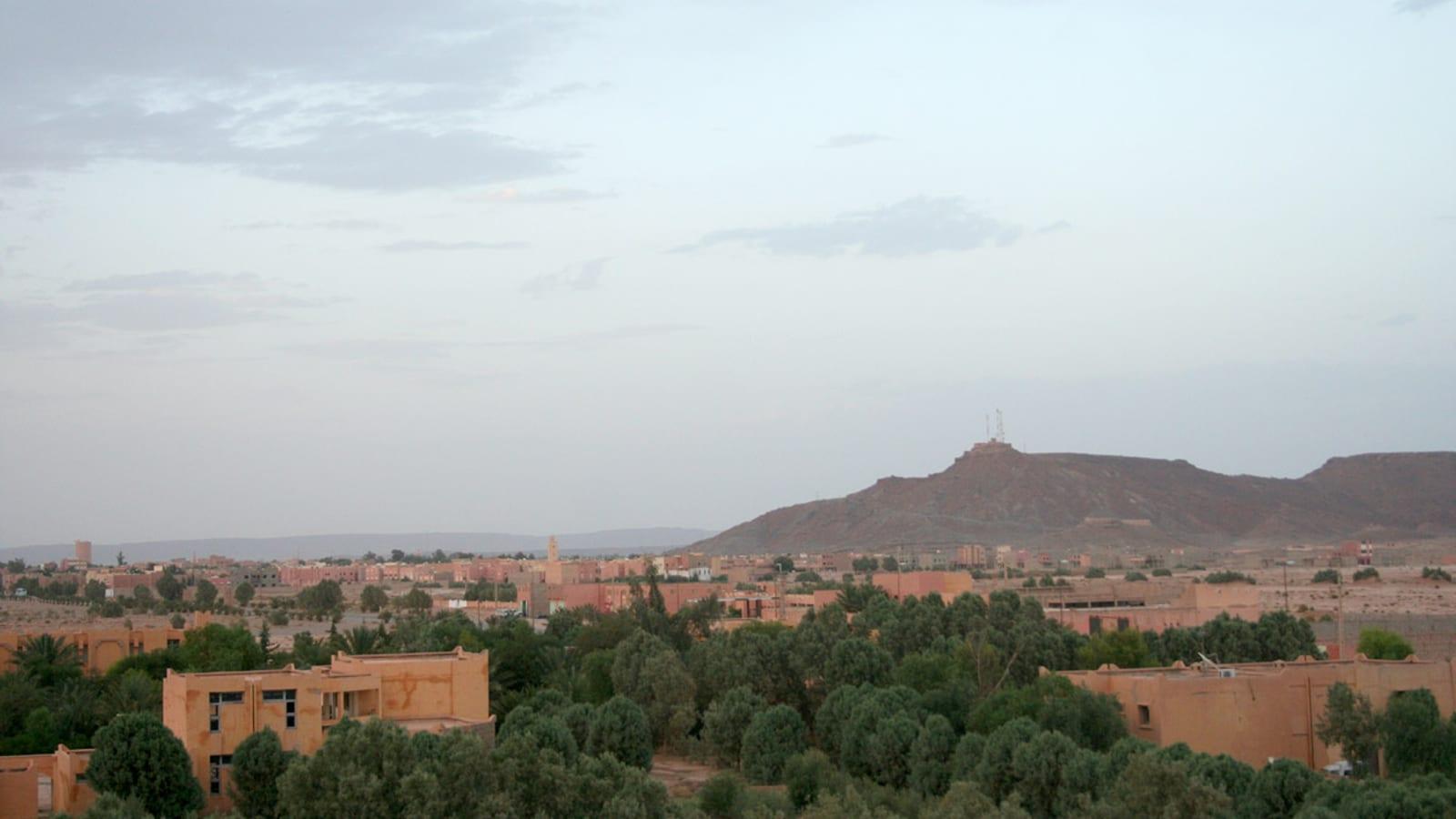
 Guelb El Kebir.jpg. Photo: Habib kaki via Wikimedia Commons (CC BY-SA 3.0)
Location and Getting There
Location
Guelb el Mharch is located approximately 18 km southwest of Rissani, Draa-Tafilalt Region, southeastern Morocco. The site occupies a low ridge with distinctive rounded mound topography created by the ancient geological structures preserved in the rock. It sits in open desert terrain with no permanent infrastructure other than any informal collector workings. The nearest services are in Rissani town, which has guesthouses and basic facilities.
Getting There
From Rissani, arrange a 4WD vehicle and local guide. The drive to Guelb el Mharch takes approximately 40 to 55 minutes via unpaved desert tracks heading southwest. The tracks cross open hammada and sandy sections that require 4WD capability. Navigation requires local knowledge; the tracks are not marked and branch repeatedly across the desert floor. Guide services in Rissani can arrange excursions to this site, sometimes in combination with other Devonian localities southwest of town for a full-day programme.
What Fossils You'll Find
Tabulate corals are the most visually striking material at Guelb el Mharch. These colonial organisms built branching or massive structures whose internal structure — parallel tubes (tabulae) running through a carbonate skeleton — is visible in broken cross-sections. Fragments range from small branching pieces a few centimetres across to substantial massive heads the size of a fist or larger. The distinctive honeycomb or pipe-like internal structure distinguishes tabulate coral from all other Devonian fossils you will encounter in the region.
 Tabulate coral 20220705.jpg. Photo: Jstuby via Wikimedia Commons (CC0)
Rugose corals (also called horn corals) appear as solitary conical structures 3 to 15 cm long, with internal septa radiating from the centre visible in cross-section. These are easier to carry than the massive tabulates and are the more commonly collected individual specimens from this type of locality.
Brachiopods at Guelb el Mharch tend to be thicker-shelled and larger than those in the deeper-water basinal sites, consistent with high-energy shallow-water conditions near a reef. Spiriferids, rhynchonellids, and atrypids all appear, identifiable by their characteristic rib patterns and outline shapes.
Crinoid columnals and stems occur throughout the reef-adjacent limestone, sometimes in sufficient concentration to constitute a crinoidal limestone bed. Look for disc-shaped segments with a central hole; articulated sections of multiple columnals are present in some blocks.
The mud volcano structures themselves are worth understanding: they represent Devonian-age pipes through which fluid migrated upward through the seafloor, creating distinctive alteration halos in the surrounding rock. Fossil content within the pipe structures is typically absent, but the surrounding unaltered limestone often contains the best-preserved reef fauna.
Geologic History
The Ancient Environment
The Devonian sediments at Guelb el Mharch were deposited approximately 385 to 375 million years ago (Givetian to Frasnian stages). The reef-associated fauna preserved here — corals, thick-shelled brachiopods, crinoids — is consistent with shallow, well-oxygenated, high-energy conditions in the photic zone, distinctly different from the anaerobic basinal settings that preserved the orthoceras and trilobite faunas elsewhere in the Tafilalt Basin. The ancient Rheic Ocean tropical shelf in this region supported both deeper basinal areas with anaerobic bottom conditions and shallower reef-margin areas with diverse, oxygen-dependent communities. Guelb el Mharch appears to represent the shallower facies.
The mud volcano structures are interpreted as cold seep features: locations where hydrocarbon-rich or methane-bearing fluids migrated upward through faults in the seafloor during the Devonian, altering the surrounding carbonate rock and creating the distinctive mound topography preserved today. Cold seep environments in modern and ancient oceans can support unusual chemosynthetic communities distinct from the normal reef fauna; the precise fauna associated with the Guelb el Mharch seep structures versus the surrounding normal reef limestone is an area of ongoing geological interest.
How Guelb el Mharch Became a Fossil Site
Local Berber families from Rissani have collected fossil material from the Guelb el Mharch area as part of the broader Tafilalt Basin fossil trade that expanded from the 1980s onward. The site is less intensively worked than the major trilobite and orthoceras quarries because coral-dominated assemblages command lower prices in the collector market than complete trilobites or polished cephalopod slabs. However, the site offers a distinct and scientifically interesting fauna that supplements the more famous Tafilalt sites for visitors seeking a complete picture of Devonian life in the region.
Visiting and Collecting Information
Access and What to Expect
All visits require a guide arranged in Rissani. Guide fees including 4WD transport for a half-day excursion run approximately 300 to 600 MAD (30 to 60 USD). The site is most productively visited as part of a full-day itinerary combining Guelb el Mharch with the Atchana trilobite mine or other Devonian localities southwest of Rissani. At the site you can search loose surface material and quarry waste for coral fragments, brachiopods, and crinoid columnals. The reef-associated fauna is robust and tolerates handling better than delicate trilobites or thin cephalopod shells. Personal collection up to approximately 5 kg for non-commercial purposes is permitted.
What to Bring
Carry at least 2 to 3 litres of water per person. Sun protection (hat, long sleeves, sunscreen) is essential year-round. Wear closed-toe boots for the rocky desert terrain. A geology hammer is useful for splitting promising blocks; coral fragments are generally sturdy enough to carry without special wrapping, but bubble wrap or newspaper protects finer brachiopod specimens. Cash in Moroccan dirhams only.
Safety and Practical Tips
Visit between October and April. Summer temperatures at this exposed desert site regularly exceed 42°C. The terrain at Guelb el Mharch includes low mounds with rocky sides; watch your footing on scree slopes. The mud volcano structures themselves are not hazardous but the surrounding rock can be unstable where erosion has undercut surface layers. Follow your guide's advice on safe working areas. Moroccan export regulations allow tourists to carry up to 10 personal-use fossil specimens out of the country without a permit.
Sources
Nearby sites
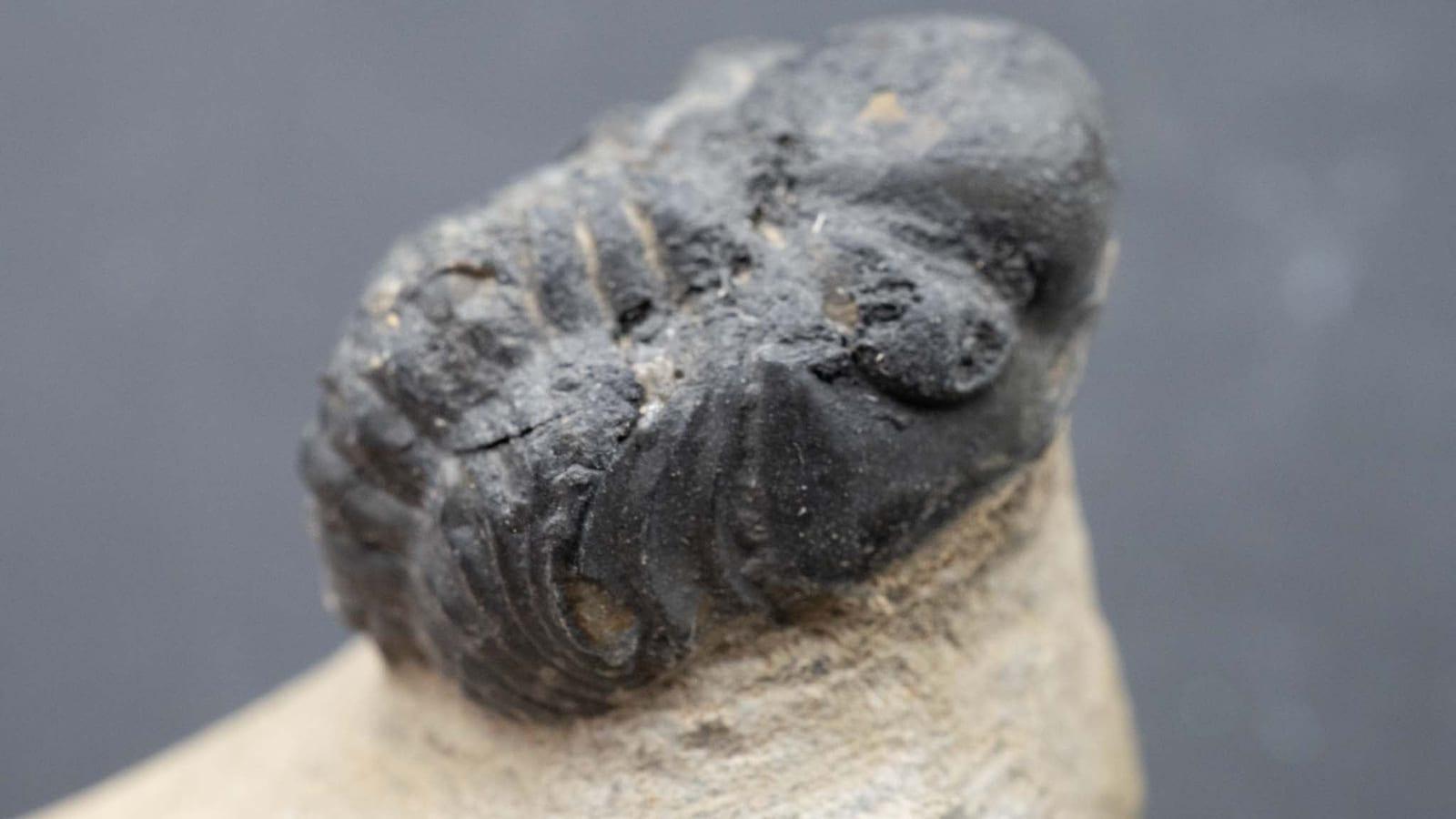 Atchana Trilobite Mine Rissani Fossil Hunting GuideAtchana Trilobite Mine, Devonian trilobites
 Jbel el Mrakib Devonian Reef Site Rissani Fossil Hunting GuideJbel El Mrakib Devonian Reef Site, Coral reef fossils
 Rissani Goniatite Quarry East of Town Fossil Hunting Guidegoniatites, Goniatites
 Boutchafine Mount Trilobite Quarry Erfoud Fossil Hunting GuidePhacops, Hollardops