Khouribga Phosphate Shark Tooth Site Fossil Hunting Guide
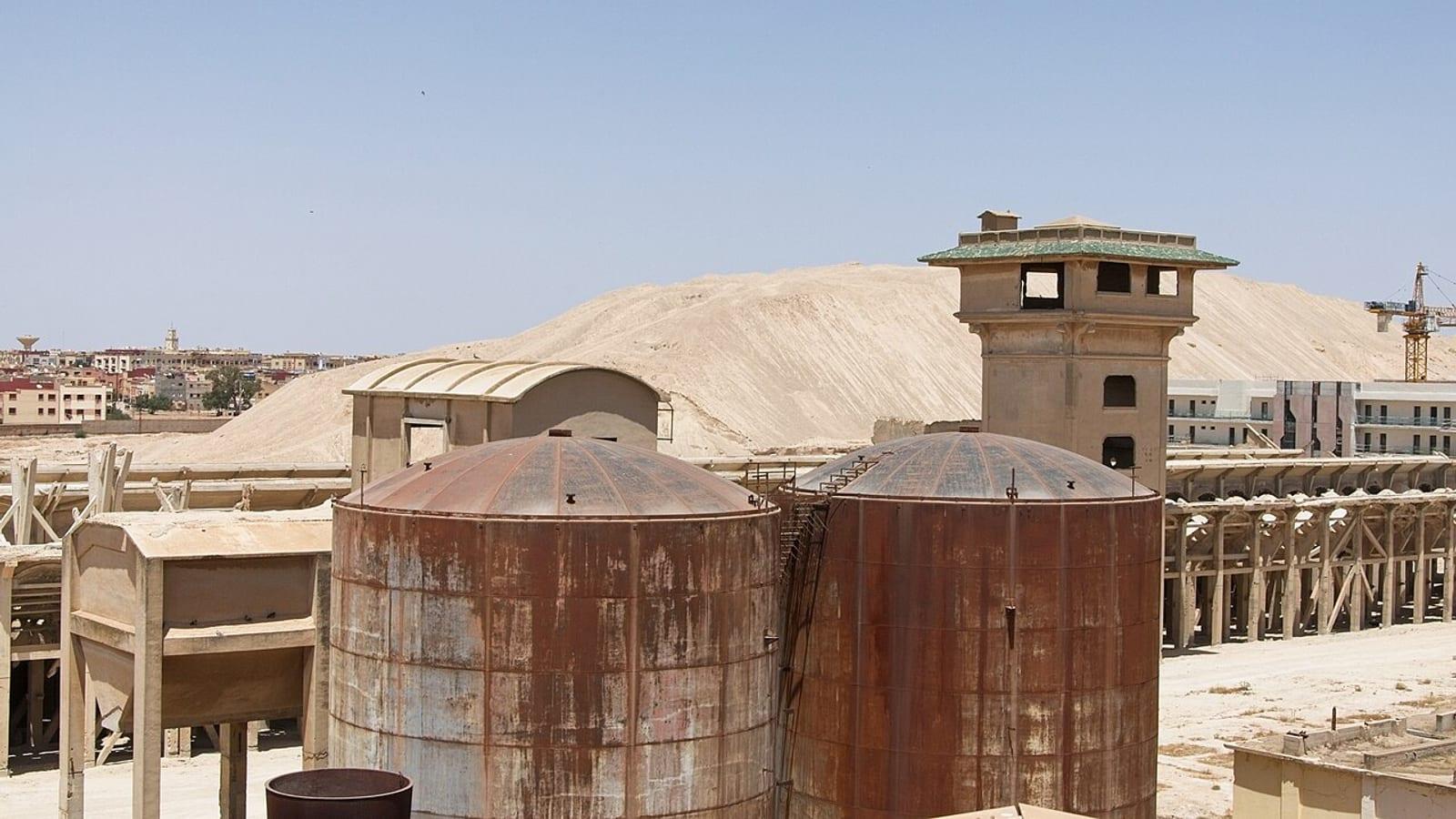
Image: Bertrand SOUBEYRAND via Wikimedia Commons
Collect Eocene shark teeth including Otodus obliquus from Khouribga's phosphate beds in north-central Morocco — one of the world's most productive shark tooth localities.
Khouribga sits at the centre of one of the largest phosphate deposits on Earth. The Ouled Abdoun Basin, which underlies the Khouribga Plateau in north-central Morocco, contains phosphate-rich marine sediments that were deposited during the Paleocene and Eocene epochs, approximately 65 to 40 million years ago. These phosphate beds are mined on an industrial scale by OCP (Office Chérifien des Phosphates), and the mining spoil and exposed quarry faces produce an extraordinary quantity of fossil material: shark teeth, mosasaur teeth, and fish fossils that fell to the seafloor of a productive tropical ocean and were preserved in the phosphate-rich sediment. The Khouribga region has supplied a significant proportion of the Eocene shark teeth that circulate in the international fossil market, and local collectors work the spoil heaps and accessible outcrops to gather material for direct sale to visitors.
This guide covers the specific fossils from the Khouribga phosphate beds, the geological setting that produced them, how to reach Khouribga and arrange access to collecting areas, and the practical information you need for visiting this unusual industrial fossil site.
 Ancien terril phosphate OCP Khouribga.jpg. Photo: Bertrand SOUBEYRAND via Wikimedia Commons (CC BY 4.0)
Location and Getting There
Location
Khouribga is a city in the Beni Mellal-Khenifra region of north-central Morocco, approximately 120 kilometres southeast of Casablanca and 80 kilometres north of Beni Mellal. The city is the administrative centre of Moroccan phosphate extraction and sits directly on the Ouled Abdoun Basin. The fossil-bearing phosphate beds are exposed both in active and inactive quarry zones surrounding the city. The approximate city centre GPS is 32.88°N, 6.91°W. Access to quarry areas for fossil collecting is arranged through local fossil dealers and guides based in Khouribga.
Getting There
From Casablanca, take the A7 motorway toward Marrakech, exit at Settat, then continue south on the N11 to Khouribga; total distance is approximately 120 kilometres and driving time is about 90 minutes. From Fes, travel south via Meknes and Khenifra on the N8 and N11; allow approximately three hours. Regular bus services connect Khouribga to Casablanca, Marrakech, and other major cities. Khouribga has a train station served by ONCF (the national rail company) on the Casablanca-Khouribga line, making it one of the more accessible fossil collecting destinations in Morocco by public transport. Taxis and local bus services connect the train station to town. Fossil dealers and guides are present in the city and can arrange transport to collecting areas outside the active mining zone.
What Fossils You'll Find
Shark teeth are the primary fossil find at Khouribga and are the reason the site is internationally known. The Ouled Abdoun phosphate beds have produced teeth from a wide range of Eocene sharks. Otodus obliquus (formerly assigned to Carcharocles), a direct ancestor of the giant Otodus megalodon, produced large triangular teeth with distinct lateral cusplets that can reach 7 to 10 centimetres. Carcharias and related sand shark teeth are common and typically 2 to 4 centimetres. Physogaleus teeth are smaller, smooth-edged, and occur in large numbers. Identifying the species from teeth alone requires familiarity with Eocene shark dentition; local guides can assist with basic identification. The phosphate replacement of original tooth enamel and dentine gives the teeth a distinctive grey-black colour.
 Rya Formation shark teeth - Sphenodus sp.jpg. Photo: Rees, 2000 via Wikimedia Commons (CC BY 3.0)
Mosasaur teeth appear in the same phosphate beds, though they are distinct from shark teeth in shape: conical, slightly recurved, with a circular cross-section. These belong to the last mosasaurs before the end-Cretaceous extinction, which occurred at the base of the Paleocene just before these beds were deposited; occasional reworked Cretaceous material can occur in the lower Paleocene phosphate horizon.
Fish remains are abundant in the phosphate beds: vertebrae, teeth of bony fishes, and occasional complete fish skeletons in some horizons. Ray dental plates — broad, flat crushing teeth used to process hard-shelled prey — are distinctive and identifiable in the field. The diversity of fish teeth reflects the productivity of the Eocene phosphate sea.
Marine reptile bones — fragmentary remains of sea turtles and possible serpentine swimming reptiles — have been reported from the Ouled Abdoun Basin by researchers, though complete material rarely reaches the casual collector market.
Geologic History
The Ancient Environment
The phosphate beds at Khouribga belong to the Paleocene to Eocene epochs, spanning approximately 65 to 40 million years ago. The Ouled Abdoun Basin was covered by a shallow, warm, highly productive tropical sea during this period, connected to the north via the proto-Atlantic Ocean. The high biological productivity of this sea is what generated the phosphate: organic matter from dead marine organisms accumulated on the seafloor faster than it could be oxidised, creating the reducing, organic-rich conditions that allow phosphate mineralisation. The same nutrient-rich conditions supported abundant shark populations, which is why teeth are so densely packed in the phosphate beds.
The Paleocene epoch immediately followed the end-Cretaceous mass extinction 66 million years ago, which had devastated marine ecosystems including eliminating mosasaurs, plesiosaurs, and non-avian dinosaurs. The shark faunas of the Khouribga beds represent an early Cenozoic recovery and diversification, filling ecological niches vacated by the extinction. By the Eocene, large otodontid sharks were the apex predators of these phosphate seas, and their teeth are among the most abundant vertebrate fossils in the deposit.
How the Khouribga Phosphate Beds Became a Fossil Site
The Ouled Abdoun phosphate deposits were buried under Eocene and younger sediment through most of the Cenozoic. Recognition of their commercial value for fertiliser production led to the first systematic mining operations in the early 20th century. Large-scale open-pit mining, which accelerated dramatically after Moroccan independence and the creation of OCP in 1920, exposed vast quantities of phosphate-bearing rock and the fossils within it. Mining spoil heaps became effective sampling grounds for fossil material, and local communities around Khouribga developed expertise in identifying, collecting, and preparing the fossils from mine waste. This industrial history means the Khouribga area has a larger and more established fossil market than any other Moroccan locality, with dealers selling material to international buyers from shops and stalls in the city.
Visiting and Collecting Information
Access and What to Expect
Access to fossil-bearing areas around Khouribga is through local fossil dealers and guides. The active OCP mining operations are industrial zones and require formal permission to enter; most visitor collecting takes place on inactive spoil heaps and legacy phosphate exposures accessible with a local guide. Fossil dealer shops in Khouribga are the practical starting point for arranging a field visit; dealers typically know which areas are currently accessible and can provide or arrange transport. Half-day guided excursions cost approximately 300 to 600 MAD (approximately 30 to 60 USD) per person. You may collect loose specimens from accessible spoil heaps and surface exposures. Prepared specimens and large shark teeth are available for direct purchase from dealers in the city. Morocco permits tourists to export up to ten decorative fossil specimens without special documentation; retain receipts for purchased pieces.
What to Bring
The phosphate spoil heap environment is industrial in character: rough underfoot, dusty, and exposed. Wear sturdy boots and clothing you do not mind getting dirty. A dust mask is useful on windy days when phosphate dust is prevalent. Carry two litres of water per person for a half-day visit. A small brush or paintbrush helps clean phosphate matrix from teeth found on spoil heaps. A hand lens at 10x magnification assists identification of small shark teeth in matrix. Bring specimen bags for loose teeth and wrap any larger pieces in newspaper. Cash in Moroccan dirhams is required for guide fees and purchases.
Safety and Practical Tips
Khouribga is a working industrial city rather than a tourist destination; the infrastructure is functional but not oriented toward foreign visitors. Standard urban safety practices apply in the city. At collecting sites, stay within areas your guide indicates are accessible and do not approach active quarry equipment or operations under any circumstances. The area around Khouribga is at moderate altitude (approximately 900 metres) and has a semi-arid continental climate, with hot summers (35 to 40°C) and cool winters. Spring and autumn are the most comfortable visiting periods. Khouribga's good public transport connections from Casablanca make this the most accessible major Moroccan fossil site by rail, which is a practical advantage if you are visiting without a private vehicle.
Sources
Nearby sites
 Timahdite Brachiopod Collecting Site Fossil Hunting Guidebrachiopods, Spiriferid brachiopods
 Bakrit Starfish Echinoid Site Ifrane Fossil Hunting Guidestarfish and echinoid fossils, Starfish
 Filon 12 Vanadinite Fossil Mine Mibladen Fossil Hunting Guidevanadinite, trilobites
 Ait Benhaddou Echinoid Site Ouarzazate Fossil Hunting GuideCretaceous echinoids, Brachiopods