Wenlock Quarry Much Wenlock Shropshire Fossil Hunting Guide
Image: Stephen Darlington via Wikimedia Commons
Wenlock Quarry near Much Wenlock, Shropshire exposes Silurian reef limestone packed with corals, brachiopods, crinoids, and trilobites in a National Trust woodland setting.
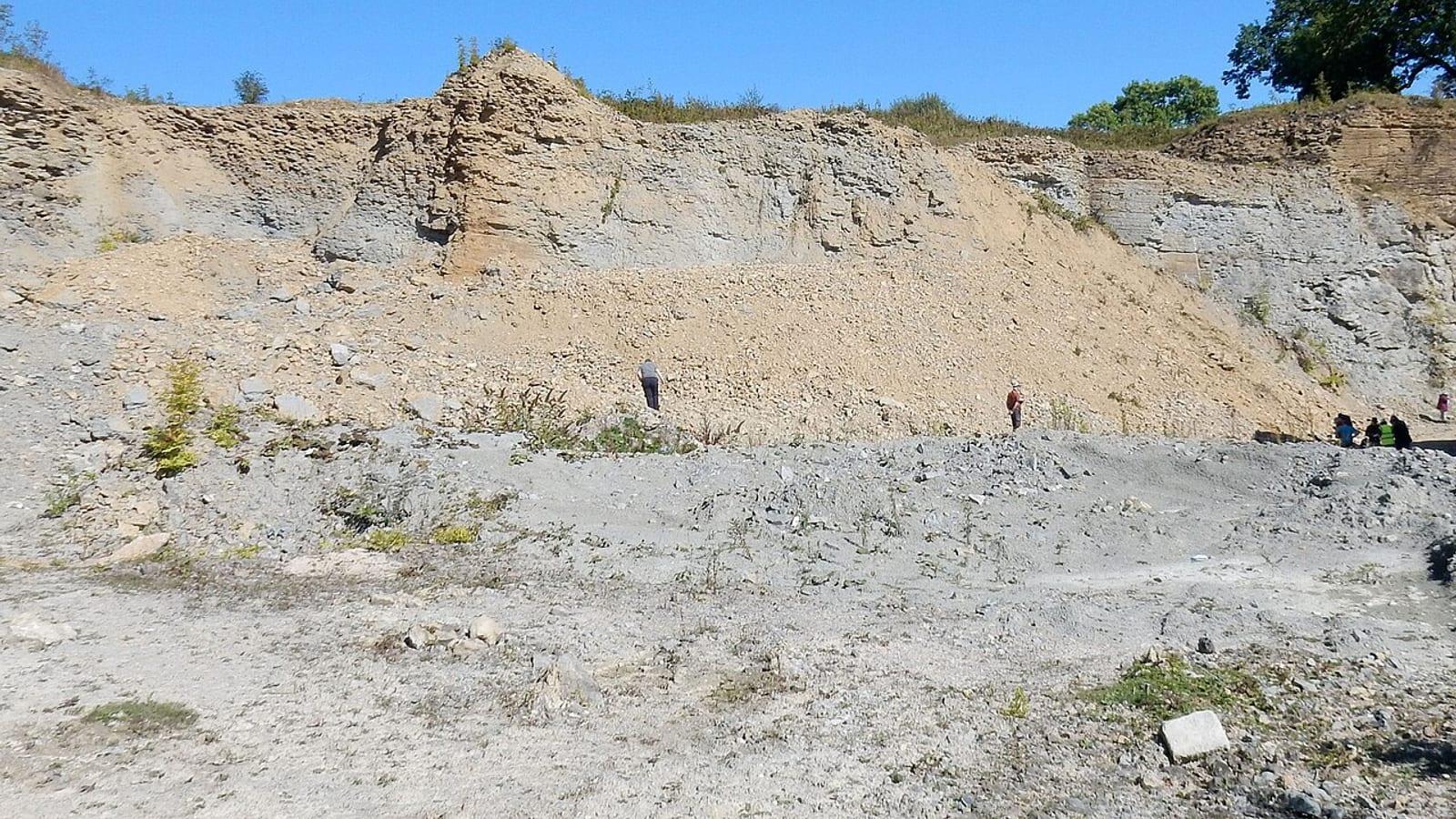
Wenlock Quarry, tucked into the wooded hillside above Much Wenlock in Shropshire, is a former limestone quarry that now ranks among the finest freely accessible Silurian fossil sites in Britain. The quarry cuts into the Much Wenlock Limestone Formation, a Homerian-age reef limestone laid down approximately 423 to 426 million years ago in a warm, shallow subtropical sea. The limestone here is thick-bedded and fossil-rich throughout: corals, brachiopods, crinoids, trilobites, cephalopods, polyzoa, and worm tubes all occur, sometimes in such density that a single block may contain half a dozen different taxa. Although vegetation and soil have colonised much of the quarry floor since working ceased, the quarry walls and scattered loose blocks retain abundant material for the patient collector.
The site is part of the Wenlock Edge SSSI and lies within National Trust land. Access is on foot from the National Trust car park, and the walk to the quarry involves a modest but steady uphill climb. This guide covers the route in detail, explains what to look for in each part of the quarry, and sets out the rules for collecting at an SSSI site.
 Old quarry near Much Wenlock - geograph.org.uk - 5125909.jpg. Photo: Stephen Darlington via Wikimedia Commons (CC BY-SA 2.0)
Location and Directions
Address
Wenlock Quarry is located near Harley Bank, Much Wenlock, Shropshire. The postcode for the National Trust car park at Harley Bank is TF13 6DH.
Directions and Parking
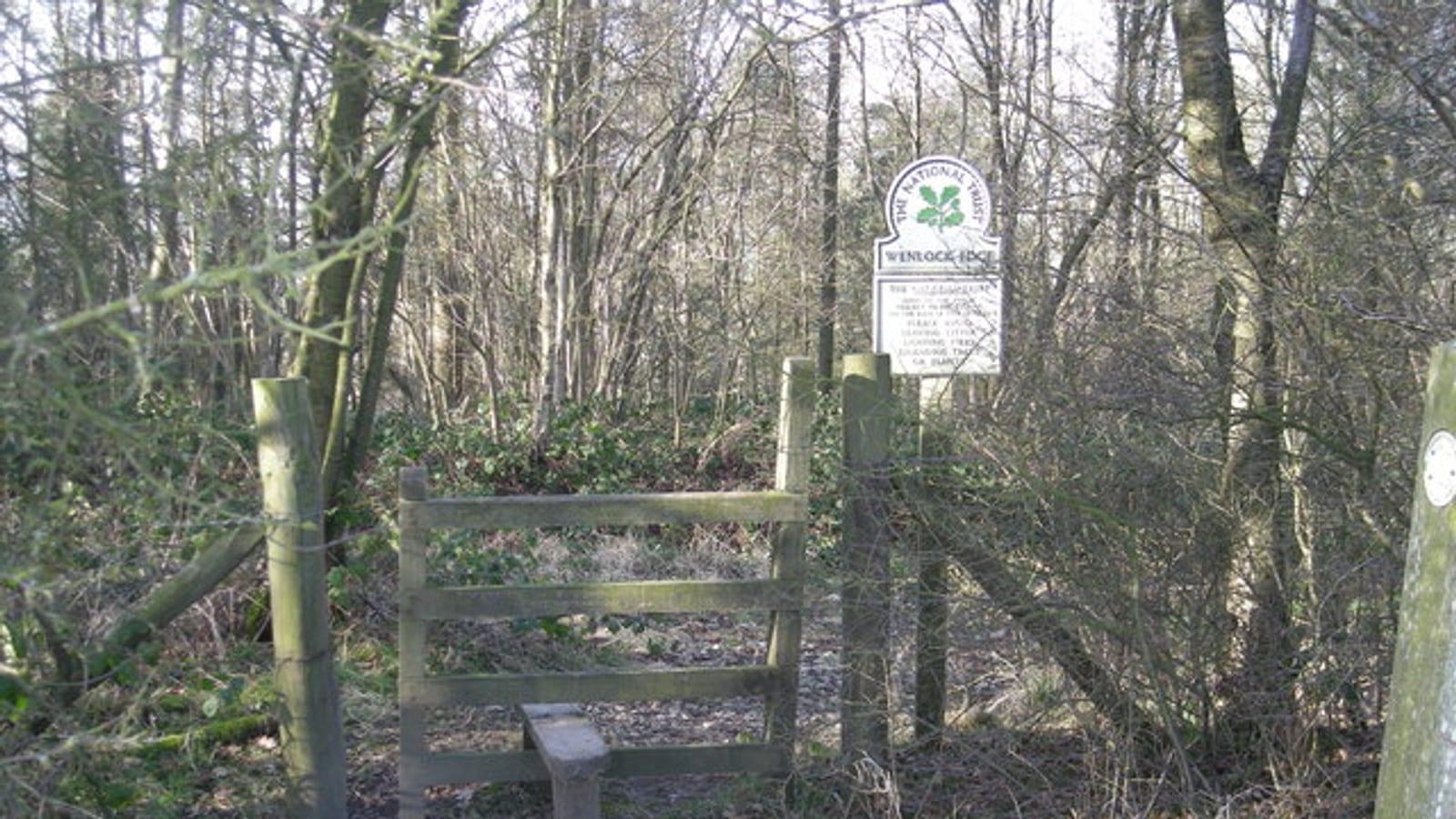
From Much Wenlock town centre, take the A458 briefly westward before joining the B4371 toward Church Stretton. The National Trust car park at Harley Bank is on the right-hand side of the B4371 approximately 2 km west of Much Wenlock. The car park is free for National Trust members; a charge applies for non-members. From the back of the car park, locate the small wooden gate and the stone steps leading uphill into the woodland. Follow the path uphill, crossing two stiles as you ascend the steep slope. Continue past Stokes Barn on your left, then pass through a small wooden gate to enter the main woodland. The quarry is directly ahead. The full walk from the car park takes roughly 15 to 20 minutes at a steady pace. The ground in the quarry itself is uneven, with loose rock and fallen blocks, so sturdy footwear is essential.
What Fossils You'll Find
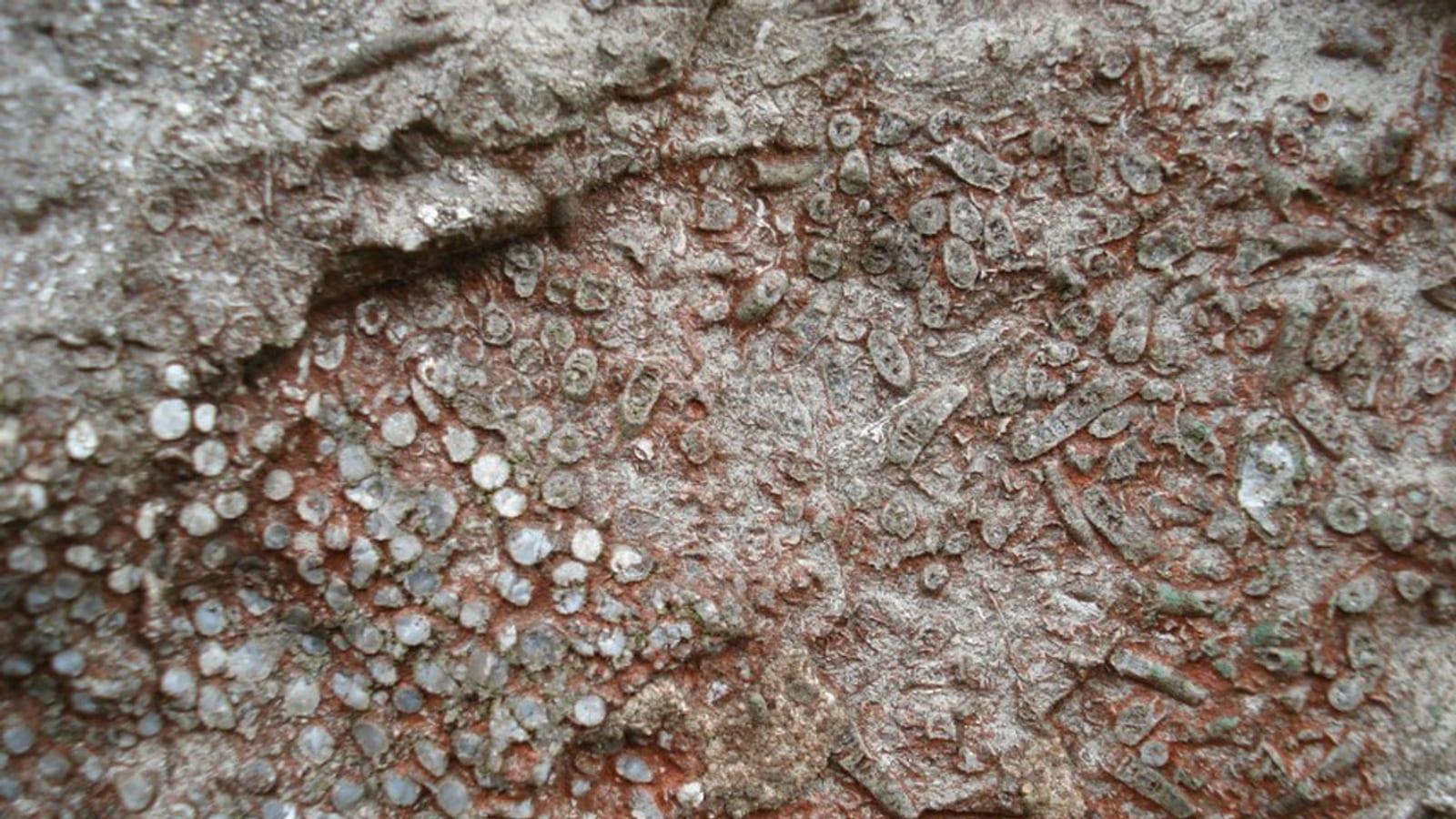
Corals are among the most visually striking finds at Wenlock Quarry. Both compound (colonial) corals and solitary rugose corals occur. Colonial forms such as Favosites (honeycomb coral) and Halysites (chain coral) are identifiable by their distinctive cellular structures, often preserved with excellent detail in the hard limestone. Solitary horn corals are also present and are sometimes found intact. Look for coral masses in the quarry walls and in large loose blocks on the quarry floor.
 Silurian (Wenlock) Limestone, Dudley, Worcestershire - geograph.org.uk - 636763.jpg. Photo: Roger Kidd via Wikimedia Commons (CC BY-SA 2.0)
Brachiopods are common throughout the limestone and occur both as complete articulated shells and as disarticulated valves scattered through the matrix. Spiriferid and rhynchonellid forms are most frequently encountered. Their ribbed exterior and distinctive hinge structure make them relatively straightforward to identify once you have seen a few examples.
Crinoids appear as stem fragments and, occasionally, as partial crowns. The individual columnals (stem discs) are extremely common and easy to find on weathered surfaces. Complete crinoid specimens are rare but have been recorded at Wenlock sites.
Trilobites are present but less common than the corals and brachiopods. Fragments of the exoskeleton, particularly free cheeks and pygidia, are more frequently found than complete specimens. Careful searching of finer-grained limestone beds increases your chances of finding trilobite material.
Cephalopods, polyzoa, and worm tubes complete the fossil assemblage. Straight nautiloid cephalopods occur as cross-sections in polished or weathered limestone surfaces. Polyzoa (bryozoans) form small branching or encrusting colonies on other shells and can be found by examining the surfaces of larger fossils. Worm tubes are visible as sinuous markings on bedding surfaces.
Geologic History
The Ancient Environment
The Much Wenlock Limestone Formation was deposited during the Homerian Age of the Wenlock Epoch, approximately 423 to 426 million years ago during the Silurian Period. At this time, the area that is now Shropshire lay south of the equator, at a latitude roughly comparable to the modern Seychelles, in a warm, clear, and shallow subtropical sea. The limestone represents the product of an extensive reef system: colonial corals and stromatoporoids (sponge-like organisms that were the primary reef-builders of the Silurian) constructed massive structures on the seafloor, while the spaces between them were colonised by brachiopods, crinoids, trilobites, and a diverse array of other invertebrates. The reef-building organisms required clear, well-oxygenated, and nutrient-moderate water, which the subtropical sea of the Silurian provided in abundance. Sediment that accumulated around and between the reef masses was reworked by currents and bioturbation, producing the nodular and bedded limestones that alternate with the reef core material. This was one of the most productive intervals of reef development in Earth's geological history, with reef systems extending across much of what is now Europe and North America.
How Wenlock Quarry Became a Fossil Collecting Site
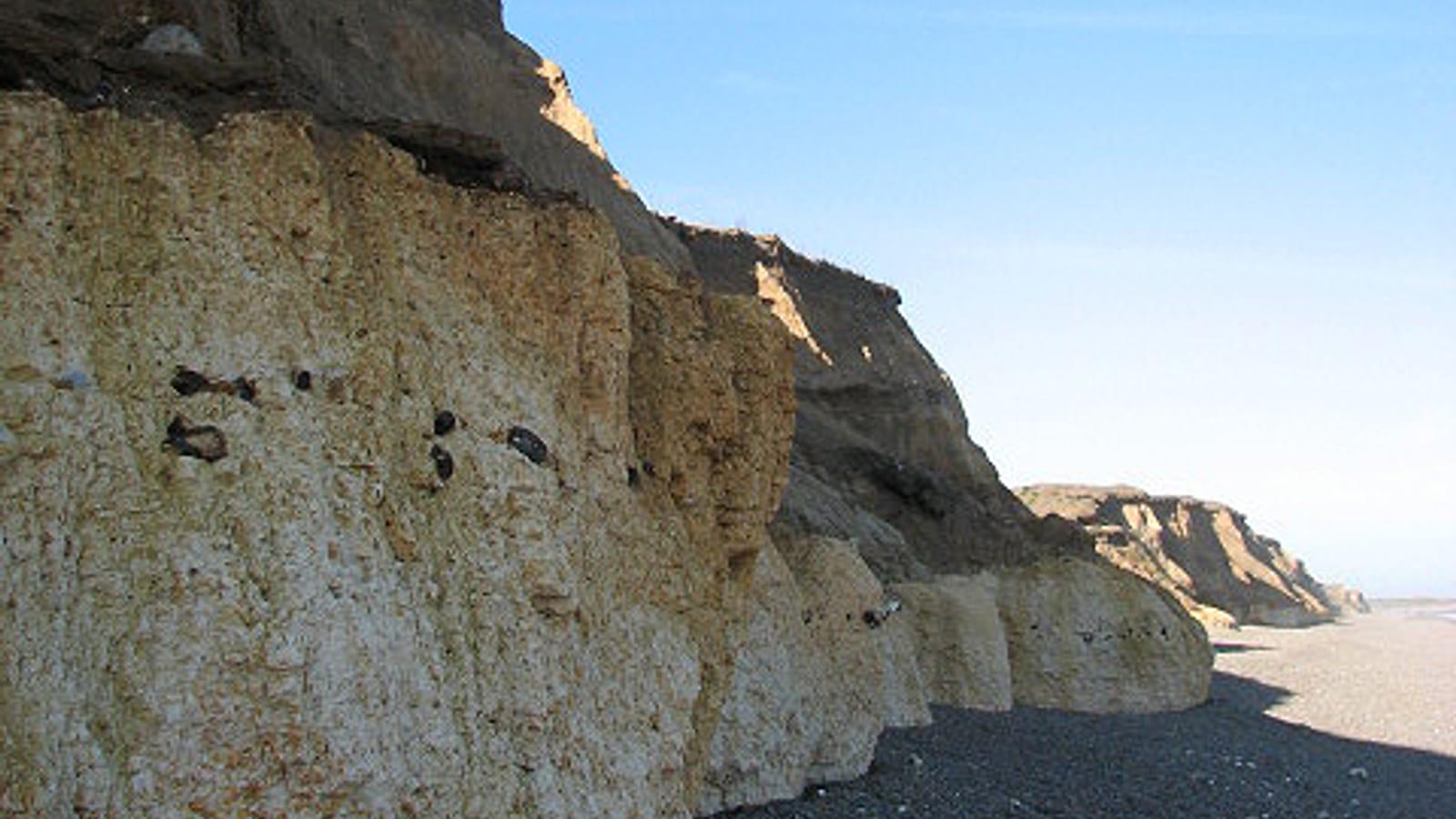
The limestone of Wenlock Edge was quarried for building stone and for burning to produce agricultural lime from at least the medieval period through to the early twentieth century. Wenlock Quarry itself was worked as part of this long tradition, and the quarrying operations cut through the Wenlock Limestone at depth, exposing sections through the reef that would otherwise have remained buried beneath the hillside. When quarrying ceased, the exposed faces and piles of extracted material were left in place, and the site was gradually colonised by woodland vegetation. The combination of old quarry faces, loose scree, and scattered blocks provides today's collectors with access to fresh limestone surfaces that would not exist without the historical excavation. The National Trust now manages the surrounding land as part of its Wenlock Edge estate.
Collecting Rules and Regulations
Is Fossil Collecting Allowed?
Wenlock Quarry falls within the Wenlock Edge SSSI, a Site of Special Scientific Interest notified under the Wildlife and Countryside Act 1981. The site is also on National Trust land. SSSI designation means that damaging geological or biological features is a criminal offence. You must not hammer the in-situ quarry walls or faces. You may collect loose material from the quarry floor and existing scree piles, provided you collect in modest quantities for personal or educational use and do not remove blocks so large that they cannot be carried by hand. The National Trust and Natural England expect visitors to treat the site with care and to leave the main exposures intact. If you find something of potential scientific significance, contact the British Geological Survey or the Shropshire Geological Society.
Recommended Tools
A geological hammer and a set of cold chisels are useful for opening loose blocks on the quarry floor along existing fracture planes. A hand lens (10x magnification) is invaluable for examining the surface detail of corals and brachiopods. Bring a stiff brush for clearing matrix from specimens before wrapping. Pack bubble wrap or newspaper to protect fragile finds. The walk to the quarry involves rough ground and steep slopes, so good walking boots are a practical necessity rather than an optional extra.
Safety
The quarry walls are old and in places overhanging; do not work directly beneath them. Loose blocks on the quarry floor can shift when struck or stood on. Wear a hard hat if you intend to work close to the quarry faces. The woodland path to the site is steep and can be slippery when wet. In winter, ice on the stone steps makes the approach more hazardous. Carry a charged mobile phone: phone signal in this area can be intermittent.