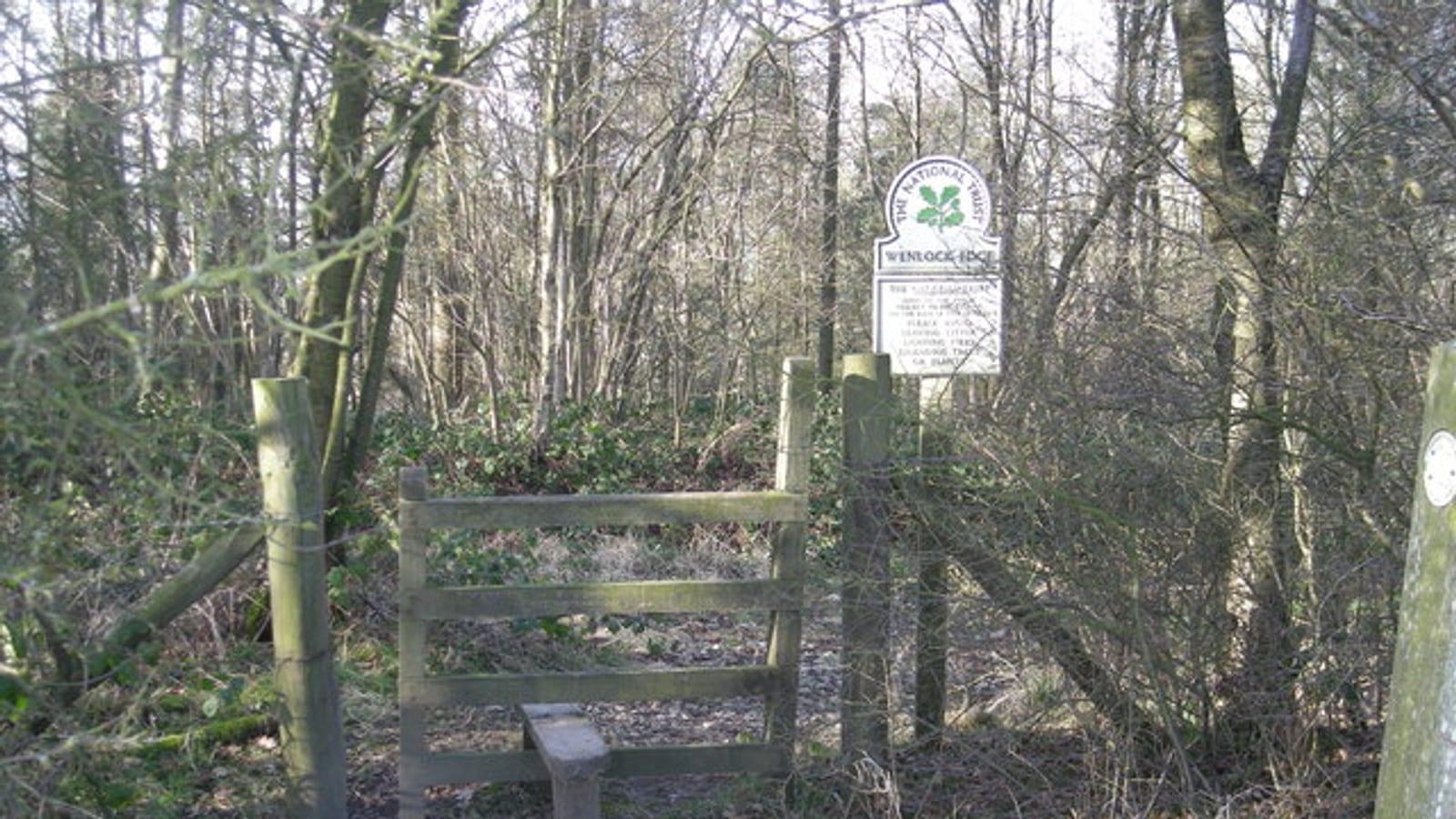
Wenlock Edge Presthope Shropshire Fossil Hunting Guide
Image: Row17 via Wikimedia Commons
Wenlock Edge at Presthope, Shropshire is the global type locality for the Silurian Wenlock Epoch, with scree slopes yielding crinoids, corals, and brachiopods freely.
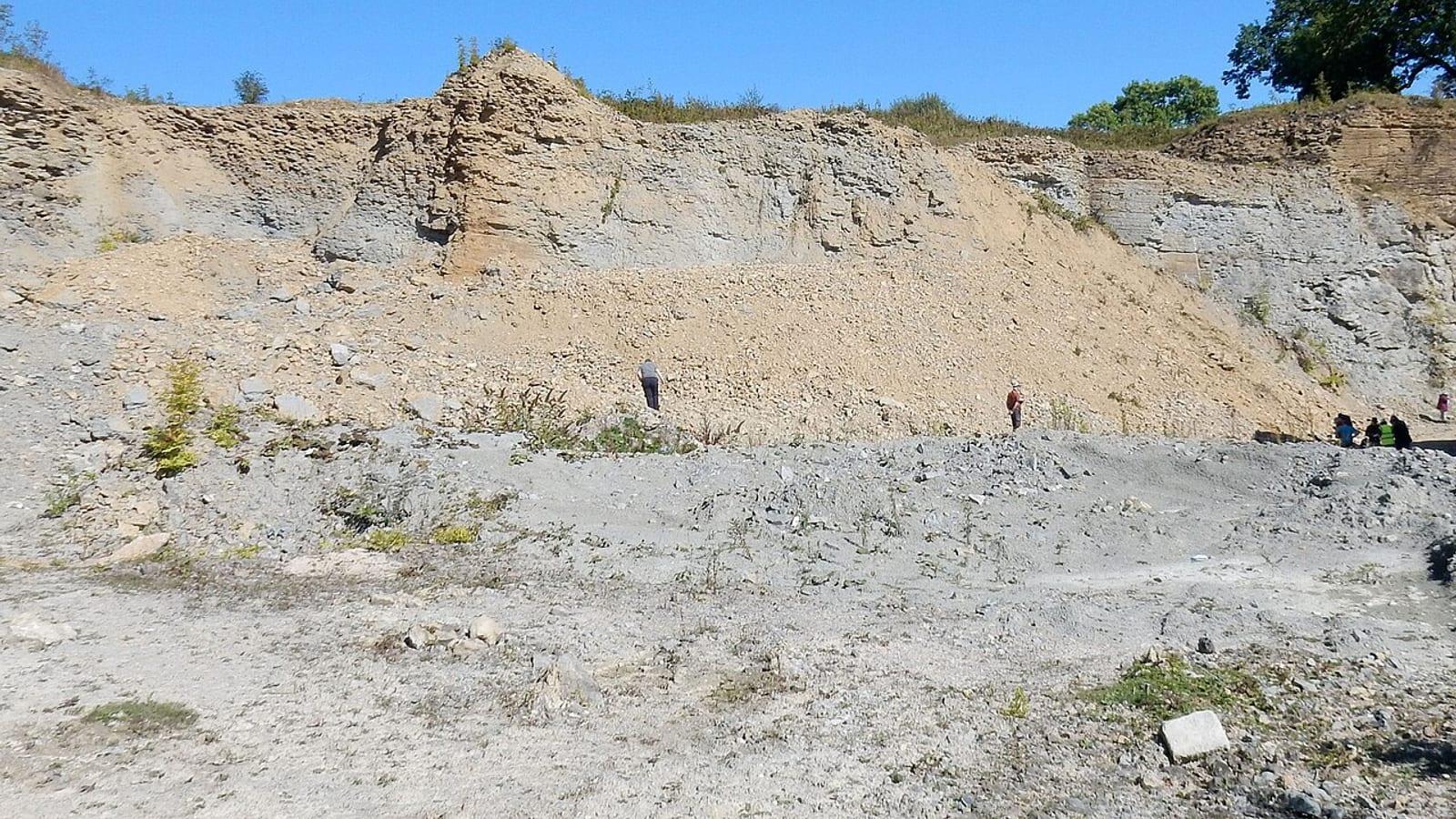
The road cutting and scree slopes at Presthope on Wenlock Edge expose the Much Wenlock Limestone Formation along the National Trust's managed escarpment in Shropshire. This is the type locality for the Wenlock Epoch of the Silurian Period, a stratigraphical interval that takes its name from the nearby town and has been correlated to rock sequences across the world. The limestone here was laid down approximately 423 to 425 million years ago in a warm, shallow subtropical sea, and it contains crinoids, corals, and brachiopods in such abundance that almost every block lifted from the scree yields at least one fossil. The site is an SSSI, meaning that the cliff face itself must not be hammered, but collecting from the extensive scree slopes and naturally dislodged material is the accepted practice that has produced excellent specimens for generations of collectors.
The National Trust car park at Presthope is small but well placed, and the fossil-bearing exposures are visible within a short walk. This guide explains the geology, what you are likely to find, and how to work within the conservation rules that apply here.
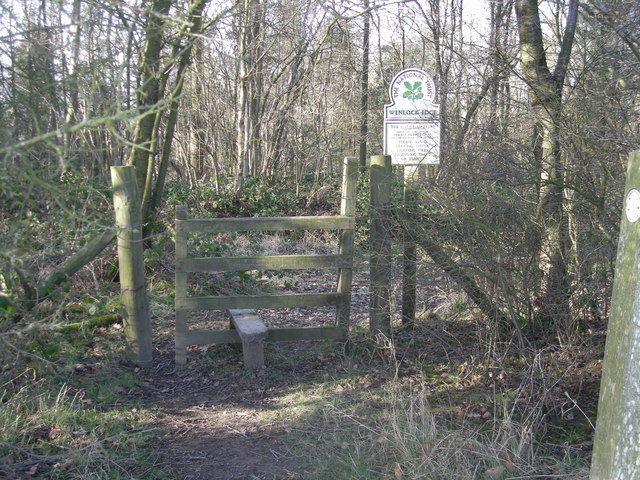 Over the stile and down Wenlock Edge escarpment - geograph.org.uk - 689856.jpg. Photo: Row17 via Wikimedia Commons (CC BY-SA 2.0)
Location and Directions
Address
Wenlock Edge (Presthope), B4371, Presthope, Much Wenlock, Shropshire TF13 6DQ.
Directions and Parking
From Much Wenlock, take the B4371 westward toward Church Stretton. The National Trust car park at Presthope is on the right-hand side of the road approximately 5 km (around 3 miles) west of Much Wenlock, just before the right turn to Hughley village. National Trust signs indicate the entrance. The car park is small, accommodating perhaps a dozen cars, and fills quickly at weekends in summer; an early start is advisable. From the car park, the limestone escarpment and its scree slopes are immediately visible. A footpath runs along the base of the escarpment, providing access to the scree and to sections of road cutting where limestone blocks have accumulated. Parking is free for National Trust members; a charge applies for non-members. There are no on-site facilities.
What Fossils You'll Find
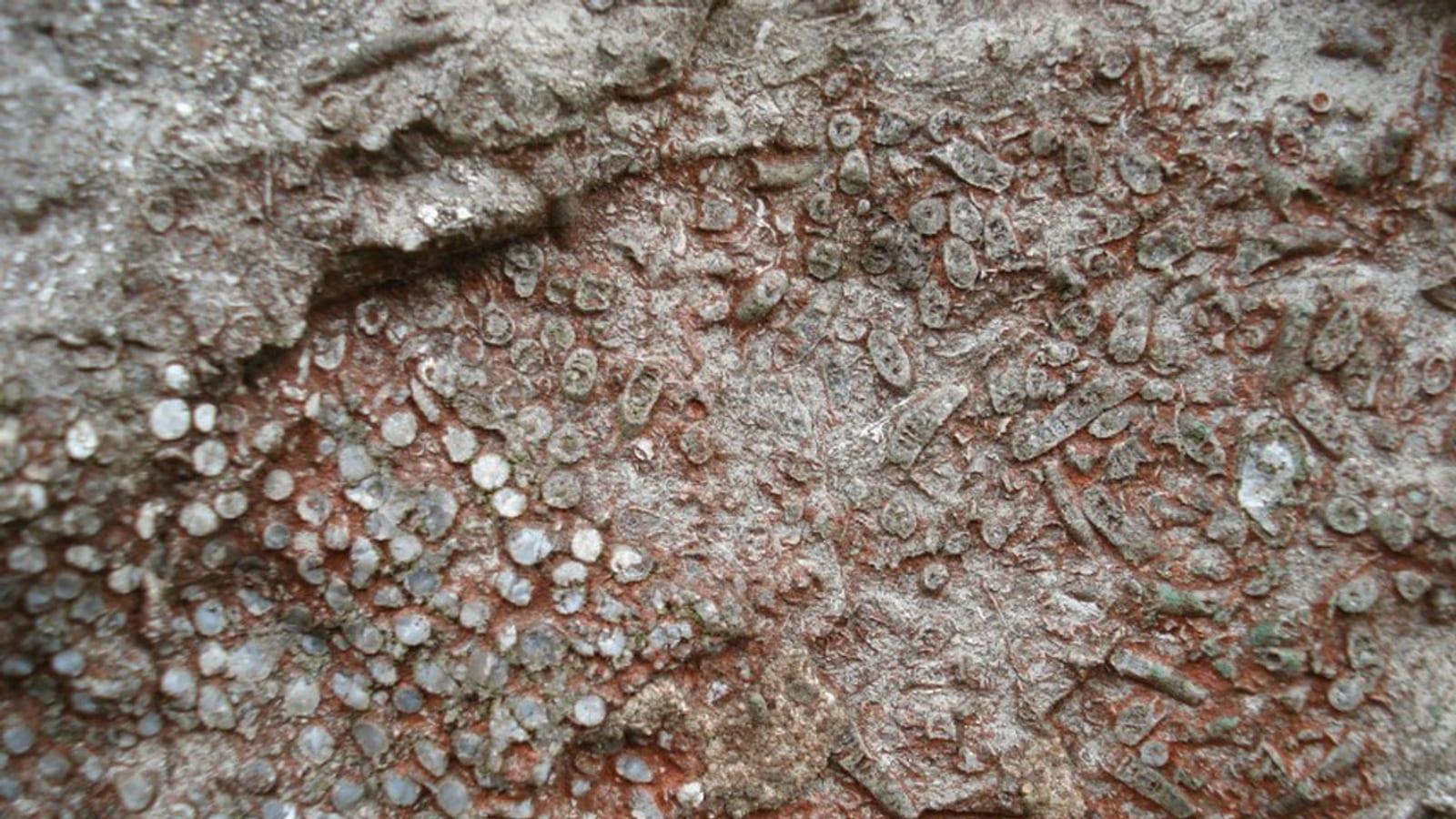
Crinoids are the most immediately evident fossils at Presthope. Individual crinoid columnals (the disc-shaped segments of the stem) are so common that they can be seen on almost every weathered limestone surface. They appear as small, round or star-shaped cross-sections, typically a centimetre or less in diameter. Larger stem fragments showing multiple columnals in sequence are also frequently found in loose blocks. Complete crinoid crowns are exceptionally rare at any site, but stem sections showing attachment structures occasionally occur in the more massive reef limestone blocks.
 Crinoid-fragm gotland hg.jpg. Photo: Hannes Grobe (talk) via Wikimedia Commons (CC BY 3.0)
Corals occur both as colonial masses and as solitary forms. Colonial corals including Favosites and Heliolites are identifiable by their polygonal or tubular cell structures, often weathered proud of the limestone surface to give a characteristic honeycomb texture. Solitary rugose corals (horn corals) occur scattered through the bedded limestone and are occasionally found complete. The largest coral masses in the much thicker reef limestone (the lenticular ballstone units that can reach 24 m in thickness) may be too large to collect but are worth examining in detail.
Brachiopods are common throughout the limestone. Rhynchonellids, spiriferids, and atrypids all occur and can often be found as both articulated shells and as isolated valves. The ribbing patterns on the exterior of the shell help with identification.
Geologic History
The Ancient Environment
The Much Wenlock Limestone at Presthope was deposited during the Homerian Age of the Wenlock Epoch, approximately 425 to 423 million years ago, in the Silurian Period. The area lay south of the equator at a latitude roughly equivalent to the modern Seychelles, in a clear, warm, and shallow tropical to subtropical sea. The most prominent rock units are the ballstones: flat-bottomed, lens-shaped masses of massive reef limestone up to 24 m thick, built by colonial corals and stromatoporoids on a seafloor that was otherwise accumulating finer-grained nodular and bedded limestone. The ballstones represent ancient patch reefs or reef cores, while the surrounding bedded and nodular limestone records the quieter, off-reef environments where crinoids, brachiopods, and smaller invertebrates lived in abundance. The climatic conditions during the Wenlock were consistently warm, with sea surface temperatures significantly higher than today and no polar ice caps, producing the globally high sea levels that flooded much of the continental shelf of ancient Europe. The orbital variations that drive the Milankovitch cycles are recorded in the regular alternation of limestone types, suggesting that even in this ancient warm world, short-term climate fluctuations influenced sedimentation patterns.
How Wenlock Edge (Presthope) Became a Fossil Collecting Site
Wenlock Edge is a prominent ridge running approximately 24 km southwest from Much Wenlock, formed because the resistant Wenlock Limestone has weathered more slowly than the softer shales on either side of it. The escarpment faces northwest, and the scree slopes at its base accumulate limestone blocks that have spalled off the cliff face through frost action and root-wedging over thousands of years since the last glaciation. The limestone road cutting on the B4371 at Presthope added a fresh exposure in the nineteenth or twentieth century. The combination of natural scree and the road cutting provides collectors with abundant loose material. Lime kilns at the site, now preserved by the National Trust, are evidence of the limestone's former commercial use: the rock was burned here for agricultural lime for several centuries before quarrying shifted to larger industrial operations elsewhere on the Edge.
Collecting Rules and Regulations
Is Fossil Collecting Allowed?
Wenlock Edge is an SSSI notified for its geological and biological interest, and the site at Presthope falls within National Trust ownership. The in-situ cliff face must not be hammered or broken. Collection is limited to loose and naturally fallen material from the scree slopes. The National Trust and Natural England expect collectors to take only what they can carry comfortably and to leave significant specimens in place where they are visible for other visitors. The site is the international type locality for the Wenlock Epoch; its geological integrity is of global scientific importance, and this should inform how collectors approach it. If you find anything that appears to be scientifically significant, contact the Shropshire Geological Society or the British Geological Survey.
Recommended Tools
A geological hammer can be used to split loose scree blocks along natural bedding planes or fractures to reveal fresh fossil surfaces. Do not use a hammer against the intact cliff face. A hand lens at 10x magnification makes coral and brachiopod identification easier. Bring wrapping material for fragile specimens and wear sturdy boots: the scree slopes are uneven and can be loose underfoot.
Safety
The limestone cliff above the scree slopes is subject to frost shattering and can shed fragments without warning, particularly after cold spells. Do not work directly beneath the cliff face. The B4371 carries traffic at speed, so take care when crossing or walking along the road verge. The scree slopes are steep in places and footing can be insecure. Keep children within sight on the steeper sections.