Reighton Sands Yorkshire Fossil Hunting Guide
Image: JThomas via Wikimedia Commons
Reighton Sands on the Yorkshire coast offers glacial erratic boulders with multi-period fossils and occasional Kimmeridge Clay exposures, and access to Speeton Cliffs.
Reighton Sands on the Yorkshire coast serves a dual purpose for fossil hunters. As the primary access point for Speeton Cliffs, it is the start of one of the best Lower Cretaceous collecting walks in the north of England. But the bay itself also has fossil potential in its own right: the boulder clay till deposited by Pleistocene ice sheets is eroding from the low cliffs above the beach, releasing erratic boulders transported from sources across northern England and Scotland, some of which contain fossils. Occasionally, scouring tides expose the underlying Kimmeridge Clay on the foreshore, which can yield Jurassic fossils directly.
This guide covers both uses of Reighton Sands: as a collecting site in its own right for glacial erratics and occasional Kimmeridge Clay material, and as the staging point for the Speeton Cliffs walk. Understanding the geology of both the erratics and the in-situ exposures helps you get the most from a visit here. The site is free to access, and the car park at Reighton Gap is the most practical base for any collecting trip along this section of coast.
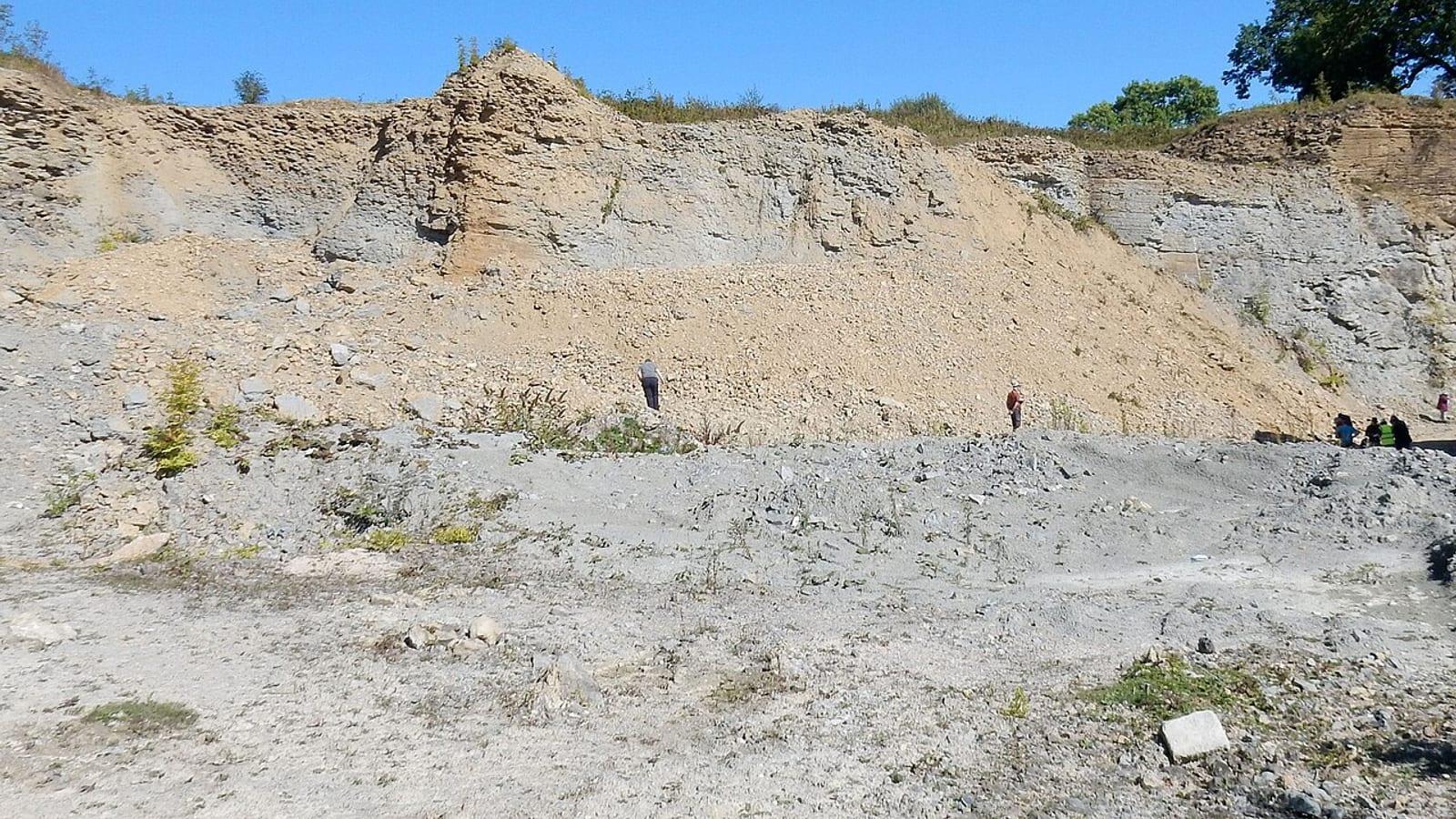
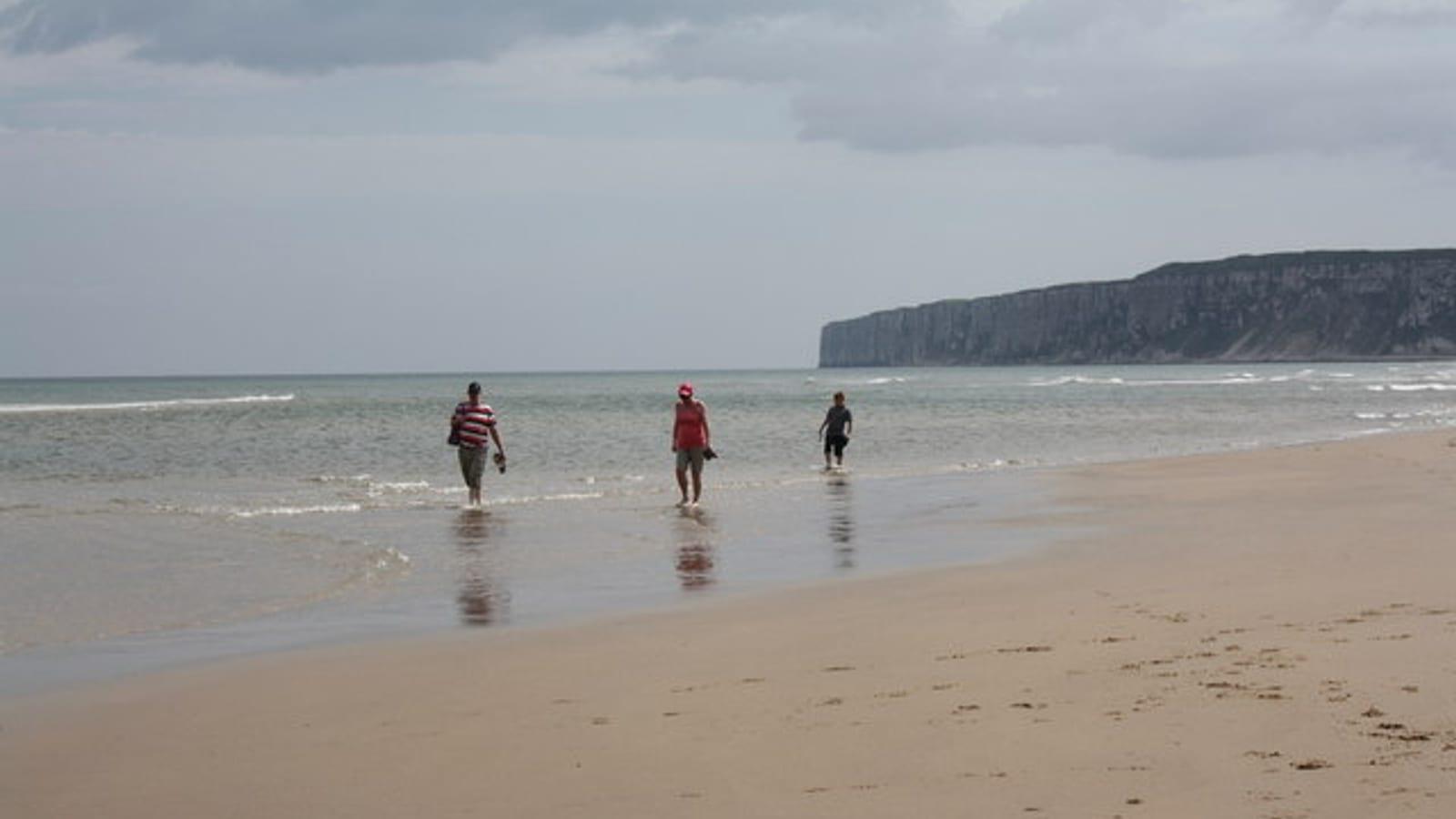
 Reighton Sands - geograph.org.uk - 4107322.jpg. Photo: JThomas via Wikimedia Commons (CC BY-SA 2.0)
Location and Directions
Address
Reighton Gap, Reighton Sands, near Reighton, North Yorkshire YO14 9SH, England. The car park at Reighton Gap is located at the end of the road through Reighton Sands Holiday Village, at grid reference TA 140 763.
Directions and Parking
From the A165 between Filey and Bridlington, turn east toward Reighton Sands Holiday Village. This turning is north of Reighton village. Follow the road through the holiday village and continue to its end at Reighton Gap. A gravel car park is available at the clifftop (no charge in most seasons; check notices at the site). The concrete slipway descends to the beach; it is worn and cracked and slippery near the bottom, so take care on the descent.
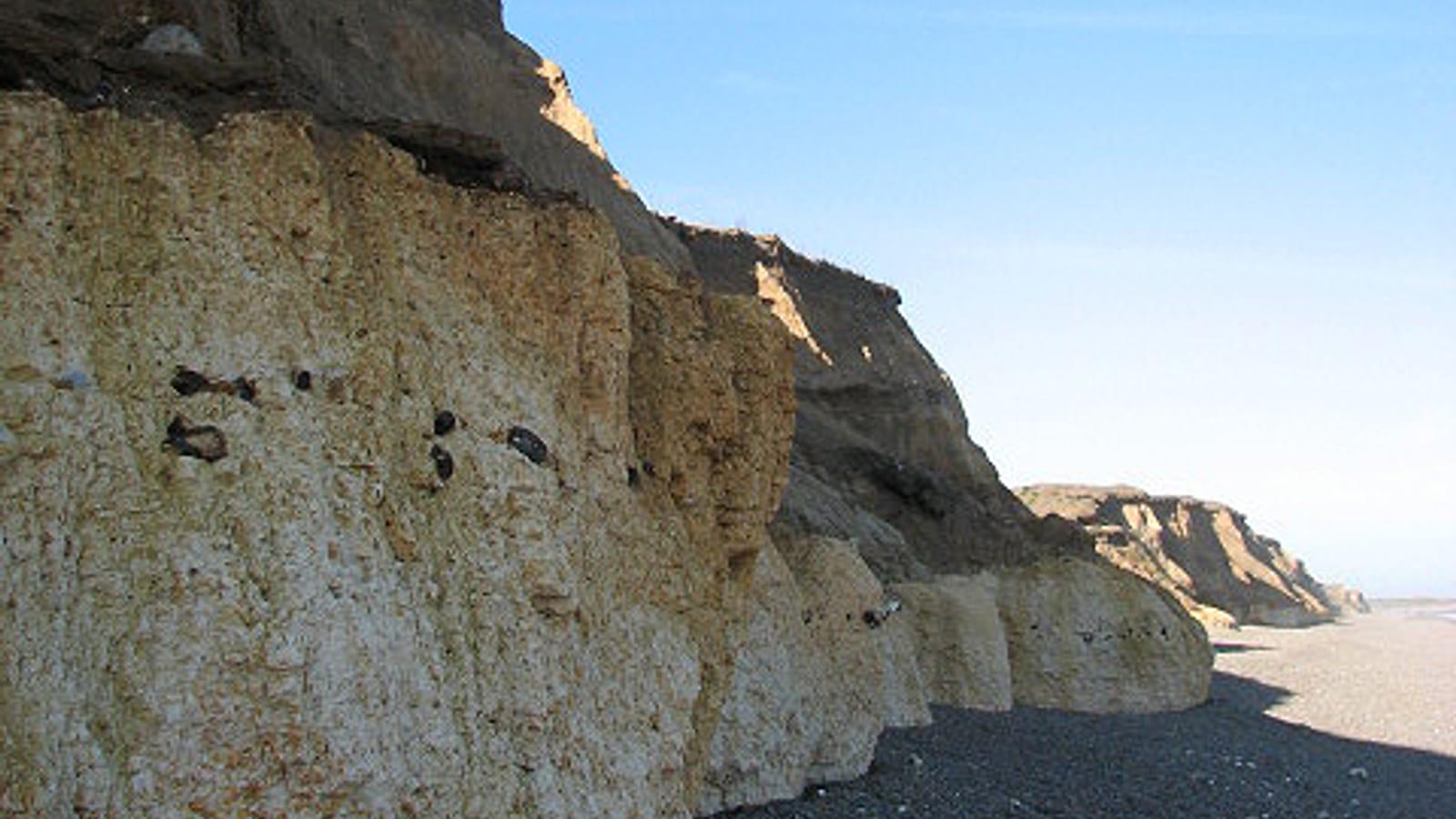
Once on the beach, you can explore Reighton Sands itself by walking northwest along the bay, or set off southeast toward Speeton Cliffs. The bay at Reighton Sands is backed by low boulder clay cliffs that are actively eroding. The foreshore is a mix of sand, pebbles, and clay, with boulders and blocks of various rock types concentrated toward the cliff base.
What Fossils You'll Find
Erratic boulders are the defining feature of Reighton Sands as a collecting site. Ice sheets of the last glaciation, the Devensian, carried boulders from source areas in northern England and Scotland and deposited them in the boulder clay that now forms the cliffs here. As the cliff erodes, these erratics are released onto the beach. They come from a wide range of geological periods, including Carboniferous limestones, Jurassic oolites, Cretaceous chalk, and Permian magnesian limestone, and some contain fossils that are not native to the Yorkshire coast at all. Examining the different rock types among the beach boulders is itself a geological exercise.
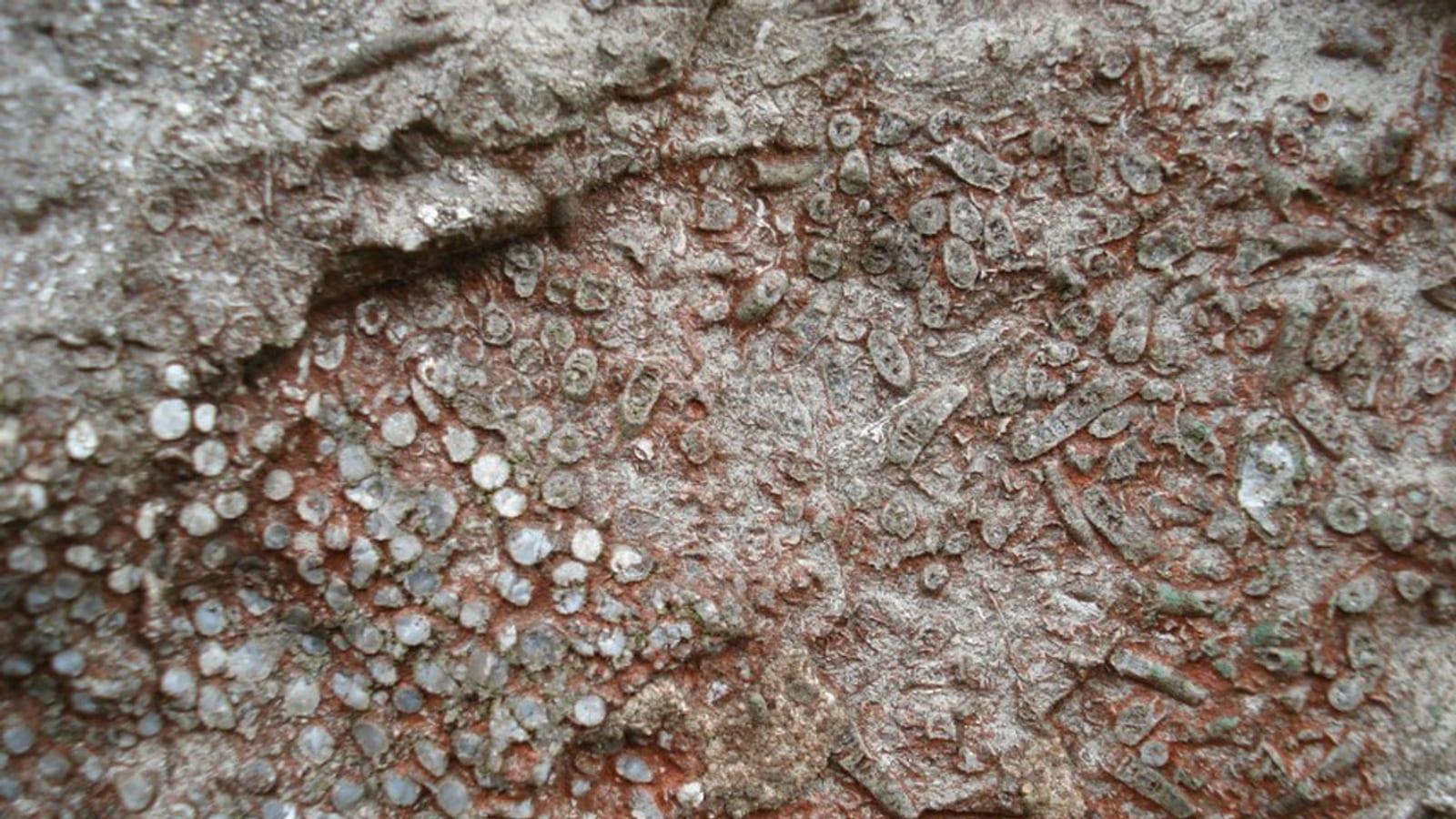
 Xenusion auerswaldae 2.png. Photo: Qohelet12 via Wikimedia Commons (CC BY-SA 4.0)
Jurassic limestone and ironstone erratics sometimes contain ammonites, belemnites, and bivalves from formations exposed elsewhere in the Cleveland Hills and North Yorkshire Moors. Carboniferous limestone erratics may carry brachiopods, corals, and crinoid columnals similar to those found at inland quarry sites. Chalk erratics can contain flint echinoids.
Kimmeridge Clay is occasionally exposed on the foreshore at Reighton Sands during low scouring tides, particularly after winter storms strip away the sand cover. The Kimmeridge Clay here is equivalent to the beds exposed at Kimmeridge Bay in Dorset and can yield pyritised ammonites, belemnites, and bivalves typical of this Late Jurassic formation. These exposures are unpredictable and vary significantly from visit to visit.
Geologic History
The Ancient Environment
The boulder clay at Reighton Sands is Devensian till, deposited by ice sheets that covered most of Yorkshire during the last glacial maximum approximately 20,000 to 15,000 years ago. The ice sheet sourced material from multiple directions: Scandinavian erratics arrived from the east via the North Sea ice, while local Yorkshire material was also incorporated. The till is an unsorted mixture of clay, sand, gravel, and boulders of all sizes from all sources, without the organised bedding of water-laid sediment.
Beneath the till, the Kimmeridge Clay Formation represents deposition in a Late Jurassic offshore shelf sea, Kimmeridgian stage, approximately 157 to 152 million years ago. At this time Yorkshire lay beneath a moderately deep, relatively quiet sea where fine organic-rich muds accumulated, producing the laminated, fossil-bearing clay that is exposed on the foreshore when conditions allow.
How Reighton Sands Became a Fossil Collecting Site
Post-glacial sea level rise inundated the lower Yorkshire plain and established the modern coastline. Wave action has since worked steadily at the boulder clay cliffs, which are among the most rapidly eroding on the Yorkshire coast, losing several metres per decade in places. As the till erodes, its contained erratics are released onto the beach, creating a constantly replenished supply of diverse rock types. The finer till matrix is washed away by the sea, concentrating the harder boulders on the foreshore. Storms periodically scour the beach to lower levels, exposing the underlying Kimmeridge Clay platform.
Collecting Rules and Regulations
Is Fossil Collecting Allowed?
Reighton Sands is a public beach with free foreshore access. The foreshore here is not comprehensively SSSI-designated in the same way as the Speeton Clay section to the southeast, but if the Kimmeridge Clay is exposed it may be subject to SSSI protection, as this formation is geologically important. Erratic boulders that have been released from the till and are lying loose on the beach are generally collectable under the standard principle of loose surface collecting on public foreshores.
For any exposed Kimmeridge Clay sections, apply the same approach as at other SSSI-protected clay coasts: surface collection of loose material only, no cutting into in-situ exposures. If in doubt, Natural England covers this area; their guidance is available via the Natural England website.
Recommended Tools
A geological hammer for splitting erratics, a hand lens for examining rock textures and small fossils, and robust gloves for handling sharp-edged boulders are the practical requirements here. Reighton Sands is a rougher, more physically demanding site than a prepared quarry; wear sturdy boots with good ankle support. For the Speeton Cliffs walk, add chisels and extra specimen bags.
Safety
The boulder clay cliffs at Reighton are actively eroding and cliff falls are common, particularly after wet weather. Do not work at the base of the cliffs or stand beneath overhangs. The concrete slipway at Reighton Gap is in poor condition; descend carefully. The beach has strong longshore drift currents when wind is onshore; do not wade into the sea. Check tide times for Bridlington before setting out. If you plan to continue to Speeton Cliffs, read the tidal warning for that section carefully; the foreshore there can be cut off by the rising tide.
Sources
- https://ukfossils.co.uk/2010/06/10/reighton/
- https://earthwise.bgs.ac.uk/index.php/Jurassic,\_Cretaceous\_and\_Quaternary\_rocks\_of\_Filey\_Bay\_and\_Speeton\_-\_an\_excursion
- https://en.wikipedia.org/wiki/Kimmeridge\_Clay\_Formation
- https://depositsmag.com/2017/01/12/a-fossil-hunters-guide-to-the-southeast-yorkshire-coast/