Bracklesham Bay Fossil Hunting Guide
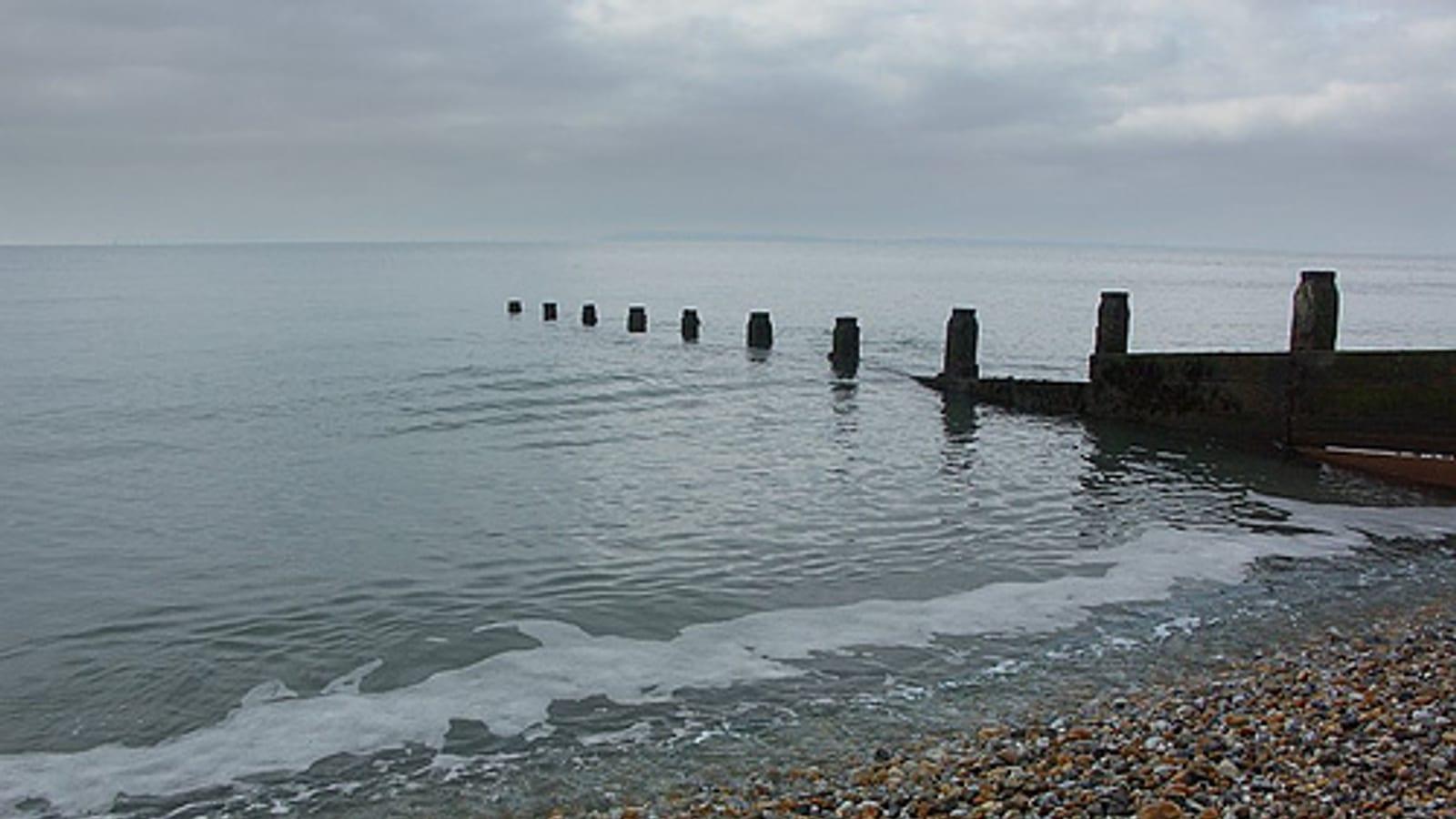
Image: Mark Tranchant at English Wikipedia via Wikimedia Commons
Bracklesham Bay in West Sussex yields shark teeth, ray teeth, and nummulites from 47-million-year-old Eocene beds. Free surface collecting on a productive Sussex beach.
Bracklesham Bay in West Sussex exposes the mid-Eocene Bracklesham Group at the shoreline, producing shark teeth, ray teeth, large foraminifera, and bivalves in quantities that few beaches in southern England can match. On a good scouring tide, the foreshore can be carpeted with teeth and shell fragments that have been washed from the cliffs and seabed overnight. The site has attracted collectors since the 1850s, when Frederick Dixon catalogued the beds and described more than 160 fish species from the formation.
This guide covers the exact access point and parking, the fossil types you can expect, the geological story behind the deposits, and the rules for collecting so that you can plan a productive visit.
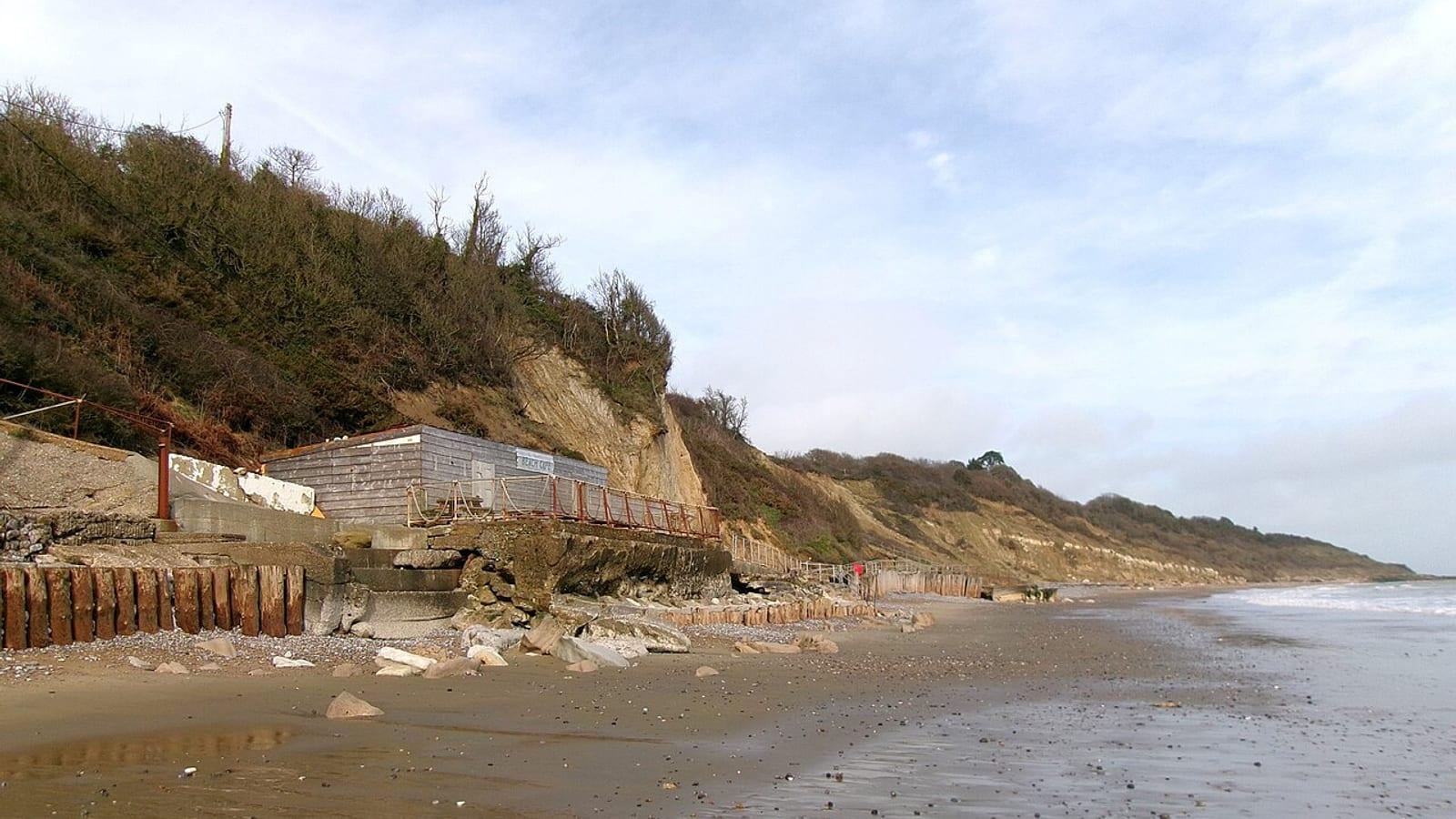
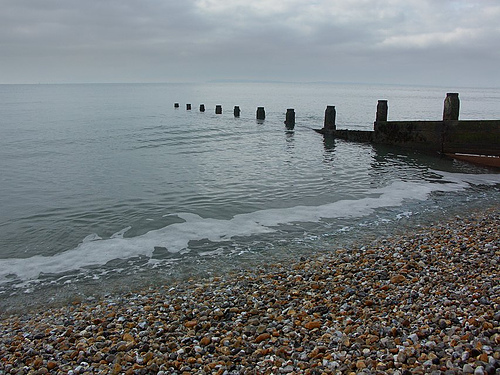 Bracklesham-Bay.jpg. Photo: Mark Tranchant at English Wikipedia via Wikimedia Commons (CC BY 2.5)
Location and Directions
Address
East Bracklesham Drive, Bracklesham Bay, West Sussex PO20 8JH. The seafront car park sits at the end of East Bracklesham Drive, directly adjacent to the beach.
Directions and Parking
From the A27 at Chichester, take the A286 south toward Birdham and then follow the B2198 through East Wittering to Bracklesham Bay. The B2198 runs straight to the seafront, where a large surfaced car park is available. Parking is charged seasonally; fees typically apply between Easter and October. Billy's On The Beach cafe operates from the car park area and provides toilets and refreshments. Walk directly from the car park down the slipway or beach access ramp onto the foreshore. The beach itself is sandy, so sturdy footwear is useful but not essential. For the best collecting conditions, aim to arrive roughly one hour before predicted low tide, particularly on spring tides when the foreshore is scoured clean and fresh material is exposed.
What Fossils You'll Find
Shark teeth are the headline find at Bracklesham Bay. The site has produced teeth from more than 20 species, ranging from the small but plentiful teeth of Striatolamia macrota to the broader cutting teeth of early carcharhinid sharks. Most teeth are thumbnail-sized or smaller, dark brown or black in colour, and found loose on the sand surface or in shallow water at the tide's edge. During scouring conditions, freshly exposed teeth appear in clusters across the lower foreshore.
 Striatolamia macrota.jpg. Photo: Ghedoghedo via Wikimedia Commons (CC BY-SA 3.0)
Ray teeth are abundant and distinctive: they are flat, rectangular, and tile-like, designed for crushing hard-shelled prey rather than cutting. These pavement teeth come from several ray species that inhabited the warm Eocene shallows. You will often find them in greater numbers than shark teeth on productive days.
Large single-celled foraminifera (nummulites) occur as coin-shaped discs up to 2 centimetres across. They are often the most numerous objects on the foreshore on a good day, and they are an excellent indicator that you are standing over productive Bracklesham Group material. Look for their coin-like profile half-buried in wet sand.
Bivalves and gastropods preserve as internal moulds or partial shell material, turning up in worn but identifiable condition. Occasional fish vertebrae and fragmentary turtle bone also appear, though these are uncommon enough to be considered a good day's find.
Geologic History
The Ancient Environment
The sediments at Bracklesham Bay belong to the Bracklesham Group, which encompasses the Wittering Formation, the Earnley Sand, the Marsh Farm Formation, and the Selsey Sand. These beds date to the Lutetian Stage of the Middle Eocene, approximately 46 to 48 million years ago. At that time, southern England lay roughly ten degrees closer to the equator than it does today, and the region was covered by a warm, shallow subtropical sea that formed part of the broader Hampshire Basin.
The alternation of clay layers with sands reflects repeated changes in water depth and proximity to the ancient shoreline. Clay-dominated intervals indicate quieter, slightly deeper conditions where fine sediment settled slowly. Sand-dominated intervals reflect shallower, more energetic coastal environments. The presence of crocodile bones, turtle carapace fragments, and land-derived seeds and fruits within some beds confirms that rivers were delivering terrestrial material into the marine system, pointing to an ancient coastline not far to the north and west.
How Bracklesham Bay Became a Fossil Collecting Site
The Bracklesham Group sediments are soft and offer little resistance to wave action. Coastal erosion and tidal scouring continuously remove material from the seabed and cliff bases, keeping the foreshore supplied with freshly exposed specimens. This is not a site where you excavate; instead, the sea does the preparation work and deposits fossils on the sand surface with each tidal cycle. The process is ongoing, which means that a beach that looks picked clean at high tide can be productive again within hours after the next low water.
Collecting Rules and Regulations
Is Fossil Collecting Allowed?
Surface collecting from the beach and foreshore at Bracklesham Bay is permitted and free of charge. Personal, non-commercial collection of loose material from the beach surface is legal under UK law. Bracklesham Bay is designated a Site of Special Scientific Interest (SSSI), covering 200.6 hectares for its biological and geological importance. SSSI designation means that you must not use hammers or chisels to extract material from in-situ cliff or bedrock, and you must not undercut or destabilise the low cliffs or exposures. Picking up loose material from the beach surface and shallow water is the standard and accepted method here.
Recommended Tools
No specialist equipment is required for Bracklesham Bay. A keen eye and a tray or shallow bucket for sifting wet sand through are the most useful items. A hand lens helps with identifying small foraminifera and tooth details. Bring plenty of small bags or containers, as productive days can yield dozens of teeth. Waterproof boots or sandals are sensible given the wet foreshore conditions.
Safety
The beach at Bracklesham Bay is generally safe, but always check tide times before visiting and be aware of how quickly the tide turns. The foreshore is widest and most productive during spring tides; those same tides also return quickly. Keep children close to the sea's edge and monitor the tide throughout your visit. The soft clay cliffs at the back of the beach are unstable and prone to sudden collapse; stay well clear of the cliff base at all times.
Sources
- https://www.ukfossils.co.uk/2012/01/24/bracklesham-bay/
- https://www.discoveringfossils.co.uk/bracklesham-bay/
- https://lukeosaurusandme.co.uk/fossil-hunting-at-bracklesham-bay
- https://depositsmag.com/2016/03/30/fossil-collecting-at-bracklesham-sussex/
- https://wessexcoastgeology.soton.ac.uk
- https://www.wikipedia.org/wiki/Bracklesham\_Bay