Yaverland Fossil Hunting Guide
Image: Chris Plunkett via Wikimedia Commons
Hunt dinosaur bones, teeth, and footprints in the Early Cretaceous Wessex Formation at Yaverland Beach, Sandown, Isle of Wight. Free surface collecting on the UK's richest dinosaur coast.
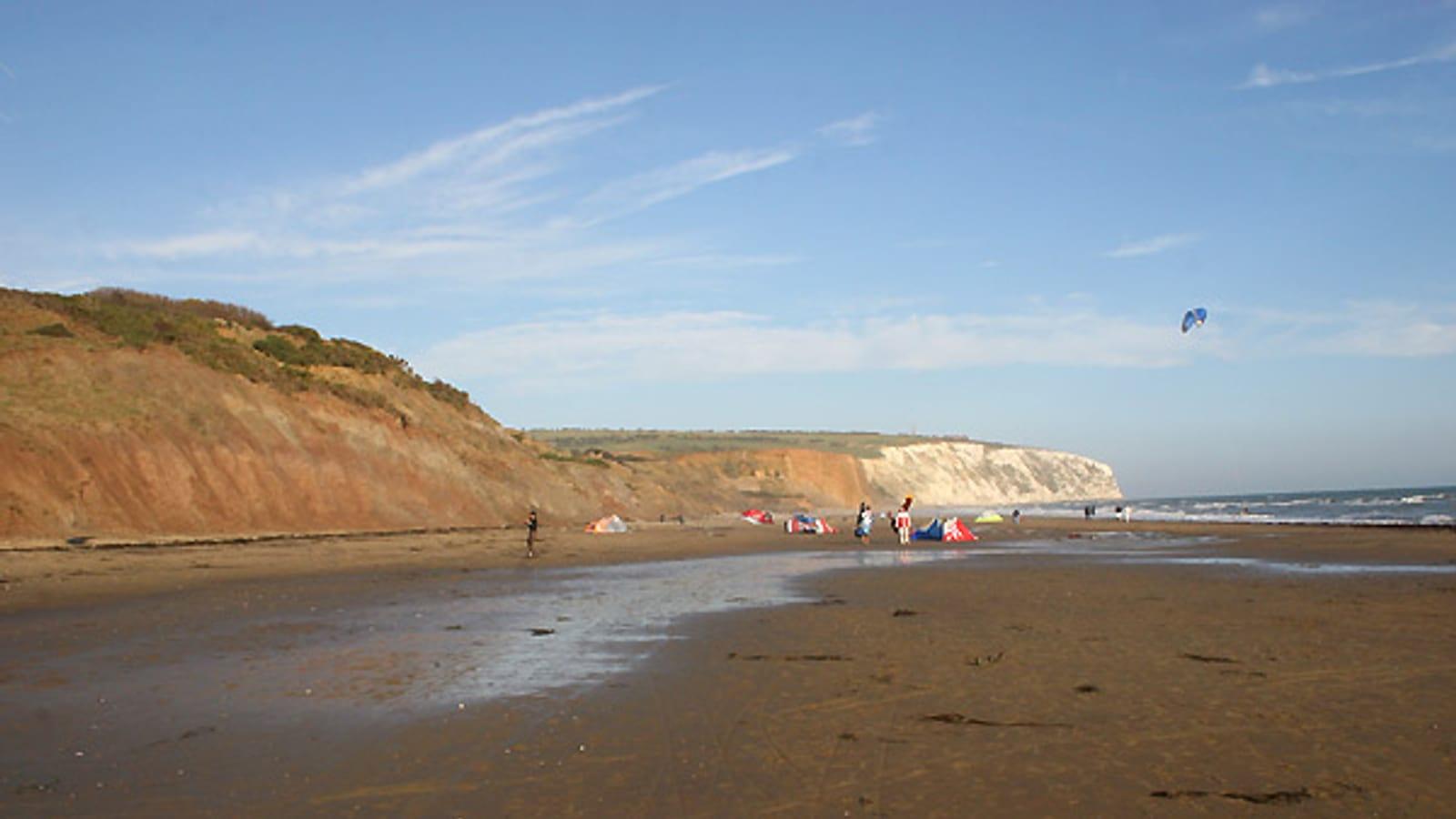
Yaverland Beach at the eastern end of Sandown Bay on the Isle of Wight is one of Britain's most storied dinosaur fossil localities. The cliffs and foreshore here expose the Wessex Formation, a sequence of Barremian-age floodplain deposits that has produced dinosaur bones, teeth, and footprints for nearly two centuries. The site forms part of a continuous eleven-mile exposure of Wealden Group rocks running from Compton Bay to Sandown, the richest Cretaceous dinosaur sequence in Europe. Conditions matter here: winter and spring storms rip fresh material from the cliffs and sweep it onto the foreshore, so visiting after a period of rough weather dramatically improves your chances. The site can be over-collected at popular times, but persistent searching rewards the patient visitor with dinosaur bone fragments, fish scales, and turtle remains. This guide covers access, what the foreshore yields, the geological context of these 125-million-year-old river floodplains, and the rules that govern collecting on this important stretch of coast.
 Yaverland beach, Isle of Wight - geograph.org.uk - 79210.jpg. Photo: Chris Plunkett via Wikimedia Commons (CC BY-SA 2.0)
Location and Directions
Address
Yaverland Beach, Yaverland Road, Sandown, Isle of Wight, PO36 8QA.
Directions
From Sandown town centre, follow Yaverland Road east toward the coast. The road ends at a large car park directly adjacent to the beach at Yaverland. Parking is available in the car park and is subject to a seasonal charge. From the car park, cross the sea defences onto the beach and walk north toward the coloured cliffs. The fossil-bearing Wessex Formation beds are visible in the cliff face and on the foreshore platform. Best collecting is at low tide when the foreshore is fully exposed. Visiting after winter storms or periods of high seas significantly increases the quantity of freshly eroded material on the beach. The Dinosaur Isle Museum is a short drive away in Sandown and is well worth visiting before or after a beach session, as it provides a detailed introduction to the fossils you are likely to encounter.
What Fossils You'll Find
Dinosaur bone fragments are the primary draw at Yaverland. Bone tends to preserve as dark brown or black, dense material that is noticeably heavier than the surrounding sandstone or clay matrix. Look for angular fragments with a spongy internal structure visible on broken surfaces. Bone concentrations occur particularly in association with the black fossil wood layers within the Wessex Formation. Do not expect complete or articulated specimens from the foreshore; rolled and fragmentary bone is typical.
 Vetulonaia sp. (fossil clams) & dinosaur bone fragments (Morrison Formation, Upper Jurassic; Dinosaur National Monument, Utah, USA) 2 (48837817786).jpg. Photo: James St. John via Wikimedia Commons (CC BY 2.0)
Dinosaur teeth are a more realistic target for the casual visitor than large bones. Iguanodontian teeth are leaf-shaped with ridged surfaces, while theropod teeth are blade-like with serrated edges. Both types are occasionally found among the gravel and pebble beaches below the cliff sections.
Dinosaur footprints occur preserved in the harder siltstone layers of the Wessex Formation. Large three-toed iguanodontian tracks have been recorded at various points along this stretch of coast. Footprints in the cliff face cannot be collected, but loose slab material containing prints occasionally falls onto the foreshore.
Fish remains, including scales, teeth, and occasional bones of freshwater species, are relatively common. The ancient rivers of the Wealden floodplain supported a diverse freshwater fish fauna, and their remains turn up throughout the Wessex Formation.
Turtle shell fragments and crocodilian teeth and osteoderms are present but less common. Both groups were abundant in the Early Cretaceous river systems of the Isle of Wight and are documented in the Dinosaur Isle Museum collection.
Geologic History
The Ancient Environment
The rocks at Yaverland belong primarily to the Wessex Formation of the Wealden Group, deposited during the Barremian stage of the Early Cretaceous, approximately 121 to 127 million years ago. The characteristic purple, blue, and pink banded mudstones and sandstones visible in the cliffs represent sediments laid down by ancient river systems crossing a wide, seasonally flooded plain. Britain at this time sat at approximately 40 degrees north latitude in a warm, Mediterranean-type climate with distinct wet and dry seasons. The floodplain supported dense vegetation including pine trees, tree ferns, and flowering plants, which in turn sustained a diverse fauna of over twenty dinosaur species. Above the Wessex Formation, the sequence progresses through the lagoonal Vectis Formation and then into the marine Lower Greensand, Gault Clay, Upper Greensand, and Lower Chalk, recording a progressive marine transgression as rising sea levels gradually drowned the dinosaur-bearing landscape.
How Yaverland Became a Fossil Collecting Site
The Isle of Wight is subject to some of the fastest coastal erosion rates in Britain, with cliff sections retreating by measurable amounts each year. This rapid erosion continuously exposes fresh sections of the Wealden Group and releases fossils that were sealed within the mudstones for over 120 million years. The combination of rapidly eroding soft cliffs and a long foreshore that traps material means that Yaverland and the wider Sandown Bay shoreline yields new specimens after almost every significant storm. William Buckland provided the first scientific description of material from Yaverland in 1829, before the word dinosaur had even been coined. The Isle of Wight has been central to dinosaur palaeontology ever since, and the 2023 discovery of Mantellisaurus footprints during Environment Agency flood defence work at the beach is the latest in a long sequence of significant finds from this locality.
Collecting Rules and Regulations
Is Fossil Collecting Allowed?
Surface collecting of loose fossils from the beach foreshore at Yaverland is permitted for personal, non-commercial purposes at no charge. The cliffs are within a Site of Special Scientific Interest; hammering the cliff face or digging into the cliff base is prohibited. Collect only from the beach surface, shingle, and loose fallen material. Scientifically significant finds, including any substantial dinosaur bone, articulated material, or complete skeletons, should be reported to the Dinosaur Isle Museum in Sandown. The museum staff are experienced at assessing finds and can arrange professional extraction if needed.
Recommended Tools
A geological hammer is useful for splitting nodules found on the foreshore beach. Bring a hand lens and a spray bottle of water to clean and examine specimens in the field. Wear waterproof footwear. For carrying specimens, a padded bag or rucksack with newspaper for wrapping fragile finds is advisable. The beach surface is mixed sand and shingle, with mudstone and sandstone outcrops at low tide.
Safety
The coloured Wealden cliffs at Yaverland are actively eroding and prone to sudden collapse. Keep well clear of the cliff base at all times, and never stand beneath an overhang or enter any cave or notch cut into the cliff. Monitor the weather; rain can trigger sudden cliff falls. Check tide times before visiting. The foreshore here is not subject to the same tidal cut-off risks as narrower cove sites, but sea conditions can deteriorate rapidly, particularly in winter months when storm collecting is most productive.
Sources
Nearby sites
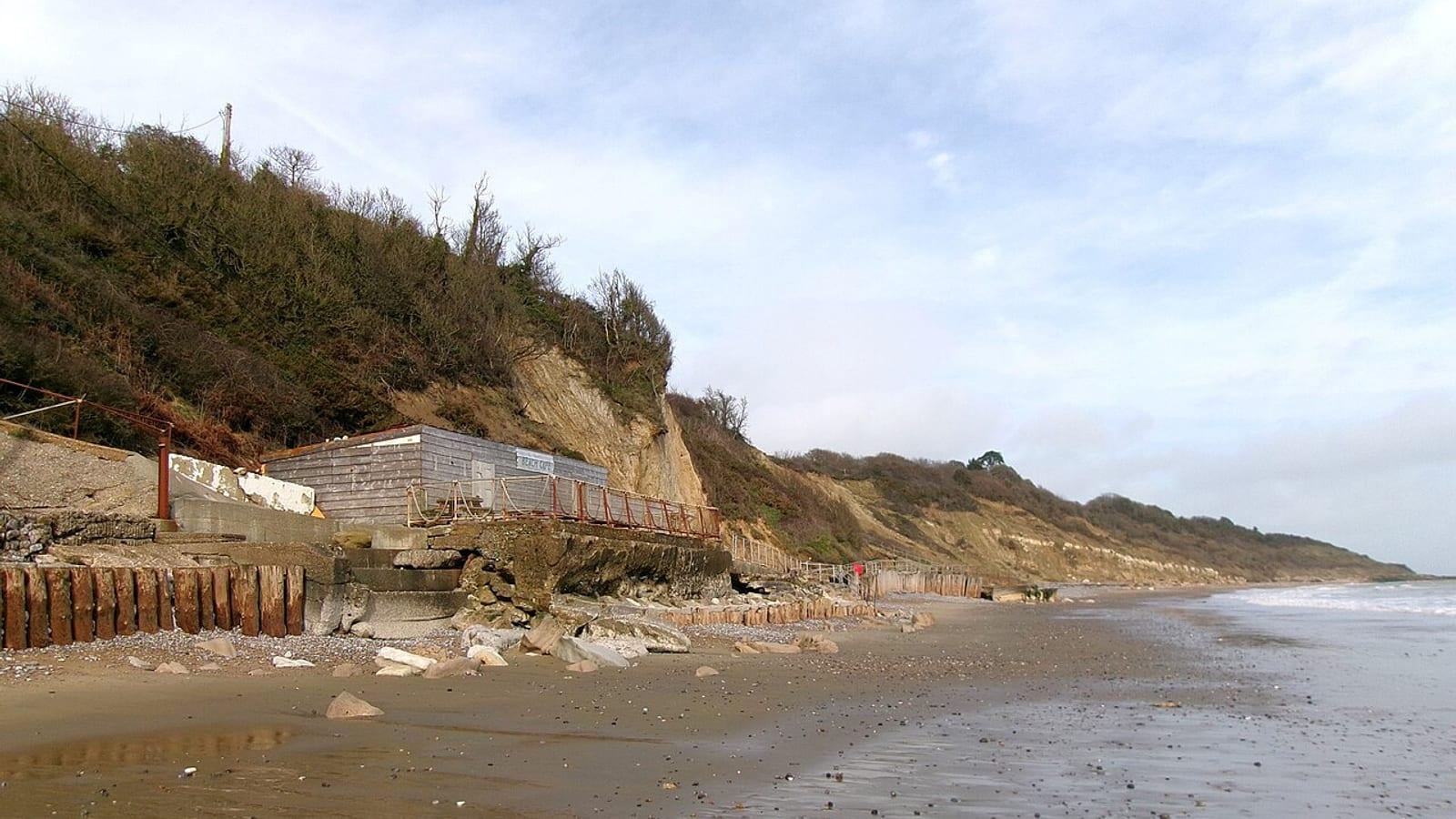 Whitecliff Bay Isle of Wight Fossil Hunting GuideLondon Clay, shark teeth
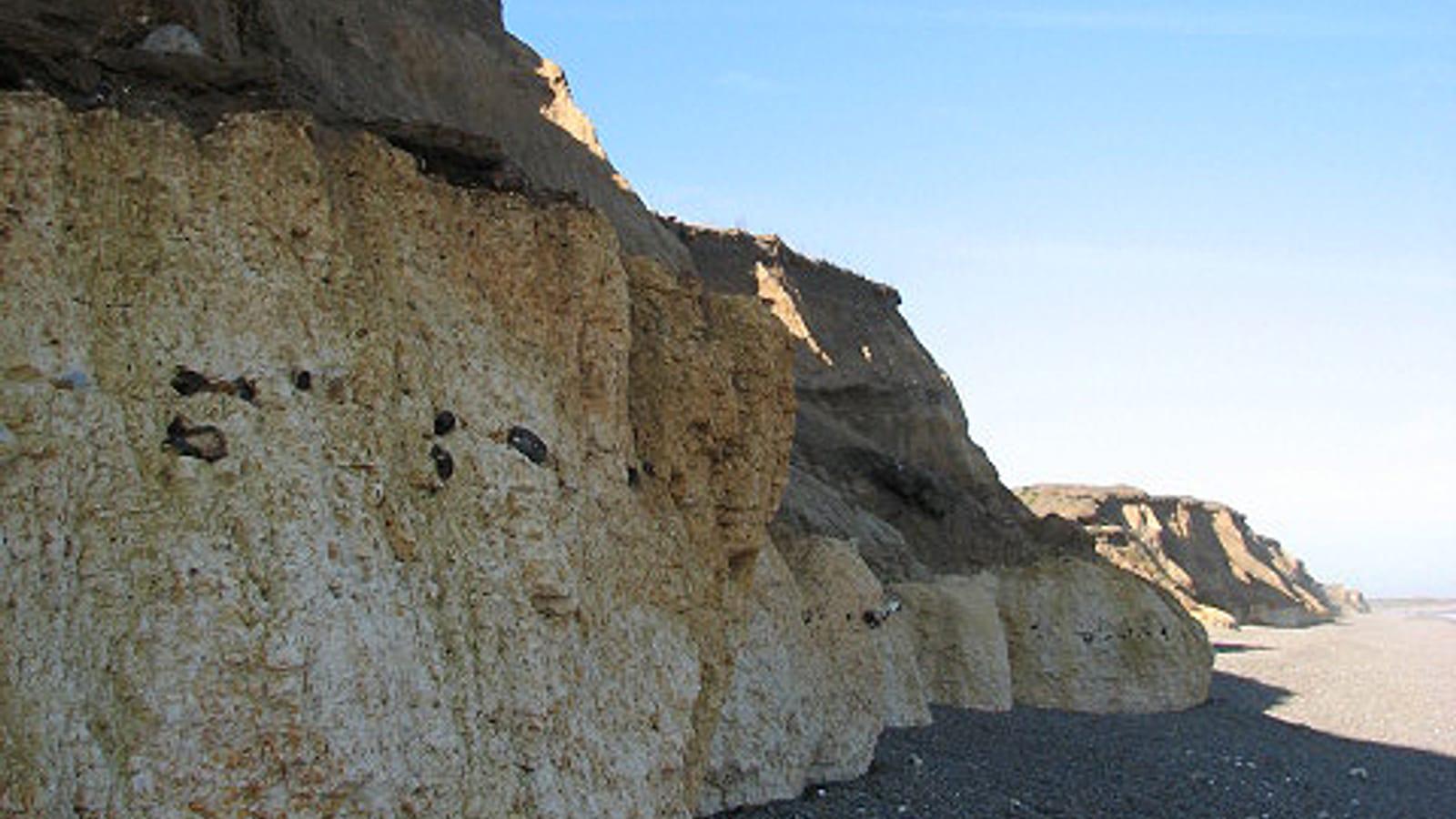 Brighstone Bay Fossil Hunting Guideplant debris bed, dinosaur teeth
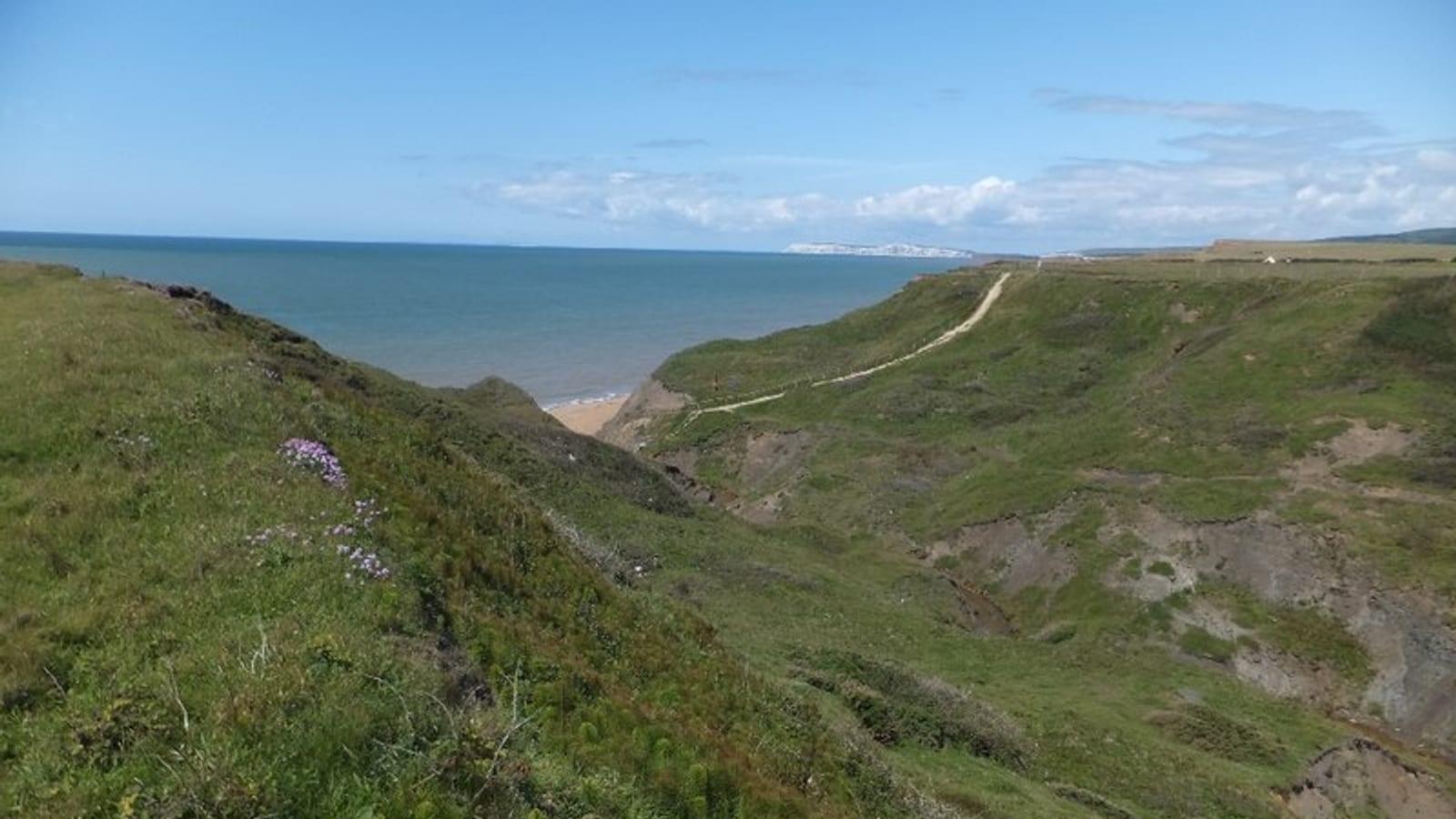 Shepherds Chine Whale Chine Isle of Wight Fossil Hunting GuideCrackers, Perna Bed
 Hamstead Isle of Wight Fossil Hunting GuideMollusc shells, Plant seeds and fragments