Brighstone Bay Fossil Hunting Guide
Brighstone Bay on the Isle of Wight exposes Early Cretaceous Wealden beds with dinosaur bones, teeth, and plant fossils. Free foreshore collecting; full guide included.
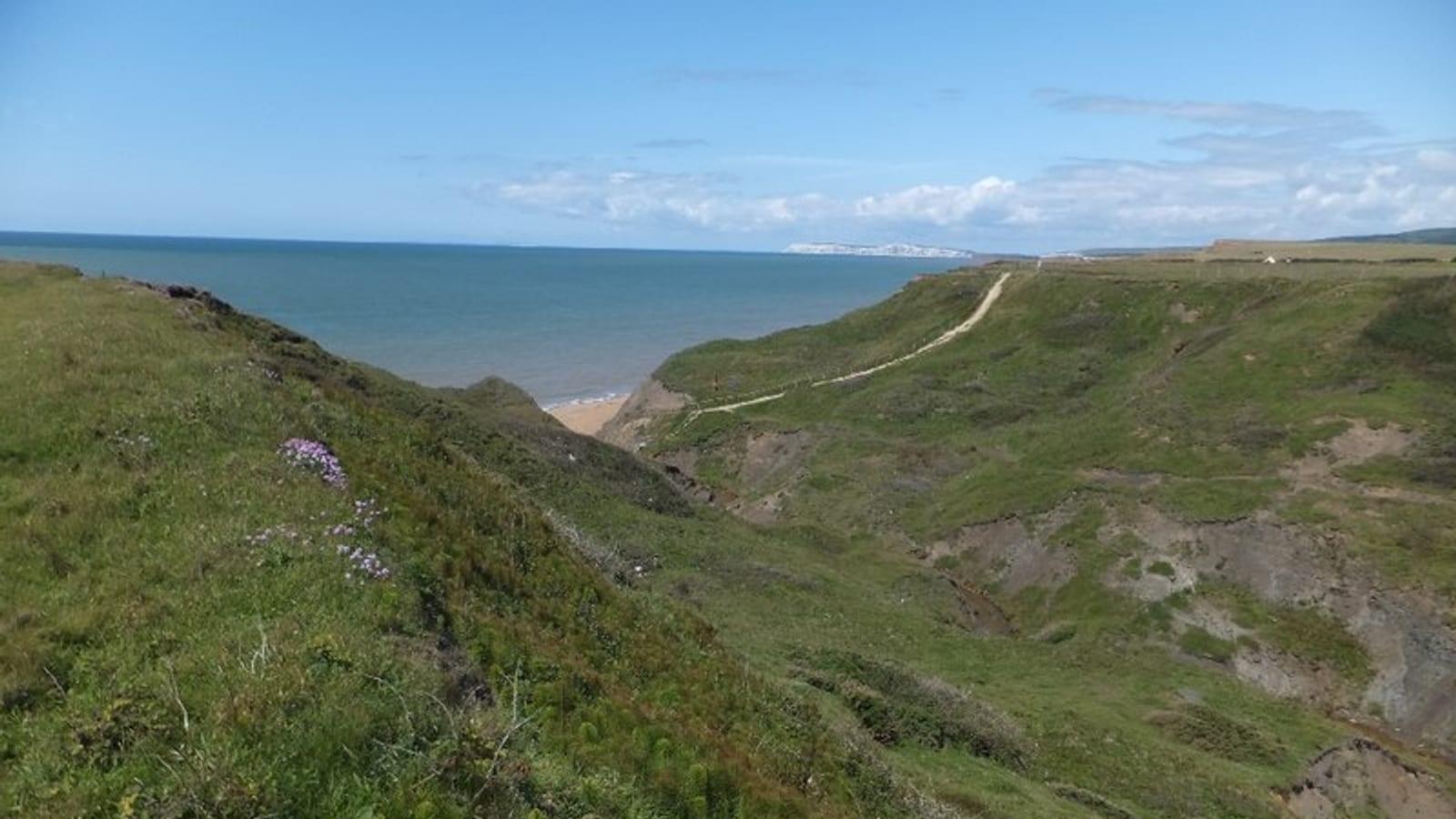
Brighstone Bay stretches for roughly nine kilometres along the southwest coast of the Isle of Wight, exposing the Early Cretaceous Wealden Group through most of its length. The bay is notable in British palaeontology for the discovery of a partial sauropod skeleton, and the area continues to yield dinosaur bones, reptile remains, and plant fossils to collectors who know where to look. The key collecting locality within the bay is the plant debris bed east of Grange Chine, a hard surface packed with plant material, isolated teeth, and bone fragments that erodes steadily from the base of the cliff. The site is free to access and collecting loose material from the foreshore is permitted. This guide covers the access points, what material is found and where, the geological context, and the safety considerations that apply along this actively eroding stretch of coast.
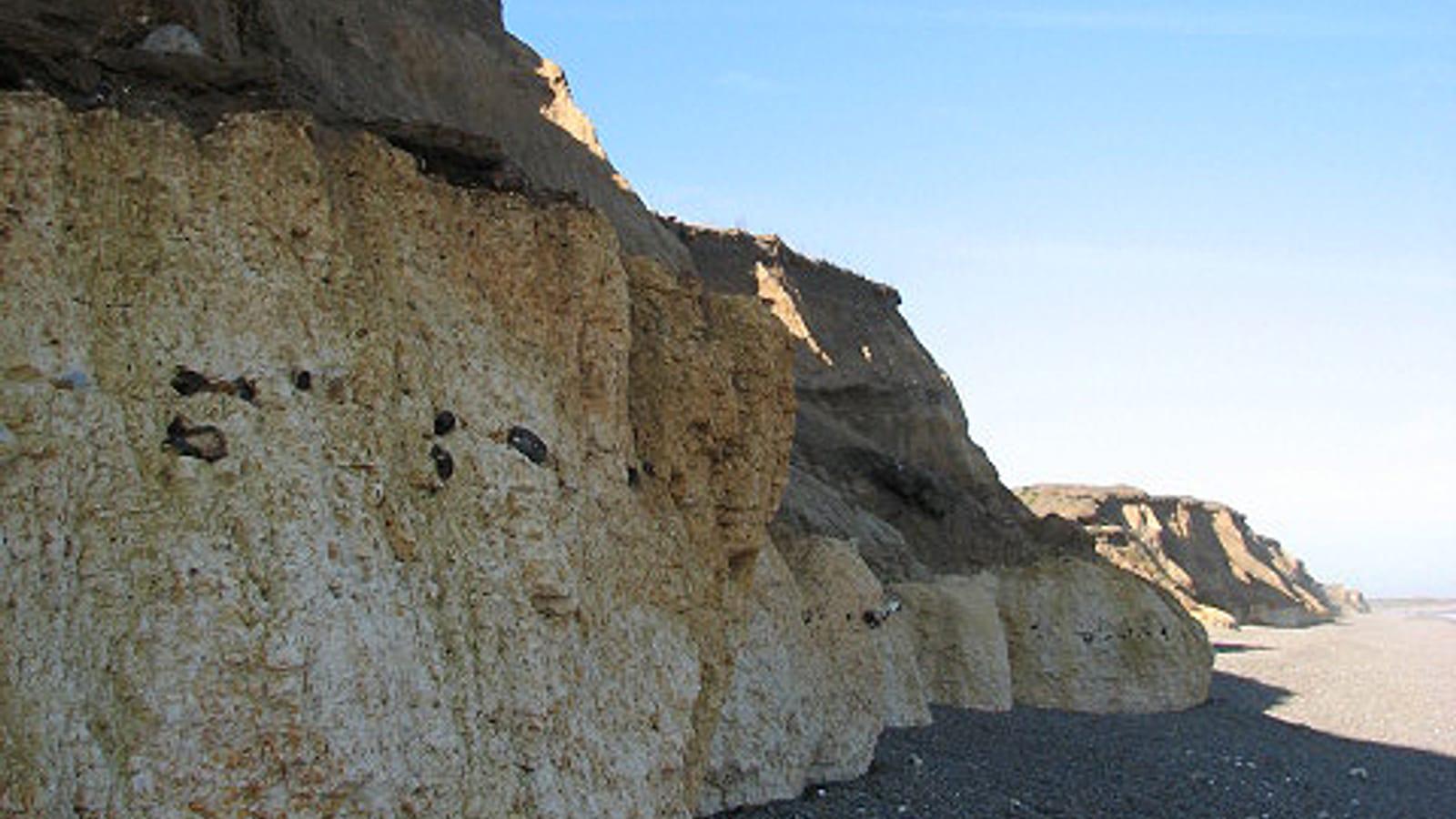
 Chalk cliffs and shingle beach, England. Photo: Wikimedia Commons contributor via Geograph (CC BY-SA 2.0)
Location and Directions
Address
Brighstone Bay, near Brighstone, Isle of Wight, PO30, England. Key access points: Grange Chine (PO30 4DA) and Chilton Chine, off the Military Road (A3055).
Directions and Parking
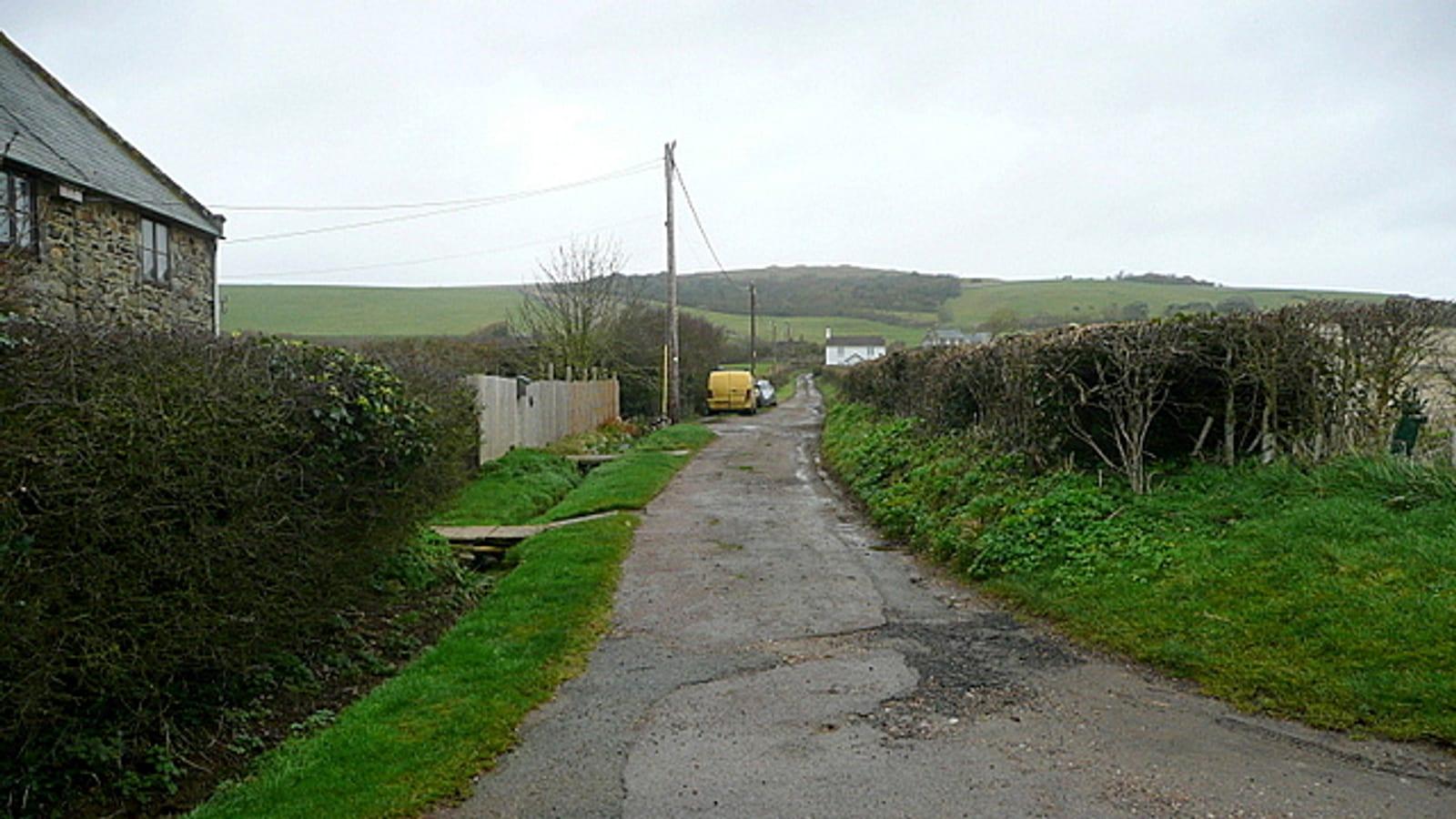
From Newport, take the A3054 west to Brighstone village. From Brighstone, follow signs south to the Military Road (A3055), which runs along the clifftop parallel to the bay. Several access points are available. Grange Chine provides the most direct route to the plant debris bed; small parking is available on verges near the chine entrance. Chilton Chine offers a larger car park with better facilities. Brook car park to the north is another option. From any of these access points, walk down the chine to the beach and then east or west along the foreshore as required. The productive Grange Chine plant debris bed is reached by walking east from the chine. Plan to walk significant distances along the foreshore and factor this into your timing around the tides. The bay is best visited at low tide when the widest foreshore area is exposed.
What Fossils You'll Find
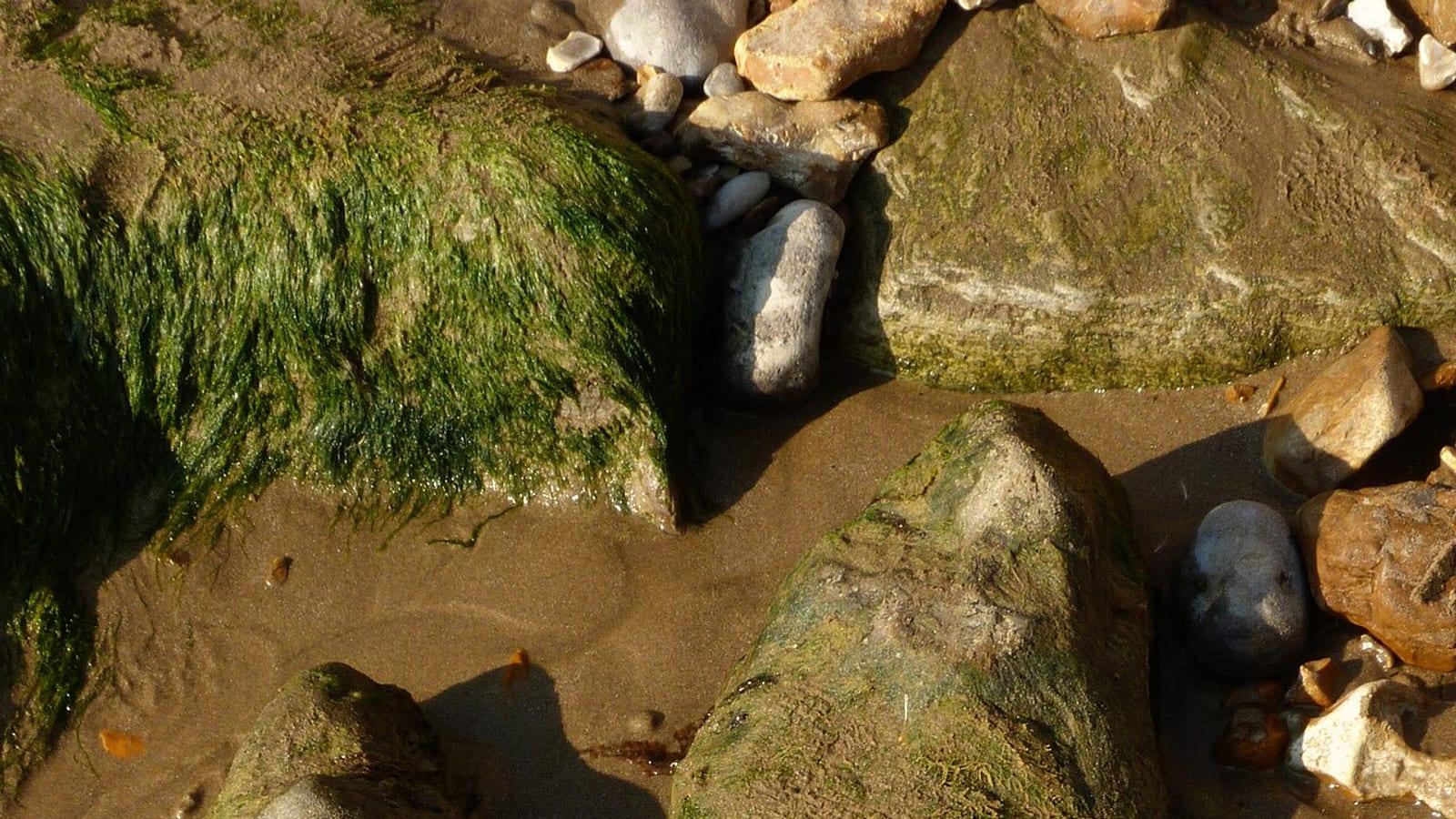
The plant debris bed east of Grange Chine is the most consistently productive spot in the bay. The surface of this bed is densely covered with carbonised plant fragments, but patience in searching the same surface will turn up isolated dinosaur teeth and small bone fragments. The teeth are small, often under a centimetre, and require a careful eye to distinguish from plant material. They are typically dark brown or black with a characteristic faceted surface. Dinosaur bones, including fragments attributed to iguanodontians and sauropods, are found along the broader foreshore as rolled fragments worked out of the cliffs. The sauropod discovery that brought Brighstone Bay to prominence was made in this general area, though complete bones are extremely rare and most material recovered is fragmentary. Crocodile remains, including teeth and scute fragments, also occur in the Wealden beds here. Turtle shell fragments, typically appearing as curved pieces of pitted bone, turn up on the beach. The Vectis Formation at the top of the Wealden sequence introduces lagoonal and shallow-water deposits that can contain plant fossils, bivalves, and occasional fish material.
Geologic History
The Ancient Environment
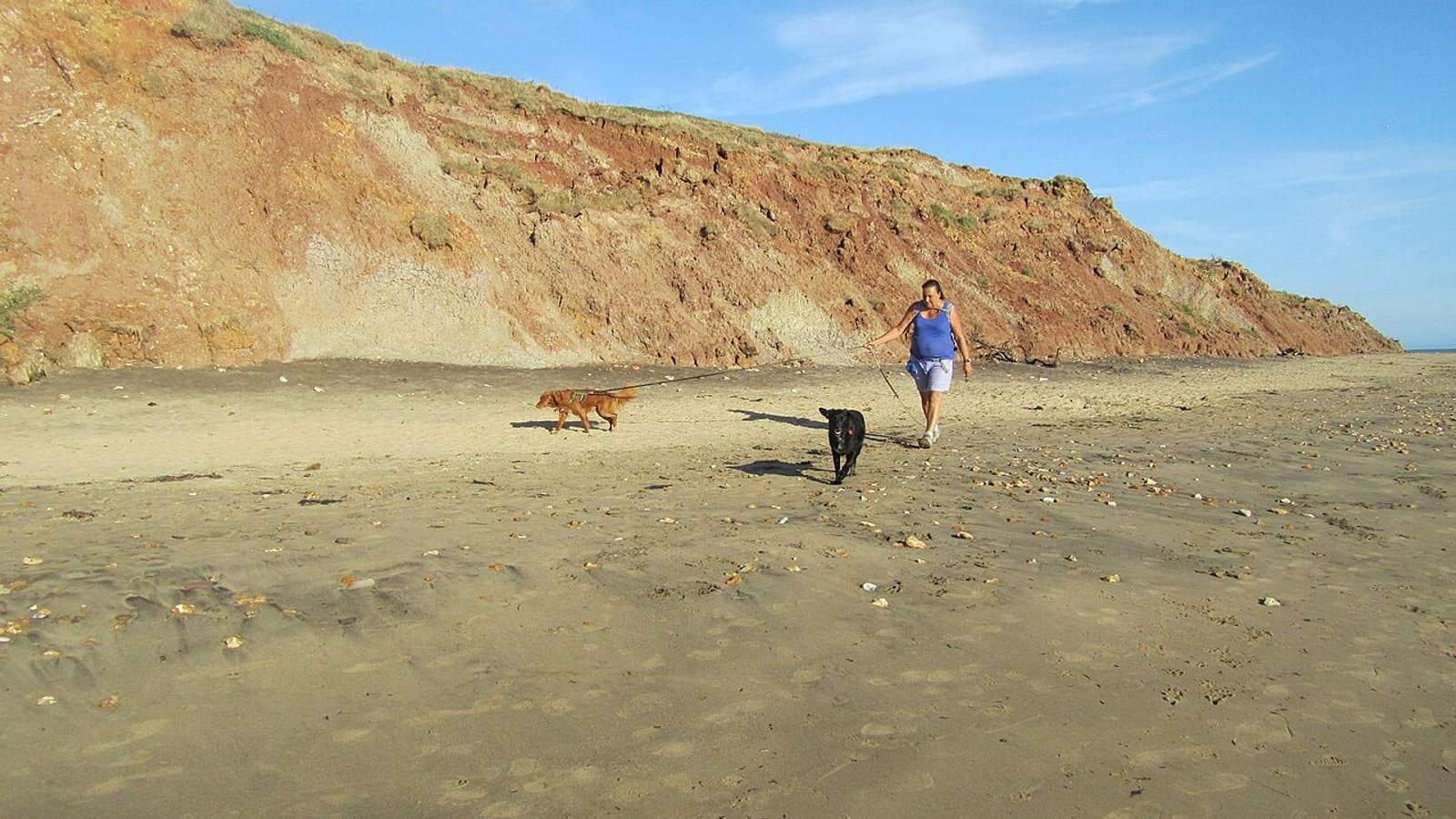
Brighstone Bay exposes two formations within the Wealden Group, both deposited during the Barremian stage of the Early Cretaceous period, approximately 125 million years ago. The lower Wessex Formation represents river valleys and floodplains in a warm subtropical environment. Interbedded sandstones and mudstones record channel deposits and overbank floodplain muds respectively. The vivid colours, ranging from purple and red through buff and grey, reflect alternating oxidising and reducing conditions in a seasonally flooded landscape. The upper Vectis Formation marks a transition to shallower, more restricted conditions as the sea began to encroach on the freshwater environment. Lagoonal and brackish-water deposits with fluctuating salinities replace the purely freshwater floodplain facies. This transition records the early stages of the marine transgression that would eventually flood the entire area and deposit the overlying Lower Greensand Formation. The vegetation of the Wessex Formation floodplain consisted of conifers, tree ferns, and cycad-like plants that supported the diverse dinosaur community whose remains are now found on the beach.
How Brighstone Bay Became a Fossil Collecting Site
The southwest coast of the Isle of Wight has been eroding steadily for centuries, driven by wave action from the English Channel against the relatively soft Cretaceous sediments. The Military Road that runs along the clifftop has been progressively repositioned inland as the cliff edge retreats. Each storm season strips fresh material from the cliff face and distributes bone fragments, teeth, and plant material across the foreshore. The combination of soft matrix and durable fossilised bone means that remains can travel some distance before being found. The most productive periods for collecting are typically the weeks following winter storms, when fresh material has been exposed and has not yet been buried again under mobile beach sediment.
Collecting Rules and Regulations
Is Fossil Collecting Allowed?
Brighstone Bay is a public beach and collecting loose fossils from the foreshore is permitted. The accepted code of practice for the Isle of Wight applies: collect only loose material already detached from the cliff, do not excavate into cliff faces or cause deliberate rock falls, and report significant vertebrate finds to the Dinosaur Isle museum at Sandown. The island's museums actively study the Wealden fauna and welcome reports of significant finds. Commercial collecting is not permitted without a licence.
Recommended Tools
No specialised tools are required for routine foreshore collecting at Brighstone Bay. Walking slowly along the tide line and examining each likely fragment is the most effective method. A hand lens helps when examining small teeth and bone fragments. A soft brush is useful for cleaning finds in the field. Bring wrapping material for any significant specimens.
Safety
The cliffs along Brighstone Bay are actively eroding and cliff falls are a regular occurrence, particularly after rain and frost. Never stand or sit at the cliff base, and maintain a safe distance from the cliff face at all times. The foreshore narrows significantly at high tide along sections of the bay, making it possible to be cut off. Check tide tables before descending to the beach and allow adequate time to return to the access point before the tide comes in. The terrain between access points can be rough, with boulder fields and shingle banks to cross.