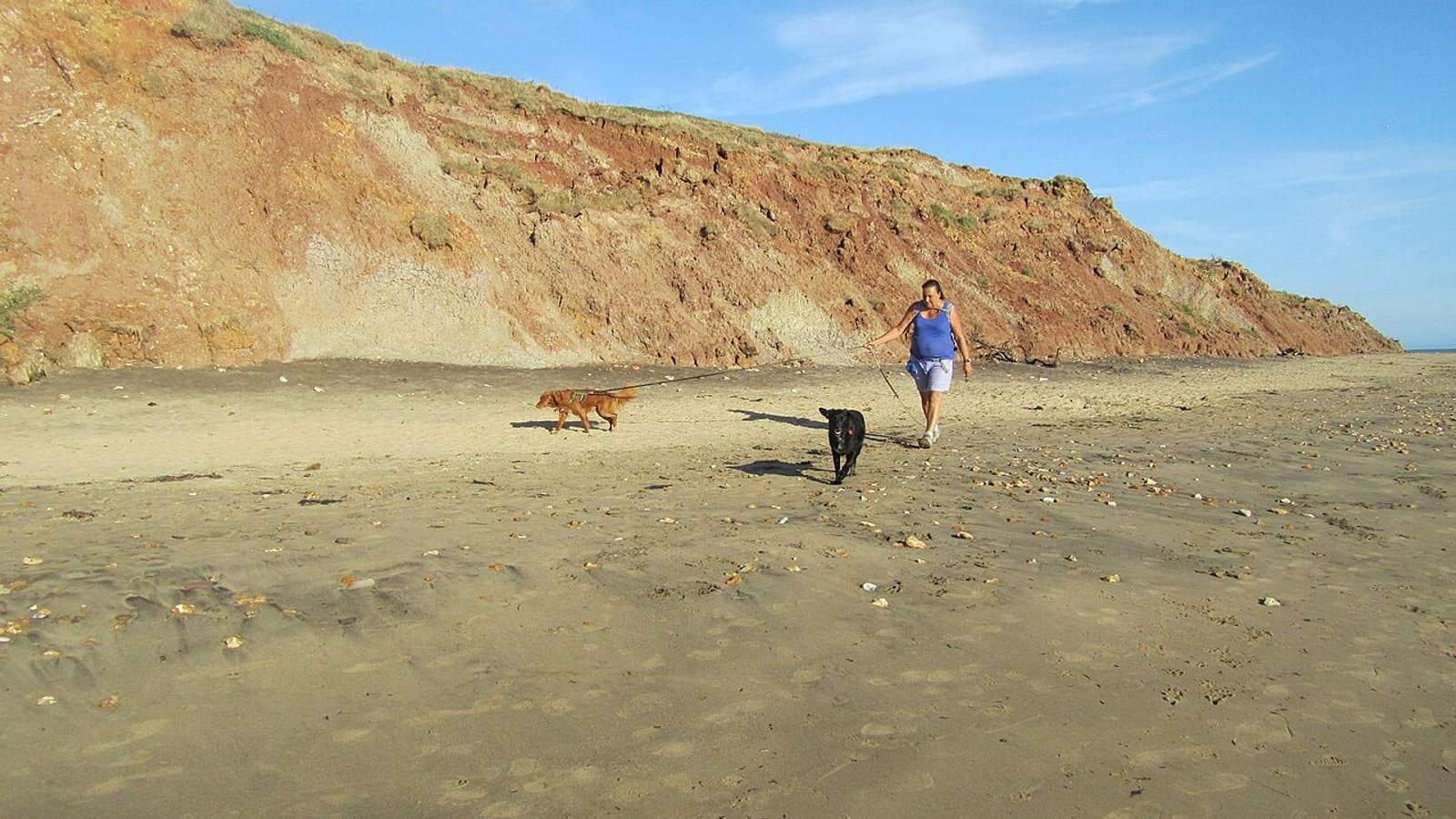
Brook Bay Isle of Wight Fossil Hunting Guide
Image: Sue Turner via Wikimedia Commons
Brook Bay on the Isle of Wight exposes Early Cretaceous Wealden beds with dinosaur bone fragments on the foreshore. Free to collect; full guide included.
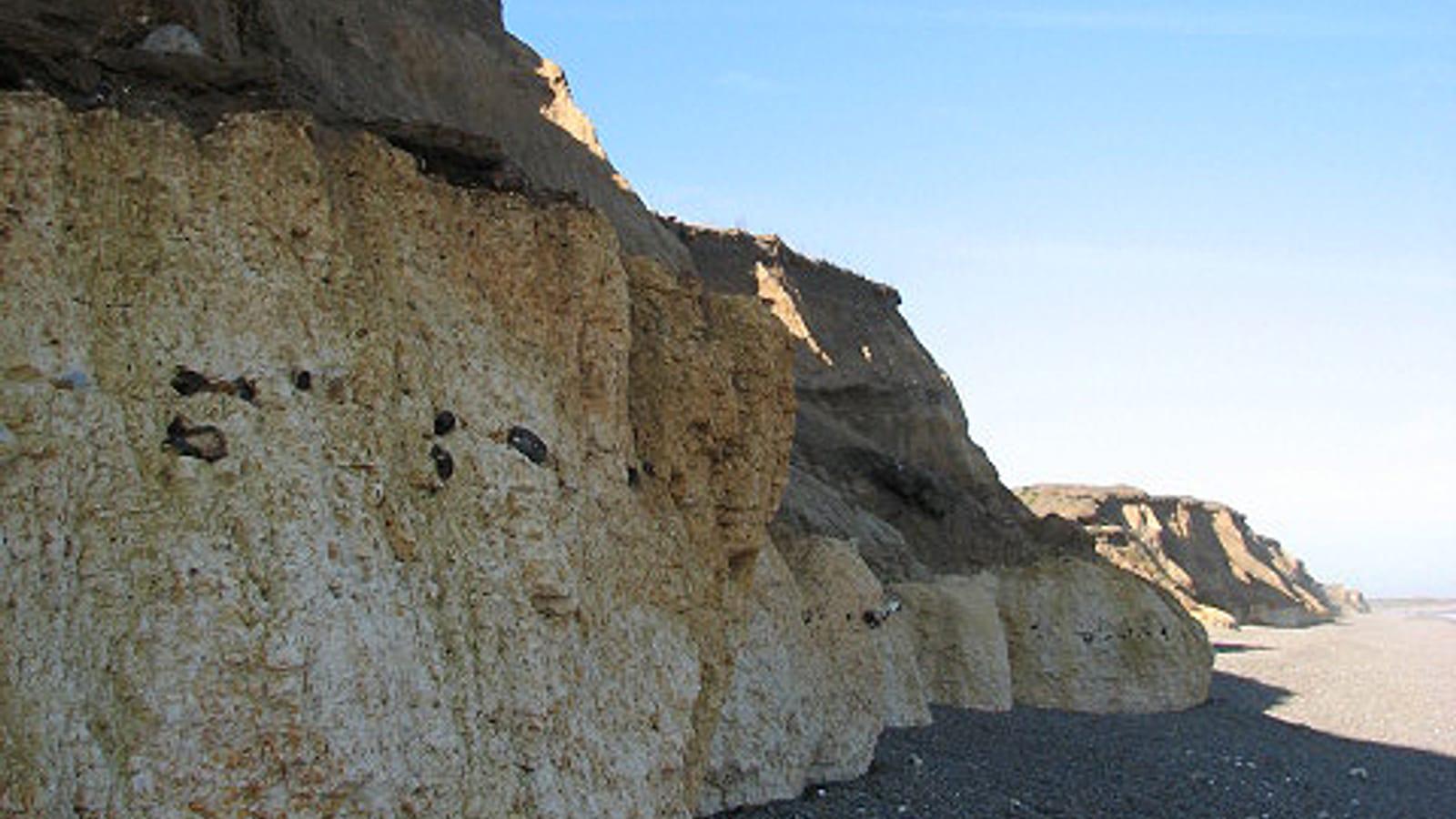
Brook Bay on the southwest coast of the Isle of Wight exposes the Early Cretaceous Wealden Group in colourful cliffs of purple, red, and blue-grey sandstones and mudstones. These sediments, laid down approximately 125 to 126 million years ago in a warm freshwater floodplain environment, preserve a range of dinosaur and reptile material. Most finds here are rolled or fragmentary, worked loose from the cliffs by wave action and caught up in the shingle and foreshore sediment, but searching the beach systematically yields real rewards. Larger bones, though rare, have been found by careful collectors walking the tide line.
Brook Bay lies between Compton Bay and Brighstone Bay and shares the same Wealden sequence exposed along this stretch of the Military Road coast. The Greensand formation overlying the Wealden beds is also visible at the cliff tops. This guide covers how to reach the bay, what material is realistically findable, the geological context, and the rules for collecting on the Isle of Wight.
 Brook Bay Isle of Wight - geograph.org.uk - 3699417.jpg. Photo: Sue Turner via Wikimedia Commons (CC BY-SA 2.0)
Location and Directions
Address
Brook Bay, near Brook, Isle of Wight, PO30 4HE, England.
Directions and Parking
From Newport, take the A3054 west to Brighstone, then follow the minor road south signposted to Brook. Continue to the coast, where the A3055 Military Road runs along the clifftop. A National Trust car park is located near Brook Chine, off the Military Road, with pay and display charging approximately £2 per hour; National Trust members park free. The postcode PO30 4HE will bring you to the Brook area on satnav. Public toilets are available at Compton Chine, a short walk along the coast path. From the car park, follow the footpath down through the chine to the beach. The bay is also accessible by walking east or west from Compton Bay or Hanover Point car parks, all of which give access to the same stretch of Wealden coast. The exposures are best at low to mid tide when the foreshore is fully uncovered.
What Fossils You'll Find
The predominant finds at Brook Bay are fragments of dinosaur bone, mostly rolled and abraded by wave action. The dark brown or black bone material stands out against the lighter beach sediment once you train your eye to recognise it. Iguanodontian bones are most common, reflecting the abundance of these large ornithopod dinosaurs in the Wealden ecosystem. Theropod bones, though rarer, have also been found along this stretch of coast.
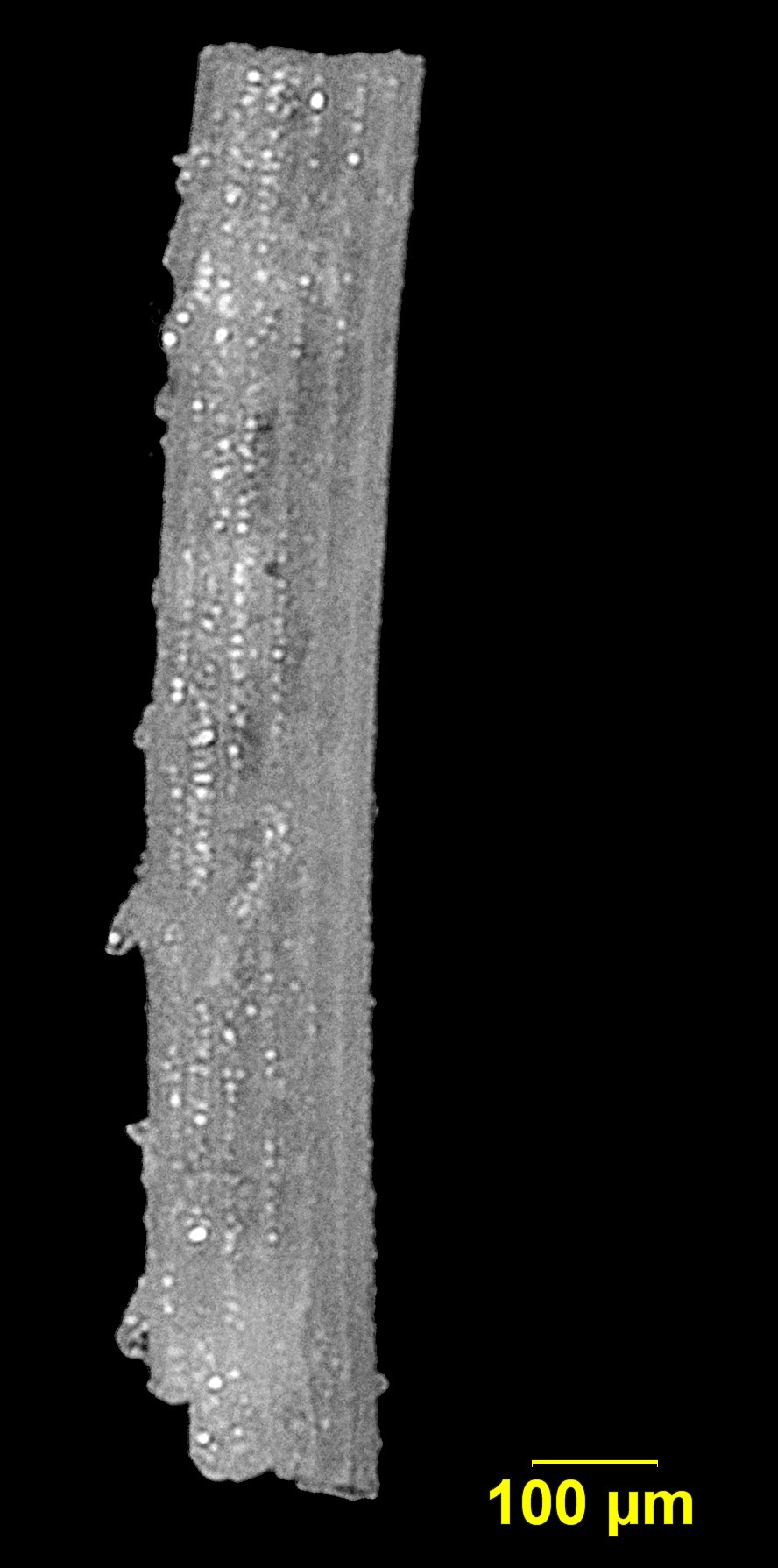 MenuhaEchinoidSpine.jpg. Photo: ARetzler11 via Wikimedia Commons (CC BY-SA 3.0)
Crocodile teeth and bones occur in the Wealden beds and turn up on the beach. Turtle shell fragments are another find to watch for, typically appearing as slightly curved pieces of pitted bone. Fish scales and teeth from the freshwater fish that inhabited the Wealden lakes and rivers also appear. Plant material, including carbonised wood fragments, is sometimes found in the finer-grained mudstone horizons.
The most effective approach is to walk the storm tide line and the foreshore just below it, working slowly and looking for bone texture and colour rather than shape, since most fragments are too abraded to be identified by form alone. After storms, fresh material is exposed and collecting conditions improve significantly.
Geologic History
The Ancient Environment
The Wealden Group at Brook Bay was deposited during the Barremian stage of the Early Cretaceous period, approximately 125 to 126 million years ago. At this time, the Isle of Wight lay at a paleolatitude equivalent to roughly 22 degrees north, within a Mediterranean-type climate zone characterised by warm, wet winters and hot, drier summers. The environment was a low-lying floodplain threaded by meandering rivers, seasonal ponds, and oxbow lakes. Periodic flooding spread fine sediment across the plain, creating the interbedded mudstones and sandstones visible in the cliffs today.
The vivid purple, blue, and pink colours of the Wealden sediments reflect the oxidising conditions of a well-aerated floodplain soil environment. The vegetation consisted of conifers, cycads, and tree ferns. This landscape supported a diverse vertebrate fauna including large sauropod dinosaurs, iguanodontids, theropods, crocodilians, turtles, and freshwater fish. The same Wealden sequence is exposed continuously along the Military Road coast from Brook westward to Compton Bay and Hanover Point, giving collectors a long stretch of productive shoreline to work.
How Brook Bay Became a Fossil Collecting Site
Coastal erosion by the English Channel has been steadily cutting back the southwest coast of the Isle of Wight for centuries, exposing successive sections of the Wealden sequence. The relatively soft nature of the mudstones and sandstones means that cliff falls are frequent, particularly after winter storms and heavy rainfall. Each fall brings new material to the foreshore, where wave action eventually works the bones free and distributes them across the beach. The Military Road itself, which runs along the clifftop, has required repeated landward repositioning as the cliff edge recedes.
Collecting Rules and Regulations
Is Fossil Collecting Allowed?
Brook Bay is a public beach and collecting loose fossils from the foreshore is permitted. The Isle of Wight Council and Natural England ask that collectors follow a code of responsible practice: collect only loose material from the beach and foreshore, do not dig into or chisel the cliff faces, and report significant vertebrate finds to the local museums. The Dinosaur Isle museum at Sandown is the appropriate contact for scientifically significant material. The site is not designated as an SSSI along the collecting foreshore itself, but vertebrate fossils from SSSI-designated sections are protected.
Recommended Tools
No heavy tools are needed or appropriate here. A keen eye and a slow walk along the foreshore are your primary tools. A small hand lens helps distinguish bone texture from stone. A bag lined with bubble wrap or newspaper protects any finds on the walk back. If you carry a hammer for splitting nodules, use it only on loose beach material, never on the cliff face.
Safety
The Wealden cliffs along this coast are unstable. Cliff falls occur regularly and without warning. Always keep well away from the cliff base, particularly after rain or frost when the risk of collapse is highest. The Military Road car parks and clifftop paths have safety notices regarding cliff instability; take these seriously. Check the tide before descending to the beach as some sections of foreshore narrow significantly at high water.
Sources
Nearby sites
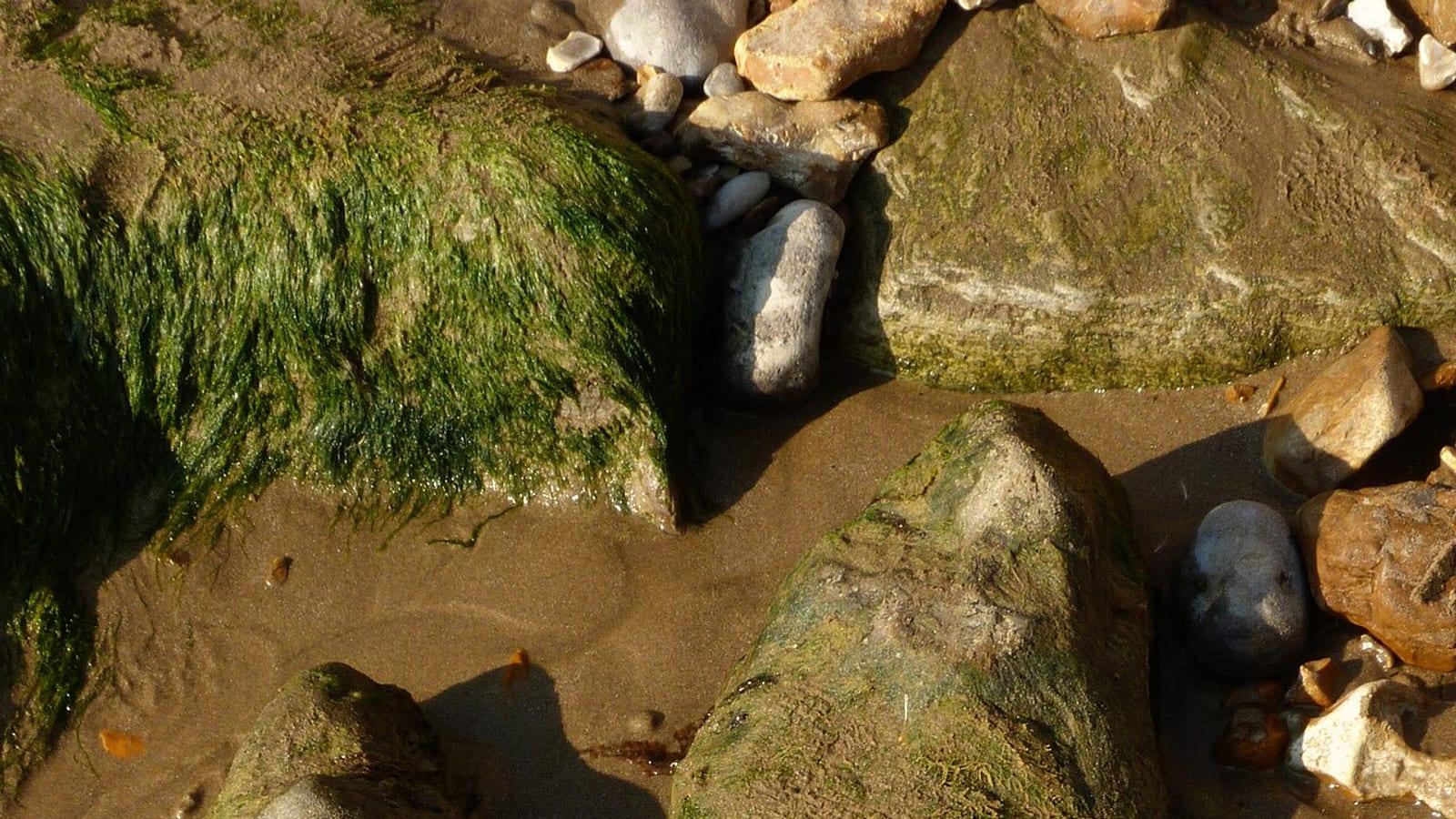 Compton Bay: Dinosaur TrackwaysDinosaur footprints, Dinosaur bone fragments
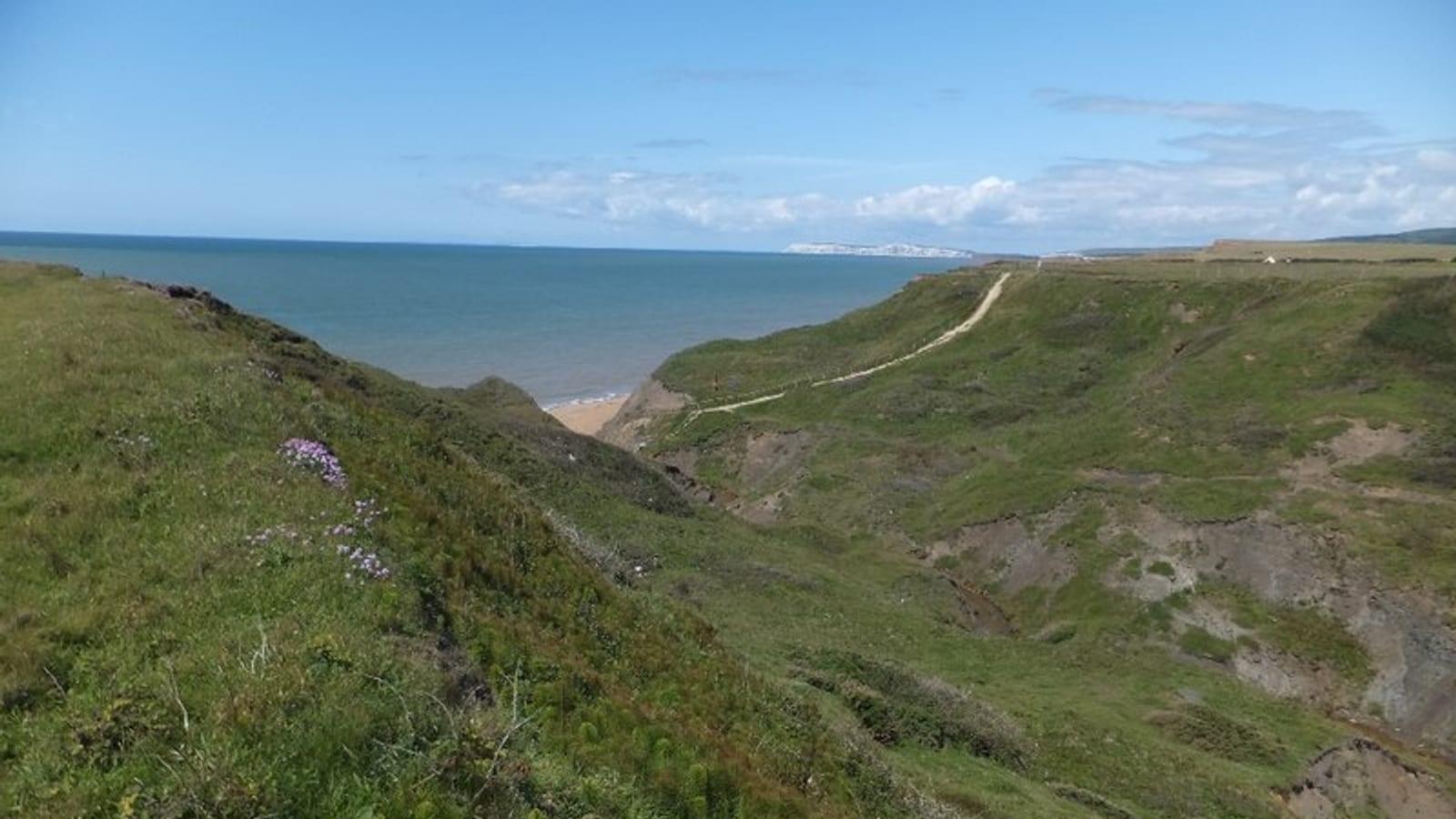 Shepherds Chine Whale Chine Isle of Wight Fossil Hunting GuideCrackers, Perna Bed
 Brighstone Bay Fossil Hunting Guideplant debris bed, dinosaur teeth
 Hamstead Isle of Wight Fossil Hunting GuideMollusc shells, Plant seeds and fragments