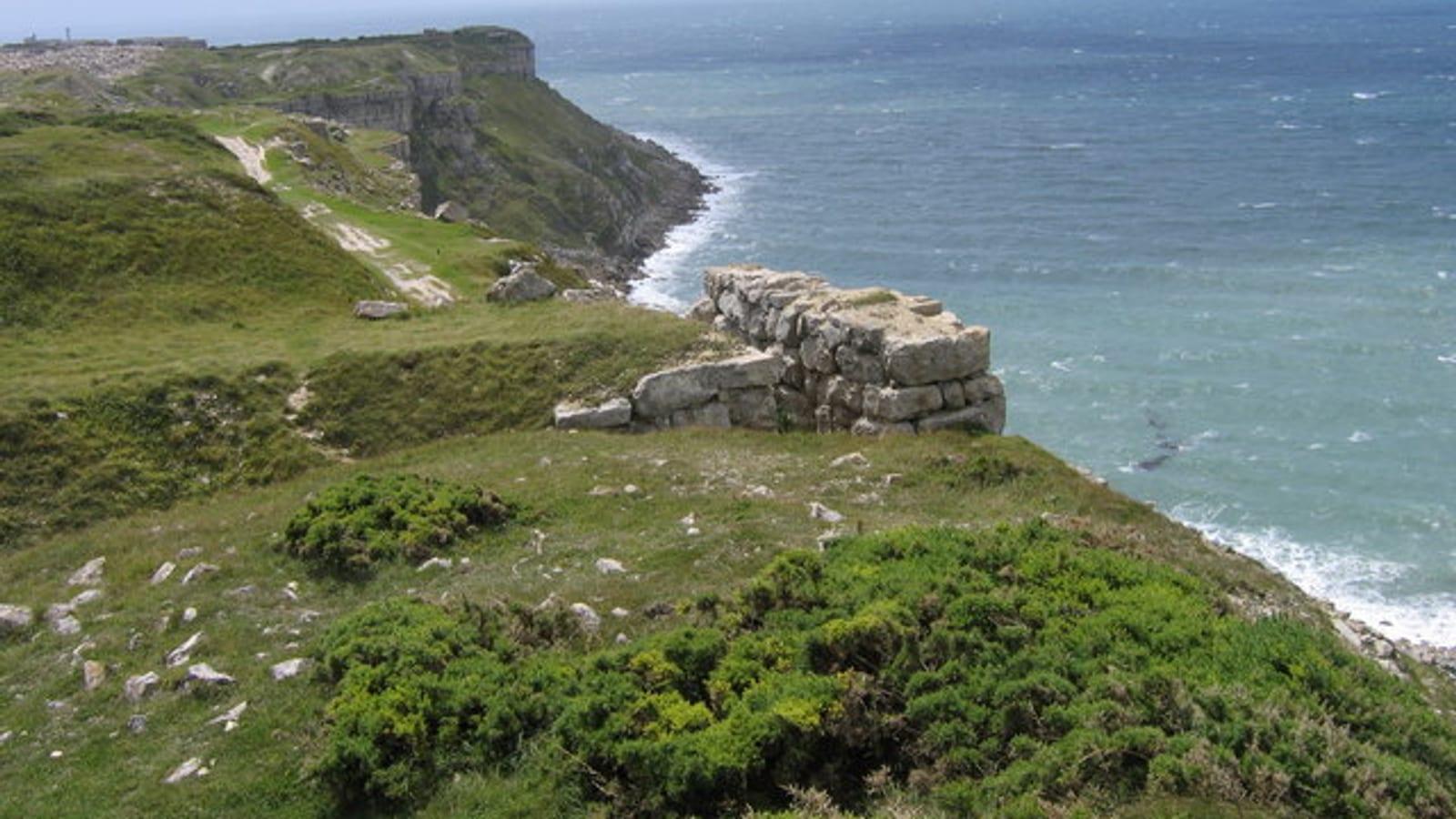
Isle of Portland: Dinosaur Trackways
Image: A-M-Jervis (CC BY-SA 2.0)
The Isle of Portland exposes Portland Stone with giant Titanites ammonites, dinosaur footprints, and fossil forest remains on the Dorset UNESCO World Heritage Coast.
The Isle of Portland projects into the English Channel from the Dorset coast, connected to the mainland only by the Chesil Beach tombolo. Beneath its surface lies some of the most significant Jurassic rock in Britain: the Portland Stone Formation, the type locality for both the Portland Stone and the Portlandian Stage of the Upper Jurassic. The island's quarries have supplied building stone since Roman times, and the same beds that built St Paul's Cathedral also preserve some of the largest ammonites found anywhere in the world, dinosaur footprints, and a fossil forest with trees still standing in their original growth positions. This guide covers the publicly accessible areas for fossil hunting and viewing, including Tout Quarry, the coastal exposures at Portland Bill, and the West Weare cliffs.
Portland is part of the UNESCO Jurassic Coast World Heritage Site, a 95-mile stretch of coast from Exmouth to Studland Bay. The island offers a range of fossil encounters, from giant Titanites ammonites visible in building stone across Britain to in-situ dinosaur tracks you can crouch down and examine yourself.
 Old Pier, Salen, Isle of Mull.jpg. Photo: Colin via Wikimedia Commons (CC BY-SA 3.0)
Location and Directions
Address
Portland Bill: Portland Bill Road, Portland, Dorset DT5 2JT. Tout Quarry: off Weston Road, Portland, DT5 1HW (approximate). West Weare cliffs: accessible from Chesil Beach car park at Chiswell end of the island.
Directions and Parking
From Weymouth, take the A354 south across the causeway and bridge onto the Isle of Portland. The island is narrow and easy to navigate. For Portland Bill at the southern tip, follow the main road through Easton and Weston, then continue south following signs to Portland Bill and the lighthouse. A pay and display car park sits near the lighthouse at the end of Portland Bill Road; expect charges of around £5 for two hours. Public toilets, the Lobster Pot Café, and the Pulpit Inn pub are all within easy walking distance.
For Tout Quarry, turn off the main road in Weston and follow signs to the Portland Sculpture and Quarry Trust site. Parking is available nearby. The quarry is managed as a public sculpture park with walking trails through restored quarry benches, making it the most accessible fossil and geology site on the island for families.
For West Weare, park at the Chesil Beach car park at the Chiswell end of the island (near the junction of the A354 and the coast road) and follow the coastal path north along the West Cliff. The coastal exposures here are reached via a rougher footpath; sturdy footwear is required and the terrain is uneven. Working quarries across the island are not open to the public without prior arrangement with operators Albion Stone or Portland Stone Firms.
What Fossils You'll Find
Ammonites are the most abundant macrofossil on Portland. The giant Titanites anguiformis reaches up to 900 mm in diameter and occurs throughout the Portland Freestone, particularly in the Roach bed where shell fragments and moulds are densely packed. Titanites giganteus occurs lower in the sequence in the Basal Shell Bed. These cannot be collected but can be examined in loose quarry spoil at Tout Quarry and in building stone across the island. Smaller ammonites are also present.
 Ammonites Fossils.jpg. Photo: Leoneix via Wikimedia Commons (CC BY 4.0)
Bivalves are extremely common throughout the Portland Stone. Oysters dominate many beds, particularly in the Basal Shell Bed, and their shells are densely packed in certain limestone layers. Gastropods occur alongside them. The distinctive limestone called the Roach is rich in bivalve fragments and moulds, creating a holey, irregular texture in the rock. This texture is the reason Portland Roach has a different character from Portland Whitbed, and it is visible in many buildings that used the stone.
Dinosaur footprints are preserved in the Hard Slatt layer of the Purbeck Group immediately above the Portland Stone. Three-toed theropod tracks and broader sauropod impressions occur at several locations on the island, with the best exposures at the base of the cliffs near the Bill and along the west coast. These are in-situ features and cannot be collected, but many are clearly visible at ground level.
The Fossil Forest is exposed along the coast east of Lulworth Cove (part of the broader Portland/Purbeck sequence), where the stumps and hollow moulds of conifer trees from the Purbeck Group are visible in their original growth positions. On Portland itself, fossil wood and rare plant material occur in the Purbeck beds above the main Portland Stone quarry sequence.
Marine reptile remains have been recovered from the West Cliff exposures of Portland; this is noted as one of the better Portlandian reptile sites in the UK, though finds are rare and require careful searching of fallen block material.
Geologic History
The Ancient Environment
The Portland Stone Formation was deposited during the Late Jurassic, in the Tithonian stage, approximately 147 to 152 million years ago. At that time, Britain sat at a paleolatitude of around 30 to 35 degrees north, roughly equivalent to modern North Africa. The climate was warm and humid with no polar ice. The sea covering southern Britain was clear, shallow, and warm, similar in character to the modern Bahamas platform: carbonate-rich water supporting abundant marine life.
The Portland Stone Formation consists of oolitic and shelly limestone, its oolite grains formed by the precipitation of calcium carbonate in layers around shell fragments in agitated shallow water. Giant ammonites, oysters, and gastropods thrived in this environment. The calcareous alga Solenopora portlandica is endemic to the formation and forms part of small patch reefs. The transition upward into the Purbeck Group marks a shift from this marine setting to a low-lying coastal plain with lagoons of fluctuating salinity, occupied by cypress-like conifers, cycads, sauropod and theropod dinosaurs, crocodiles, turtles, and early mammals.
How Isle of Portland Became a Fossil Collecting Site
Portland's geology has been exposed through more than a thousand years of quarrying for building stone. Roman settlers extracted stone from the island for coffins and monuments; large-scale quarrying expanded dramatically after Christopher Wren selected Portland Stone for the rebuilding of St Paul's Cathedral following the Great Fire of London in 1666. This industrial extraction, covering the surface of the island with quarry benches and waste heaps, created extensive exposures of fossil-bearing rock. Former working quarries, including Tout Quarry, have been converted into public nature reserves and sculpture parks, making the fossil beds accessible without entering active extraction sites. Coastal erosion along the west cliffs continues to expose new material.
Collecting Rules and Regulations
Is Fossil Collecting Allowed?
The situation at Portland is varied depending on the specific location. At Tout Quarry (Portland Sculpture and Quarry Trust), the site is publicly accessible and loose fossil material in quarry spoil can be examined, though formal collecting policies should be confirmed with the Trust directly before removing material. At Portland Bill and the coastal exposures, the foreshore is subject to standard UK beach access law, and loose material from the foreshore can be collected in reasonable quantities for personal use. The entire Jurassic Coast is a UNESCO World Heritage Site, and many specific outcrops carry SSSI designation, which prohibits hammering in-situ rock, breaking cliff faces, and bulk collecting. Working quarries are private and require specific permission from Albion Stone or Portland Stone Firms before entry. Do not enter working quarry areas without prior arrangement.
Recommended Tools
At Tout Quarry and coastal spoil areas, a hand lens, small brush, and containers for loose surface finds are appropriate. Do not bring hammers or chisels to SSSI-designated sections. At coastal exposures, wear sturdy boots with ankle support as the terrain is rough and uneven. Bring water, particularly in summer when the exposed limestone reflects heat significantly.
Safety
The west cliffs at Portland are high and subject to rockfall. Keep away from cliff bases and never stand beneath overhanging sections. The coastal path along West Weare is unfenced in places and the drop to the sea is significant. Portland Bill itself is one of the most dangerous headlands in the English Channel; the Portland Race, a powerful tidal overfalls zone, begins immediately offshore, and the sea can be rough even in calm conditions. Do not enter the water near the Bill. Check tide times before walking coastal sections, as some foreshore areas become inaccessible on the incoming tide.
Sources
- https://www.jurassiccoast.org/discover/sites/isle-of-portland/
- https://www.portland-sculpture.org/tout-quarry
- https://earthwise.bgs.ac.uk/index.php/Portland\_Stone\_Formation
- https://www.dorsetnature.co.uk/pages/portland.html
- https://en.wikipedia.org/wiki/Isle\_of\_Portland
- https://www.albionstone.com
Nearby sites
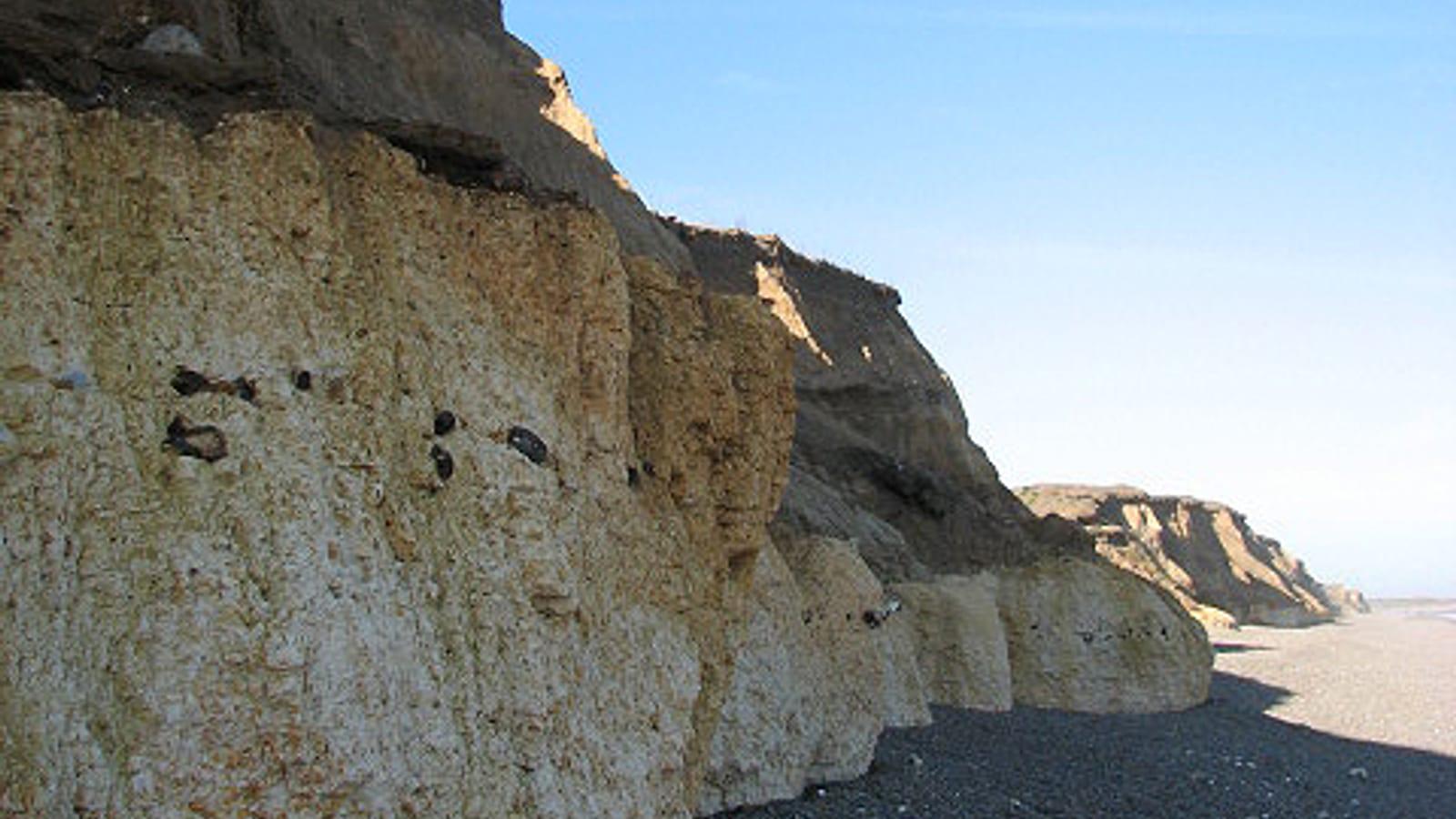 Find Fossils at Tidmoor Point Fossil Hunting GuidePyritised and limonitised ammonites, Belemnites
 Black Head Osmington Fossil Hunting GuideAmmonites, Belemnites
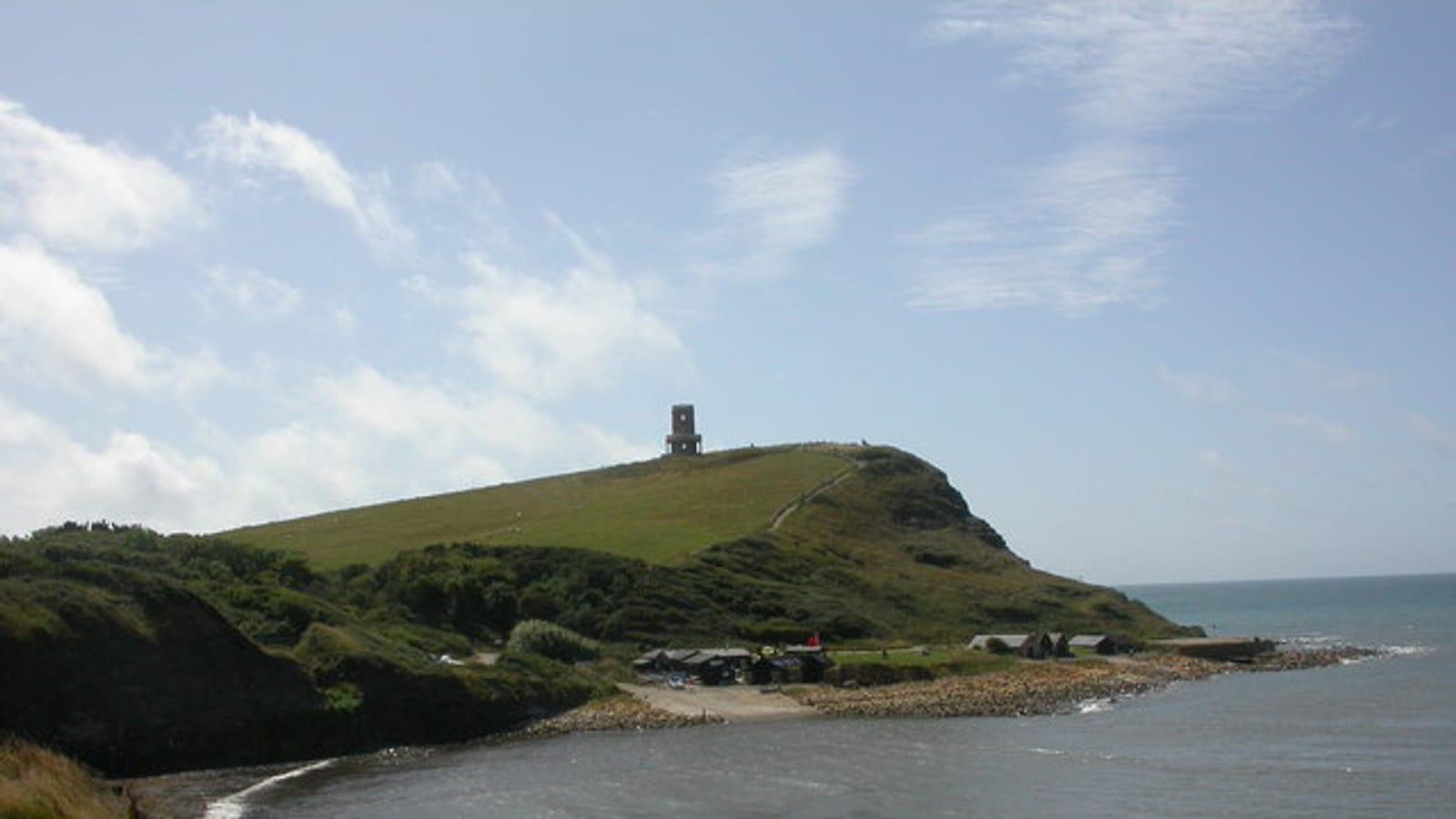 Kimmeridge Bay Fossil Hunting GuideEtches Collection Museum, Ammonites
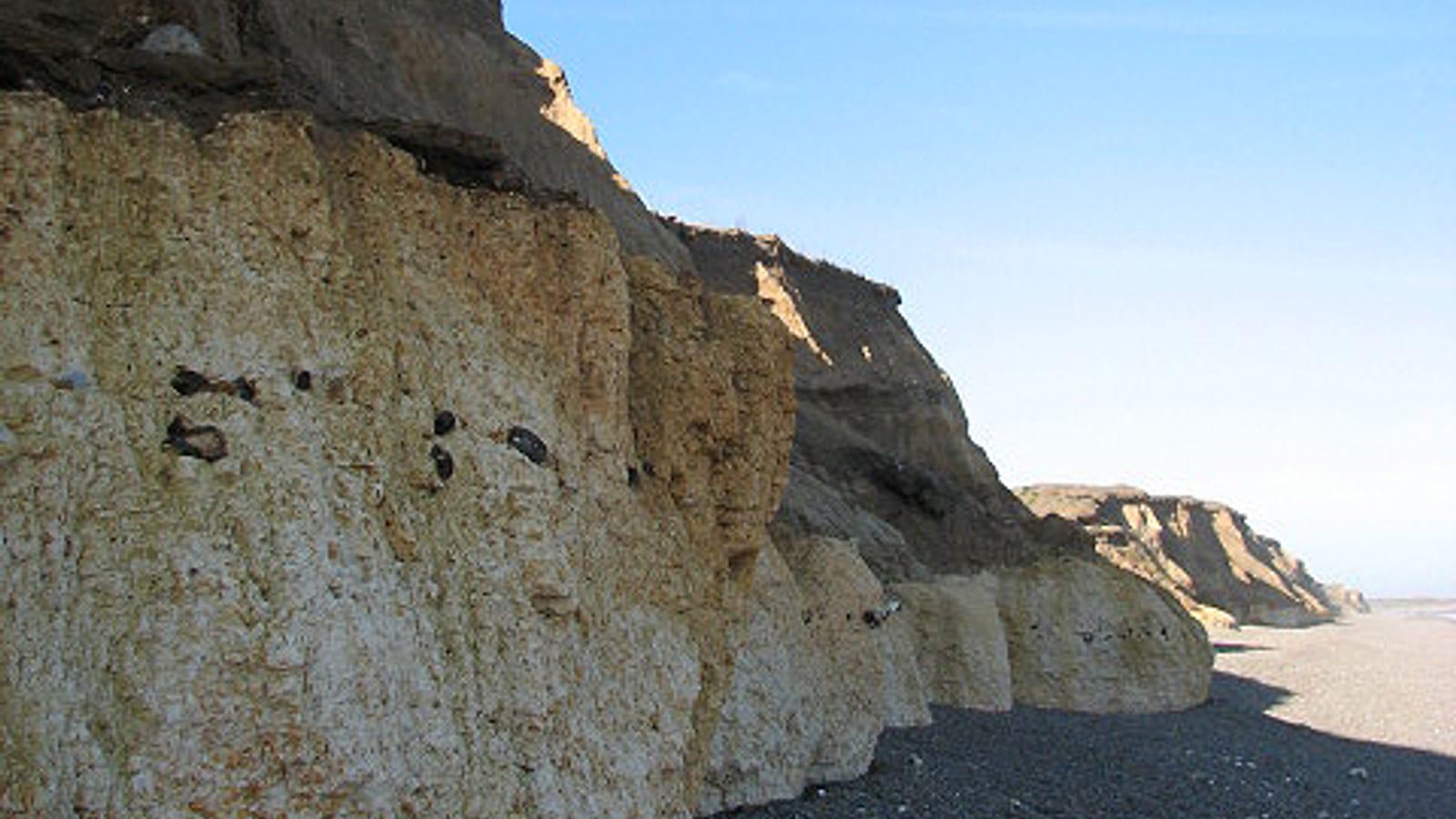 Dinosaur Footprints at Worth Matravers, Dorset: Dinosaur Trackwaysnot permitted, Sauropod footprints