Dinosaur Footprints at Worth Matravers, Dorset: Dinosaur Trackways
View in-situ sauropod dinosaur trackways at Worth Matravers, Dorset. Over 130 Early Cretaceous footprints preserved in Purbeck Limestone, open to the public. No collecting permitted.
On the foreshore near Dancing Ledge and Seacombe, south of Worth Matravers on the Jurassic Coast, a series of giant sauropod footprints lies exposed in the limestone bedrock, exactly where the animals set them down roughly 140 million years ago. These are not replicas or museum exhibits. They are the original tracks, preserved in the same stone that formed the floor of a warm, shallow lagoon during the Early Cretaceous, and they remain in place on the coastline for anyone willing to make the walk from the village. The site was discovered by quarrymen in 1997 and opened to the public with an interpretation board in 2016. Scientific investigation since then has documented over 130 individual tracks, likely from multiple animals walking together in the same direction across a tidal flat. This guide explains how to reach the trackway site, what you will see when you get there, the geology of the Purbeck Limestone Group in which the tracks are preserved, and the access arrangements that apply to this nationally significant site.
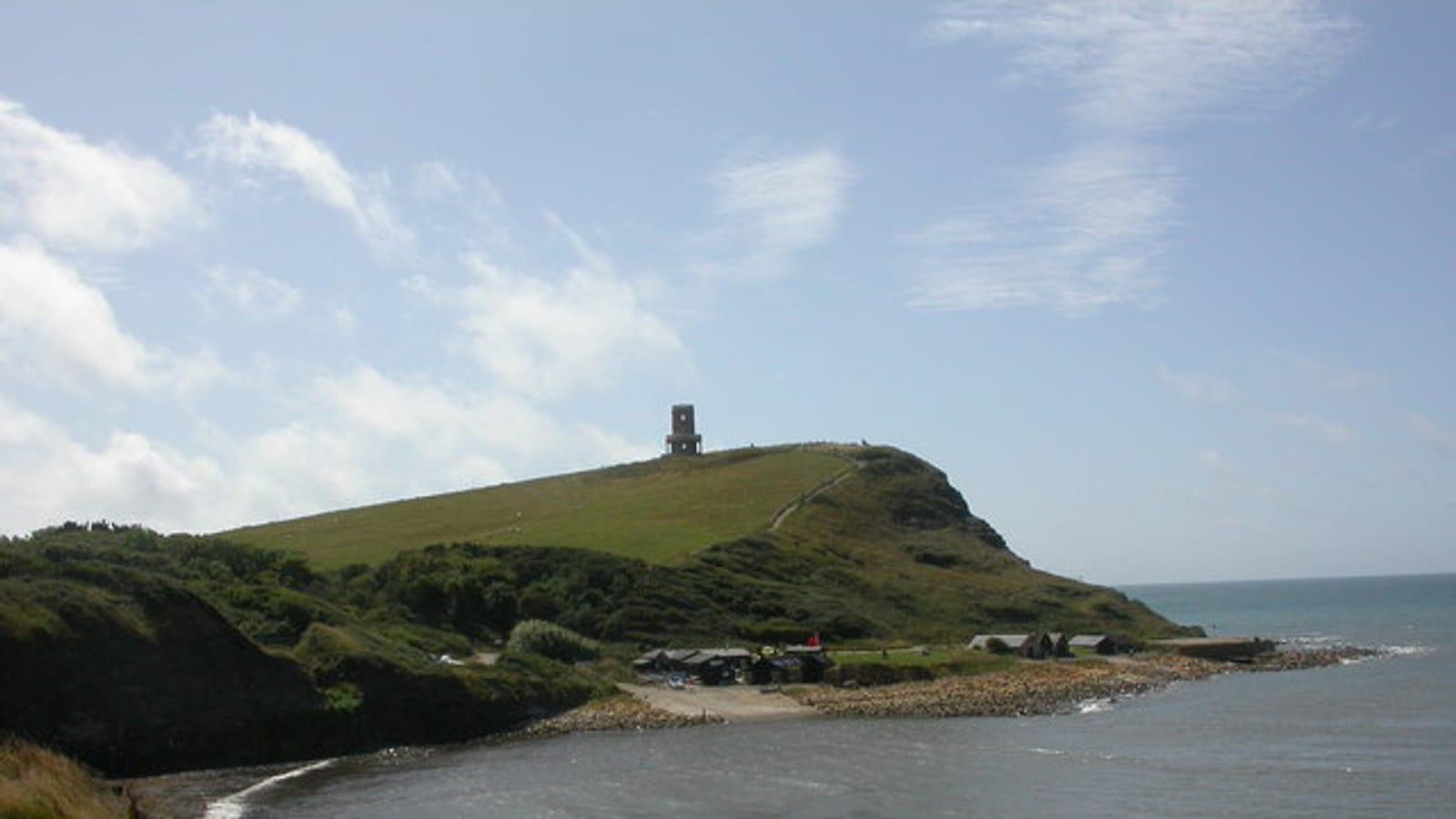
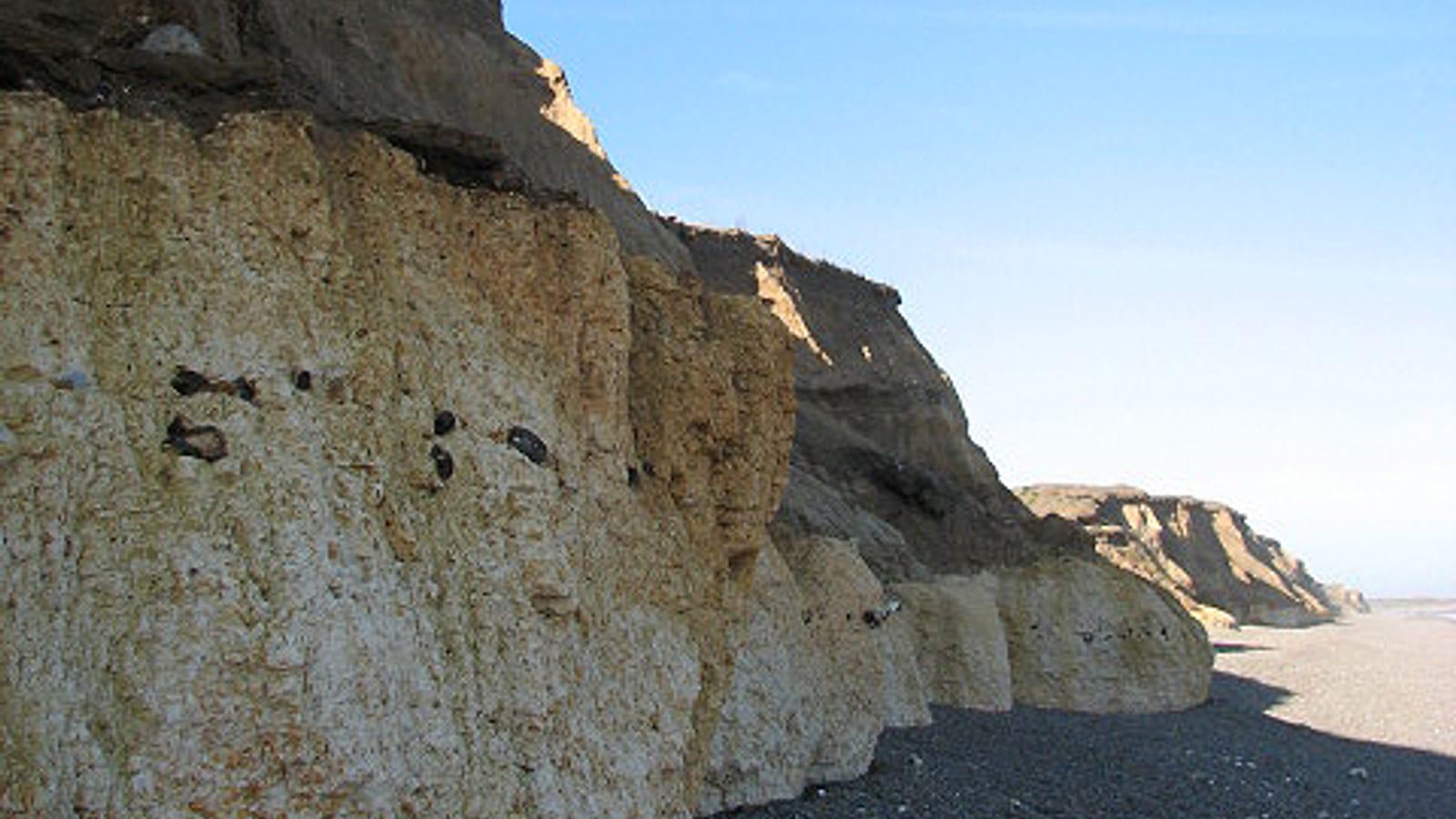
 Chalk cliffs and shingle beach, England. Photo: Wikimedia Commons contributor via Geograph (CC BY-SA 2.0)
Location and Directions
Address
Spyway Quarry / Dancing Ledge area, Worth Matravers, Dorset, BH19.
Directions
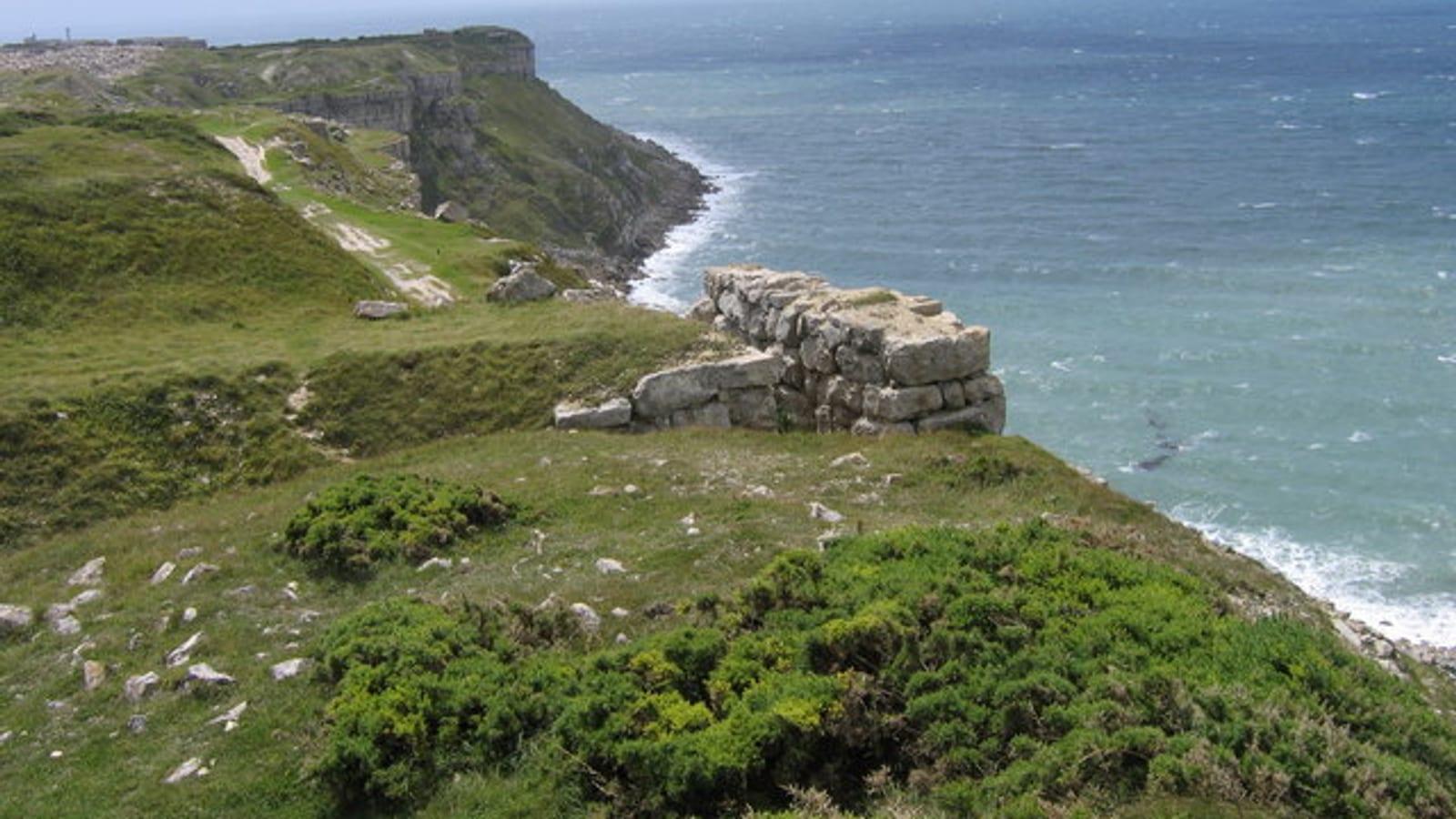
Worth Matravers is a small village in the Isle of Purbeck, signposted from the B3069 between Corfe Castle and Swanage. Park in the village car park in Worth Matravers, which charges a modest fee. From the car park, take the footpath south toward the coast along the Priest's Way or via the coastal path. The walk to the trackway site at Dancing Ledge takes approximately 1.5 kilometres over uneven terrain and takes around 25 to 30 minutes at a moderate pace. The path crosses open farmland and descends toward the cliff edge; sturdy footwear is necessary. The footprints are visible at the quarry site, now known as Spyway Quarry, which is marked with an interpretation board. The trackways are on the upper surface of the limestone bedrock and are best seen in low-angle light, particularly in the morning or late afternoon. Access requires crossing private farmland via the designated footpath. You should arrive and leave via the marked public footpath only.
What Fossils You'll Find
Fossil collecting is not permitted at this site. The dinosaur trackways are protected features of national scientific importance and are preserved in their original in-situ position in the bedrock. The Spyway Quarry trackway site exists for viewing, not collecting, and no material may be removed from the site under any circumstances.
Sauropod footprints are the principal feature. The individual tracks are large, roughly circular to oval depressions, each measuring roughly half a metre to one metre across, a few centimetres deep in the limestone surface. They were made by the feet of animals that may have been related to Brachiosaurus and stood over twelve metres tall. The tracks occur in parallel rows indicating the direction of travel and suggesting that more than one animal was moving together across the tidal flat.
Theropod tracks have also been recorded within the site area, visible as smaller, three-toed impressions on certain limestone surfaces. These are rarer than the sauropod tracks.
The nearby foreshore at Dancing Ledge exposes other Purbeck Limestone Group rocks that contain bivalves, gastropods, and other invertebrate fossils. However, the trackway site itself is for viewing only, and any collecting in the wider area should follow the general rules for coastal collecting in Dorset: surface collecting of loose material from the foreshore is generally permitted, but the chalk and limestone cliffs of the Jurassic Coast are SSSI-protected and must not be hammered.
Geologic History
The Ancient Environment
The dinosaur trackways are preserved within the Stair Hole Member of the Durlston Formation, part of the Purbeck Limestone Group. The specific layer containing the tracks is the top surface of the Bottom Freestone within the Freestone Vein, overlain by approximately six metres of younger Stair Hole Member beds. The Purbeck Group spans the late Jurassic to early Cretaceous, and the track-bearing beds were deposited approximately 139 to 145 million years ago. Britain at this time lay at approximately 37 degrees north palaeolatitude, and the environment was a warm coastal plain of lagoons, swamps, and river channels situated on the margins of the Tethys Sea. The limestone beds represent carbonate sediments deposited in shallow, partly enclosed lagoons where the water was warm and lime-rich. Sauropod herds walked across the firm, damp surface of the tidal flat, pressing their feet into the lime mud. The impressions were rapidly infilled by lime-rich sediment washing in with the tides, and the subsequent lithification of both the track surface and the infill preserved the tracks as three-dimensional casts. The presence of parallel trackways suggests group movement, possibly toward a watering point or feeding area on the lagoon margin.
How Worth Matravers Became a Fossil Viewing Site
The trackway surface was quarried for centuries as part of the Purbeck Stone industry, and the tracks, which are shallow depressions in the rock surface, were simply not recognised as dinosaur footprints during this period. It was quarrymen Kevin Keates and Trev Haysom who identified the tracks in 1997 during quarry operations at what is now Spyway Quarry. Scientific investigation began in 2002 under the direction of Professor Matthew Bennett of Bournemouth University, using DigTrace 3D photogrammetry to document the track surfaces digitally. The National Trust, which manages much of the surrounding coastal area as part of the Jurassic Coast, opened the site to the public in 2016 with an interpretation board providing context. The site is part of the Jurassic Coast UNESCO World Heritage Site and is recognised as the largest in-situ Purbeck Group dinosaur trackway site accessible to the public.
Collecting Rules and Regulations
Is Fossil Collecting Allowed?
Fossil collecting is strictly prohibited at the Spyway Quarry trackway site. The dinosaur footprints are in-situ geological features protected under the Wildlife and Countryside Act 1981 as part of a Site of Special Scientific Interest. No material may be removed from the trackway surface or the surrounding rock. The site is designated for viewing and education only. The Jurassic Coast World Heritage Site status adds an additional layer of protection and international recognition to this and other geological features in the area.
Recommended Equipment for Visiting
Bring a camera with the ability to photograph in low-angle light, as the tracks show up most clearly when the light catches the depressions at a shallow angle. A wide-angle lens helps capture the scale of the trackway as a whole. Download the relevant Ordnance Survey map for the area before you go, as mobile signal is limited on the Purbeck coast. Wear sturdy walking boots for the path from Worth Matravers, and bring waterproofs. The coastal path can be muddy and uneven.
Safety
The coastal paths in this area cross active cliff edges. Stay on the marked footpaths and do not approach the cliff edge. The limestone ledges near Dancing Ledge can be wet and slippery. If you continue to the Dancing Ledge foreshore, be aware that the tidal ledges can be covered by waves unexpectedly, particularly in swell conditions. There is no mobile phone signal in this area; inform someone of your plans before setting out. The walk back to Worth Matravers is uphill and should be accounted for in your planning.