Barton on Sea Fossil Hunting Guide
Barton on Sea, Hampshire is the global type section for the Bartonian Stage, yielding 600-plus mollusc species, shark teeth, and fish from 40-million-year-old Eocene cliffs.
Barton on Sea in Hampshire is the type section for the Bartonian Stage of the Eocene epoch, which means that when geologists worldwide define what Bartonian sediments look like, they refer to this stretch of eroding cliff. The beds have yielded more than 600 species of molluscs, and the foreshore regularly produces shark teeth, fish remains, and mammal bones from a warm subtropical sea that covered southern England around 40 million years ago. Collectors have been working this beach since 1766, when Gustavus Brander described the shells here in his landmark publication Fossilia Hantoniensia.
This guide covers access, parking, the fossils to look for, the geological story, and the rules so you can plan a visit with realistic expectations.
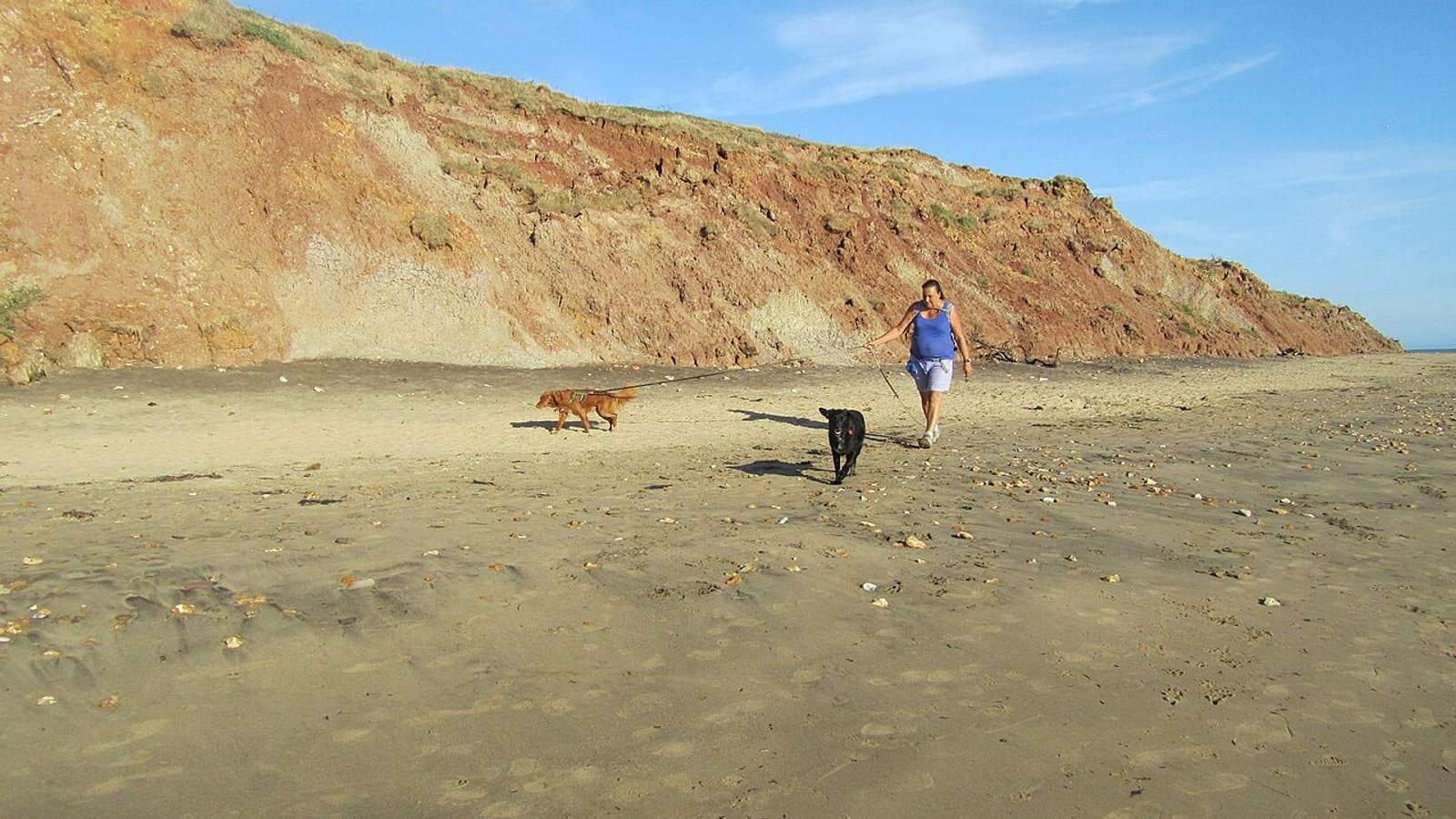
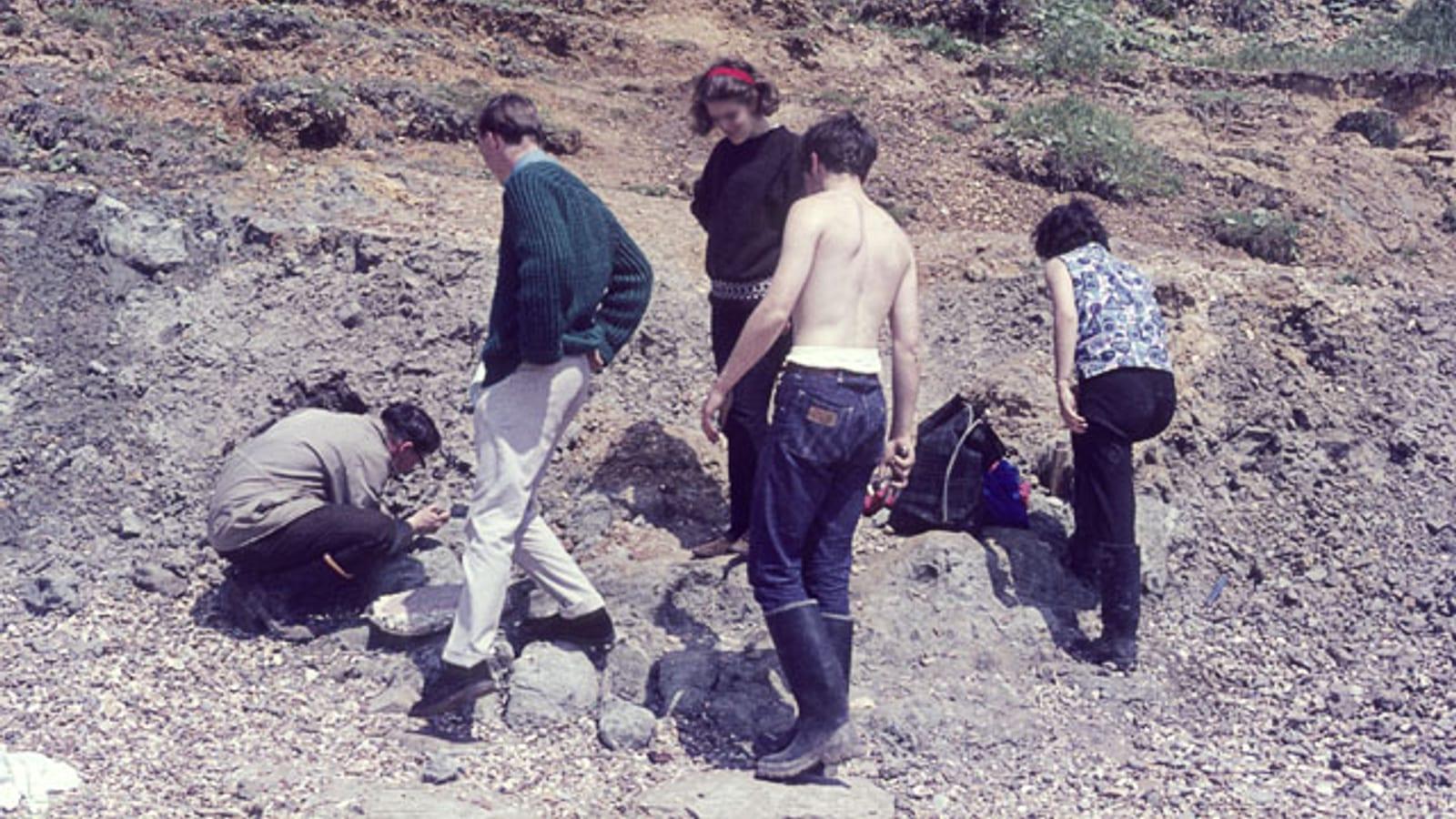
 Fossil hunting at Barton-on-Sea - geograph.org.uk - 1555003.jpg. Photo: John Rostron via Wikimedia Commons (CC BY-SA 2.0)
Location and Directions
Address
The recommended access point is Highcliffe Car Park, Waterford Road, Highcliffe, Christchurch BH23 4UN (OS grid reference SZ 216 933). An alternative car park is available at Barton seafront with shops nearby.
Directions and Parking
From the A35 between Bournemouth and New Milton, follow signs to Highcliffe. Take Waterford Road to the signposted Highcliffe Castle car park, from which a surfaced footpath leads down to the beach. Alternatively, park at the Barton seafront car park off Barton Court Road, though this involves a longer walk to the most productive sections of cliff. Walking between Highcliffe and Barton along the beach is sometimes impossible due to cliff falls and mudslides that block the foreshore; check conditions before committing to a long beach walk. Stay on the beach at all times and avoid the muddy cliff terraces, which are actively eroding and unstable. The cliffs erode at roughly one metre per year, so fresh material is constantly being released.
What Fossils You'll Find
Gastropods are the defining fossils of Barton on Sea. The Barton Clay has produced over 600 mollusc species, many described and named from specimens collected here. Most gastropod shells survive as internal moulds or fragmentary external casts, but well-preserved examples turn up regularly, particularly after cliff falls bring fresh material onto the beach. Turritella, Athleta, and Rimella are among the genera you are likely to find.
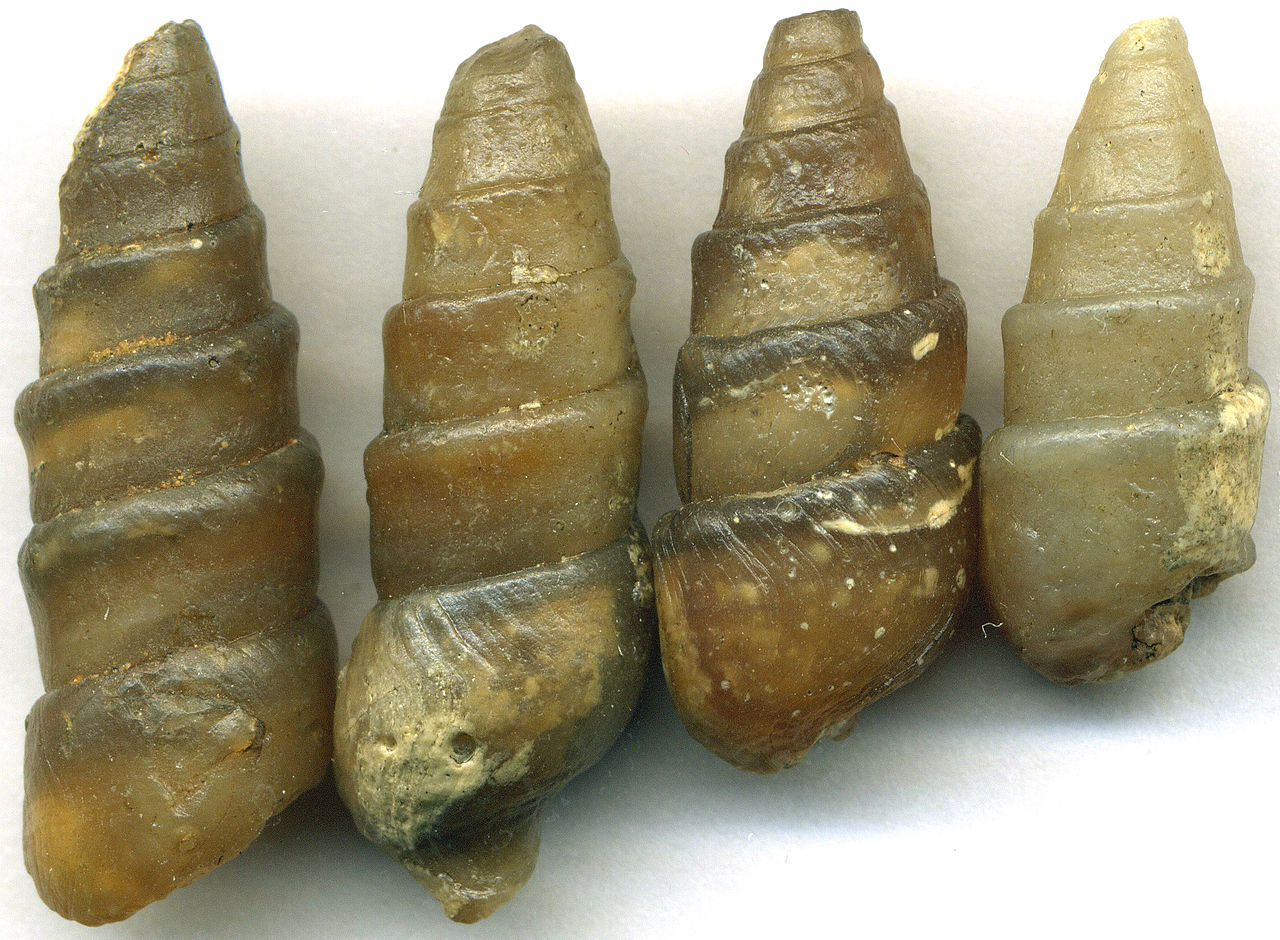 Chalcedonized fossil gastropods (Cretaceous; possibly from Dakhla, southern Morocco) (15230327942).jpg. Photo: James St. John via Wikimedia Commons (CC BY 2.0)
Shark teeth are a consistent find at Barton, with multiple species represented in the Barton Clay. Teeth from Striatolamia, Otodus, and various carcharhinid sharks appear in dark brown or black preservation. The teeth drop from the clay as it weathers and can be found on the foreshore surface and in the base of freshly collapsed material.
Fish remains include vertebrae, scales, and occasional skull elements from the diverse Eocene fish fauna. Mammal teeth and bone fragments appear less commonly; this site has produced early Eocene mammals, though such finds require careful searching through fallen clay blocks. Bivalves, echinoid fragments, and occasional crab claws round out a typical day's collecting.
Geologic History
The Ancient Environment
The Barton Clay Formation is divided into ten beds labelled A through K and grouped into Lower, Middle, and Upper phases, overlain by the Chama Sand and the Becton Sand, giving a total exposed sequence roughly 30 to 46 metres thick. These sediments belong to the Bartonian Stage of the Upper and Middle Eocene, dated to approximately 41.3 to 37.8 million years ago.
During Bartonian time, Britain lay at roughly 40 degrees north latitude, equivalent to the position of modern northern Spain. Sea surface temperatures exceeded 22 degrees Celsius, and the shallow marginal sea covering the Hampshire-Dieppe Basin supported a subtropical marine community of extraordinary diversity. The variation in bed composition from sandy clays at the base to dark sandy clays in the middle and lighter sandy units at the top reflects repeated shifts in sea level and in the proximity of the ancient coastline. When sea levels fell slightly and the shoreline approached, sand dominated; deeper, quieter water deposited clay. Atmospheric carbon dioxide reached approximately 4,000 parts per million during the Bartonian, contributing to a global climate considerably warmer than today.
How Barton on Sea Became a Fossil Collecting Site
The Hampshire coast between Highcliffe and Barton has been eroding continuously since sea levels stabilised after the last ice age. The Barton Clay is soft and offers minimal resistance to wave action. Cliff falls, mudslides, and beach scouring expose new material on a regular basis throughout the year. This natural erosion is what makes the site so productive: the same process that is gradually consuming the cliffs is also constantly delivering fresh specimens to the foreshore. The site requires no excavation; the sea does the preparation work.
Collecting Rules and Regulations
Is Fossil Collecting Allowed?
Surface collecting from the beach and foreshore at Barton on Sea is permitted and free. Personal, non-commercial collection of loose material from the beach is legal under UK law. The cliffs and foreshore form part of a Site of Special Scientific Interest. Under SSSI rules, you must not use hammers, chisels, or other tools to extract material from in-situ cliff face or bedrock. Working loose fallen blocks or picking material from the foreshore surface is acceptable and is the standard approach here.
Recommended Tools
A small hand trowel for turning loose beach material, a hand lens for examining small teeth and shell fragments, and sturdy bags or containers for your finds are all you need. Avoid tools that would allow you to chip directly at the standing cliff face. Old clothing is advisable as the clay is highly staining.
Safety
The cliffs at Barton on Sea are actively eroding and produce cliff falls without warning. Keep well clear of the cliff base and never stand directly beneath exposed clay. Mudslides on the cliff terraces can move quickly after rain. Always check the tide before walking along the foreshore, and do not attempt to walk between Highcliffe and Barton unless you are certain the passage is clear and you have sufficient time before the tide returns.
Sources
- https://www.ukfossils.co.uk/2011/02/02/barton-on-sea/
- https://www.discoveringfossils.co.uk/barton-on-sea-hampshire/
- https://wessexcoastgeology.soton.ac.uk/barton.htm
- https://www.ougs.org/london/event-reports/437/field-trip-barton-on-sea/
- https://www.ukafh.com/2018/05/18/fossil-hunt-at-barton-on-sea/
- https://depositsmag.com
- https://www.wikipedia.org/wiki/Barton\_on\_Sea