Ilminster Fossil Hunting Guide
Ilminster in Somerset yields Toarcian ammonites from ploughed fields and is home to the Strawberry Bank Lagerstätte, an Early Jurassic deposit of exceptional preservation.
The fields and former quarry sites around Ilminster in south Somerset have produced some of the most scientifically important Lower Jurassic fossils in Britain. The area around Strawberry Bank in particular is known for the Toarcian Lagerstätte, an Early Jurassic deposit of exceptional preservation that has yielded three-dimensional soft-tissue fossils of fish, ammonites with preserved colour patterns, and insects that are among the oldest known from the Mesozoic era. For the field collector, ploughed farmland around Ilminster yields ammonites from the Upper Lias Beacon Limestone Formation (historically called the Junction Bed) after each agricultural season. These are surface picks, requiring no tools, gathered from field surfaces after the ground has been turned. The town of Ilminster is accessible from the A303/A358, and local geological guides provide directions to specific productive localities. This guide covers what the area yields, its geological context, and the conditions under which collecting is possible. Ilminster is not a coastal site and lacks the continuous natural erosion that refreshes foreshore collecting areas. Productive collecting here depends on agricultural cycles and on establishing contact with landowners, but for those who do, the area continues to produce classic Somerset Jurassic ammonites with regularity.
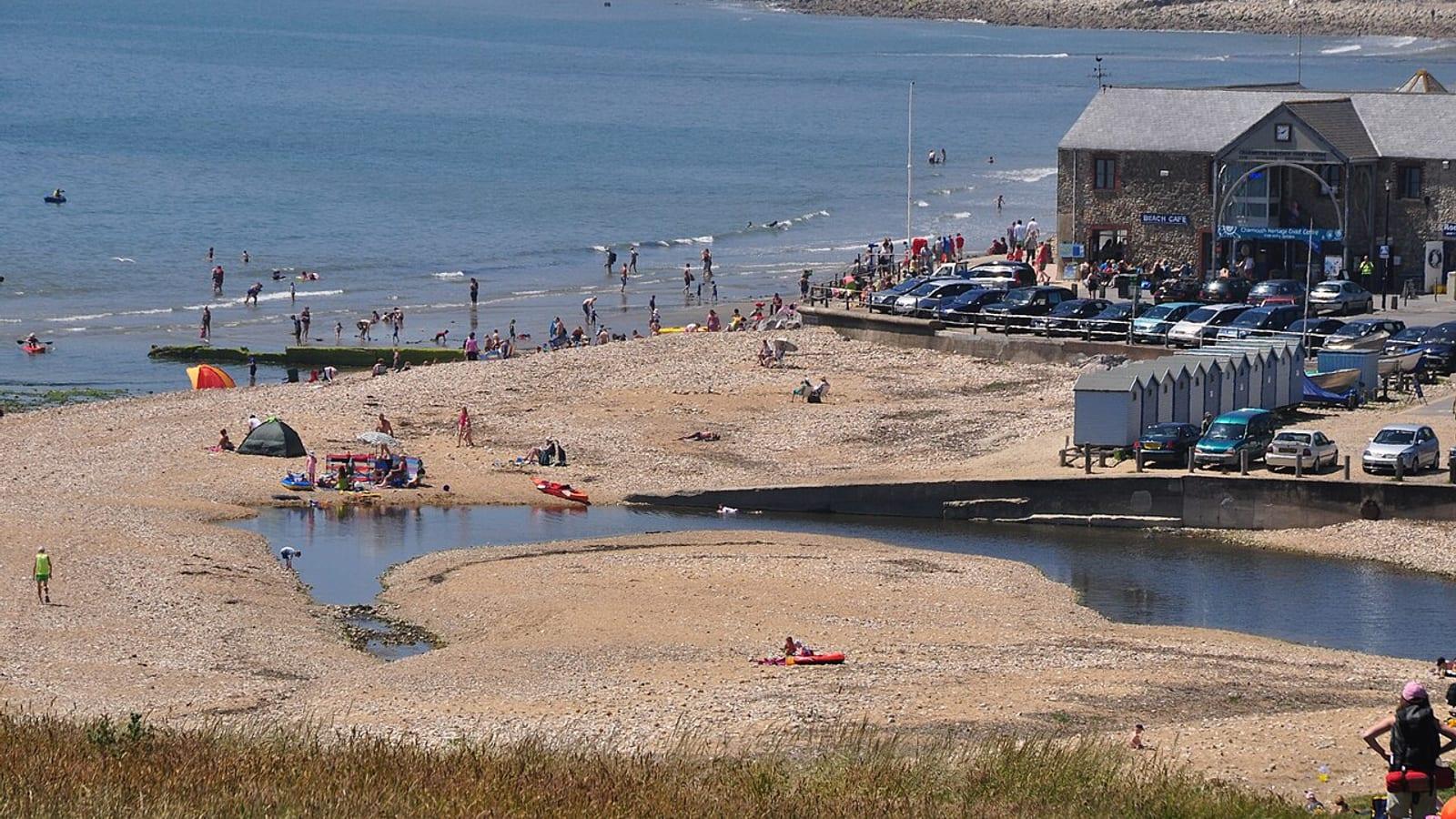
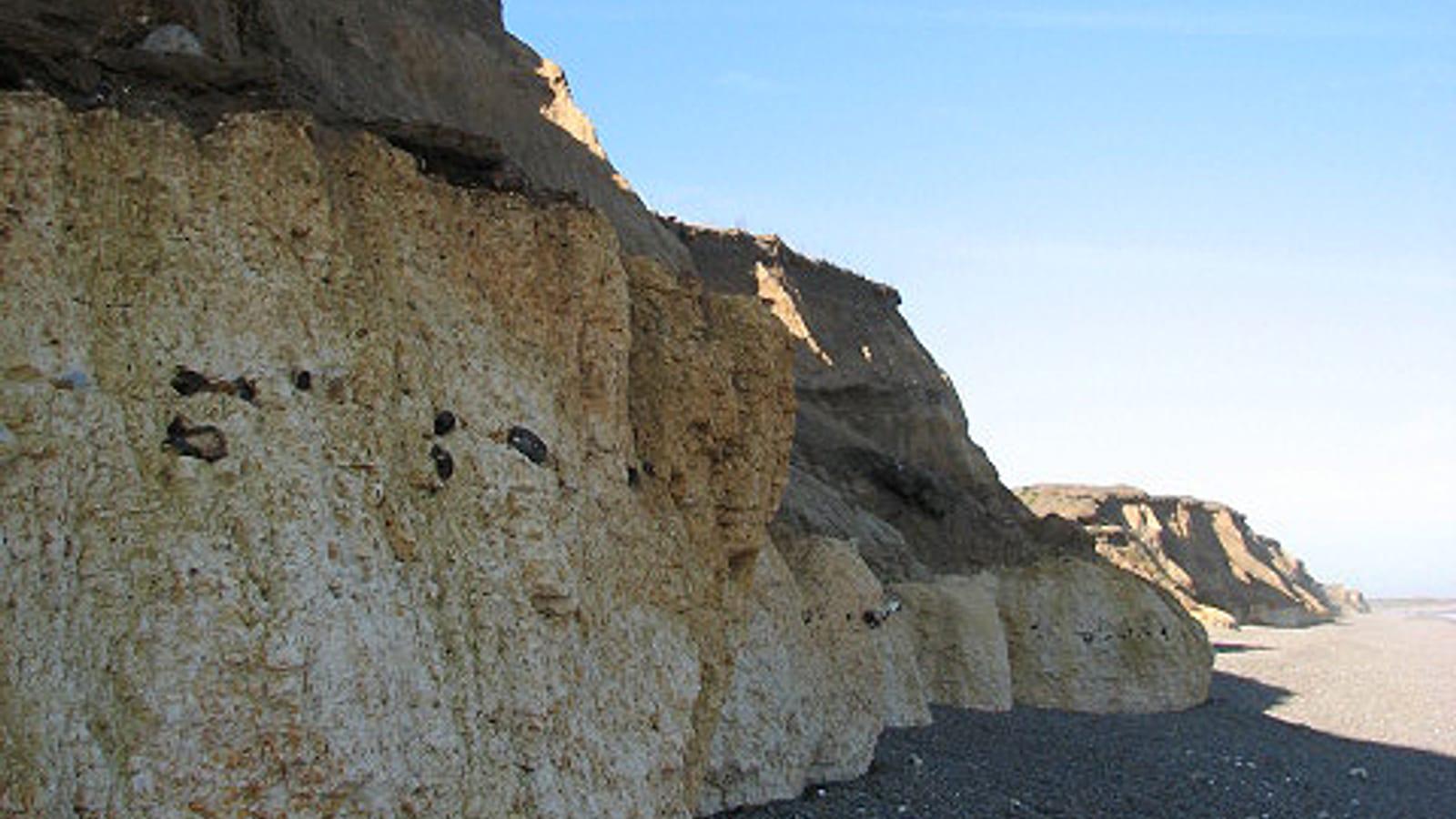
 Chalk cliffs and shingle beach, England. Photo: Wikimedia Commons contributor via Geograph (CC BY-SA 2.0)
Location and Directions
Address
Ilminster area, Somerset TA19, England. Specific field localities are not published in detail to protect access relationships; the town itself is on the A303 between Taunton and Chard.
Directions and Parking
Ilminster is reached from the A303 by taking the A358 north or south from the junction near Horton Cross, approximately 8 kilometres northeast of Chard. The town centre has several public car parks. From Ilminster, specific collecting localities around Strawberry Bank and the broader TA19 area require local knowledge. The Geological Society and regional geological societies including the Bath Geological Society have published locality guides to the Somerset Jurassic; consulting these before visiting is strongly recommended. Most productive field localities are on private agricultural land; permission from the relevant landowner is required before entering any field, and this should be arranged in advance. Do not attempt to access fields without permission. The nearby village of Dowlish Wake and the broader Ilminster rural area contain the relevant geological exposures, but the exact locations require local guidance. Ilminster town centre has shops, cafes, and a pub. Taunton, 18 kilometres north via the A358, offers full facilities and is the nearest town with a railway station (on the London Paddington to Penzance Great Western Main Line).
What Fossils You'll Find
Ammonites are the primary find in the Ilminster area. After ploughing, they appear in numbers on field surfaces, often weathered to a pale grey or brown limestone colour against the darker soil. The Upper Lias Beacon Limestone Formation here is Middle to Upper Toarcian in age and yields a succession of ammonite zones. Species include various Toarcian genera that can be identified by rib pattern, whorl shape, and keel characteristics. Most field surface finds are partially weathered, but the limestone is robust enough to survive ploughing intact; look for rounded or lobate shapes in the soil that do not match the local rock character. The Strawberry Bank Lagerstätte material, which includes three-dimensional fish, soft-tissue preservation, colour-pattern ammonites, and insects, is not available to the casual field collector; these specimens come from very specific horizons that have been worked by professional palaeontologists in collaboration with the Bath Royal Literary and Scientific Institution and the Natural History Museum. The collection assembled by 19th-century Somerset geologist Charles Moore (1814 to 1881) from Strawberry Bank forms the basis of this knowledge and is held at the Bath institution. The JESBI (Jurassic Ecosystem of Strawberry Bank Ilminster) project, initiated in 2010, continues to study material from this horizon. Belemnites, brachiopods, bivalves, and gastropods also occur in the Upper Lias limestone and are found alongside ammonites on ploughed surfaces. Occasional crinoid ossicles and echinoid fragments complete the invertebrate fauna.
Geologic History
The Ancient Environment
The Toarcian stage of the Early Jurassic, approximately 183 to 174 million years ago, was a time of warm, shallow seas across Britain. The rock sequence at Ilminster includes the Toarcian Oceanic Anoxic Event, a global episode of ocean deoxygenation recorded in the black shales and bituminous limestones at this stratigraphic level. This event was associated with a massive release of greenhouse gases and a rapid warming of ocean temperatures, causing widespread extinction in the marine realm and exceptional preservation conditions in the low-oxygen seafloor sediments. The Beacon Limestone Formation (historically called the Junction Bed, a term still used in older literature) represents the upper part of the Lower Jurassic sequence in Somerset, deposited in a shallow carbonate-shelf environment after the anoxic event. The limestone formed in clear, warm, well-oxygenated water with a diverse marine community including ammonites, belemnites, bivalves, brachiopods, and fish. The palaeolatitude of Britain during the Toarcian was approximately 37 degrees north, broadly equivalent to the modern Mediterranean in climate. The Strawberry Bank Lagerstätte lies within the lower Toarcian, in the Dactylioceras tenuicostatum Zone, corresponding precisely to the Toarcian Oceanic Anoxic Event. The low-oxygen bottom conditions at this horizon prevented scavenging and decay, allowing soft tissues, colour pigments in ammonite shells, and complete fish carcasses to be preserved in three dimensions within carbonate concretions.
How Ilminster Became a Fossil Collecting Site
The geology around Ilminster has been exposed by a combination of former quarrying and ongoing agricultural activity. The quarries that exposed the Toarcian sequence in the 19th century, which Charles Moore worked extensively, are largely overgrown or inaccessible. The agricultural fields overlying the same geological horizon continue to produce surface fossils after each ploughing season: winter rainfall breaks down the soil around ammonites and other limestone fossils, leaving them proud of the surface and visible by the following spring. This makes the seasonal cycle of ploughing and weathering the primary mechanism delivering new material to collectors in this inland area.
Collecting Rules and Regulations
Is Fossil Collecting Allowed?
Field collecting in the Ilminster area is dependent on landowner permission. Most productive localities are on private agricultural land, and you must obtain permission before entering any field. This is both a legal requirement (trespassing on agricultural land) and a practical necessity: the local farming community in this area has a long history of cooperating with fossil enthusiasts, but access depends on maintaining good relations by asking first, leaving gates as found, and not disturbing livestock or crops. There are no formal pay-to-dig arrangements in this area. Some geological society field trips arrange access as part of organised excursions; joining a local society is the most reliable route to productive field access. The Strawberry Bank Lagerstätte horizon is of significant scientific value; if you find unusually well-preserved material including soft-tissue preservation or insects, contact the Bath Royal Literary and Scientific Institution or the Natural History Museum before extracting it.
Recommended Tools
For field surface collecting, no tools are required; ammonites are picked from the soil surface. A bag or container to carry specimens home is sufficient. For examining finds closely, a hand lens at 10x magnification is useful. If you intend to visit with a geological society group that has arranged formal quarry access, a geological hammer and safety goggles may be appropriate; confirm requirements in advance.
Safety
Field collecting in Somerset is generally low-risk compared to coastal sites. Wear appropriate footwear for muddy agricultural ground; fields after ploughing are soft and uneven. Be aware of agricultural machinery operating nearby during the ploughing season. The A303 nearby is a fast dual-carriageway; do not park on the road verge. If visiting in winter, ground conditions can be very wet and fields may not be accessible. Confirm field conditions with the landowner before making a long journey.