Charmouth Fossil Hunting Guide
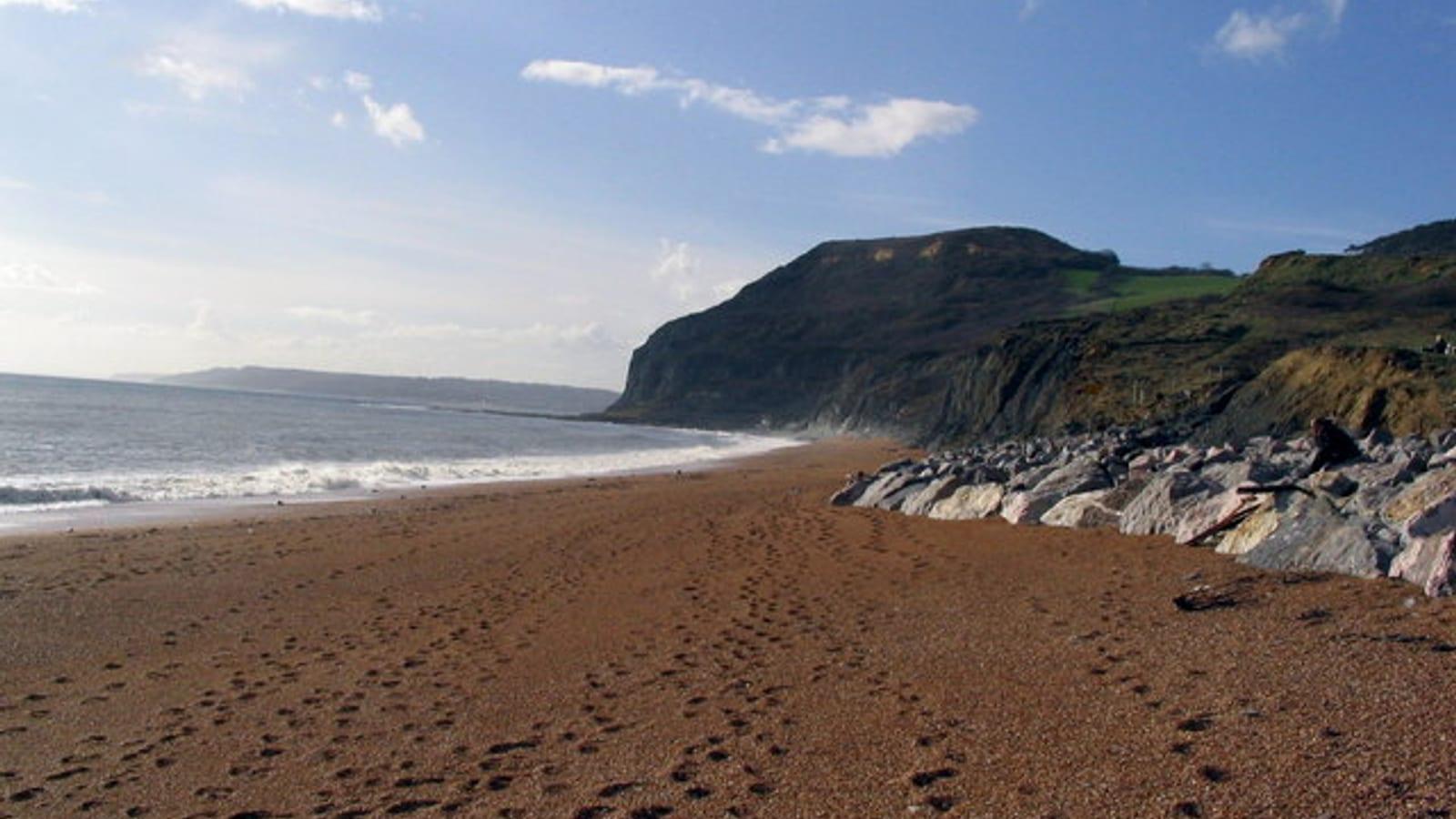
Image: Maurice D Budden (CC BY-SA 2.0)
Charmouth in Dorset offers free Jurassic fossil collecting on the World Heritage Jurassic Coast, with ammonites, belemnites, and ichthyosaur material from the Black Ven cliffs.
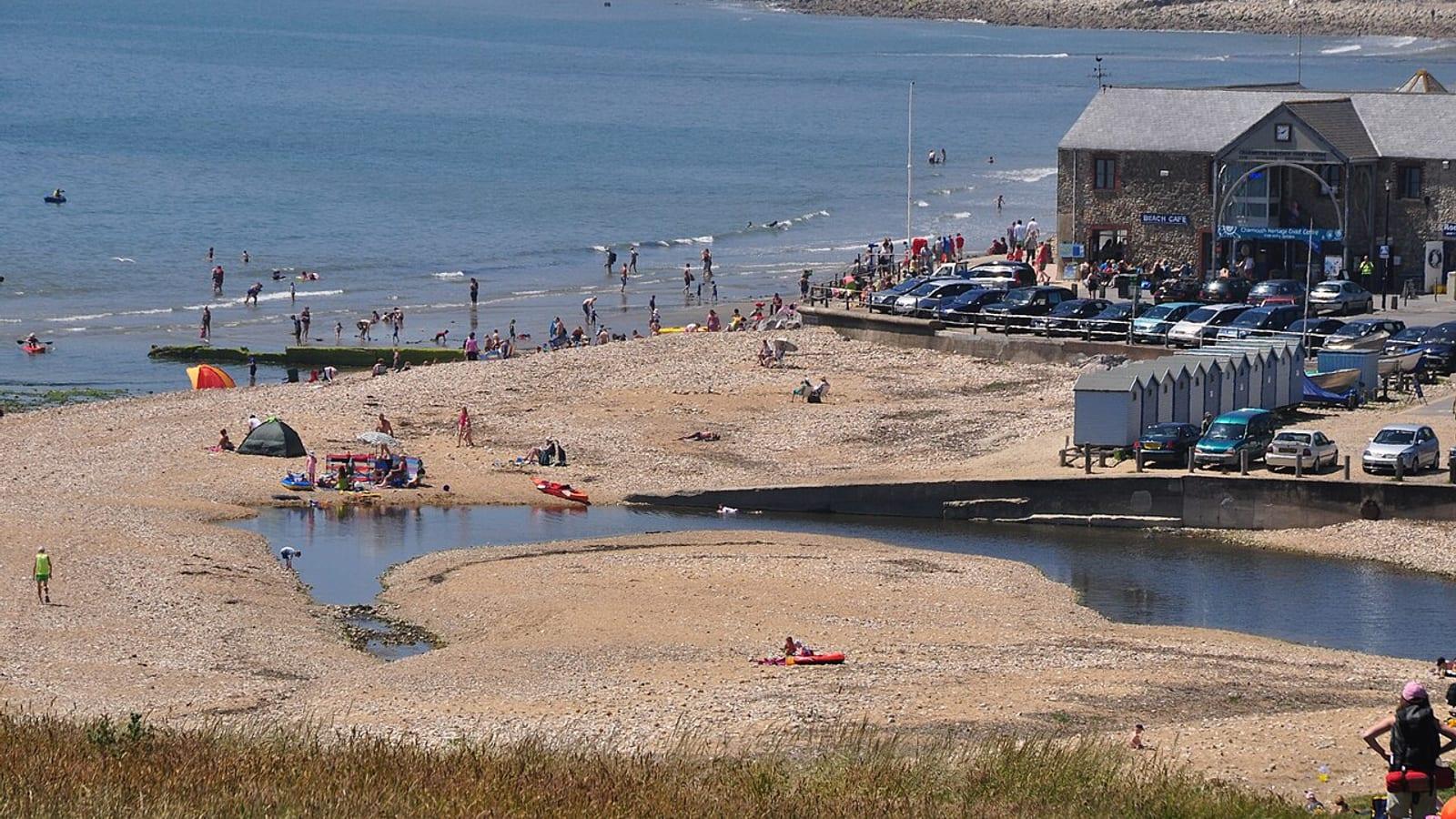
Charmouth beach in Dorset sits at the heart of the Jurassic Coast World Heritage Site and is one of the most consistently productive places in Europe to find Jurassic marine fossils. The Black Ven cliffs rise immediately to the east of the beach access point and include some of the largest coastal landslides in Europe, continuously feeding ammonites, belemnites, ichthyosaur vertebrae, and fish remains onto the foreshore. Thousands of people collect here every year, and the beach still produces new material on every low tide.
This guide covers the car parks, directions, what to look for, the geology behind the site, and the rules and safety information you need before you arrive.
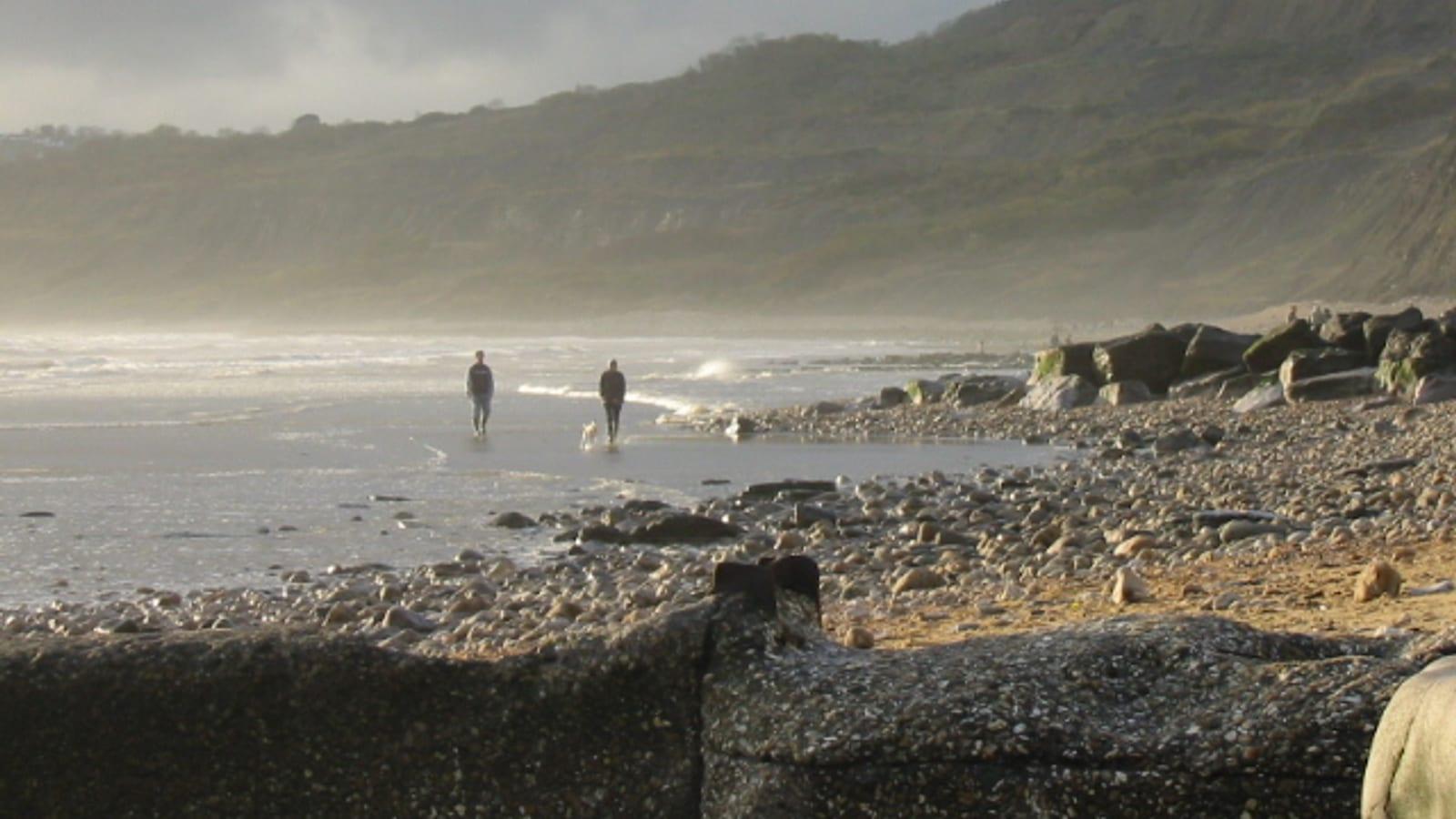
 Charmouth, Dorset - geograph.org.uk - 1499296.jpg. Photo: Derek Voller via Wikimedia Commons (CC BY-SA 2.0)
Location and Directions
Address
Lower Sea Lane, Charmouth, Dorset DT6 6LL. Three car parks are clustered at the seafront; all are accessed from Lower Sea Lane.
Directions and Parking
From the A35 at Charmouth village, turn south onto Lower Sea Lane and follow it to the beach. The main car park sits directly at the seafront and is closest to the Heritage Centre and beach access; parking costs approximately £2 for the day at the mid-level car park. A second option is the car park at St Andrews Drive, which adds a ten-minute walk to the beach. Caravans and campervans are not permitted in the beach car parks. The Charmouth Heritage Coast Centre, located at the main car park, is open seasonally and provides tide tables, fossil identification, and guided walk information. Walk east from the car park along the beach toward the base of Black Ven for the most productive collecting ground. The full Black Ven exposure is only accessible for roughly two to three hours around low tide; always obtain tide times from the Heritage Centre or a reliable online source before visiting.
What Fossils You'll Find
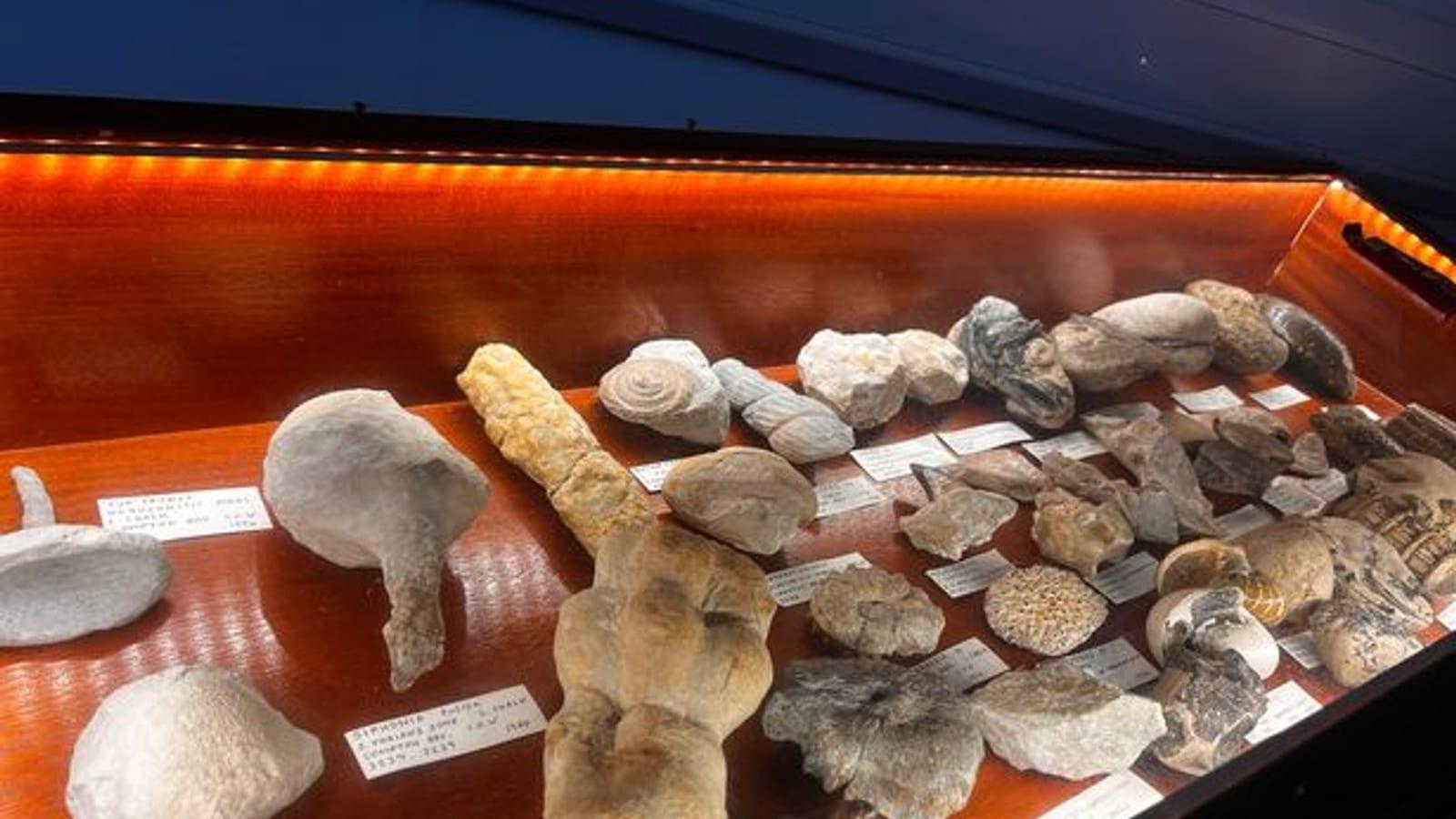
Ammonites are the most sought-after find at Charmouth and appear in a range of sizes and conditions. Small compressed ammonites preserved in limestone nodules wash out of the cliffs and are found loose on the beach. Larger examples may still be partially embedded in nodule material and reveal themselves as curved ridges of shell on the beach surface. The most common genera include Arnioceras, Asteroceras, and Promicroceras, with the last of these sometimes appearing in nodules containing dozens of tightly packed small specimens.
 Specimen of Rhamphorhynchus and ammonite.jpg. Photo: Dean Falk Schnabel via Wikimedia Commons (CC BY-SA 4.0)
Belemnites are abundant. These straight, bullet-shaped guards are the internal skeletons of squid-like animals and preserve well in the mudstone here. They are often the first fossil type that new visitors find, partly because their cylindrical shape stands out clearly against the dark beach pebbles.
Ichthyosaur material is present and genuinely findable at Charmouth, though whole skeletons are rare and usually require specialist preparation. Vertebrae, ribs, and occasional paddle bones are the most likely finds. Dark, irregular disc-shaped bones standing out from paler matrix in a nodule are worth examining closely. The Heritage Centre staff can assist with identification of potential reptile material.
Gryphaea, the curved oyster-like bivalve known colloquially as the Devil's Toenail, is one of the commonest fossils and makes an excellent beginner's find. Fish teeth, scales, and vertebrae from the Sinemurian-Pliensbachian seas also appear regularly in the finer-grained beach material.
Geologic History
The Ancient Environment
The cliffs at Charmouth expose the Charmouth Mudstone Formation, including the Black Ven Marl Member and the Shales-with-Beef Member, overlying the Blue Lias Formation and passing up into the Stonebarrow Pyritic Member and the Eype Clay Member. These sediments were deposited during the Sinemurian and Pliensbachian stages of the Early Jurassic, approximately 190 to 185 million years ago.
At that time, southern Britain lay at a latitude equivalent to present-day North Africa, roughly 30 to 35 degrees north. The region was covered by a shallow, warm epicontinental sea no more than 100 metres deep. The alternating limestone and dark grey mudstone layers record repeated fluctuations in oxygen levels, sea depth, and organic productivity. Periods of stagnant bottom water produced black organic-rich shales that concentrated and preserved soft tissue. Calmer, better-oxygenated intervals deposited the limestone bands. The seas teemed with ammonites, belemnites, bivalves, crinoids, and the large marine reptiles that are Charmouth's most famous geological products.
How Charmouth Became a Fossil Collecting Site
Black Ven is described as the largest actively eroding coastal landslide system in Europe. The cliff sequence is more than 150 metres high and consists of alternating hard limestone beds and soft mudstones that absorb water and fail repeatedly. Landslides bring down sections of cliff and spread fossil-bearing material across the beach, where wave action and tidal scour break up the fallen blocks and sort material along the foreshore. Each new fall releases fresh specimens, and the regular tidal cycle works through the loose sediment continuously. This combination of active mass movement and tidal processing means the beach at Charmouth is almost never depleted for long.
Collecting Rules and Regulations
Is Fossil Collecting Allowed?
Surface collecting from the beach and foreshore at Charmouth is permitted and free. The Charmouth Heritage Coast Centre actively encourages responsible collecting as part of its educational mission. The Jurassic Coast is a UNESCO World Heritage Site, and the cliffs are designated SSSI. You must not dig into or hammer the standing cliff face under any circumstances. Collecting loose material from the beach surface, from the base of cliff falls, and from shallow tidal water is the accepted and legal method. Specimens of significant scientific value should be reported to the Heritage Centre.
Recommended Tools
A geological hammer and a chisel are useful for splitting loose nodules already on the beach; they must not be used on the standing cliff face or on in-situ rock. Bring a hand lens for examining small specimens, a brush for clearing debris from nodule surfaces, and padded containers or newspaper for wrapping finds. A bucket or tray for carrying material across the wet foreshore is practical.
Safety
The Black Ven cliffs are actively unstable and produce rockfalls and cliff collapses without warning. Never stand at the base of the cliffs or under any overhanging material. Always check tide times and allow adequate time to return before the tide turns. The beach east of the car park narrows at high tide and can become impassable; do not be tempted to push further along the cliff base when the water is rising.