Warden Point Isle of Sheppey Fossil Hunting Guide
Image: Marathon via Wikimedia Commons
Warden Point on the Isle of Sheppey is one of Britain's most productive London Clay sites, yielding Eocene turtle shell, lobsters, shark teeth, and pyritised plant material.
Warden Point on the northern coast of the Isle of Sheppey in Kent is the eastern anchor of the longest London Clay coastal exposure in the UK, and it has produced some of the most significant Eocene fossils ever found in Britain. Complete turtle carapaces, lobster specimens, shark teeth, and the pyritised seeds and fruits of a long-vanished tropical forest all come from these cliffs, which are eroding at some of the fastest rates anywhere in England. The beach is free to access, the fossils are abundant by the standards of any UK site, and the geology is well documented with collections in the Natural History Museum.
This guide covers the access route to Warden Point, the specific fossils to look for, the Early Eocene London Clay geology, and the practical collecting and safety information you need before visiting.
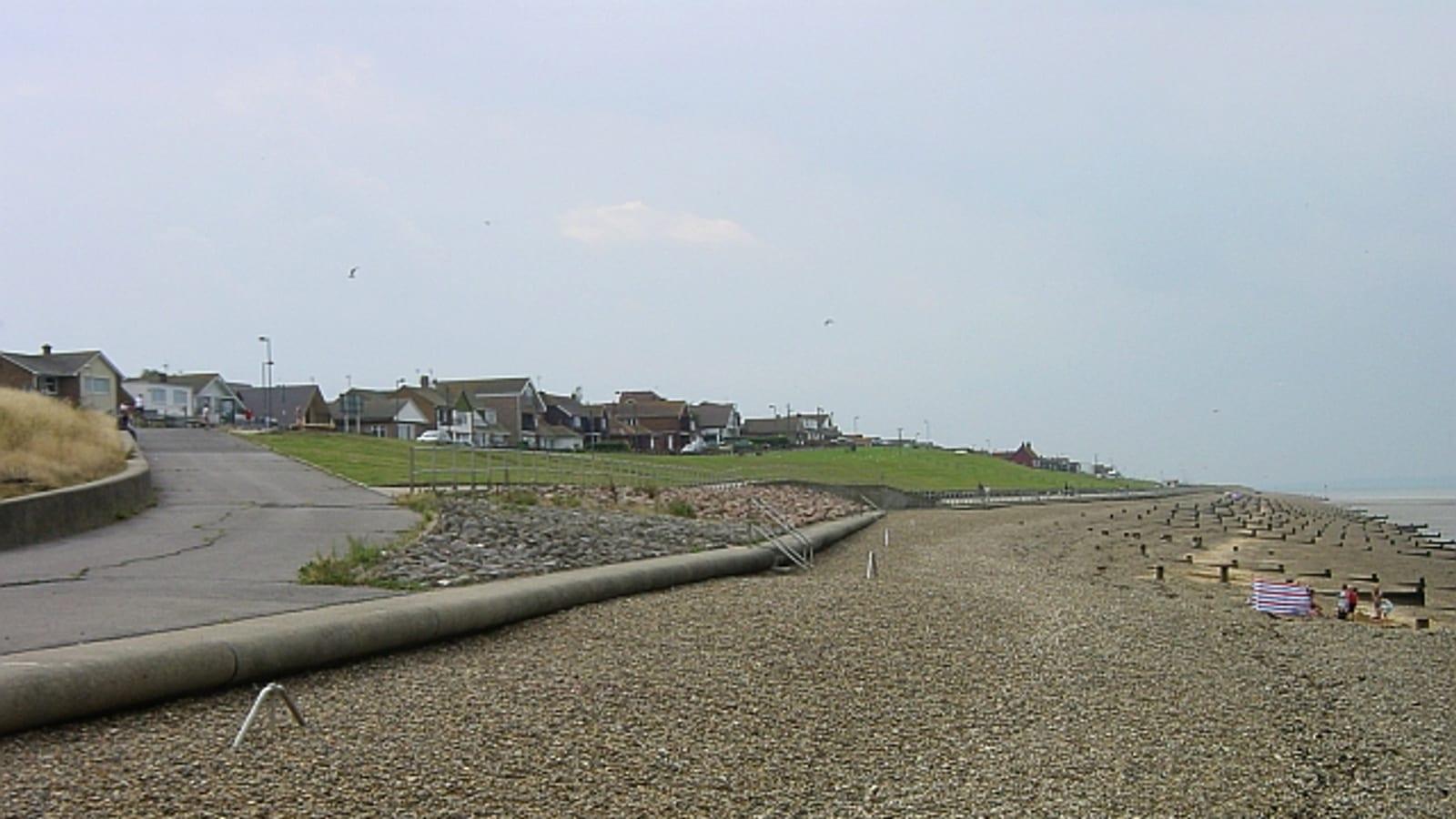
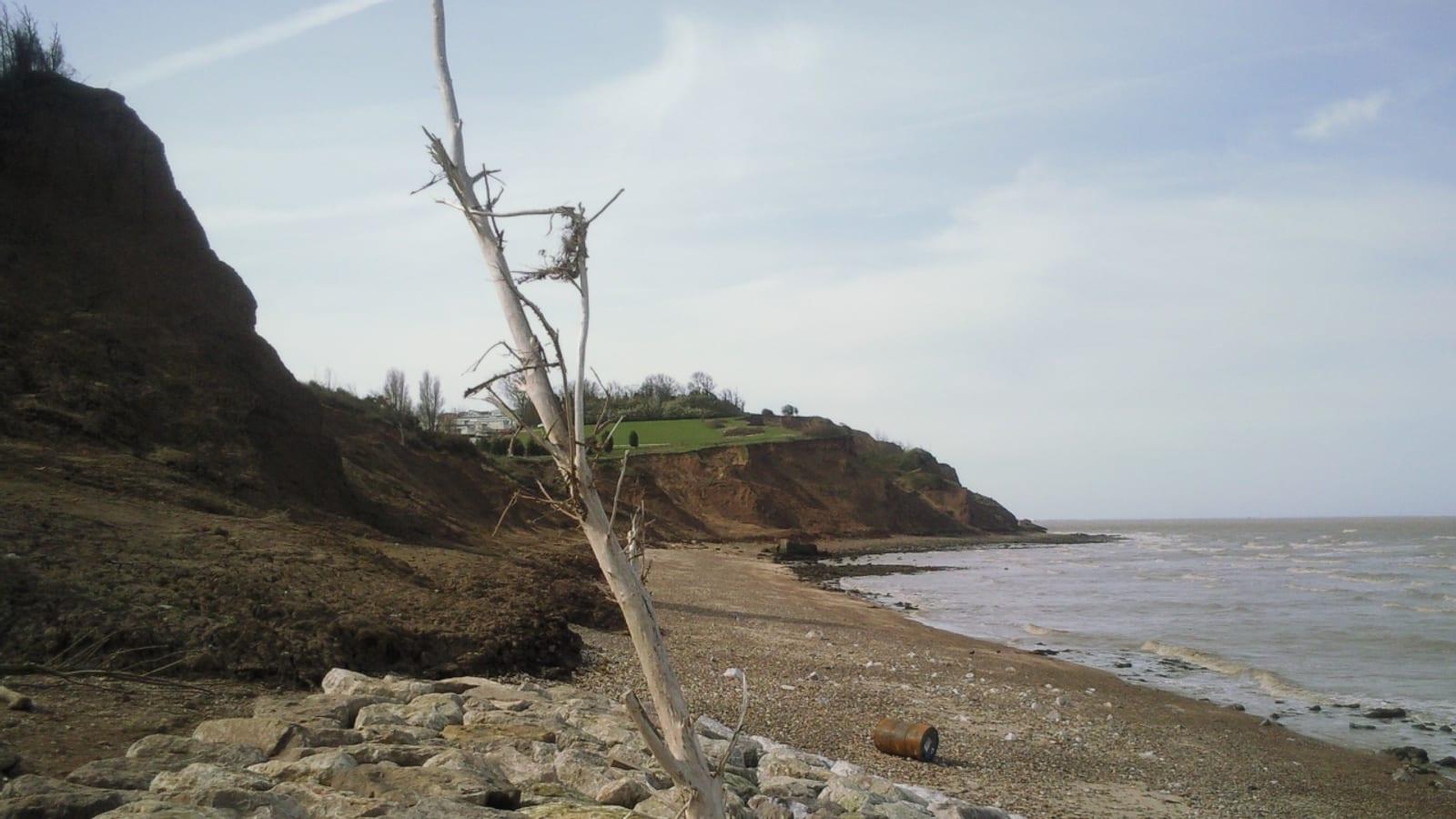
 Eroding cliffs near Warden Point, Isle of Sheppey - geograph.org.uk - 1890537.jpg. Photo: Marathon via Wikimedia Commons (CC BY-SA 2.0)
Location and Directions
Address
Warden Point, Isle of Sheppey, Kent ME12 4RR. The village of Warden Bay is the nearest settlement with limited roadside parking.
Directions and Parking
From the A249 Sheppey Crossing onto the Isle of Sheppey, follow the A2231 toward Leysdown-on-Sea and then take the minor road north to Warden Bay. Park on the roadside near the cliff edge, following any posted restrictions. A footpath leads from the road down to the cliff and onto the beach. Note active erosion warnings at the cliff edge; the cliff line has retreated significantly over recent decades. From the beach, work westward along the foreshore for the most productive collecting areas. The foreshore at Warden Point is extensive at low tide and can be muddy; waterproof boots are essential. Warden Point is signposted from Eastchurch village as an alternative approach from the A2231.
What Fossils You'll Find
Turtle shell fragments and occasional more complete carapace sections are among the most sought-after finds at Warden Point. The London Clay here has produced numerous turtle specimens over the decades, including examples now held in major museum collections. Turtle bone is dense, dark brown or black, and typically shows a distinctive polygonal surface texture that distinguishes it from random rock fragments. Fragments appear as loose material on the foreshore after cliff falls and during scouring tides.
 Fragment of a Kimono (Kosode) with Design of Pine Branches, Cherry Blossoms, and Tortoise Shell Pattern LACMA M.39.2.302 (2 of 2).jpg. Photo: Wikimedia Commons (Public domain)
Lobsters are a Warden Point speciality. Hoploparia and related genera have been found here in articulated or near-complete condition, preserved in three dimensions within nodules. Finding a complete lobster requires splitting nodules on the beach, but even fragmentary claws and carapace sections are collectable and identifiable. The nodule beds running along the foreshore are the most productive horizon for crustacean material.
Shark teeth are consistent and diverse at Warden Point, reflecting the rich marine fauna of the Early Eocene sea. Multiple carcharhinid species, otodont ancestors, and smaller carpet shark teeth appear in the London Clay and wash onto the foreshore surface. Dark brown to black teeth in a range of sizes can be found by scanning the clay surface at low tide or by working the beach immediately below recent cliff falls.
Pyritised plant material, including seeds, nuts, and wood fragments derived from the adjacent tropical forest, is a characteristic component of the Sheppey London Clay. These golden or iridescent metallic objects stand out clearly against the dark clay background. They are most abundant in the plant-bearing horizons within the formation and appear on the foreshore surface after scouring. Pyrite is chemically unstable; specimens should be stabilised with a consolidant as soon as possible after collection.
Occasional fish skulls, vertebrae, and ray teeth also appear. The broader Sheppey fauna has produced crocodile bones and bird remains, though these are rare enough to be considered exceptional finds rather than targets for a typical visit.
Geologic History
The Ancient Environment
The London Clay at Warden Point belongs to the London Clay Formation, specifically the lower divisions (A and B) of the Ypresian stage, Early Eocene, approximately 52 to 51 million years old. The formation also incorporates the Harwich Formation at its base. The dark grey-blue clay was deposited in a warm, relatively deep epicontinental sea covering southern England during a period when the climate was considerably warmer than today.
During deposition, southern England lay at approximately 40 degrees north latitude, ten degrees closer to the equator than its present position. This placed the region at a latitude equivalent to modern northern Spain. The sea surface temperature averaged approximately 23 degrees Celsius annually, compared to around 10 degrees Celsius today. The nearest significant land lay 20 to 30 miles to the north and west, and the sea floor was calm enough for fine sediment to settle from suspension without significant disturbance. This placid depositional environment is what allowed such excellent preservation of delicate turtles, lobsters, and plant material.
The World War Two Warden Point Battery gun emplacements, which once stood on the clifftop, have now fallen to the beach due to coastal erosion. Their presence on the foreshore gives a stark illustration of how rapidly these cliffs are retreating.
How Warden Point Became a Fossil Collecting Site
The Isle of Sheppey has some of the highest coastal erosion rates in England, driven by the combination of soft London Clay cliffs, wave exposure from the Thames Estuary, and ongoing post-glacial sea level change. The cliffs at Warden Point retreat by several metres in a bad winter and have been eroding continuously since the island's coastline took its present form. This rapid erosion constantly exposes fresh sections of the London Clay formation, and the foreshore is renewed with new material after every significant storm. The same forces that are eliminating the island's land area are also making Warden Point one of the most productive fossil sites in Britain.
Collecting Rules and Regulations
Is Fossil Collecting Allowed?
Surface collecting from the beach and foreshore at Warden Point is permitted and free. Personal, non-commercial collection of loose material from the beach is legal under UK law. The Sheppey London Clay foreshore carries SSSI designation for its geological and palaeontological importance. Under SSSI regulations, you must not hammer or chisel in-situ cliff face or bedrock. Picking up loose material from the foreshore surface and from fallen cliff blocks already on the beach is the accepted and legal method. Exceptionally significant specimens, particularly articulated skeletons or new species candidates, should be reported to the Natural History Museum or Natural England.
Recommended Tools
A geological hammer and chisel for splitting nodules on the foreshore, a hand lens for examining teeth and shell texture, a trowel for turning loose clay on the beach surface, labelled sample bags, and Paraloid B-72 solution for stabilising pyritised specimens are all worth bringing. Sturdy waterproof boots are essential; the foreshore at Warden Point is extensively muddy at low tide and regular footwear will not cope with the conditions.
Safety
The cliffs at Warden Point are among the most actively eroding in England and produce cliff falls at any time of year. Stay well clear of the cliff base throughout your visit; the eroded debris on the foreshore is a guide to how much material has already come down, and more can follow at any point. The muddy foreshore requires care: test the stability of clay patches before committing your weight, as some areas can be unexpectedly soft. Check tide times before visiting and allow adequate time to return to the access path before the tide rises. The foreshore extends for a considerable distance at low water; it is easy to misjudge how long the return walk will take across soft ground.