Tankerton Kent Fossil Hunting Guide
Image: Mark Anderson via Wikimedia Commons
Tankerton in Kent exposes London Clay on a 2.2-kilometre foreshore, yielding fish, crabs, lobsters, and pyritised plant material from a 50-million-year-old Eocene sea.
Tankerton, on the Kent coast east of Whitstable, exposes the London Clay Formation on a 2.2-kilometre foreshore stretch that has produced seven lobster species, twelve crab species, fish remains, and the extremely rare early horse relative Hyracotherium leporinum, documented from only one other site in the world. At the eastern end of the beach, a Pleistocene river gravel bed sits directly above the Eocene deposits, containing mammoth, rhinoceros, bison, and deer bones. No other site in Kent offers this combination of deep-time marine fossils alongside ice-age megafauna within walking distance of each other.
This guide covers the access points along Marine Parade, the conditions that make the London Clay productive, and the rules for collecting at this SSSI-designated foreshore.
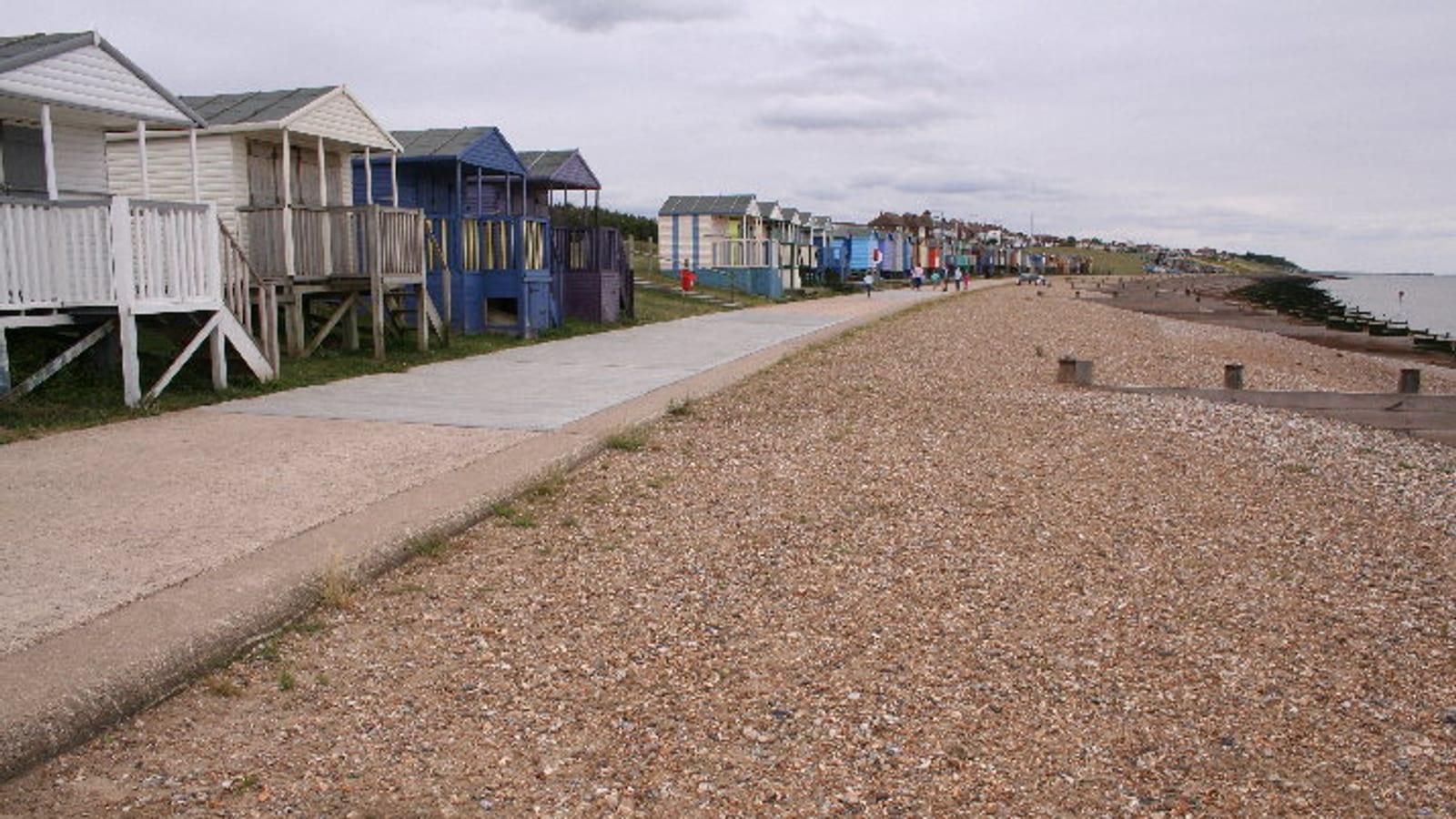
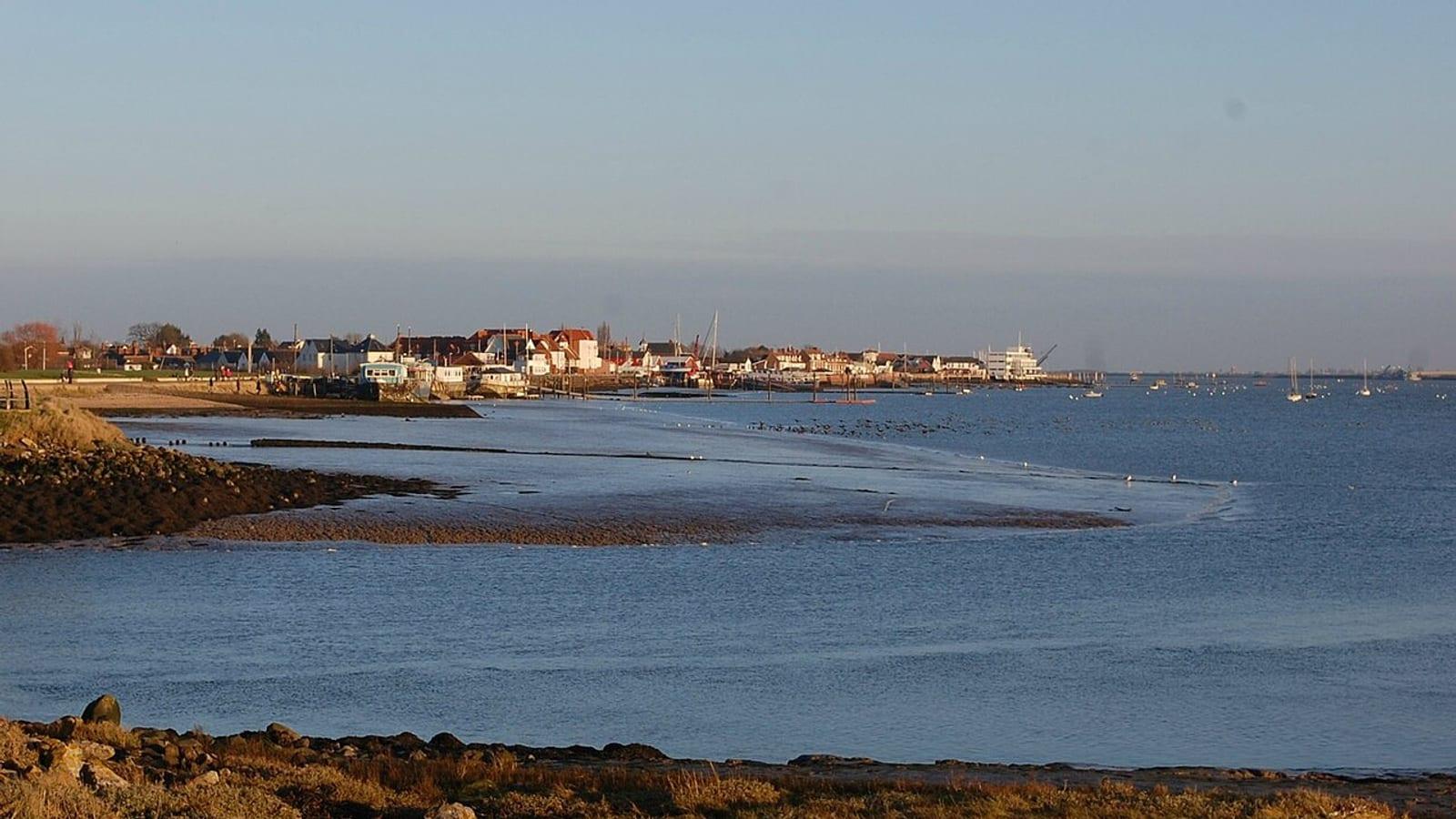
 Tankerton beach, Kent, UK.jpg. Photo: Mark Anderson via Wikimedia Commons (CC BY-SA 2.0)
Location and Directions
Address
Marine Parade, Tankerton, Whitstable, Kent CT5 2BE. Multiple beach access points are available along the 2.2-kilometre stretch of Marine Parade between Whitstable and Tankerton.
Directions and Parking
From the A299 or the A2990, follow signs into Whitstable town centre. From the town, take the seafront road east along Marine Parade toward Tankerton. Parking is available in several small car parks and lay-bys along Marine Parade, with additional parking in Whitstable town centre if the seafront is full. The beach is accessible at multiple points along the full 2.2-kilometre stretch. For the Pleistocene gravel bed and the site known as Long Rock, continue to the eastern end of the seafront near Tankerton slopes. The London Clay is most extensively exposed during scouring tides; the patches visible at low water become larger when east or north-east winds have been running for several days, clearing sand from the foreshore.
What Fossils You'll Find
Fish remains are the most commonly recovered fossils at Tankerton, appearing as vertebrae, teeth, and occasional jaw elements in the London Clay nodules and loose clay patches on the foreshore. The diversity here reflects the rich tropical marine environment that covered the area 50 million years ago, with multiple species of ray, shark, and bony fish all documented from this section.
 Iodes sp. seed, Icacinaceae, London Clay pyrite fossil, by Omar Hoftun.png. Photo: Omar hoftun via Wikimedia Commons (CC BY-SA 4.0)
Crustacean remains are a Tankerton speciality. The site has produced twelve documented crab species and seven lobster species from the London Clay, which is an exceptionally high crustacean diversity for a single location. Claws and carapace sections are the most likely finds; complete specimens are rare but not unknown. Look for orange-brown calcified material in the clay surface during productive tidal exposures.
Plant material, including seeds, nuts, and occasional wood fragments, washes from the London Clay onto the foreshore after scouring tides. Much of this material is pyritised, giving it a golden or iridescent metallic appearance. These plant remains came from the tropical forest that grew on land 20 to 30 miles away and were transported into the sea by rivers and tidal currents.
At Long Rock on the eastern end of the beach, the Pleistocene gravel bed contains bones of mammoth, woolly rhinoceros, bison, and deer. These are typically heavily rolled and in fragmentary condition, but identifiable pieces do turn up. This gravel bed dates to a cold stage of the Pleistocene, roughly 100,000 to 500,000 years ago, and represents a completely separate geological event from the Eocene deposits below it.
Geologic History
The Ancient Environment
The foreshore at Tankerton exposes the London Clay Formation, Divisions B1 and B2, of Ypresian age in the Early Eocene, approximately 50 million years old. The dark grey-blue London Clay turns chocolate-brown as it oxidises on exposure to air. At Tankerton, the formation outcrops in patches on the foreshore, with more extensive exposures during scouring conditions and particularly prominent nodule beds running along the beach.
During deposition, southern England sat at approximately 40 degrees north latitude, ten degrees closer to the equator than today. The sea was warm, averaging around 23 degrees Celsius annually. The marine environment was subtropical, supporting a diverse community of fish, sharks, rays, crustaceans, turtles, and marine mammals. The nearest significant land lay 20 to 30 miles to the north and west, and rivers from that land delivered plant material, seeds, and occasional terrestrial animals into the sea. The Tankerton section is one of very few UK sites to have produced documented Pleistocene megafauna overlying Eocene marine deposits in the same coastal exposure.
How Tankerton Became a Fossil Collecting Site
The London Clay at Tankerton outcrops on the foreshore because the soft sediments have been eroded down to foreshore level by centuries of wave action and tidal scouring. The clay is exposed most extensively during scouring tides driven by onshore winds, when sand is stripped from the beach surface and the underlying clay patches and nodule beds are revealed. The process is intermittent: after calm periods or offshore winds, sand covers the clay again. This means conditions vary significantly between visits, and a visit during or just after a prolonged north-easterly wind is likely to be more productive than a visit after a calm spell.
Collecting Rules and Regulations
Is Fossil Collecting Allowed?
Surface collecting from the beach and foreshore at Tankerton is permitted and free. Personal, non-commercial collection of loose material is legal under UK law. Tankerton Slopes was designated a Site of Special Scientific Interest in 1986, primarily for its biological significance as the largest UK population of hog's fennel (Peucedanum officinale). The geological London Clay foreshore is separately important. Under SSSI regulations, you must not hammer or chisel in-situ rock, cliff, or bedrock. Picking up loose material from the exposed foreshore surface is the standard and accepted method.
Recommended Tools
A flat trowel or putty knife for scraping the surface of exposed clay patches, a hand lens for examining small fish teeth and crustacean fragments, a sieve or fine mesh tray for washing loose clay, and labelled sample bags are all useful. Waterproof boots are essential given that productive collecting requires working across wet, exposed foreshore clay.
Safety
The Tankerton foreshore is safe compared to cliff-base sites, but always check tide times before visiting and be aware of how quickly the tide returns along this open coastline. The clay surface can be slippery when wet. Long Rock at the eastern end involves scrambling over uneven boulder surfaces; take care on loose or wave-washed material.
Sources
Nearby sites
 Beltinge Herne Bay Fossil Hunting GuideBeltinge Fish Bed, Shark teeth
 Warden Point Isle of Sheppey Fossil Hunting GuideTurtle shell fragments, London Clay Formation
 Minster Beach Isle of Sheppey Fossil Hunting GuidePlant remains, Nipa palm seeds
 Burnham on Crouch Essex London Clay Fossil Hunting GuideShark teeth, Ray teeth