Hastings East Sussex Fossil Hunting Guide
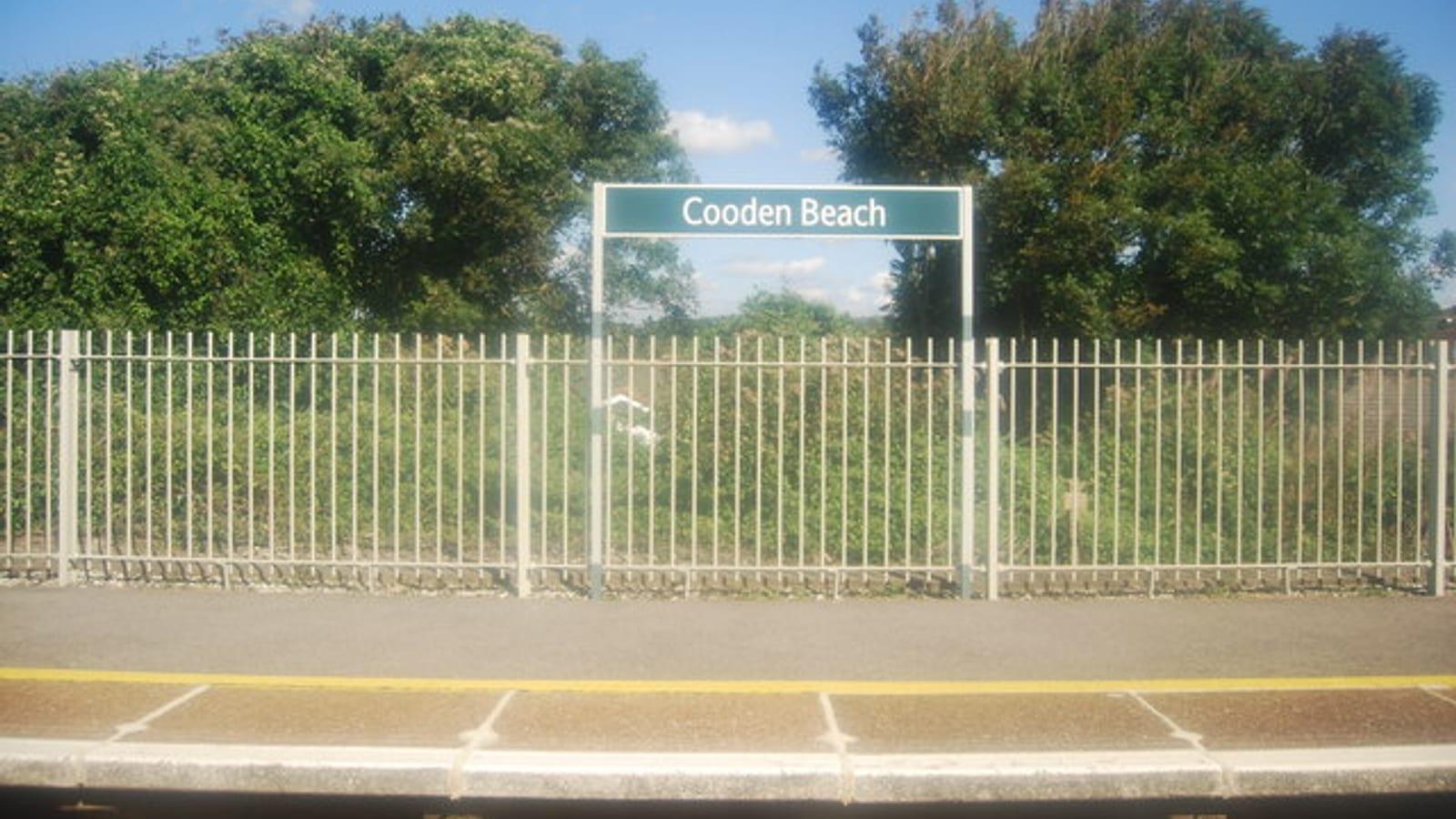
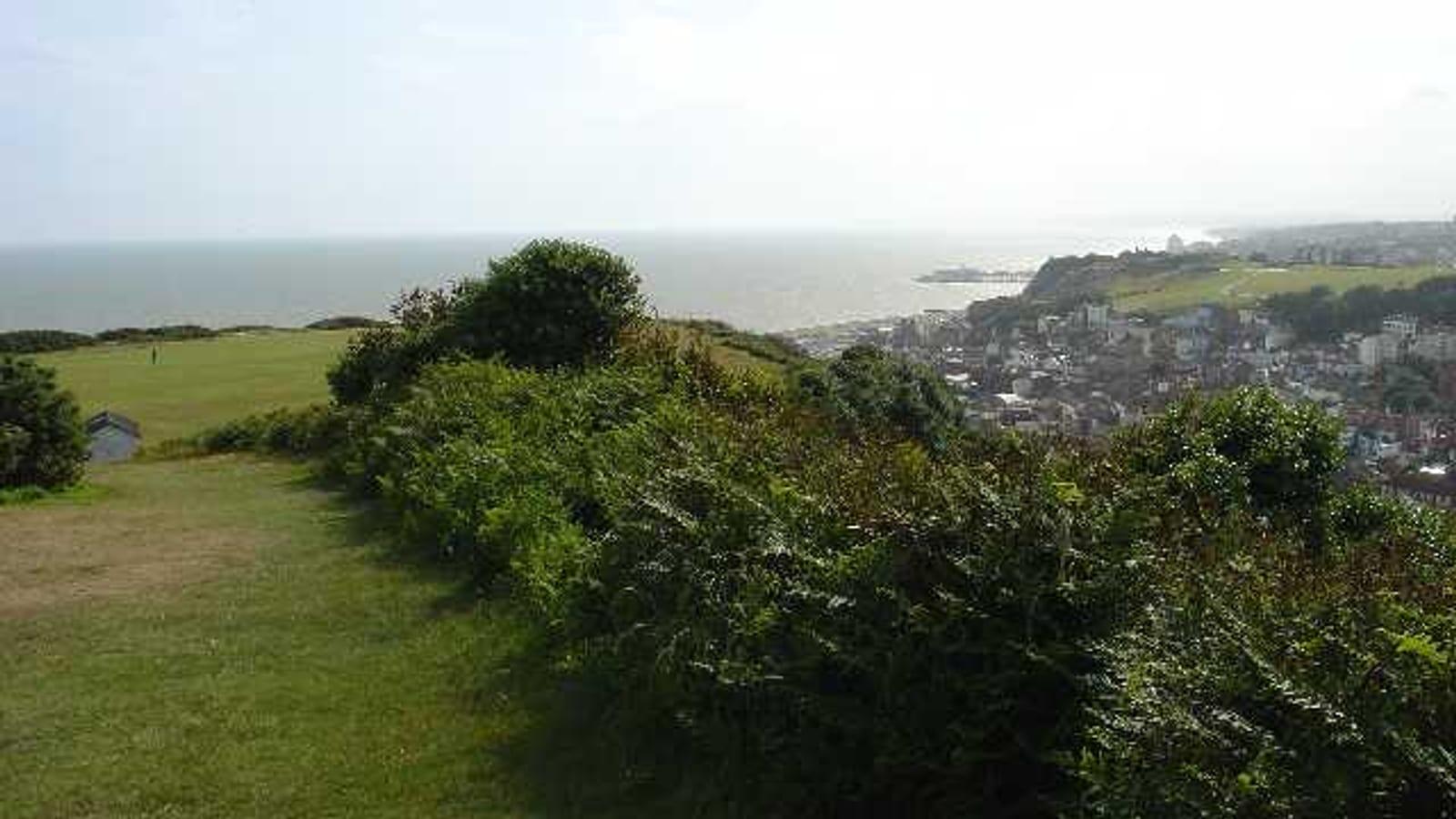
Image: Pete Chapman (CC BY-SA 2.0)
Hastings foreshore exposes Early Cretaceous Wealden deposits yielding dinosaur bones, footprints, freshwater molluscs, and plant fossils from 140 million years ago.
The beach at Rock-a-Nore in Hastings offers access to one of the most important Early Cretaceous fossil sites in Britain. The foreshore and low cliffs expose the Hastings Beds Group, a sequence of sandstones and mudstones laid down in rivers, floodplains, and freshwater lakes roughly 140 million years ago. These sediments preserve a record of a complete non-marine ecosystem: dinosaurs, crocodilians, turtles, freshwater fish, sharks, insects, and lush subtropical vegetation all lived here during the Valanginian and Hauterivian stages.
This is a site with genuine scientific history. Samuel Beckles worked the foreshore in the 1850s, and Charles Dawson built an extensive Wealden collection here in the 1880s to 1900s. More recently, Cambridge University researchers documented dozens of dinosaur trackways at nearby Lee Ness Sandstone, the most diverse footprint assemblage mapped in the British Isles. For collectors, the site yields fragmentary bone, plant material, freshwater molluscs, and the occasional fish scale or tooth. This guide covers access, what to look for, the geological background, and the rules that govern collecting here.
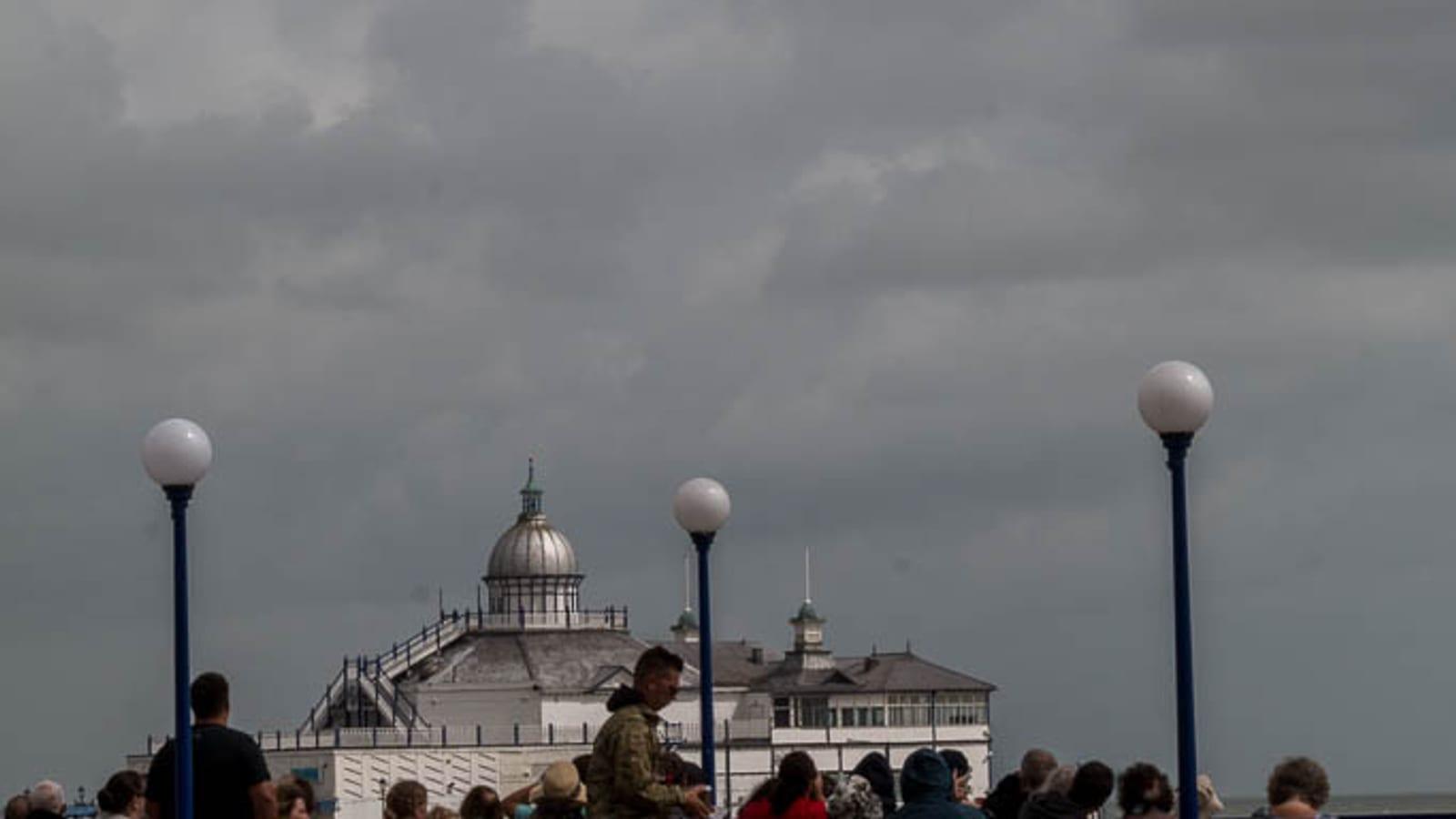
 East Sussex College Hastings - geograph.org.uk - 6536353.jpg. Photo: N Chadwick via Wikimedia Commons (CC BY-SA 2.0)
Location and Directions
Address
Rock-a-Nore, Hastings, East Sussex TN34 3DW, England. The productive foreshore extends eastward from Rock-a-Nore toward Fairlight Cove and Pett Level for approximately 3 km.
Directions and Parking
From the A259 in central Hastings, follow signs to the Old Town and then to Rock-a-Nore Road. The road runs along the seafront past the Fishermans Museum and the Sea Life Centre to the large Rock-a-Nore car park at the eastern end (pay-and-display, seasonal charges). A second, smaller car park sits just before the main one and is sometimes less congested.
Beach access was previously via a concrete ramp but this is now damaged. You can still reach the foreshore by carefully climbing over the safety barrier and descending the concrete blocks. Once on the beach, walk east toward Fairlight and Pett Level, examining the exposures of Ashdown Formation sandstones and Wadhurst Clay mudstones as they appear at the cliff base and foreshore. The best fossil-bearing material tends to erode out after storms. Walking the full section to Pett Level takes 90 minutes each way; the middle stretch around Ecclesbourne Glen offers some of the best bone-bearing horizons.
Parking at Rock-a-Nore is the most convenient option. Alternatively, park at Pett Level and work back west, though this reverses the access challenge at the Rock-a-Nore end. Buses run from Hastings town centre to Rock-a-Nore Road.
What Fossils You'll Find
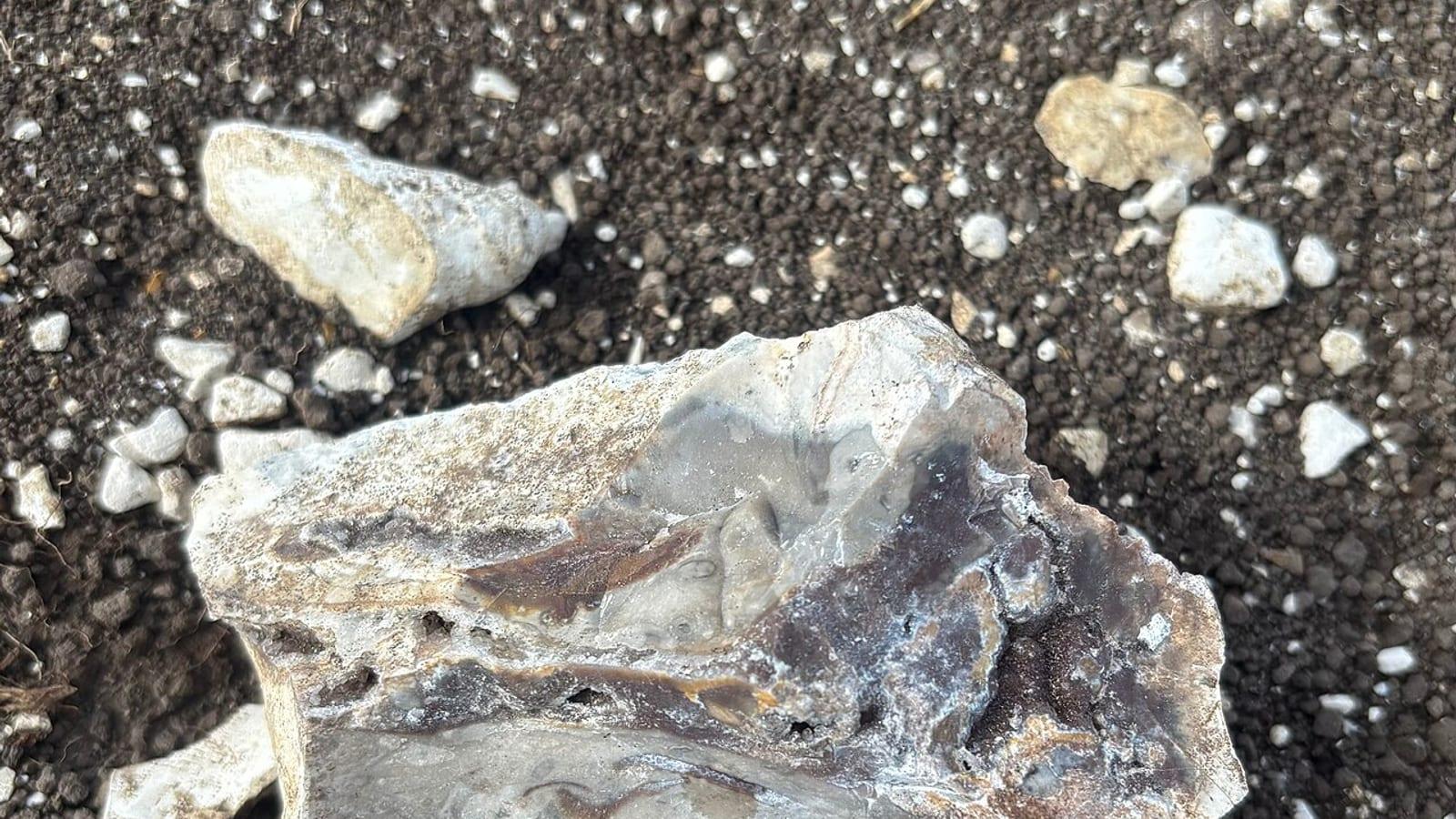
Dinosaur bones and teeth are the most sought-after finds at Hastings. Iguanodontid bones, including vertebrae, limb fragments, and teeth, are the most frequent. Fragments typically turn up as dark brown or black bone material in eroded blocks of Wadhurst Clay or Ashdown Formation sandstone. Articulated material is extremely rare; isolated elements are the norm. Scan the base of freshly collapsed clay blocks and look for bone texture among the rock fragments.
 Dinosaur bones (Morrison Formation, Upper Jurassic; Fossil Cabin, Como Bluff, Wyoming, USA) 19.jpg. Photo: James St. John via Wikimedia Commons (CC BY 2.0)
Dinosaur footprints have been mapped in the Lee Ness Sandstone horizon exposed at low tide east of Rock-a-Nore. The prints are large and three-toed; look for them in flat sandstone slabs at very low tides, particularly after storms have cleaned the surface. They are in-situ and protected, so do not attempt to remove them.
Freshwater molluscs including the bivalve Unio and the gastropod Viviparus are common throughout the Wadhurst Clay and occur in distinct shell-bed horizons. These are good indicator fossils for the freshwater lake and river facies and are often found as internal moulds in grey mudstone.
Plant material is found throughout both formations. Carbonised plant fragments, fern fronds, cycad fronds, and occasional conifer shoots occur as flattened impressions in both the sandstones and clays. Horsetail stem sections (Equisetum) are particularly common.
Fish remains including scales, teeth, and occasional vertebrae occur in the clays, particularly in the Wadhurst Clay where lacustrine conditions prevailed. Lepidotes, a ray-finned fish, is the most commonly identified species from this site.
Crocodilian teeth and osteoderms (armour plates) erode from the Wadhurst Clay with some regularity. They are recognisable by their distinctively ridged surface texture.
Geologic History
The Ancient Environment
The Hastings Beds Group, comprising the Ashdown Formation and the overlying Wadhurst Clay Formation, was deposited during the Valanginian and Hauterivian stages of the Early Cretaceous, approximately 140 to 130 million years ago. At this time southern England lay at about 40 degrees north paleolatitude, comparable to modern southern Europe, and the climate was warm and subtropical with pronounced seasonal rainfall.
The Ashdown Formation records the deposits of a large braided river system draining from uplands to the northwest, the so-called London Uplands. Coarse silts and fine sands accumulated in active channels and on broad floodplains subject to periodic flooding. The Wadhurst Clay above it records a transition to quieter conditions: a large, shallow freshwater to brackish lake or lagoonal system fed by meandering rivers. Fine muds settled in the deeper, quieter parts of this lake, preserving the remains of organisms that died and sank to the anoxic floor.
Mudcracks in some horizons indicate periodic drying of floodplain surfaces, consistent with seasonal drought. The fauna preserved here, including large iguanodontid dinosaurs, crocodiles, turtles, and abundant freshwater fish, reflects a fully developed non-marine ecosystem.
How Hastings Became a Fossil Collecting Site
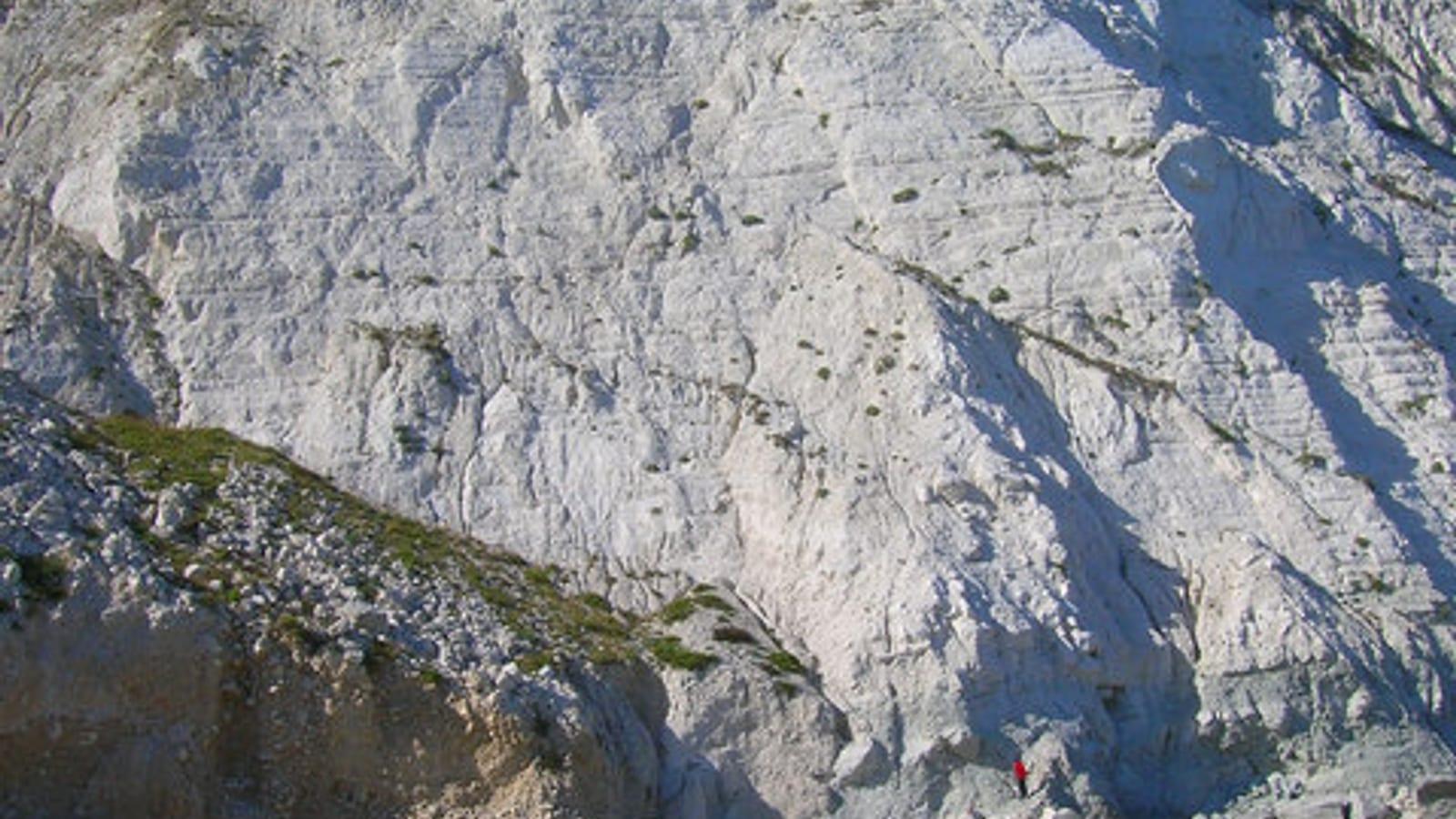
Wave erosion along the East Sussex coast continuously attacks the softly cemented Wealden sandstones and clays exposed in the low cliffs between Rock-a-Nore and Pett Level. Cliff retreat of 0.5 to 1 metre per year is typical along this section, and storm events accelerate the process considerably. Each collapse of the cliff face releases fresh material onto the foreshore, and bones, teeth, and plant material that were sealed in the rock are freed to lie on the beach where collectors can find them. The foreshore also exposes flat bedding planes at low tide where trackways and shell beds are visible in their original context.
Collecting Rules and Regulations
Is Fossil Collecting Allowed?
The Hastings foreshore is publicly accessible and loose fossil collecting is legal and common. The cliffs and foreshore between Rock-a-Nore and Fairlight are not comprehensively SSSI-designated along the entire collecting stretch, though specific geological exposures have protected status. The dinosaur trackways visible in the Lee Ness Sandstone at low tide are in-situ geological features; do not attempt to remove or damage them. For bones and other loose material eroded onto the foreshore, surface collecting with hand tools is the acceptable practice.
As a general principle on all UK public foreshores, you are permitted to collect loose material using hand tools without a licence. Hammering into cliff faces, digging into the cliff base, or removing in-situ geological features is not permitted and may constitute criminal damage in designated areas. Any significant vertebrate find, particularly articulated dinosaur material, should be reported to Hastings Museum (which holds important Wealden collections) or to the Natural History Museum in London.
Recommended Tools
A geological hammer and a couple of chisels of varying sizes are the standard kit. The Wadhurst Clay can be split along bedding planes with patience. Bring a brush to clean surfaces and a hand lens to examine small teeth and scales. Waterproof boots are essential; the foreshore is wet and the clay is sticky. A tide table is important: the best low-tide exposures require you to be on the beach during the two to three hours around low water.
Safety
The cliffs between Rock-a-Nore and Pett Level are actively eroding and periodic cliff falls are a real hazard, particularly in wet weather and after frost. Keep well away from the cliff base and do not linger beneath overhangs. The foreshore becomes very narrow at high tide in places; ensure you know the tide times before setting out and allow yourself adequate time to reach safety before the tide comes in. The beach surface of clay and boulders is slippery when wet. This section of coast has no intermediate access points, so if you walk east from Rock-a-Nore, plan your return carefully.
Sources
- https://ukfossils.co.uk/2012/01/24/hastings/
- http://www.discoveringfossils.co.uk/hastings-east-sussex/
- https://depositsmag.com/2021/08/01/hastings-part-2-geology-and-fossils/
- https://depositsmag.com/2017/04/20/dinosaur-quarries-of-hastings/
- https://en.wikipedia.org/wiki/Wealden\_Group
- https://earthwise.bgs.ac.uk/index.php/Wealden\_Group
- https://www.hmag.org.uk/collections/geology/