Eastbourne Sussex Fossil Hunting Guide
Image: Christine Matthews via Wikimedia Commons
Eastbourne in East Sussex exposes 17 million years of Cretaceous chalk at Holywell and Cow Gap, with echinoids, ammonites, and brachiopods from multiple chalk formations.
Eastbourne in East Sussex sits at the eastern end of the South Downs chalk sequence and provides access to one of the most complete exposures of Lower through Upper Chalk in England. The beaches at Holywell and Cow Gap expose strata spanning 17 million years of Cretaceous time, from the Gault Clay of the Albian stage at the base through to the uppermost Seaford and Newhaven Chalk at the top of the sequence. Echinoids, ammonites, brachiopods, sponges, and bivalves appear throughout, with each formation producing its own characteristic assemblage.
This guide covers the two main access points, the fossils associated with each formation, the geological sequence from the Albian Gault to the Santonian chalk, and the rules and safety information you need before visiting these actively eroding cliffs.
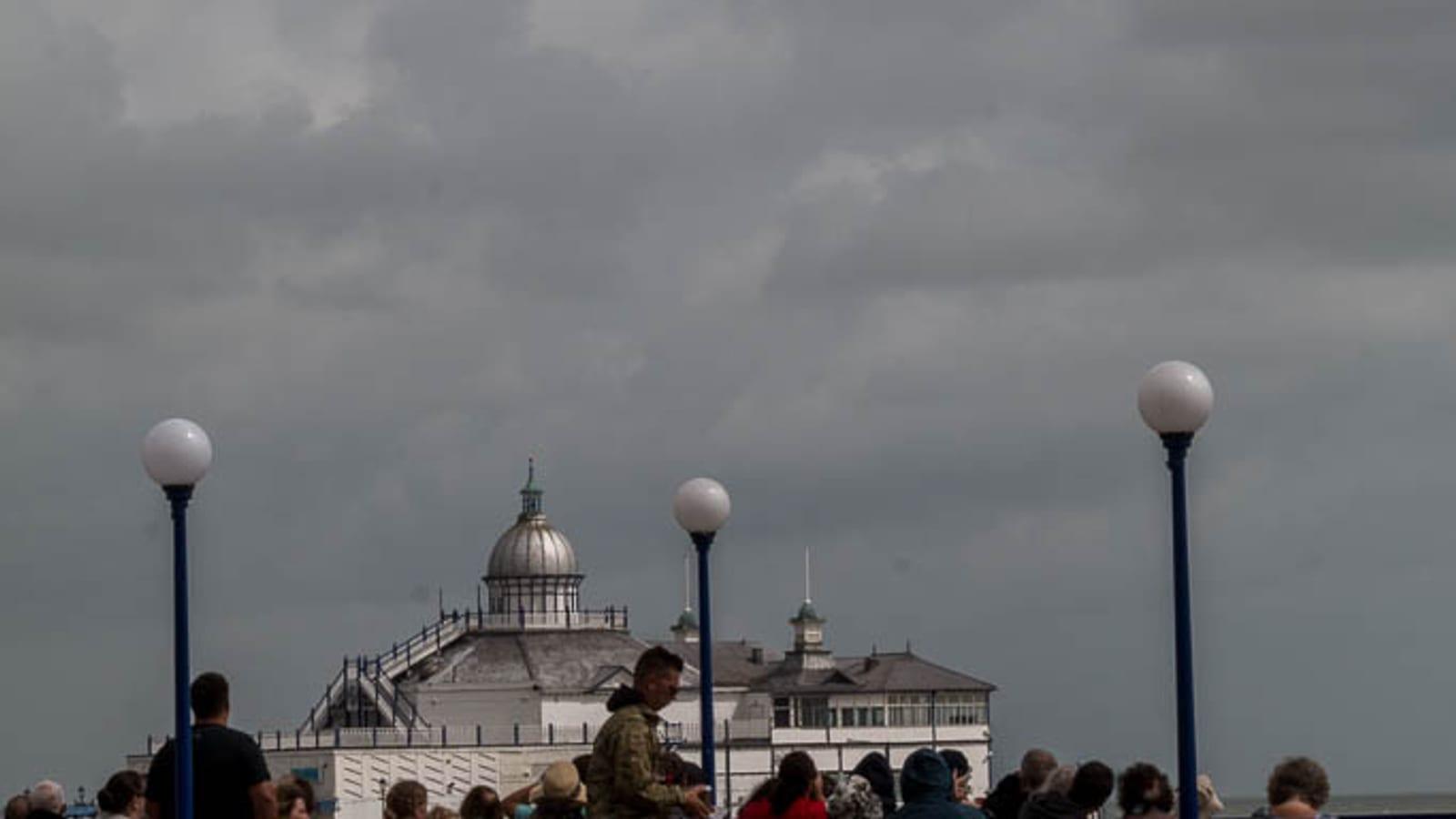
 Chinook, Eastbourne, Sussex - geograph.org.uk - 4131973.jpg. Photo: Christine Matthews via Wikimedia Commons (CC BY-SA 2.0)
Location and Directions
Address
Holywell Beach: Duke's Drive, Eastbourne BN20 7XL. Cow Gap: South Cliff, Eastbourne BN20 7XQ. Both are on the western outskirts of Eastbourne, on the road toward Beachy Head.
Directions and Parking
From Eastbourne town centre, take the B2103 seafront road west toward Beachy Head. For Holywell Beach, turn into Duke's Drive and follow it to the cliff-top car park; steps lead down to the beach below. For Cow Gap, continue further along the B2103 past Holywell and look for the signed Cow Gap access track on the left. Both access points involve a descent to the beach on steps or a steep path. The Holywell car park is free of charge. From Cow Gap, the walk along the beach toward the cliff base exposures is approximately five to ten minutes. The Beachy Head lighthouse and the Belle Tout lighthouse are both visible from the clifftop access points and provide orientation.
What Fossils You'll Find
Echinoids are the most frequently found fossils at Eastbourne and appear in several forms across the different chalk formations exposed here. The irregular echinoid Micraster is present in the Seaford and Newhaven Chalk, often in good three-dimensional condition. The heart-shaped form of this genus is distinctive and immediately recognisable. Conulus occurs lower in the sequence. In the Gault Clay at Cow Gap, the echinoid Holaster appears alongside ammonites and bivalves in a very different fossil assemblage from the chalk above.
 Fossil Echinoids Stroking Stones Folklore Fairy Loaves.jpg. Photo: Malcolm Lidbury (aka Pink pasty) via Wikimedia Commons (CC BY-SA 3.0)
Chalk ammonites are a speciality at Eastbourne. The site exposes chalk-stage ammonites including Schloenbachia and Mantelliceras in the Grey Chalk and lower White Chalk formations, in addition to the characteristic Gault Clay ammonites in the lower beds. Finding ammonites in chalk requires splitting fresh nodules or examining the surfaces of fallen blocks carefully; they are less immediately obvious than echinoids but equally present.
Brachiopods, bivalves including Inoceramus, sponge bodies, and fish teeth are present throughout the chalk sequence. The Plenus Marls, a distinctive band visible in the cliff between the Grey and White Chalk, is associated with a known oceanic anoxic event and marks a change in the fossil assemblage above and below it. This band is worth locating in the cliff section for reference even if it is not the most productive collecting horizon.
Geologic History
The Ancient Environment
The cliffs at Eastbourne expose a chalk sequence spanning from the Albian stage (approximately 103 million years ago) at the base, through the Cenomanian, Turonian, Coniacian, and up to the Santonian stage at the top (approximately 86 million years ago). This 17-million-year record makes the Eastbourne section one of the longest continuous Cretaceous exposures in England.
The Gault Clay at Cow Gap represents a shallow, near-shore environment with terrestrial sediment input during the Albian. As sea levels rose through the Cenomanian, the shoreline retreated northward, progressively deeper and cleaner water covered the region, and the chalk-forming conditions characteristic of the Upper Cretaceous were established. The pure white of the higher chalk beds reflects the same deep, land-distant sea recorded at Seven Sisters. Britain lay at approximately 40 degrees north latitude throughout this interval, with warm shallow seas supporting diverse benthic communities of echinoids, sponges, bivalves, and fish.
The Plenus Marls band records a global oceanic anoxic event during the Cenomanian-Turonian boundary, approximately 93 million years ago, when low-oxygen bottom waters spread across many chalk seas worldwide. This event left a distinctive dark marl visible in chalk cliffs throughout Europe.
How Eastbourne Became a Fossil Collecting Site
The Beachy Head chalk sequence has been eroding since post-glacial sea levels rose to their current position. The headland recedes by wave undercutting and cliff fall, with the chalk offering somewhat more resistance than the soft Eocene clays at other Kent and Sussex sites but still eroding at a measurable rate. Cow Gap, in particular, is positioned where a geological fault brings the Gault Clay and lower chalk down to beach level, allowing access to formations that would otherwise be inaccessible without the fault displacement. The Holywell beach section provides access to higher chalk formations. Together, the two access points give collectors a wide range of Cretaceous material from a single visit.
Collecting Rules and Regulations
Is Fossil Collecting Allowed?
Surface collecting from the beach and foreshore at Eastbourne is permitted and free. Personal, non-commercial collection of loose material from the beach is legal under UK law. The chalk cliffs and foreshore carry SSSI designation. Hammering or chiselling the standing cliff face or in-situ bedrock is prohibited under SSSI regulations. Collecting loose material from fallen chalk and clay blocks already on the beach is the accepted method.
Recommended Tools
A geological hammer and chisel for splitting loose chalk nodules on the beach, a stiff brush for clearing chalk dust and debris from fossil surfaces, a hand lens for examining small brachiopods and echinoid pores, and padded containers for transporting fragile specimens are all useful. Chalk fossils can be delicate; wrapping individual specimens in foam or newspaper before packing prevents damage.
Safety
The chalk cliffs between Cow Gap and Beachy Head are among the most actively eroding in Britain and produce sudden cliff falls throughout the year. Never stand at the cliff base or under overhanging chalk. The safest collecting method is to work chalk blocks that have already been moved away from the cliff face by wave action. Always check tide times before visiting; the beach narrows significantly at high tide and parts of the foreshore may be cut off. The descent paths at Holywell and Cow Gap are steep and can be slippery in wet weather.
Sources
Nearby sites
 Beachy Head Fossil Hunting GuideEchinoids (sea urchins), Flint sponges
 Seven Sisters Fossil Hunting GuideSeaford Chalk Formation, Echinoids
 Cooden Beach Bexhill Fossil Hunting GuideDinosaur bones and teeth, Crocodilian material
 Hastings East Sussex Fossil Hunting GuideDinosaur bones and teeth, Dinosaur footprints