Cooden Beach Bexhill Fossil Hunting Guide
Image: N Chadwick via Wikimedia Commons
Cooden Beach at Bexhill-on-Sea exposes Early Cretaceous Wealden Clay and sand yielding dinosaur bones, crocodilian teeth, turtle fragments, and plant fossils.
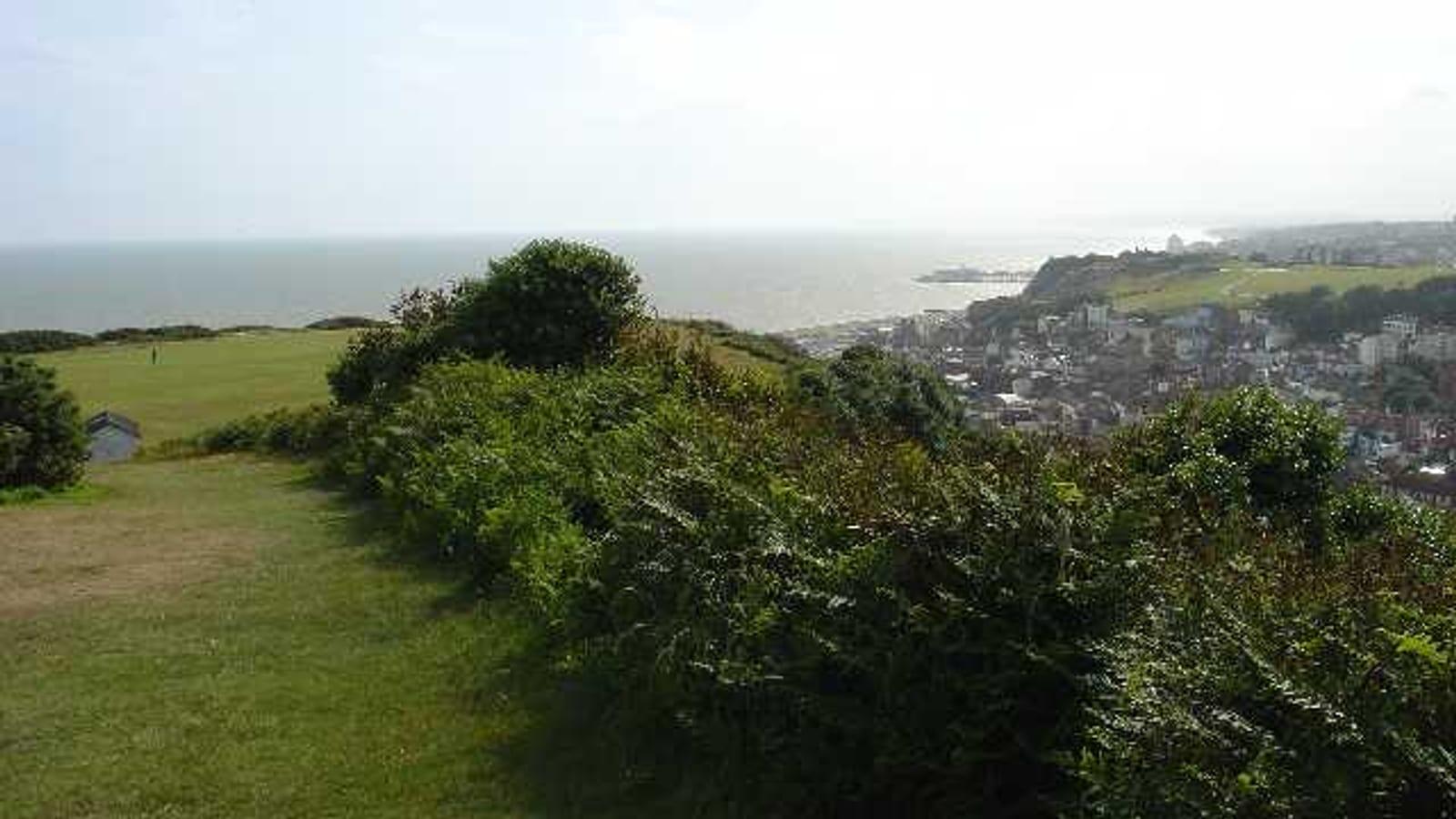
Cooden Beach, at the western end of Bexhill-on-Sea in East Sussex, exposes the Wealden Group along the foreshore and in the low cliffs backing the beach. This is the same Early Cretaceous freshwater sequence that yields dinosaur bones, crocodilian remains, turtle fragments, fish, and plant fossils at Hastings to the east. The formations here, the Weald Clay and the Tunbridge Wells Sand, were laid down in a complex of rivers, floodplains, and shallow lakes approximately 130 to 125 million years ago, during the Hauterivian and Barremian stages.
Cooden is less well-documented in the fossil hunting literature than Hastings or Bexhill's eastern foreshore, but the geology is continuous and the collecting potential is real for those who work the site systematically. Dinosaur bones, crocodilian teeth and armour plates, turtle shell fragments, fish scales and vertebrae, and plant impressions all occur in the Wealden sediments here. Because the site sees fewer collectors than Hastings, freshly eroded material is less likely to have been picked over before you arrive. This guide covers access, what to look for, the Early Cretaceous geology, and the rules that apply.
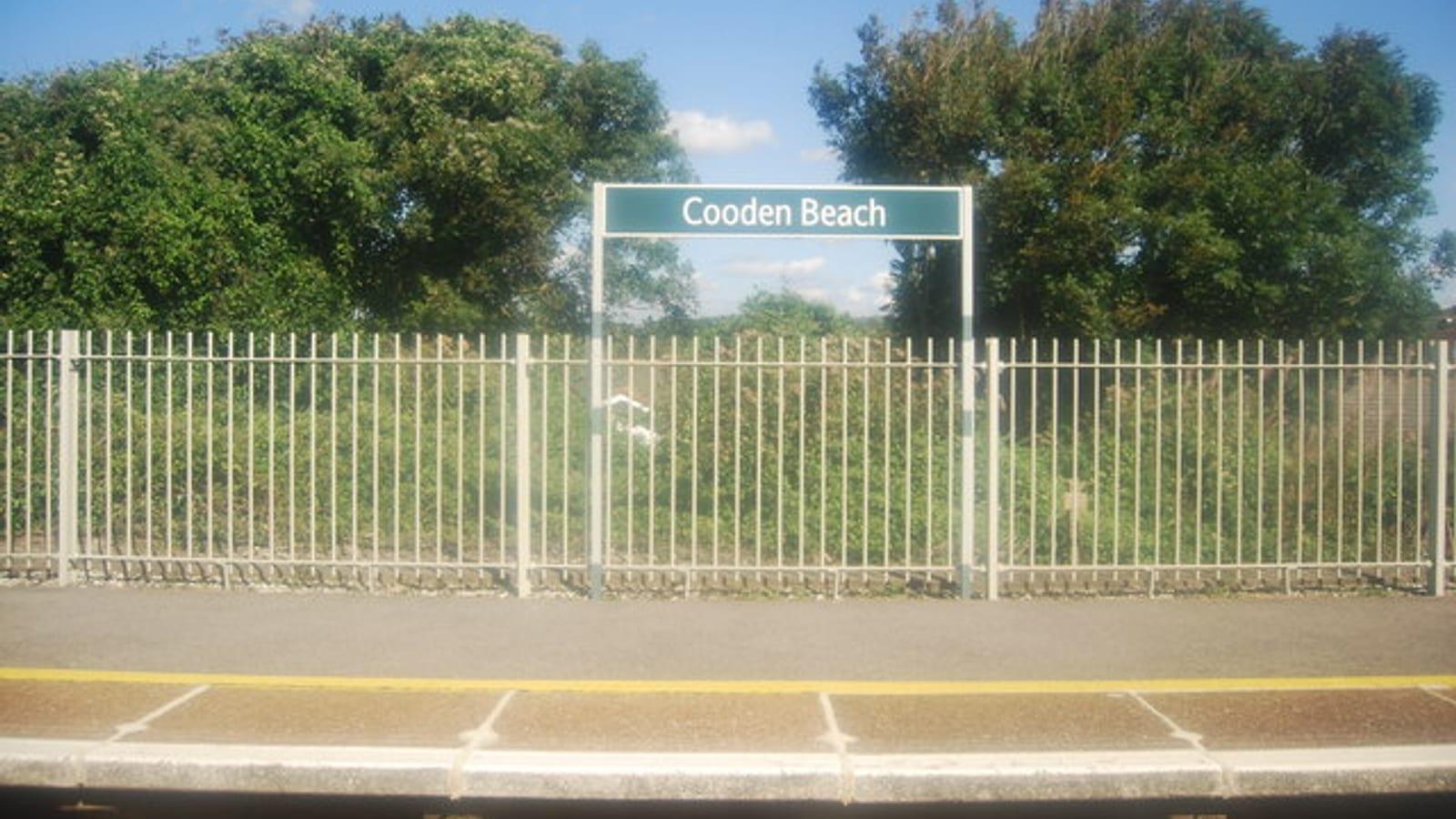
 Cooden Beach Station - geograph.org.uk - 4205114.jpg. Photo: N Chadwick via Wikimedia Commons (CC BY-SA 2.0)
Location and Directions
Address
Cooden Beach, western end of Bexhill-on-Sea, East Sussex TN39 4SG, England. The fossil-bearing Wealden exposures are on the foreshore extending west from Cooden toward Pevensey, with the most accessible sections near the Cooden Beach Hotel and the beach huts at Cooden.
Directions and Parking
From Bexhill-on-Sea town centre, follow the A259 west toward Eastbourne. Turn south onto Cooden Sea Road (signed for Cooden Beach). Follow this road to the seafront, where free street parking is available along the seafront road near the Cooden Beach Hotel and beach huts. Alternatively, park in the side streets of Cooden. The beach is directly accessible from the seafront road via steps and ramps at several points.
Walk along the foreshore westward toward Pevensey to examine the Wealden exposures. The most productive approach is to walk at low tide, scanning the foreshore for clay and sandstone material eroded from the cliffs. The cliffs here are low, generally 3 to 5 metres, and composed of unconsolidated Wealden clay and sandstone with a surface cover of beach gravel. Material eroded from the cliff base concentrates on the foreshore after storms.
What Fossils You'll Find
Dinosaur bones and teeth are the finds that bring most collectors to this stretch of coast. Iguanodontid material, including isolated teeth, vertebrae, and limb bone fragments, occurs in the Weald Clay and Tunbridge Wells Sand. The bones are typically dark brown or black and have a spongy internal texture that distinguishes them from the surrounding rock. Scan the base of clay cliffs and recently collapsed blocks on the foreshore. Polacanthus (an ankylosaur) remains have been recorded from Wealden Group sites at this longitude.
 Dinosaur bones (Morrison Formation, Upper Jurassic; Fossil Cabin, Como Bluff, Wyoming, USA) 33.jpg. Photo: James St. John via Wikimedia Commons (CC BY 2.0)
Crocodilian material is among the more commonly found vertebrate fossils in the Weald Clay. Teeth are elongate and ridged with a distinctive surface texture. Osteoderms, the bony armour plates that covered the back and sides of Wealden crocodilians, occur as small, irregular, pitted bony fragments that can be confused with other material; the pitted upper surface is the key identifier.
Turtle shell fragments occur in both the Weald Clay and coarser sandstone facies. The shell is composed of polygonal bony plates with a characteristic surface pattern of radiating ridges and pits; even small fragments are identifiable by this texture.
Fish remains, including the scales and teeth of Lepidotes and other Wealden bony fish, are found in the finer-grained clay horizons. Lepidotes scales are rhomboid to circular, glossy, and often only a few millimetres across; they concentrate in thin scale-bearing layers within the Wadhurst Clay equivalent.
Plant material, including carbonised stem sections, fern fronds, and cycad fragments, erodes from the clay in recognisable form. Horsetail stem sections are particularly common and are identifiable by their regularly jointed, circular cross-section.
Geologic History
The Ancient Environment
The Weald Clay Formation and Tunbridge Wells Sand at Cooden were deposited during the Hauterivian and Barremian stages of the Early Cretaceous, approximately 135 to 125 million years ago. These formations are part of the Wealden Group, a thick non-marine sequence that extends across much of Kent, Sussex, and Surrey, representing the infilling of a large freshwater to brackish basin, the Weald Basin, during the early stages of the opening of the North Atlantic.
The depositional environment was a broad, low-relief floodplain intersected by meandering river channels and shallow lakes. The Weald Clay records quiet-water lake and floodplain conditions where fine silts and muds settled. The Tunbridge Wells Sand represents the coarser, higher-energy deposits of river channels and delta lobes prograding into the lake system. The climate was warm and subtropical, comparable to modern central Africa or southern Asia, with seasonal rainfall and lush vegetation on the floodplains. The fauna, including large iguanodontid dinosaurs, sauropods, ankylosaurs, crocodilians, turtles, and freshwater sharks, reflects the warm, well-vegetated character of this ancient landscape.
How Cooden Became a Fossil Collecting Site
Wave erosion along the East Sussex coast cuts steadily into the low Wealden cliffs backing Cooden Beach and the stretch of coast running west toward Pevensey. The rate of cliff retreat is lower here than at the chalk sites further east, but it is sufficient to keep exposing fresh clay surfaces and releasing fossil material onto the foreshore. Storms, in particular, are responsible for the most significant cliff collapses, which deposit fresh clay blocks on the beach. Because the Wealden clay is relatively soft, these blocks weather quickly over the course of a few months, releasing enclosed fossils to lie on the surface for collectors to find.
Collecting Rules and Regulations
Is Fossil Collecting Allowed?
The foreshore at Cooden Beach is publicly accessible. The Wealden Group cliffs and foreshore along much of the East Sussex coast are not comprehensively SSSI-designated in the same way as the Speeton Clay or the Jurassic Coast, but individual stretches may have designations in place. Check the Natural England SSSI mapping tool for the precise stretch between Cooden and Pevensey before visiting with the intention of collecting.
The standard approach applies throughout: collect only loose, already-detached material from the foreshore using hand tools. Do not cut into the cliff face, undercut the cliff base, or attempt to extract material from in-situ exposures. Any significant dinosaur find, particularly articulated material, should be reported to the Natural History Museum or to Hastings Museum, which holds the principal Wealden collections for East Sussex.
Recommended Tools
A geological hammer, chisels, and a hand lens are the basic kit. The Weald Clay splits along bedding planes with moderate effort, and much useful material can be found simply by examining loose blocks on the foreshore without any hammering. A stiff brush helps clean surfaces. Bring a tide table; the most productive foreshore sections are only fully exposed for two to three hours around low water. The clay is extremely sticky in wet conditions; rubber boots are preferable to leather walking boots for the foreshore itself.
Safety
The cliffs at Cooden are low but are actively eroding and can slump without warning, particularly in wet weather. Do not work at the base of the cliff or stand beneath any overhang. The foreshore clay is slippery when wet; take care walking on exposed clay surfaces. The beach west of Cooden toward Pevensey becomes increasingly remote, with fewer exit points; plan your return before the tide begins to come in. Check weather forecasts before visiting, as onshore winds and accompanying rough seas make this foreshore dangerous.