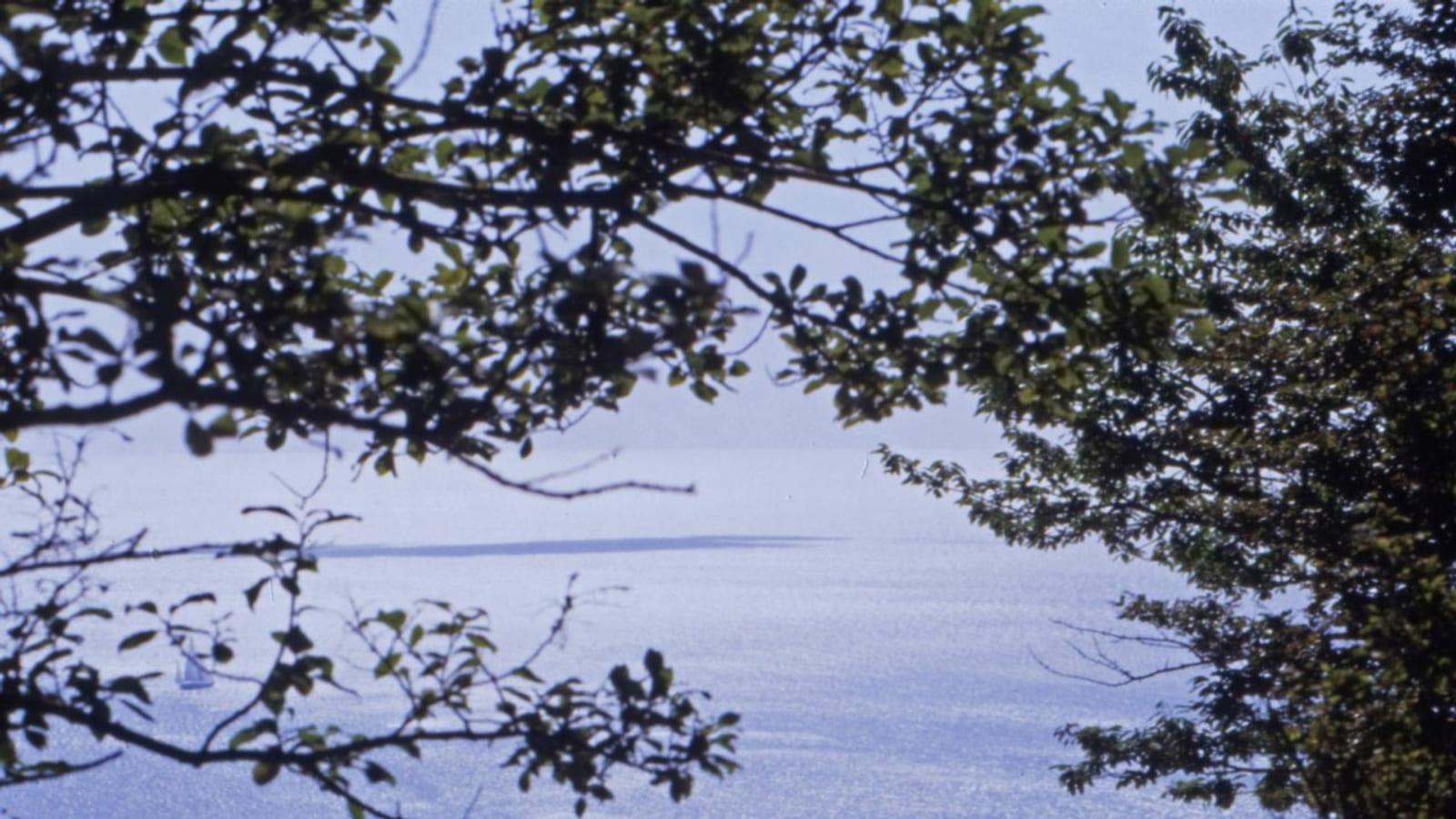
Store Klint Mons Klint Tallest Cliffs Fossils Fossil Hunting Guide
Image: Rüdiger Stehn via Wikimedia Commons
Collect Cretaceous fossils below Denmark's tallest chalk cliffs at Møns Klint Store Klint section. Free access, abundant belemnites, wilder setting than the GeoCenter.
Store Klint is the section of Møns Klint where the chalk cliffs reach their maximum height of 128 meters — the tallest sea cliffs in Denmark. The beach below these white walls is quieter than the main GeoCenter section and requires a steeper 15-minute forest trail descent, but the fossil collecting is identical to the rest of Møns Klint: abundant Late Cretaceous belemnites, sea urchins, brachiopods, and coral fragments from seas 70 million years old. What distinguishes Store Klint is the scale. Standing at the cliff base and looking up at 128 meters of white chalk overhead — chalk that was originally laid down as horizontal seafloor sediment and then shoved vertical by Pleistocene glaciers — gives a visceral sense of the forces involved in creating this landscape. For fit hikers who want a wilder collecting experience away from the GeoCenter crowds, Store Klint is the right choice. This guide covers how to reach the site, what to expect from the collecting, the geological history of the cliffs, and the safety rules that are especially important at this height.
 Møns Klint Danmark (102442103).jpeg. Photo: Rüdiger Stehn via Wikimedia Commons (CC BY-SA 3.0)
Location and Directions
Address
Store Klint beach access, Klintevej, 4791 Borre, Møn, Denmark. The access point is approximately 3 kilometers south of GeoCenter Møns Klint along Klintevej. Use GPS coordinates 54.9589°N, 12.5312°E for navigation.
Getting There
From Copenhagen, drive south approximately 120 kilometers on Route 22 through Køge and Præstø to Vordingborg, then cross the bridge to Møn island on Route 287. Follow signs toward GeoCenter Møns Klint. Continue 3 kilometers past the GeoCenter along Klintevej to the small informal parking area on the left. Space is limited to 4 to 6 vehicles. A steep trail through mature beech forest descends to the beach in approximately 15 minutes. The trail surface is natural and can be slippery in wet weather. There are no facilities at this site. The GeoCenter, 3 kilometers north, has a café, restrooms, and exhibits if you want to visit before or after your beach time. Allow a full day if combining both.
What Fossils You'll Find
Belemnites are consistently the most abundant find at Store Klint. The cylindrical fossils range from 3 to 12 centimeters long and weather continuously from the chalk. Finding 10 to 20 on a single beach walk is typical. After winter storms that have dislodged fresh cliff material, numbers can be much higher. Scan the chalk rubble above the waterline and along the base of recent cliff falls.
 Belemnitella americana (fossil belemnites) (Cretaceous; New Jersey, USA) (49103465241).jpg. Photo: James St. John via Wikimedia Commons (CC BY 2.0)
Sea urchin tests and spines occur regularly throughout the beach. Complete tests are found most often in fresh cliff fall material; spines are scattered more widely. Brachiopods preserve as small ribbed shells in chalk blocks. Bryozoan colonies appear as encrusting masses in cliff fall pieces. Coral fragments turn up occasionally. Flint nodules throughout the beach sometimes contain natural fossil molds. Shark teeth and fish bones are rare but worth looking for in the fine material near fresh falls.
The 128-meter cliff height at Store Klint means that larger blocks fall here than at lower sections of Møns Klint, and fresh material can accumulate in substantial quantities after storm periods. This cliff height is also why the safety rules below are especially important at this particular location.
Geologic History
The Ancient Environment
The chalk at Store Klint belongs to the Maastricht Formation, Upper Maastrichtian Stage, deposited approximately 72 to 66 million years ago in a warm shallow sea 100 to 150 meters deep. Sea surface temperatures reached 18 to 22 degrees Celsius. No polar ice existed. Denmark occupied roughly 40 to 45 degrees north latitude — further south than its current position — and subtropical conditions prevailed year-round. The chalk is nearly pure calcium carbonate, formed from the accumulated shells of microscopic coccolithophore algae at a rate of approximately 2 to 3 centimeters per thousand years.
Complex folded and tilted structures are visible in the Store Klint cliff faces. The original horizontal chalk layers were deformed during the Pleistocene Ice Age when massive glaciers advancing from Scandinavia applied enormous lateral pressure. The ice shoved the chalk into near-vertical orientations and created the dramatic fold patterns visible in cross-section. The 128-meter height at Store Klint reflects both the original chalk thickness and the angle and degree of glacial tilting at this specific location. Wave erosion from the Baltic Sea then cut the cliff face and continues to erode it today, releasing new fossils with each storm.
How Store Klint Became a Fossil Collecting Site
Møns Klint has attracted scientific and artistic attention since at least the 1700s, when Romantic-era painters created famous works depicting the white cliffs. Geologists recognized the exceptional glacial deformation structures at Store Klint in early stratigraphic studies. The cliffs remain less developed than the GeoCenter section — there is no infrastructure beyond a basic parking area and trail. Natural coastal erosion replenishes the beach with fresh material continuously, maintaining Store Klint as a productive site for surface collecting.
Collecting Rules and Regulations
Is Fossil Collecting Allowed?
Fossil collecting at Store Klint is free and requires no permit. The beach is accessible 24 hours a day. The site is part of the protected Møns Klint area. Common fossils may be kept under Danish law.
Recommended Tools
No tools are permitted anywhere on Møns Klint. Only loose surface material may be collected. Hammering on or digging into the cliff face is strictly prohibited. Surface collecting is productive here without any tools. Bring a backpack or bucket and material for packing specimens.
Safety
The 128-meter cliff height at Store Klint makes rockfall the most serious hazard at this site. A falling chalk block from this height carries far more force than the same block falling from a 15-meter cliff. Maintain a minimum distance of 15 to 20 meters from the cliff base — greater than the standard Møns Klint recommendation — and do not reduce this distance for any reason, including better fossil access. Listen as well as look; large falls sometimes produce audible cracking sounds. Do not visit during high winds, which can dislodge material from the upper cliff. The return trail up through the forest requires moderate fitness. The surface is steep and can be slippery in wet conditions — use trekking poles if you have them. The Baltic Sea has minimal tidal range; rising water is not a concern, but storm waves on this exposed section can reach the cliff base.
Sources
Nearby sites
 Liselund Park Mons Klint Beach Access Fossil Hunting GuideLiselund Park, Maastricht Formation
 Mons Klint Beach Fossil Hunting GuideMøns Klint, Belemnites
 Rødvig Beach Fossil Hunting GuideVisiting Information, What You'll Find
 Faxe Quarry South Area Fossil Hunting GuideVisiting Information, Fossil Collecting