Mons Klint Beach Fossil Hunting Guide
Image: Slaunger via Wikimedia Commons
Hunt for 70-million-year-old belemnites and sea urchins on the beach at Møns Klint's white chalk cliffs. Free access, no permit needed, guided tours available.
The beach at the base of Møns Klint sits below 128 meters of white chalk cliffs rising straight from the Baltic Sea on the island of Møn, 120 kilometers south of Copenhagen. The chalk was laid down during the final millions of years of the Cretaceous Period, and the fossils it contains — belemnites, sea urchins, brachiopods, and corals — date to approximately 70 million years ago, when warm shallow seas covered this part of northern Europe. Glaciers during the Pleistocene Ice Age shoved those originally horizontal chalk layers into dramatically steep angles, creating the cliff geometry visible today. Finding a belemnite here takes minutes; the cylindrical fossils known locally as thunderstones weather out of the chalk continuously. This guide covers how to reach the beach, what you will find, the geological history behind the cliffs, the collecting rules, and the safety precautions every visitor needs to know.
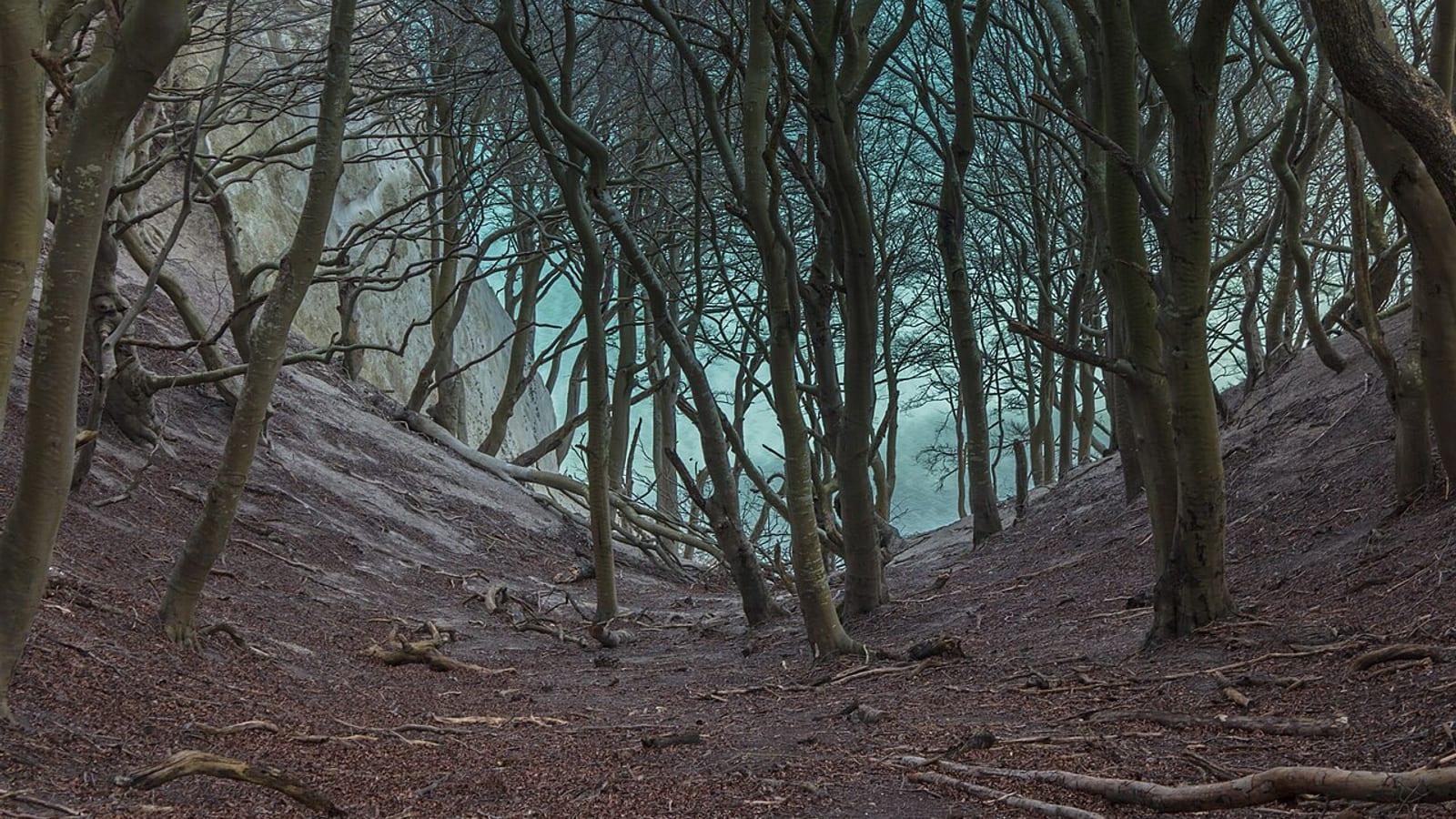
 Møns Klint beech trees in gorge 2015-04-01-4864.jpg. Photo: Slaunger via Wikimedia Commons (CC BY-SA 4.0)
Location and Directions
Address
GeoCenter Møns Klint, Stengårdsvej 8, 4791 Borre, Møn, Denmark. The GeoCenter sits at the top of the cliff and provides the primary access point to the beach below.
Getting There
From Copenhagen, drive south on Route 22 for approximately 120 kilometers through Køge and Præstø to Vordingborg, then cross the bridge to Møn island on Route 287. Follow the brown tourist signs to GeoCenter Møns Klint. The drive takes between 1.5 and 2 hours depending on traffic. Parking at the GeoCenter costs 45 DKK (approximately 7 USD) per day. Public transport is available via regional train to Vordingborg, then bus 667 to the GeoCenter; note that bus service is limited and runs primarily during summer. A free hop-on-hop-off bus circles Møn island in summer with stops at the main attractions. From the GeoCenter, the Maglevandstrappen — a 497-step staircase constructed in 2011 — descends the cliff to the beach. The stairs include rest platforms and are well maintained, but the descent is demanding and the return climb is strenuous. Allow extra time and bring water. Alternative, gentler access points exist at Liselund and Store Klint.
What Fossils You'll Find
Belemnites are by far the most abundant fossils at Møns Klint. These are the internal guards of extinct squid-like cephalopods, shaped like elongated cylinders and ranging from 3 to 10 centimeters long. The chalk releases them continuously as it weathers, and virtually every visitor who spends an hour on the beach finds at least one. Look for them on the chalk rubble just above the waterline and scattered across the upper beach after storms.
 Belemnite Fossils - geograph.org.uk - 5763147.jpg. Photo: Anne Burgess via Wikimedia Commons (CC BY-SA 2.0)
Sea urchin fossils occur in two forms: isolated spines, which are common, and complete tests (shells), which take more searching but appear regularly after winter storms have broken up fresh cliff fall. The tests are typically 2 to 4 centimeters across and weathered smooth. After storms, scan the area where fresh chalk debris has accumulated near the cliff base.
Brachiopods preserve as small ribbed shells in the chalk rubble. They are smaller and less obvious than belemnites but worth collecting. Bryozoan colonies appear as irregular masses of lace-like carbonate in chalk blocks. Small bivalve and gastropod molds occur in cliff fall pieces. Coral fragments show up occasionally. Shark teeth and fish bones are rare but turn up in the fine gravelly material at the base of cliff fall piles. The white chalk itself is a fossil material — it is composed almost entirely of microscopic coccolithophore plates visible under magnification.
Geologic History
The Ancient Environment
The Møns Klint chalk belongs to the Maastricht Formation, deposited during the Maastrichtian Stage of the Late Cretaceous Period approximately 72 to 66 million years ago. At that time, a warm, clear, shallow sea approximately 100 to 200 meters deep covered what is now Denmark. The sea was positioned at roughly 40 to 45 degrees north latitude — further south than Denmark sits today, due to ongoing continental drift. Global temperatures averaged 10 to 15 degrees Celsius above present values, no polar ice caps existed, and sea levels stood 100 to 200 meters higher than today.
The chalk formed from the slow accumulation of coccolithophore shells — calcium carbonate plates secreted by single-celled algae that lived in vast numbers in the sunlit surface water. When these organisms died, their plates sank to the seafloor and compacted over millions of years into the pure white rock visible in the cliffs today. The accumulation rate was roughly 2 to 3 centimeters per thousand years. The warm, nutrient-rich sea supported a full ecosystem: belemnites, ammonites, fish, sharks, mosasaurs, and diverse bottom-dwelling invertebrates.
Black flint bands appear throughout the chalk. The flint formed when silica dissolved from sponge spicules migrated through the porous chalk and crystallized as cryptocrystalline quartz. Flint frequently preserved fossil shapes as natural molds when the original shell material later dissolved away.
How Møns Klint Became a Fossil Collecting Site
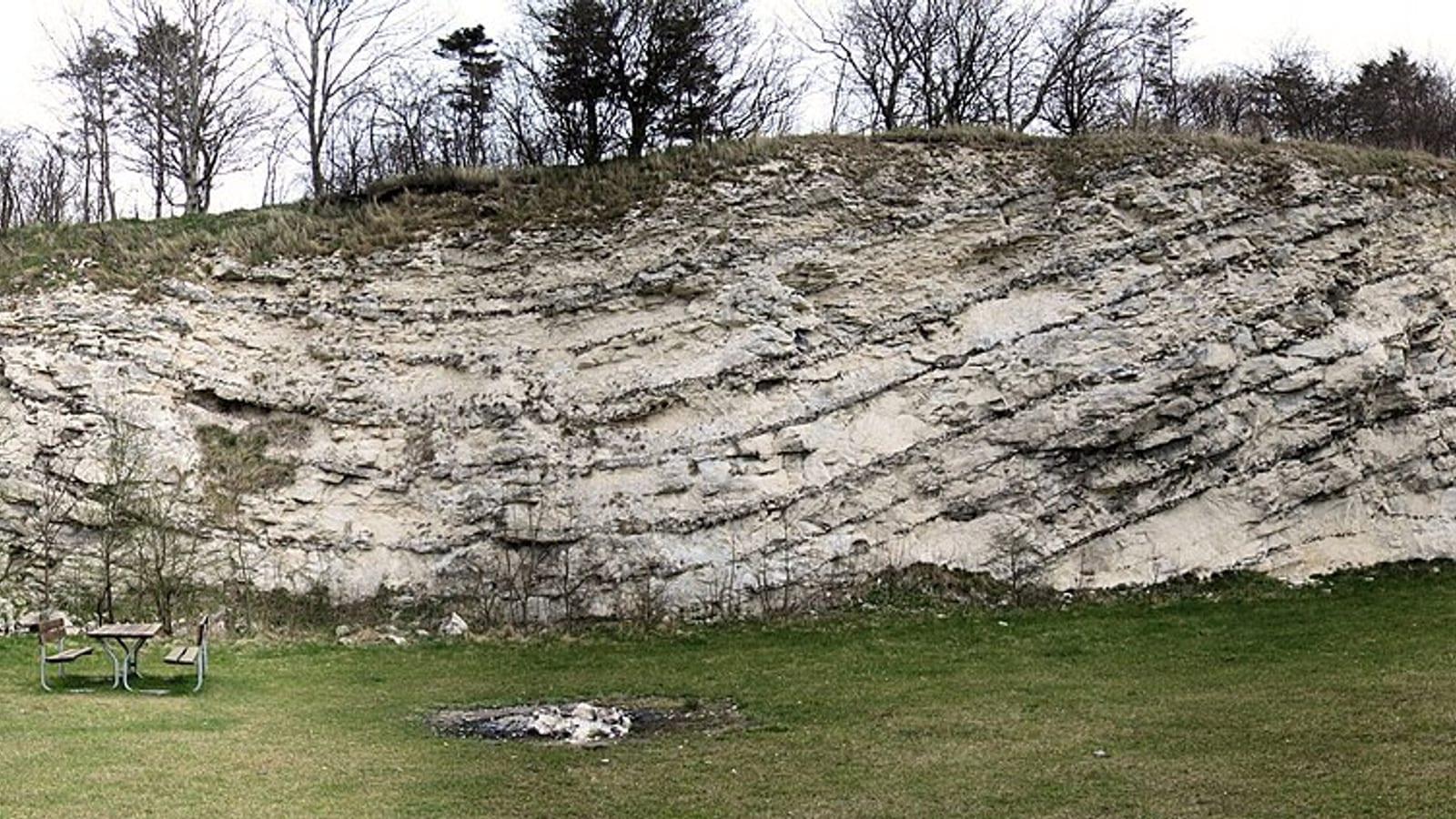
The chalk layers were originally deposited flat on the seafloor. During the Pleistocene Ice Age, beginning roughly 2.6 million years ago, massive glaciers advancing from Scandinavia applied enormous lateral pressure to the chalk, tilting the layers into near-vertical positions and folding some sections into dramatic wave-like patterns. This glacial deformation created the steep cliff faces. Once exposed to wave action, the Baltic Sea began eroding the chalk, and that erosion continues today, constantly releasing new fossils onto the beach below.
Collecting Rules and Regulations
Is Fossil Collecting Allowed?
Fossil collecting at Møns Klint beach is free and requires no permit. The beach is accessible 24 hours a day. The GeoCenter operates seasonally — open from Easter through October, with weekend-only hours from November through March — but the beach itself is always open. Under Danish law, common fossils collected for personal use may be kept by the finder; scientifically significant specimens belong to the state. You may take what you find on the beach for your own collection.
Recommended Tools
No tools are permitted at Møns Klint. You may collect only loose fossils found on the beach surface or in cliff fall debris. Hammering on or digging into the cliff faces is strictly prohibited. This rule protects both the cliff stability and the safety of people below. The GeoCenter offers guided fossil tours daily during summer at 11:00 and 14:00; the tours meet at the beach after descending the stairs and cost 50 DKK in addition to GeoCenter admission.
Safety
Rockfalls from the chalk cliffs occur regularly and without warning. Stay at least 10 to 15 meters away from the cliff base at all times while collecting. Warning signs mark particularly unstable sections. Do not collect during high winds, which can dislodge chalk blocks. The Baltic Sea has minimal tidal range — under 50 centimeters — so rising water is not a hazard, but storm waves can be powerful. Avoid the beach in severe weather. Wear sturdy shoes with good grip; the beach surface includes loose chalk blocks, wet clay patches, and slippery flint. Bring gloves to protect your hands when handling sharp flint. The return climb up the 497 stairs is demanding — allow enough time and carry water.
Sources
Nearby sites
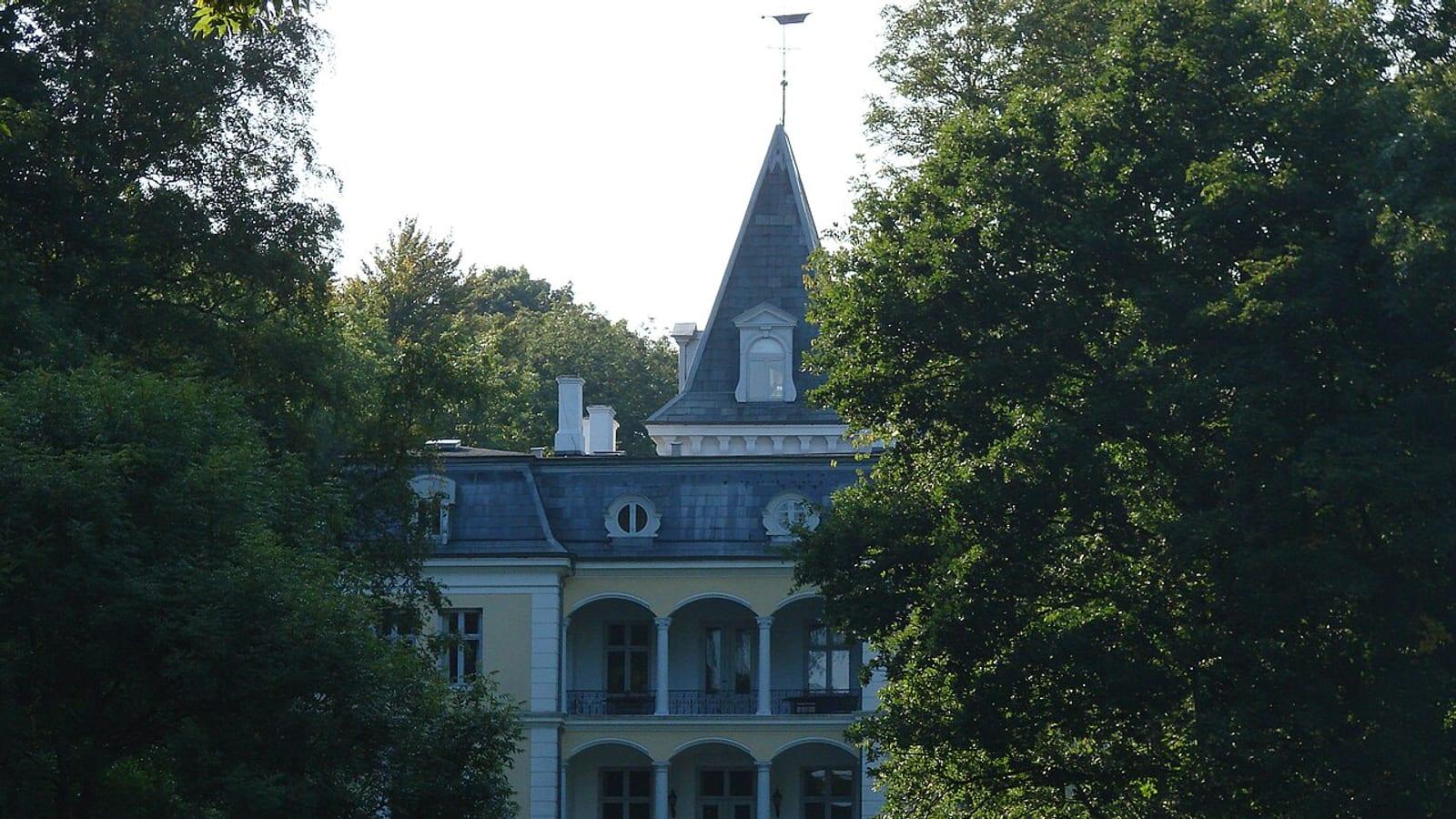 Liselund Park Mons Klint Beach Access Fossil Hunting GuideLiselund Park, Maastricht Formation
 Store Klint Mons Klint Tallest Cliffs Fossils Fossil Hunting GuideStore Klint, Belemnites
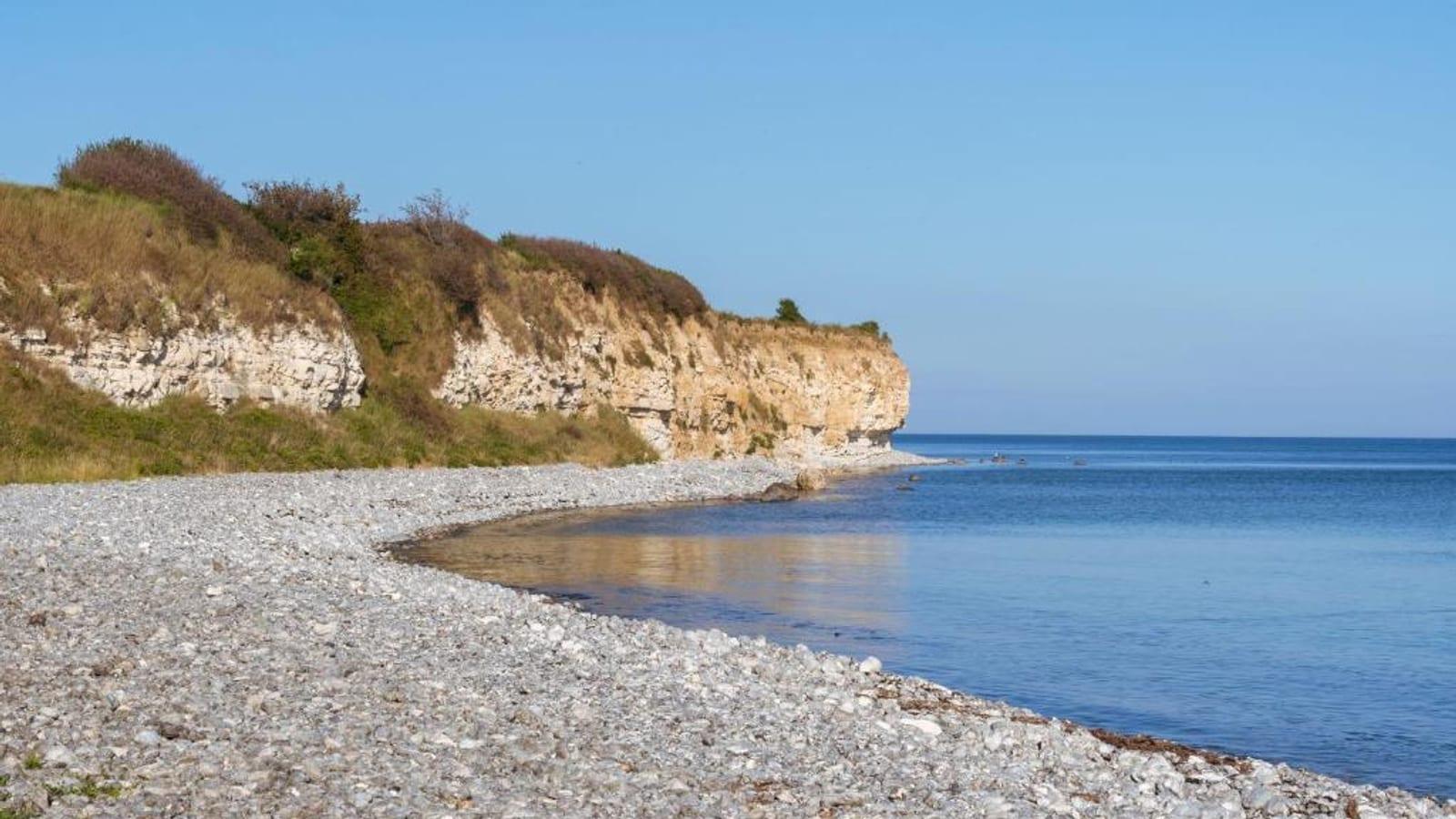 Rødvig Beach Fossil Hunting GuideVisiting Information, What You'll Find
 Boesdal Beach Stevns Klint Fossil Hunting GuideBoesdal beach, Belemnites