Mors Island Moler Museum Eocene Fossil Digging Fossil Hunting Guide
Image: Schorle via Wikimedia Commons
Supervised Eocene fossil digging at Mors Island's Moler Museum. Split moler for fish and insect fossils, keep all finds. Quieter than Fur Museum, 80 DKK admission.
The Fossil and Moler Museum on Mors island in northern Denmark offers the same quality of Early Eocene fossil collecting as the world-famous Fur Museum but draws fewer visitors, giving you quieter conditions and more individual attention from staff. The museum sits in renovated farm buildings outside Nykobing Mors, the main town on the island, roughly 350 kilometers northwest of Copenhagen. Its supervised collecting pit contains moler — the distinctive diatomaceous clay of the Fur Formation — layered with volcanic ash from eruptions 55 million years ago. Splitting the moler along those ash layers regularly exposes complete fish with visible scales, insects with wing detail, and plant leaves. Museum admission covers both the exhibits and unlimited time in the collecting pit, with all tools provided. The Lynghøj crystal — a 1.8-meter ikaite crystal and Denmark's largest — is on display in the main hall. This guide covers directions, what to expect from the fossil dig, the geology that makes these fossils exceptional, and the practical details for planning your visit.
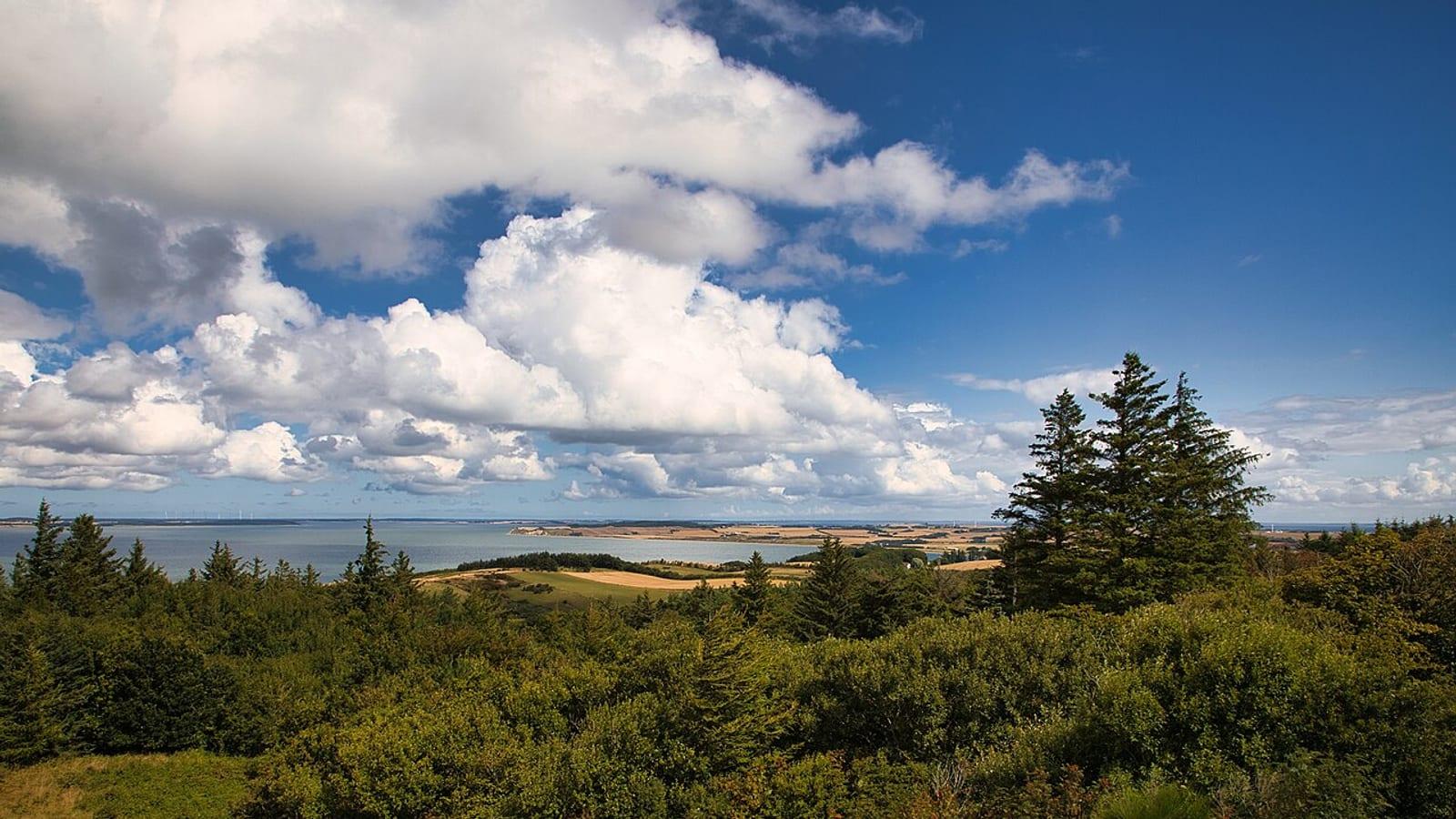
 Mors Flade 01.jpg. Photo: Schorle via Wikimedia Commons (CC BY-SA 4.0)
Location and Directions
Address
Fossil og Molermuseet, Skarrehagevej 8, 7900 Nykobing Mors, Municipality of Morsø, North Denmark Region.
Getting There
From Copenhagen, drive northwest on the E20 motorway toward Odense, then continue on Route 26 through Viborg to Holstebro. From Holstebro, take Route 26 north across the Sallingsund Bridge to Mors island and Nykobing Mors — approximately 350 kilometers total. In Nykobing Mors, follow the brown tourist signs to the museum, 3 kilometers northwest of the town center on Skarrehagevej. Free parking is available at the museum. By public transport, trains run from Copenhagen to Skive (3 to 4 hours) with a connecting bus to Nykobing Mors (30 minutes); check schedules in advance as frequency is limited. The combined admission ticket for this museum also provides entry to three other local museums on Mors island, making the 80 DKK entry fee excellent value.
What Fossils You'll Find
The Fur Formation moler at this site holds the same range of fossils as the exposures on neighboring Fur island. Museum staff provide blocks of prepared moler and teach you to split them by placing a cold chisel parallel to the volcanic ash banding and tapping with a hammer. Most splits reveal nothing. The ones that work expose fossils as dark impressions against the light moler.
 Diplomystus dentatus fossil fish (Split Fish Layer, Fossil Butte).jpg. Photo: James St. John via Wikimedia Commons (CC BY 2.0)
Fish are the most consistently found vertebrate specimens. Complete fish 5 to 15 centimeters long are found regularly by visitors who spend an hour or two at the pit. The fish appear as flat impressions showing the full body outline, scale patterns, and fin structure. Exceptional finds — fish over 30 centimeters with skeletal detail visible — are less common but do occur. Insects preserve with wing patterns and body segmentation intact in some specimens. Plant fossils include leaf impressions with veins showing, seeds, and stem fragments. Hard carbonate nodules called cementsten occasionally contain three-dimensional rather than flat fossils, including insects preserved in relief.
Museum staff will identify your finds and document anything unusual. All specimens, regardless of quality, can be taken home.
Geologic History
The Ancient Environment
The Mors moler belongs to the Fur Formation, deposited during the Early Eocene Epoch approximately 56 to 54 million years ago. A shallow subtropical sea, 50 to 100 meters deep, covered the Limfjorden region. The seafloor accumulated moler — a mixture of one-third clay minerals and two-thirds diatom frustules, the microscopic silica shells of single-celled algae. Accumulation was slow, roughly 1 to 2 centimeters per thousand years, allowing precise stratigraphic resolution.
Denmark occupied approximately 45 to 50 degrees north latitude at this time, with greenhouse atmospheric conditions maintaining subtropical temperatures year-round. Sea surface temperatures reached 20 to 25 degrees Celsius. Dense tropical and subtropical forests of palms, magnolias, and laurels grew on nearby land. No polar ice existed anywhere on Earth.
The 179-plus volcanic ash layers interrupting the moler represent eruptions from the North Atlantic Igneous Province, active as Greenland separated from Europe. Individual eruptions ejected hundreds to over 1,000 cubic kilometers of ash. As each ash fall descended through the water column, it rapidly buried organisms living near the seafloor. The bottom waters were already oxygen-poor due to density stratification, suppressing bacterial decay. This combination of rapid burial and anoxic conditions preserved organisms in extraordinary detail. The Mors moler is generally slightly thicker than the Fur island sequence, suggesting this area subsided more rapidly during deposition.
How Mors Island Moler Museum Became a Fossil Collecting Site
Moler quarrying on Mors dates to at least the 1600s. Scientific interest grew through the 19th and 20th centuries as exceptional fish and insect fossils attracted attention. The Fossil and Moler Museum opened in 1997 to house the island's paleontological collections. In the early 2000s, the museum excavated a dedicated collecting pit on museum property, providing visitors with fresh moler from authenticated horizons. This approach maintains quality control over the material and allows the supervised program to operate consistently without depleting natural cliff exposures.
Collecting Rules and Regulations
Is Fossil Collecting Allowed?
Fossil collecting requires museum admission: 80 DKK (approximately 12 USD) for adults, 40 DKK (6 USD) for children aged 6 to 17, free for children under 6. The ticket covers both exhibits and the collecting pit, plus entry to three other local museums on Mors. All fossils found in the pit may be kept by the finder.
Recommended Tools
All tools are provided — hammers, cold chisels, and safety glasses. Safety glasses are required while splitting moler. Museum staff demonstrate correct splitting technique. The moler is soft and splits without producing dangerous flying fragments, making this safe for children under supervision.
Safety
The collecting pit has stable walls and a level floor. The primary hazard is small rock chips; provided safety glasses eliminate this risk. Ensure children wear their glasses throughout. The pit closes 30 minutes before the museum. Museum hours are Tuesday through Sunday, 10:00 to 16:00 from April through October, and weekends only 10:00 to 15:00 from November through March. Bring packaging material for fragile finds — moler compression fossils break easily in transit.
Sources
Nearby sites
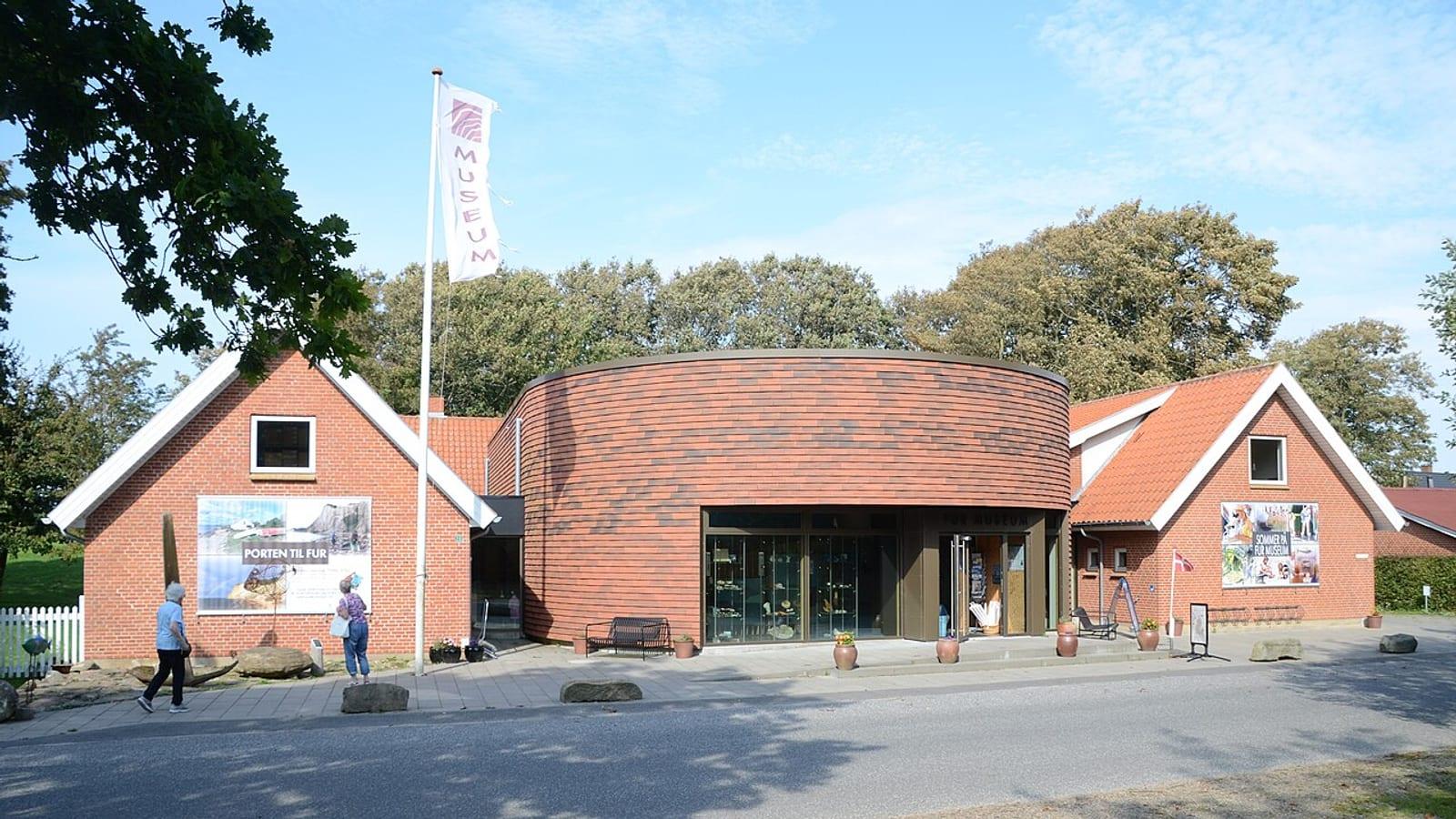 Fur Museum Dig Eocene Fish Insect Fossils Fossil Hunting GuideFur Museum, Fur Formation
 Fur Island Knudeklinterne Fossil Hunting GuideKnudeklinterne cliffs, Knudeklint Member
 Katbjerg Odde Mariager Fjord Fossil Hunting GuideKatbjerg Odde, Bryozoans
 Dalbyover Quarry Fossil Hunting GuideDalbyover, Bryozoans