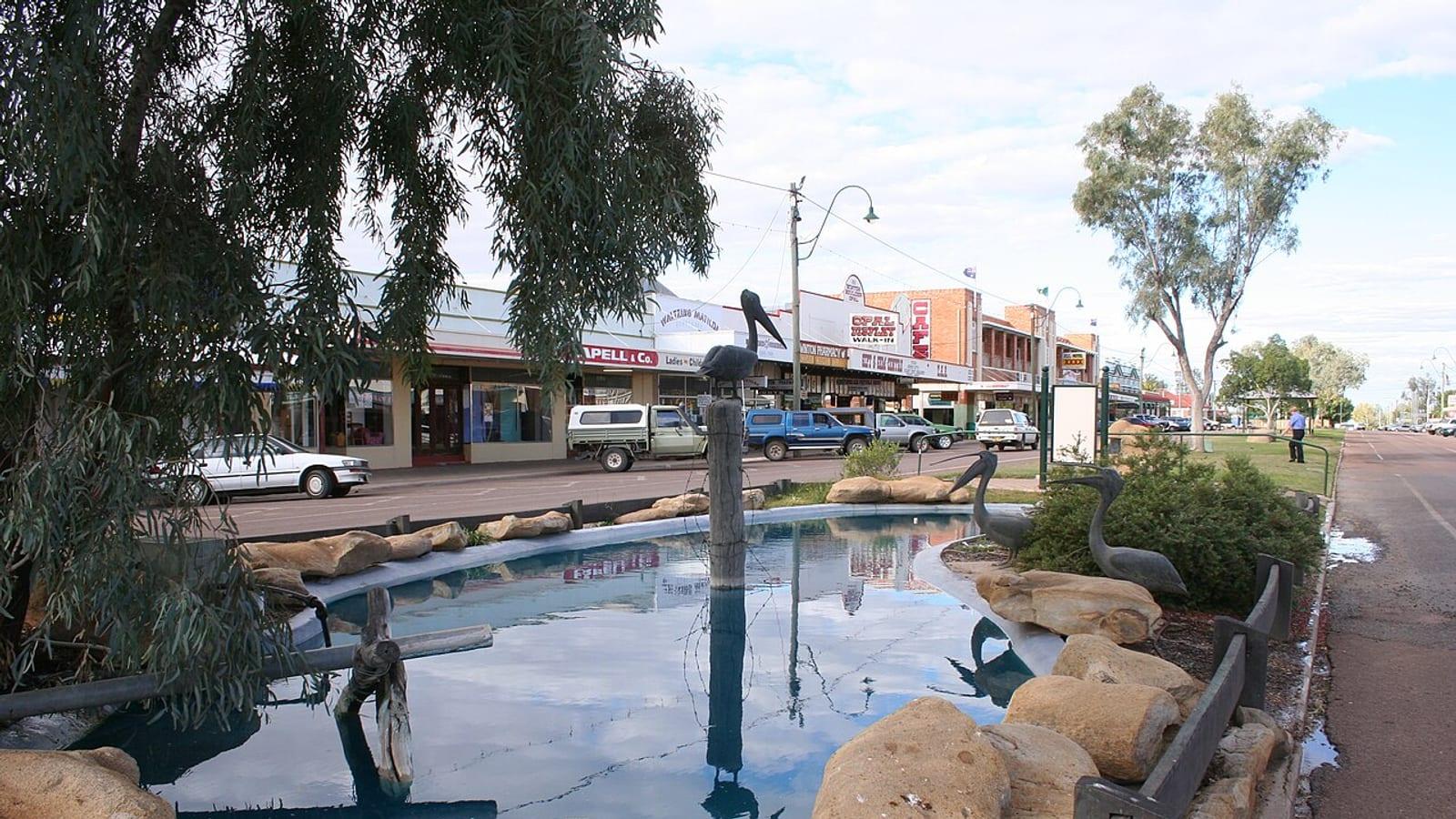
Australian Age of Dinosaurs Museum Winton Fossil Hunting Guide
Image: www.gondwananet.com via Wikimedia Commons
Visit the Australian Age of Dinosaurs Museum near Winton, QLD, to see the world's largest collection of Australian dinosaur fossils including Australotitan and Australovenator.
On a flat-topped mesa rising above the spinifex plains of central-western Queensland, the Australian Age of Dinosaurs Museum holds the largest collection of Australian dinosaur fossils in the world. The site is not a replica or a travelling exhibit — it is the actual working repository for bones excavated from the surrounding Winton Formation, a sequence of Cretaceous river and floodplain sediments that has produced titanosaur sauropods, Australia's most complete theropod, a flying reptile, and a crocodile with a juvenile dinosaur preserved inside its stomach. When you visit, you walk through a climate-controlled room lined with the holotype specimens of animals that no other museum on Earth can show you. Through large windows in the Fossil Preparation Laboratory, you watch palaeontologists working on bones that were still in the ground a few years ago. The museum sits on the Dinosaur Trail alongside Kronosaurus Korner in Richmond and the Flinders Discovery Centre in Hughenden, but Winton is where Australia's most significant Cretaceous dinosaur material lives. This guide covers what to expect when you visit, what you will see, the geology that produced the fossils, and how the site operates today.
 Winton-outback-queensland-australia.jpg. Photo: www.gondwananet.com via Wikimedia Commons (CC BY-SA 3.0)
Location and Directions
Address
Australian Age of Dinosaurs Museum, The Jump-Up, Winton-Longreach Road, Winton QLD 4735, Australia.
Directions
The museum is located on The Jump-Up, a mesa approximately 24 km southeast of Winton township. From Winton, take the Winton-Longreach Road (the Matilda Highway) heading southeast. After approximately 24 km you will see signage directing you to turn onto the museum access road. The access track climbs the mesa escarpment and leads to the main car park on the plateau. The road is sealed to the museum entrance. Winton itself is located approximately 1,380 km west of Brisbane via Emerald and Longreach, or approximately 180 km north of Longreach on the Landsborough Highway. There is no commercial air service to Winton; the nearest commercial airports are at Longreach (QLINK/QantasLink) or Mount Isa. Self-drive is the standard approach. Parking at the museum is free, with ample space for coaches, caravans, and passenger vehicles. The mesa top is exposed to wind and sun, so carry water and sunscreen.
What Fossils You'll Find
The Collections Room tour introduces you to the holotype specimens held by the museum. Diamantinasaurus matildae, nicknamed Matilda, is a titanosaur sauropod approximately 15 metres long. The specimen is among the most complete Australian sauropods ever found and was used as the basis for a life reconstruction that dominates the exhibition space. Australovenator wintonensis, nicknamed Banjo, is Australia's most complete theropod dinosaur — a fast, lightly built predator about six metres long, with powerful forelimbs bearing curved claws. Savannasaurus elliottorum, nicknamed Wade, is a second titanosaur species from the Winton Formation that was described in 2016. Wintonotitan wattsi, nicknamed Clancy, is a third titanosaur distinguished by its longer legs relative to its body. Australotitan cooperensis, nicknamed Cooper and described formally in 2021, is the largest Australian dinosaur yet discovered at an estimated 25 to 30 metres in length and up to 70 tonnes. Ferrodraco lentoni, nicknamed Butch, is the first pterosaur described from the Winton Formation, with a wingspan around four metres. Confractosuchus sauroktonos, nicknamed Chookie, is an extinct crocodilian preserved with the bones of a juvenile ornithopod dinosaur inside its stomach — direct evidence of predation behaviour frozen in the rock. The Fossil Preparation Laboratory, visible through viewing windows, contains bones in various stages of preparation. Volunteers and staff use air scribes and fine tools to free specimens from their rocky matrix. The March of the Titanosaurs exhibition presents skeletal mounts and interpretive materials on sauropod biology and diversity. Dinosaur Canyon on the mesa top features life-sized bronze sculptures of Winton Formation animals set against the outback landscape. Lark Quarry Conservation Park, located 110 km southwest of Winton, preserves 3,300 individual dinosaur footprints from approximately 95 million years ago in a purpose-built enclosure — one of the world's most significant dinosaur trackway sites, interpreted as a dinosaur stampede triggered by a large theropod.
 Diamantinasaurus scapula.jpg. Photo: Stephen F. Poropat, Philip D. Mannion, Paul Upchurch, Scott A. Hocknull, Benjamin P. Kear, Martin Kundrát, Travis R. Tischler, Trish Sloan, George H. K. Sinapius, Judy A. Elliott & David A. Elliott via Wikimedia Commons (CC BY 4.0)
Geologic History
The Ancient Environment
The fossils come from the Winton Formation, a sequence of mudstones, siltstones, and sandstones deposited during the mid-Cretaceous period, approximately 95 to 98 million years ago (Cenomanian Stage). During this interval, the Australian continent sat at higher latitudes than today and the climate was warm and humid, with strong seasonality. The Winton Formation accumulated in a low-gradient continental interior dominated by river systems and broad floodplains. Periodic floods deposited fine-grained sediments across extensive flat terrain. The vegetation was dense and diverse, supporting large herbivorous dinosaurs at the base of the food chain, medium-sized ornithopods, and predatory theropods at the top. The inland Eromanga Sea, which had previously covered much of central Australia, had retreated by this time, and the Winton Formation represents the transition to fully terrestrial conditions across the continent's interior.
How the Australian Age of Dinosaurs Site Became a Fossil Viewing Site
Grazier David Elliott discovered the first fossil material on his property Elderslie Station near Winton in 1999 while mustering sheep. The bones eroded from a low ridge of Winton Formation mudstone, and Elliott contacted the Queensland Museum. Subsequent excavation confirmed the significance of the material. Elliott and his wife Judy founded the Australian Age of Dinosaurs organisation in 2002 to manage the collection and develop a permanent facility. Excavations expanded across multiple nearby stations and produced the holotype specimens that now define the museum's collection. The Jump-Up mesa site was selected for the museum building because of its dramatic landscape position and its proximity to the productive fossil fields. The museum opened progressively from 2009, with the Collections Room and Fossil Preparation Laboratory forming the core public experience. New species descriptions continue to emerge from the collection.
Visiting Rules and Regulations
Is Fossil Collecting Allowed?
Fossil collecting by the public is not permitted at this site. All fossils from the Winton Formation are protected under the Queensland Nature Conservation Act 1992 and the Australian Government's Environment Protection and Biodiversity Conservation Act 1999 (EPBC Act). Scientific excavation on private land requires a permit issued by the Queensland Government. The Australian Age of Dinosaurs conducts all excavation under scientific permit. Visitors may observe the Fossil Preparation Laboratory and participate in the Prep-A-Dino volunteer experience, which involves supervised hands-on preparation work under the guidance of museum staff — this is not collecting, it is preparation of specimens already legally excavated. The museum is open daily from April to October. Admission fees apply for all tours; check the museum website for current pricing as it is updated seasonally. Bookings are strongly recommended for the Collections Room and Preparation Laboratory tours, which have limited capacity.
Recommended Equipment
The museum provides all tools for Prep-A-Dino sessions. For general visiting, bring a hat, sunscreen, and water — the mesa top is fully exposed and temperatures can exceed 40 degrees Celsius in the warmer months. Closed-toe shoes are recommended for walking the mesa tracks. Binoculars are useful for the mesa-top views across the Winton district.
Safety
The mesa access road involves a steep climb; drive slowly and use low gear on the descent. The plateau is exposed to strong winds and intense UV radiation. Carry at least two litres of water per person. Do not approach the mesa escarpment edges. Winton is a remote outback town — carry sufficient fuel and supplies for the drive from Longreach or further afield, as service stations in the region can have irregular hours.
Sources
- https://www.australianageofdinosaurs.com/
- https://www.wintonqueensland.com/australian-age-of-dinosaurs
- https://www.environment.gov.au/heritage/places/national/lark-quarry
- https://www.australianageofdinosaurs.com/prep-a-dino
- https://en.wikipedia.org/wiki/Australian\_Age\_of\_Dinosaurs\_Museum\_of\_Natural\_History
- https://en.wikipedia.org/wiki/Winton\_Formation
- https://en.wikipedia.org/wiki/Australovenator
- https://en.wikipedia.org/wiki/Australotitan
- https://en.wikipedia.org/wiki/Lark\_Quarry\_Conservation\_Park
Nearby sites
 Kronosaurus Korner Queensland Fossil Museum Fossil Hunting GuideEromanga Sea, Kronosaurus queenslandicus
 Porcupine Gorge National Park Fossils Fossil Hunting GuideGlossopteris, Glossopteris leaves
 White Cliffs Opal Fossicking Fossil Hunting GuideBivalve shells, Belemnites
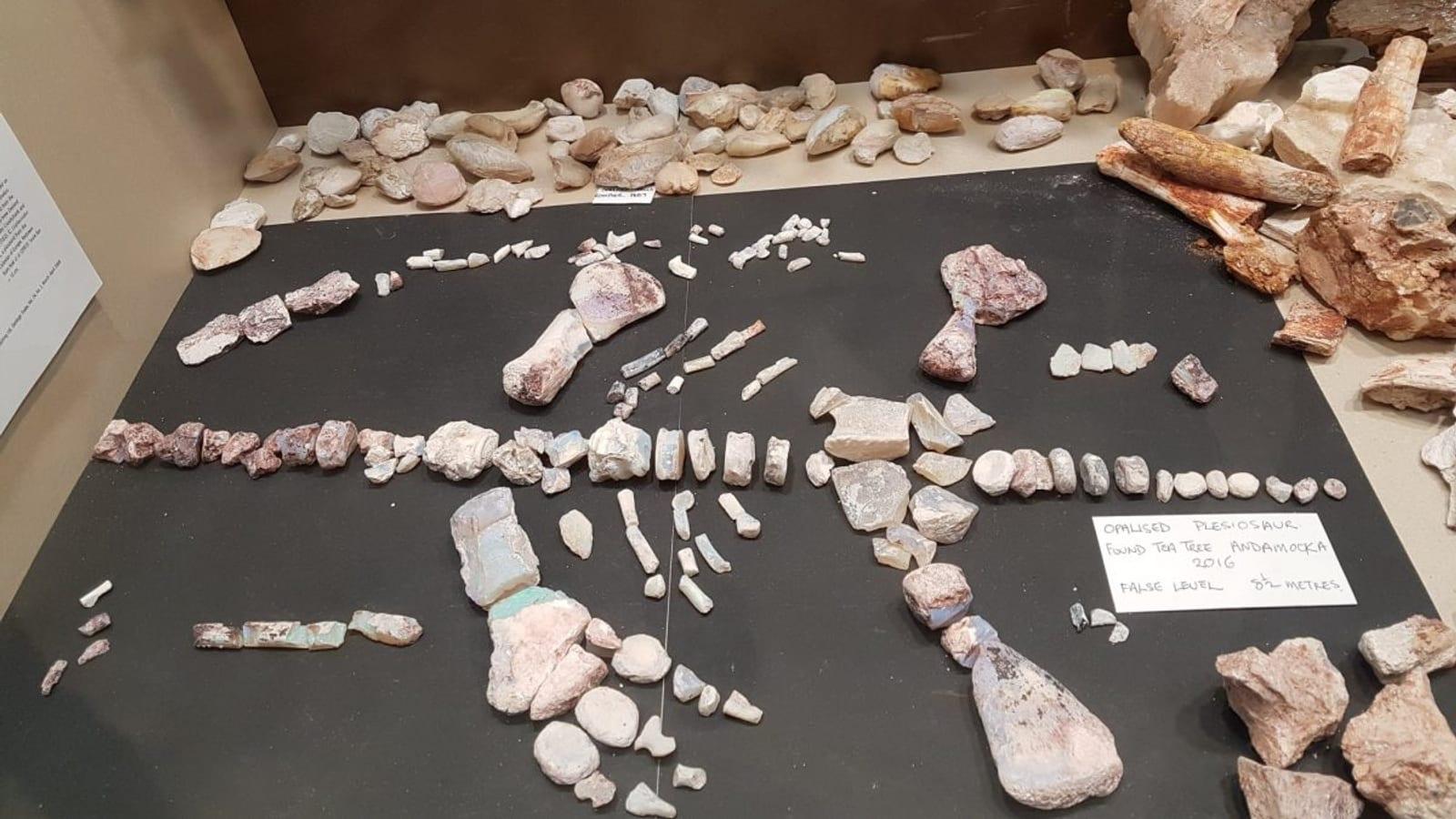 Andamooka Opal Fossils Fossicking Fossil Hunting GuideAndamooka, Addyman Plesiosaur