Stevns Klint Hoejerup k pg Boundary Fossils Fossil Hunting Guide
Image: Dan Simon, Sfdan via Wikimedia Commons
Collect Cretaceous fossils at Stevns Klint's Højerup Church beach, a UNESCO World Heritage Site where the asteroid extinction boundary is visible in the chalk cliffs.
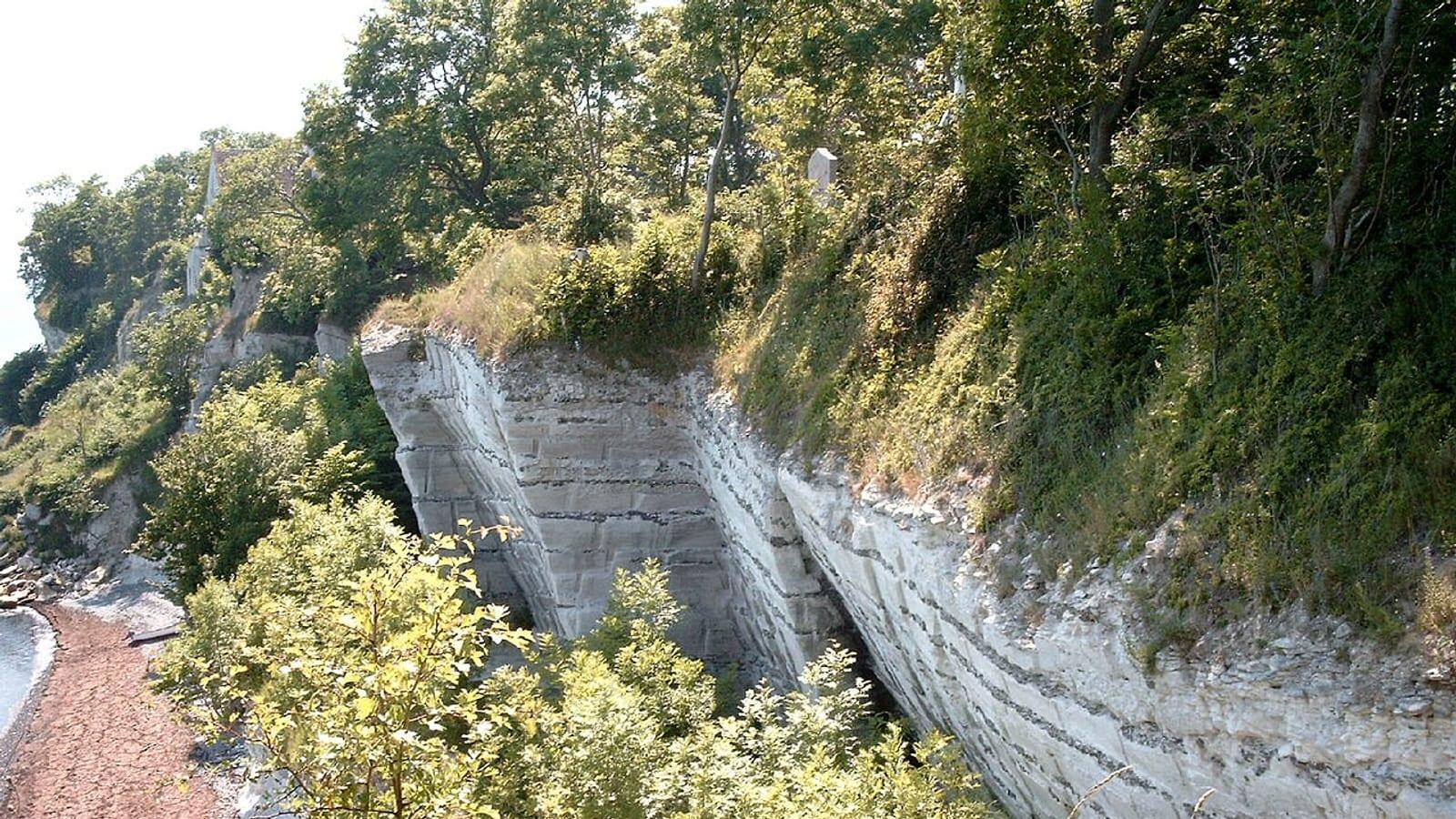
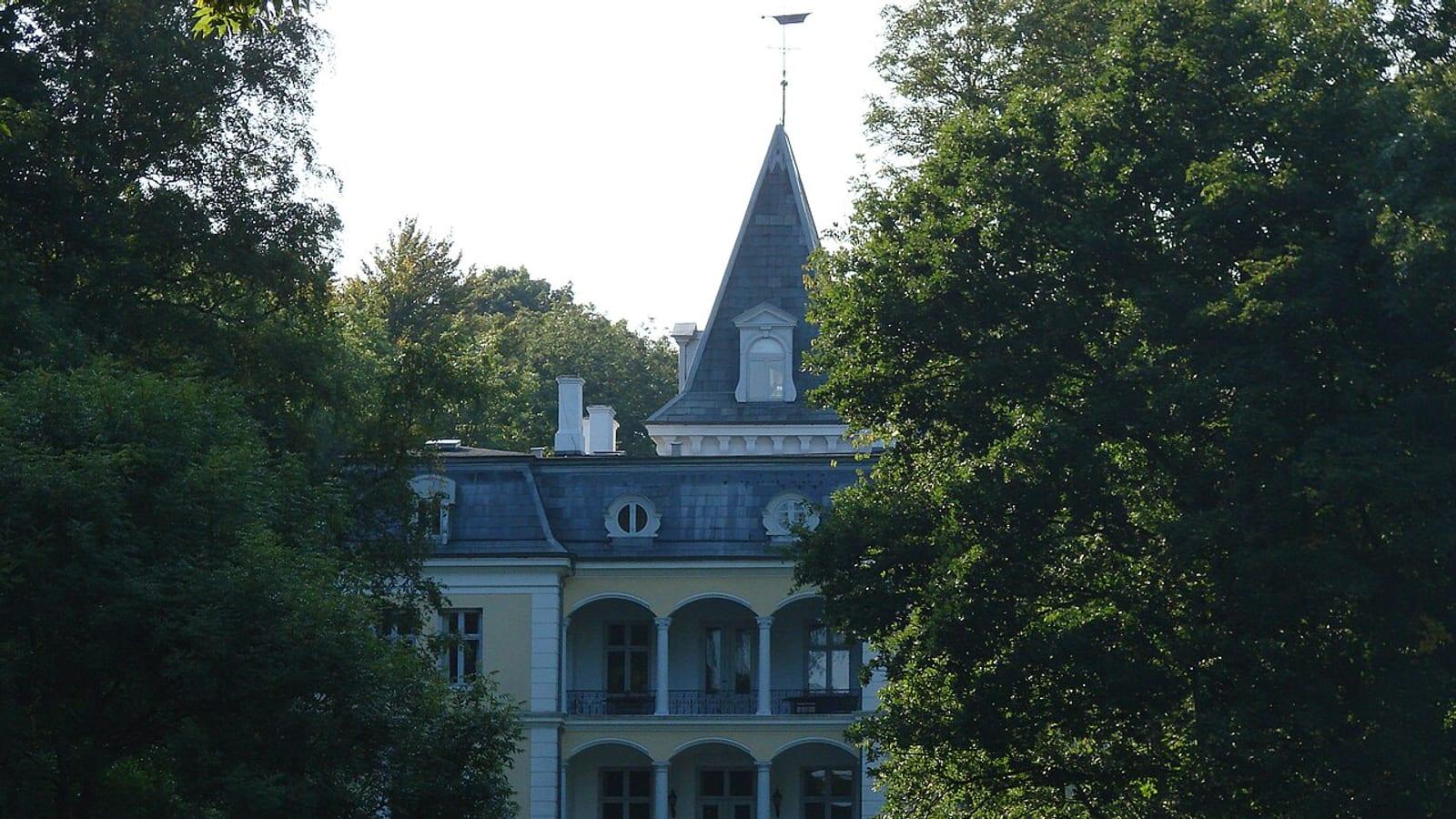
The beach at Højerup Church on Stevns Klint is one of the most geologically significant fossil collecting sites in Europe. The chalk cliffs here preserve a visible record of the asteroid impact that ended the Cretaceous Period 66 million years ago: a thin dark clay band called the fish clay layer separates white Late Cretaceous chalk below from gray Paleocene limestone above. UNESCO designated Stevns Klint a World Heritage Site in 2014 specifically because of this exposure. The historic Højerup Church — built in the 12th century and now perched at the cliff edge after its chancel collapsed into the sea during a 1928 storm — makes the human dimension of ongoing erosion impossible to ignore. Below the church, the beach offers free access to abundant Late Cretaceous fossils including belemnites, sea urchins, and brachiopods that lived in the warm seas before the impact. Located just 60 kilometers south of Copenhagen, this is the most accessible world-class fossil and geological site in Denmark.
 Stevns klint.jpg. Photo: Dan Simon, Sfdan via Wikimedia Commons (CC BY-SA 3.0)
Location and Directions
Address
Højerup Gl. Kirke, Højerupvej 28, 4660 Store Heddinge, Stevns Municipality, Zealand, Denmark.
Getting There
From Copenhagen, drive south approximately 60 kilometers on Route 261 through Køge to Store Heddinge, then follow the brown tourist signs east toward Højerup Kirke. The church is 5 kilometers east of Store Heddinge at the cliff edge. The drive takes about one hour. Free parking is available in a small lot near the church with space for approximately 20 vehicles. By public transport, take a train from Copenhagen to Køge (45 minutes), then bus 230 to Højerup (30 minutes); bus frequency is limited, so check the schedule at www.moviatrafik.dk in advance. The bus stops in Højerup village, 500 meters from the church. A steep but well-maintained footpath descends from the church grounds to the beach. Carry water as there are no facilities at the beach itself.
What Fossils You'll Find
Belemnites are the dominant fossil on this beach. The cylindrical guards of extinct cephalopods range from 3 to 12 centimeters long and weather out of the chalk in large numbers. After any period of rough weather, the beach surface is often littered with fresh specimens. Scan the chalk rubble above the waterline for the best concentrations.
 Belemnites paxillosus - Naturhistorisches Museum, Braunschweig, Germany - DSC05159.JPG. Photo: Daderot via Wikimedia Commons (CC0)
Sea urchin spines and complete tests (shells) occur regularly. Complete tests are 2 to 4 centimeters across and turn up most often after storms have broken up new cliff fall material. Look through the loose chalk debris rather than along the wave-washed beach surface for intact specimens. Bryozoan colonies appear as irregular encrusting masses in chalk blocks. Brachiopod shells preserve as ribbed forms, typically under 3 centimeters. Small bivalve molds occur in cliff fall pieces. Shark teeth and fish bones are rare but are found by persistent searchers working the fine gravelly material near fresh cliff falls.
The K-Pg boundary layer itself is visible in the cliff face approximately 100 meters north of the main beach access point, marked with an interpretive sign. The dark fish clay band is centimeters thick and clearly distinguishable from the white chalk below and gray limestone above. Photography of the boundary is encouraged; you cannot collect from the cliff face, but the exposure is close enough to examine in detail from a safe distance.
Geologic History
The Ancient Environment
The Stevns Klint section spans approximately 5 to 6 million years of Earth history across the Cretaceous-Paleogene boundary at 66 million years ago. The lower white chalk belongs to the Upper Maastrichtian Stage and formed in a warm, clear sea roughly 100 meters deep. The chalk is composed primarily of coccolithophore shells — microscopic calcium carbonate plates from single-celled algae that flourished in the nutrient-rich surface waters. Sea surface temperatures reached 18 to 22 degrees Celsius, comparable to the modern Mediterranean, despite Denmark's northern position.
The K-Pg boundary layer is a centimeter-thick dark clay band containing iridium at concentrations 30 to 160 times normal crustal levels, shocked quartz grains formed only under extreme pressure, and microtektites — all products of a large asteroid impact. A 10-kilometer asteroid struck the Yucatan Peninsula in Mexico, creating the 180-kilometer Chicxulub crater and triggering global environmental catastrophe. Impact ejecta and wildfire soot darkened the atmosphere; photosynthesis collapsed; ocean food chains failed. The fish clay at Stevns Klint records this event in rock.
Above the boundary, the gray Danian limestone of the Early Paleocene represents the recovery phase. Its changed composition and reduced fossil diversity in the lowest meters reflect ecosystems slowly rebuilding after losing approximately 75 percent of species.
How Stevns Klint Became a Fossil Collecting Site
The chalk at Stevns Klint is actively eroded by wave action and groundwater seepage, continuously undercutting the cliff base and releasing fresh material onto the beach. This natural erosion process replenishes the fossil supply with each storm. The dramatic 1928 collapse of the Højerup Church chancel into the sea demonstrated on a human timescale exactly how rapidly this coastal erosion operates. The site gained scientific importance in 1980 when the Alvarez team published their asteroid impact hypothesis, citing Stevns Klint's iridium-rich boundary layer as key evidence. UNESCO World Heritage designation followed in 2014.
Collecting Rules and Regulations
Is Fossil Collecting Allowed?
Fossil collecting at Stevns Klint is free and requires no permit. The beach is accessible 24 hours a day year-round. Under Danish law, common fossils collected for personal use may be kept; scientifically significant specimens belong to the state. All ordinary beach finds — belemnites, sea urchins, brachiopods — are yours to keep.
Recommended Tools
No tools are permitted at Stevns Klint. This is a UNESCO World Heritage Site and the chalk cliffs are strictly protected. Only loose surface material may be collected. Hammering on or digging into the cliff face is prohibited and carries potential fines. Surface collecting on the beach yields good results without any tools. Bring a backpack or bucket to carry finds, and pack specimens in soft material as chalk is brittle.
Safety
The chalk cliffs at Stevns Klint are unstable. Rockfalls occur without warning and with no preceding sound. Maintain a minimum distance of 10 to 15 meters from the cliff base at all times. Watch for falling debris overhead, particularly in wet weather when groundwater weakens the cliff structure. The Baltic Sea has minimal tidal range, so rising water is not a hazard, but storm waves can be powerful; avoid the beach in severe weather. Wear sturdy footwear — the beach surface is uneven and can be slippery when wet.
Sources
Nearby sites
 Boesdal Beach Stevns Klint Fossil Hunting GuideBoesdal beach, Belemnites
 Rødvig Beach Fossil Hunting GuideVisiting Information, What You'll Find
 Faxe Quarry South Area Fossil Hunting GuideVisiting Information, Fossil Collecting
 Liselund Park Mons Klint Beach Access Fossil Hunting GuideLiselund Park, Maastricht Formation