Stendalgraven Quarry Fur Island Fossil Hunting Guide
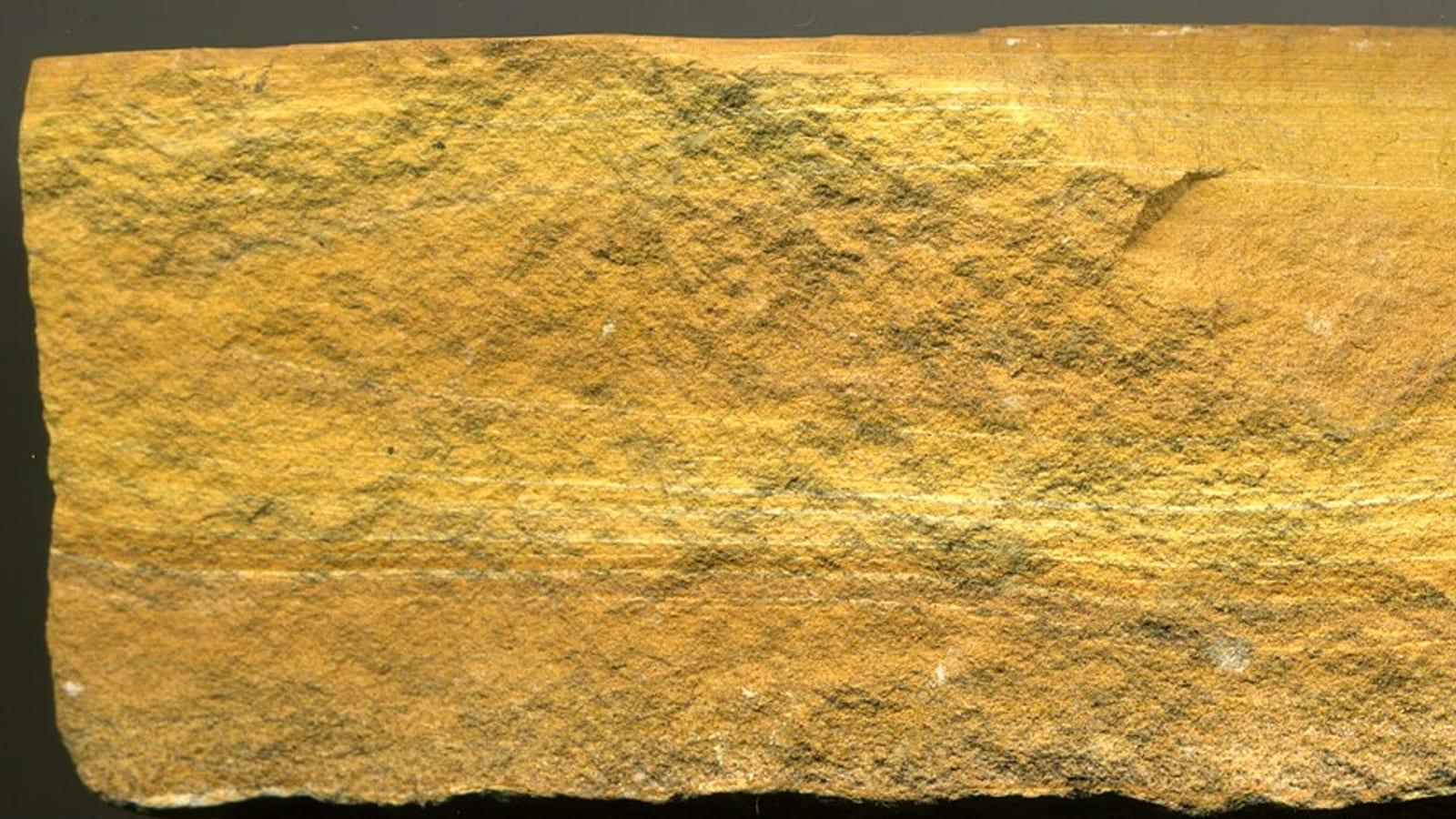
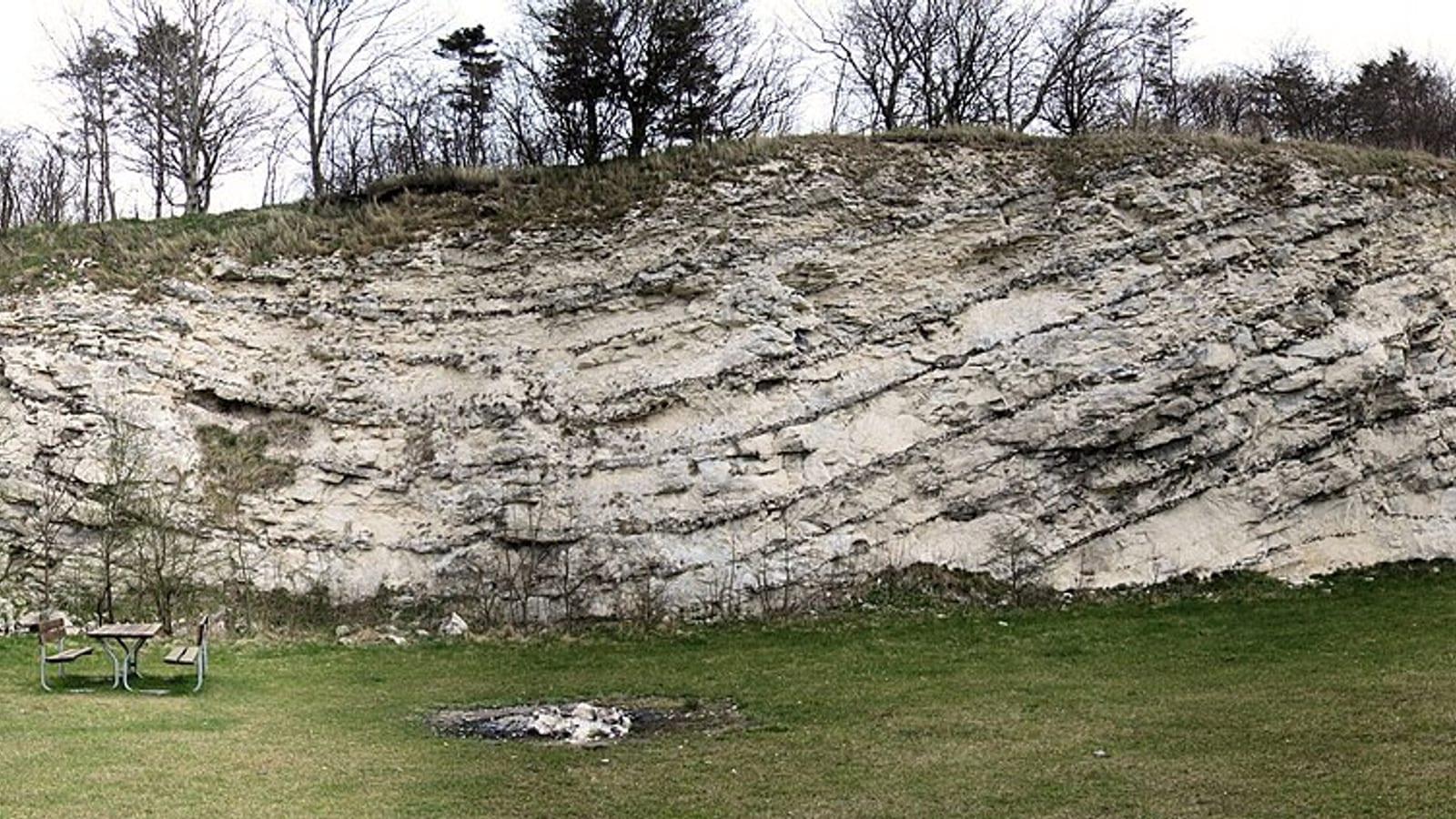
Image: James St. John (https://www.flickr.com/people/jsjgeology/) via Wikimedia Commons
Free Eocene fossil collecting at Stendalgraven quarry on Fur island, where 30-meter rainbow-striped moler walls expose the complete Fur Formation. Visit on weekends.
Stendalgraven quarry on Fur island is the most visually striking fossil site in Denmark. The quarry walls rise up to 30 meters high in striped bands of pale moler and dark volcanic ash, stained in places with reds, yellows, greens, and blues from mineral infiltration, giving the exposure a color range that photographers come specifically to document. This is an active industrial quarry that has been extracting moler from Fur since the early 20th century, with large-scale operations running since the 1950s. Despite that, the beach below the exposures is open for fossil collecting at no charge, with the most productive conditions on weekends when quarrying machinery is not operating. The fossils are Early Eocene specimens from the world-famous Fur Formation: complete fish with visible scales, insect fossils preserving wing patterns, and plant leaves, all from 55-million-year-old volcanic ash burial events. The quarry's active extraction continuously exposes fresh moler horizons, maintaining collecting quality. Stendalgraven combines the best geology on Fur island with the most dramatic scenery. This guide covers how to get there, how to collect effectively, the geological background, and the safety considerations specific to an active quarry environment.
 Volcanic Tuff of Green River Formation in Wyoming.jpg. Photo: James St. John (https://www.flickr.com/people/jsjgeology/) via Wikimedia Commons (CC BY 2.0)
Location and Directions
Address
Stendalgraven Quarry, Stendal Hede, Fur island, Municipality of Skive, Central Denmark Region. Use GPS coordinates 56.8456°N, 8.9734°E for navigation. The quarry is on the west side of Fur island, approximately 6 kilometers from the ferry landing.
Getting There
From Copenhagen, drive northwest on the E20 motorway toward Odense, then continue on Route 26 through Viborg to Skive (approximately 310 kilometers, 3.5 hours). From Skive, drive north 25 kilometers on Route 26 to Nykobing Mors, cross the bridge to Mors island, and take the Fur ferry. The ferry operates 24 hours a day with departures every 20 minutes; the round-trip vehicle fare is approximately 90 DKK (13 USD). Once on Fur, drive northwest along the main road for approximately 5 kilometers, then turn west toward Stendal Hede. Follow to the quarry viewpoint platform. A trail descends from the platform to the beach below the exposed quarry faces. There are no facilities at the quarry site. The Fur Museum (8 kilometers northeast) has a café, restrooms, and fossil exhibits. Plan to visit the museum alongside the quarry for the most complete experience of Fur island's geology.
What Fossils You'll Find
The beach below Stendalgraven receives fresh moler from the ongoing quarry operations above, supplemented by natural cliff erosion. Two collecting methods apply here, as at other Fur Formation sites. Splitting soft moler involves picking up flat pieces from the beach, orienting a hammer blow parallel to the visible ash-and-moler banding, and tapping to split along the natural bedding plane. Fish fossils appear as dark impressions in the light moler. Complete specimens 5 to 15 centimeters long are found regularly. Fish scales, fin rays, and plant fragments are common in ash layer splits.
 Volcanic tuff (bentonite) (ash-fall tuff) (Split Fish Layer, Fossil Butte Member, Green River Formation, Lower Eocene; Promised Lands Quarry, Hams Fork Plateau, southwestern Wyoming, USA) 1 (14968718273).jpg. Photo: James St. John via Wikimedia Commons (CC BY 2.0)
Breaking cementsten requires a heavier approach. These hard carbonate nodules require a geological hammer of at least 1 kilogram for effective fracturing. Strike the nodule directly and examine each broken face immediately. Three-dimensional fossils — insects with raised body structures, fish preserved in relief — occur in cementsten but need a stronger impact to expose. The active quarrying above means cementsten of various sizes accumulate on the beach, giving Stendalgraven some of the best supplies of this material on the island.
Plant fossils from the Fur Formation include leaf impressions with clear venation, seeds, and woody stems. Insect fossils range from complete specimens with wing and body detail to isolated wings and fragments. All of these are found in the moler at Stendalgraven, though exceptional specimens are inherently uncommon regardless of site. The mineral staining in the quarry walls — reds from iron oxides, yellows from sulfur compounds, greens from chlorite — does not affect the fossils themselves; specimens come from unaltered moler horizons.
Geologic History
The Ancient Environment
The Stendalgraven exposures show the complete Fur Formation sequence, deposited during the Early Eocene Epoch approximately 56 to 54 million years ago. The moler accumulated in a shallow subtropical sea 50 to 100 meters deep covering the Limfjorden region. The rock is a mixture of one-third clay minerals and two-thirds diatom frustules — the microscopic silica shells of single-celled algae that lived in the surface water in immense numbers. The ash layers visible in the quarry walls represent eruptions from the North Atlantic Igneous Province, active as Greenland separated from Europe and the Atlantic Ocean opened. Over 179 ash layers are numbered and traceable across the formation.
Denmark sat at approximately 45 to 50 degrees north latitude during the Early Eocene — closer to the equator than today — with greenhouse atmospheric conditions maintaining sea surface temperatures of 20 to 25 degrees Celsius. Dense tropical forests of palms, magnolias, and laurels grew on nearby land. The combination of oxygen-poor bottom water and rapid volcanic ash burial preserved organisms in extraordinary detail: fish with scales and stomach contents intact, insects with wing patterns, plants with cellular structure visible.
The mineral staining that gives Stendalgraven its characteristic rainbow colors results from groundwater infiltrating the moler and depositing iron, sulfur, and silicate compounds in fractures and along bedding planes. This staining is a post-depositional feature and does not affect the fossil record.
How Stendalgraven Became a Fossil Collecting Site
Moler quarrying on Fur dates to the 1600s, but large-scale industrial extraction at Stendalgraven began in the mid-20th century. The quarry has operated continuously since, producing thousands of tons of moler annually for industrial applications including cat litter, filtration media, and construction materials. The quarry management has long allowed public access to the beach below the exposures for fossil collecting, a practice that costs the operation nothing and generates goodwill. The combination of industrial-scale exposure and public access makes Stendalgraven unique among Fur Formation sites: nowhere else on the island can you see such a large vertical section through the complete moler sequence while also collecting from fresh material on the beach below.
Collecting Rules and Regulations
Is Fossil Collecting Allowed?
Fossil collecting at the beach below Stendalgraven is free with no permit required. The beach is accessible year-round. All common fossils found may be kept. Under Danish law, scientifically significant specimens technically belong to the state, but ordinary fish and insect fossils from personal collecting are not subject to this provision.
Recommended Tools
Bring a geological hammer of at least 1 kilogram for breaking cementsten; a lighter hammer can split soft moler but will not fracture cementsten effectively. A cold chisel helps direct splitting in moler. Safety glasses are mandatory — both for splitting rock and as a general precaution in the quarry environment. Gloves protect your hands. Carry a backpack or bucket for finds. Bring newspaper or bubble wrap for packing fragile moler compression fossils.
Safety
Stendalgraven is an active industrial quarry. Heavy machinery operates on weekdays; the best and safest collecting is on weekends when quarrying is not taking place. Stay strictly in the designated public access areas — the overlook platform and the beach below. Do not enter the active quarry floor or approach the machinery areas under any circumstances. The moler cliff faces are unstable; stay at least 5 meters from the base. Watch for falling moler chunks from above, particularly in wet or icy conditions. Safety glasses must be worn at all times when splitting rock. Do not visit during active blasting operations; if you hear warning signals or sirens, leave the beach area immediately and wait at the viewpoint platform. The Limfjord at this location has minimal tidal range, so water access is not a significant hazard, but wave splash can reach the beach in windy conditions.
Sources
Nearby sites
 Gram Clay Pit - Fish Fossils Found in Fossil Hunting GuideShark Teeth, Megalodon
 Faxe Quarry South Area Fossil Hunting GuideVisiting Information, Fossil Collecting
 Rødvig Beach Fossil Hunting GuideVisiting Information, What You'll Find
 Boesdal Beach Stevns Klint Fossil Hunting GuideBoesdal beach, Belemnites