Painted Cliffs Maria Island Fossil Hunting Guide
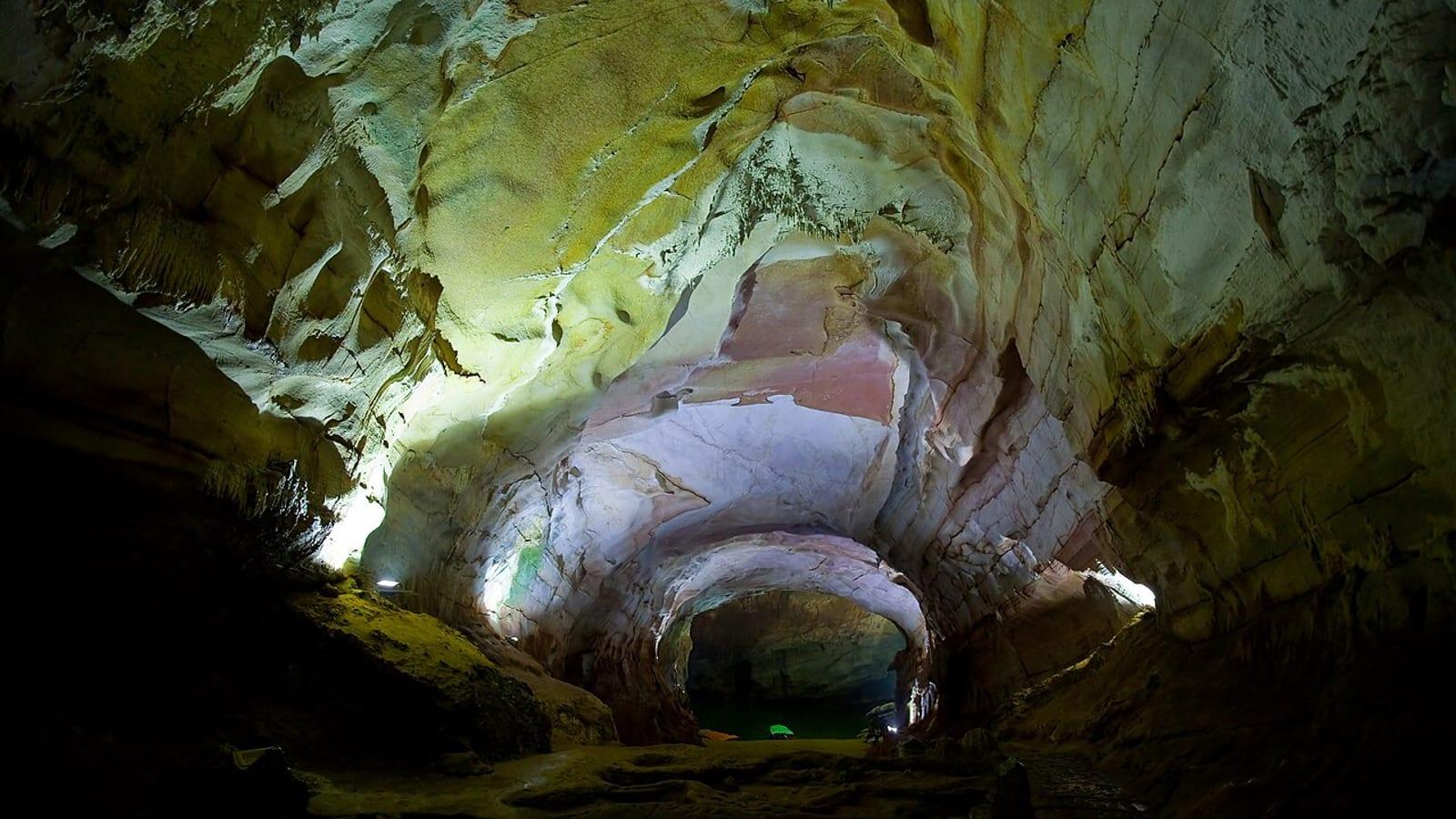
Image: cprevot (https://www.geodiversite.net/auteur193) via Wikimedia Commons
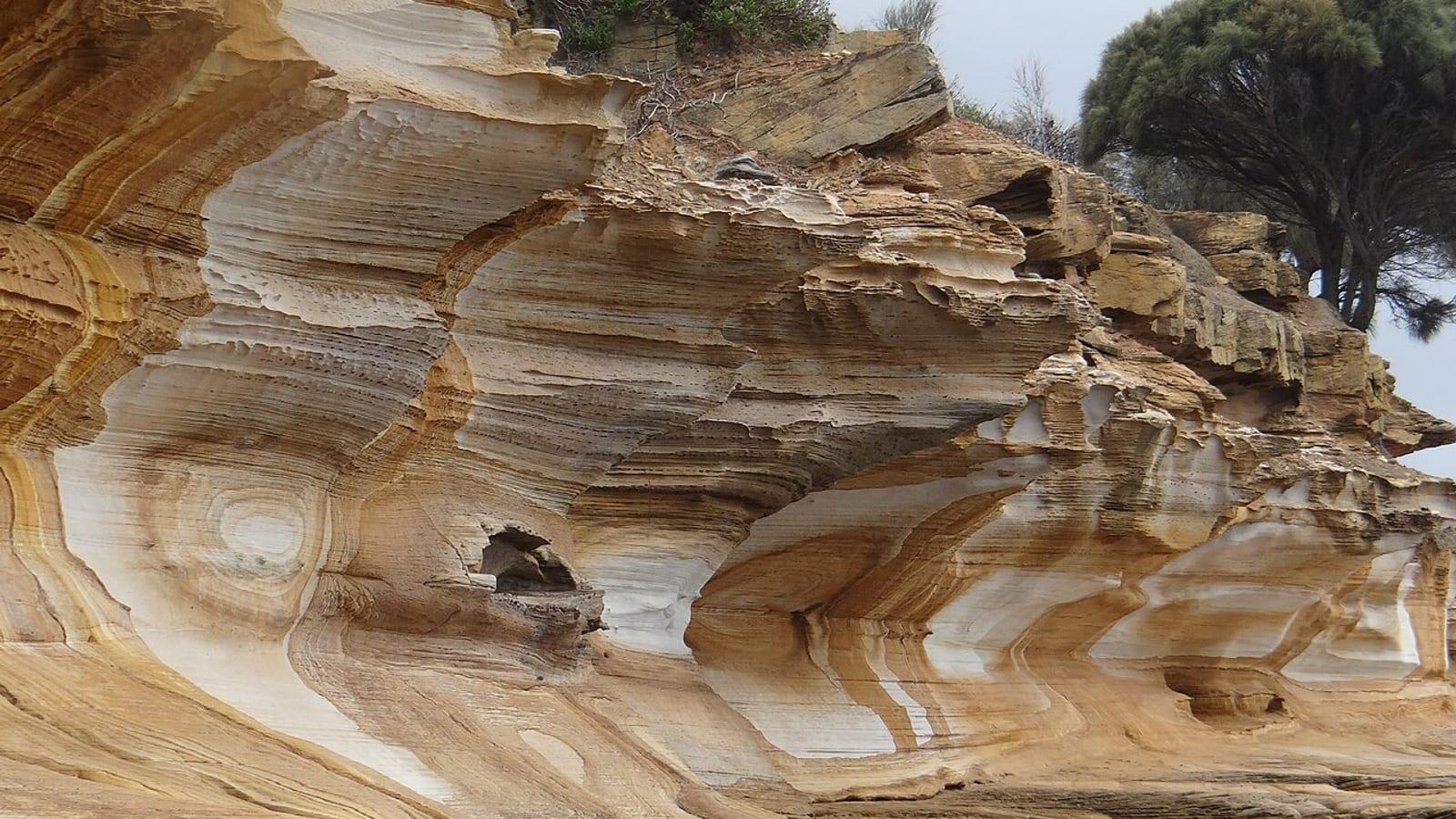
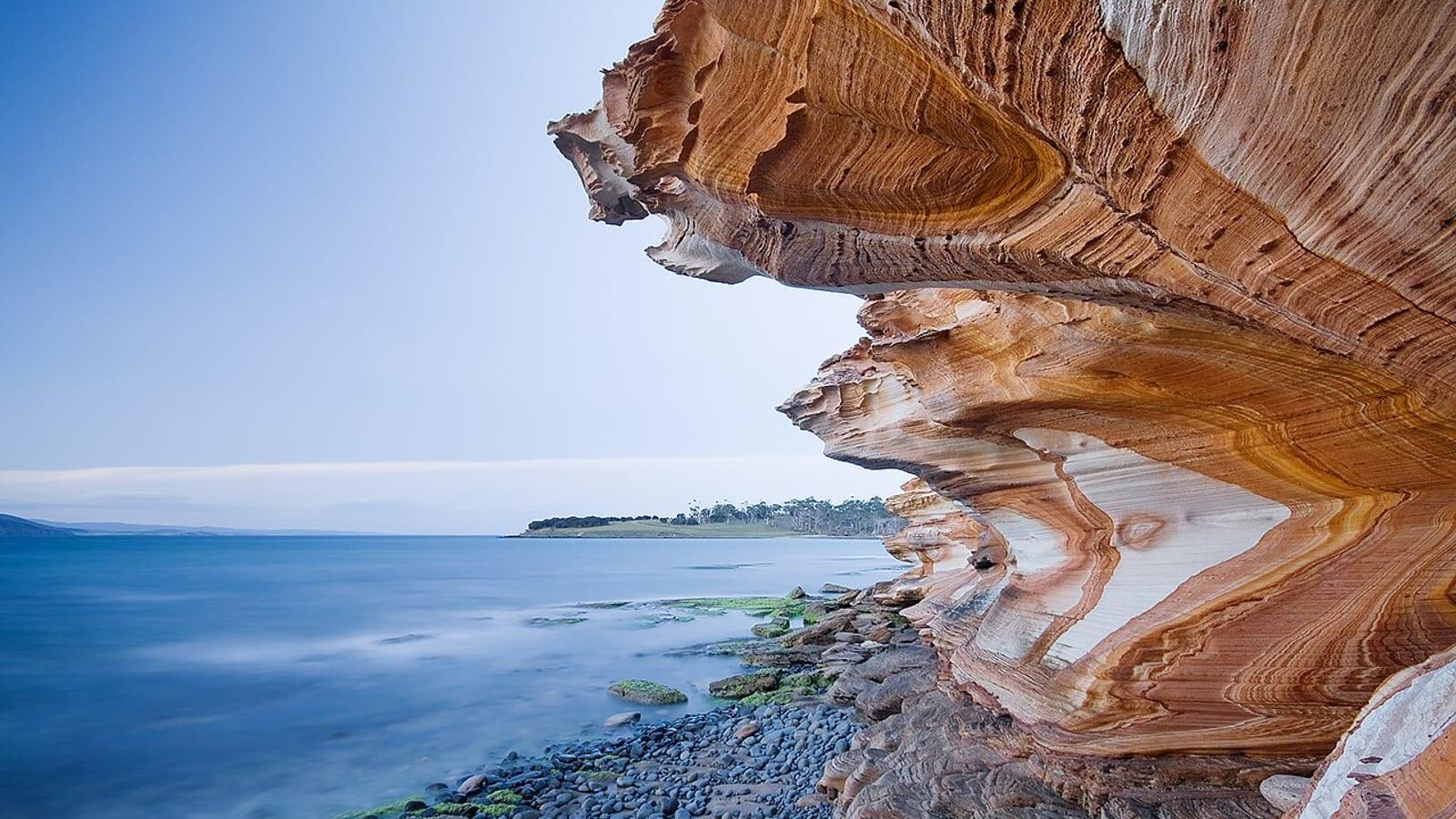
The Painted Cliffs on Maria Island display Triassic sandstone stained by iron oxide into vivid bands and rings, with trace fossils and ripple marks visible in the cliff face at Hopground Beach.
The Painted Cliffs on Maria Island are among the most visually striking geological formations in Australia. Sheets of Triassic sandstone, deposited in ancient river systems roughly 200 to 220 million years ago, have been stained by iron-rich groundwater into bands and swirls of yellow, orange, red, and deep brown. The result is a cliff face that looks as though it was painted in broad strokes — entirely the work of chemistry and time, with no human involvement whatsoever. Beyond their colour, the cliffs preserve trace fossils and sedimentary structures that record the river environments of the Triassic period, including ripple marks and cross-bedding that show the direction of ancient river flows.
The Painted Cliffs are reached by an easy, flat walk from the Darlington ferry dock, making them one of the most accessible geological sites on the island. This guide covers the ferry access from Triabunna, the walk to the cliffs, what geological and fossil features to look for, and the rules that apply to visiting Maria Island National Park.
 Triassic Sandstone on Maria Island of Tasmania in Australia.jpg. Photo: cprevot (https://www.geodiversite.net/auteur193) via Wikimedia Commons (CC BY-SA 3.0)
Location and Directions
Address
Painted Cliffs, Maria Island National Park, Maria Island, Tasmania 7190. The cliffs are located on the western shore of the island, south of Darlington, at Hopground Beach.
Directions
Drive to Triabunna, located 88 km northeast of Hobart via the A3 Tasman Highway. The drive takes approximately 75 minutes. Parking is available near the ferry terminal on the Esplanade in Triabunna.
Board the Maria Island Ferry at Triabunna for the 30-minute crossing to Darlington. The ferry runs multiple times daily in peak season and has reduced services in winter — check the current timetable before you travel. Bicycles can be taken across on the ferry and are recommended, as cycling the flat track to the Painted Cliffs takes approximately 15 minutes each way.
From the Darlington ferry dock, follow the track south along the western shoreline. The Painted Cliffs are approximately 1.5 km from Darlington, at Hopground Beach. The track is flat, well-maintained, and passes through open paddocks where wombats graze openly. The walk from Darlington to the cliffs takes 30 to 45 minutes on foot. The cliffs are best visited at low tide, when the full extent of the formation is exposed and you can walk along the rock platform at its base. Check tide times before you go — at high tide, access to the base of the cliffs is limited or impossible.
What Fossils You'll Find
The Painted Cliffs are not primarily a fossil site in the sense of skeletal remains, but they preserve important trace fossils and sedimentary structures that carry palaeontological information. Ripple marks are visible on bedding plane surfaces — symmetrical ridges left by flowing water in the Triassic river or floodplain environment. These tell you the direction of water flow and give a sense of the energy levels in the ancient system.
 Ediacaran trace fossil.jpg. Photo: Verisimilus at English Wikipedia via Wikimedia Commons (CC BY 2.5)
Cross-bedding is visible in section view on the cliff face, where angled layers within a sandstone bed record the migration of ancient sand dunes or river bars. Cross-beds at the Painted Cliffs are particularly clear where weathering has picked out the contrasting iron oxide concentrations within the strata.
The Liesegang banding that creates the cliff's distinctive colours is a diagenetic feature rather than a biological fossil — but it records the movement of groundwater through the rock after burial, which is itself a form of geological record. The bands form concentric rings and parallel stripes where iron oxide precipitated out of solution as groundwater chemistry changed. No two sections of the cliff are identical.
This is a viewing-only site. No material may be removed from the national park.
Geologic History
The Ancient Environment
The sandstone at the Painted Cliffs belongs to the Triassic period, deposited approximately 200 to 220 million years ago. The formation records a fluvial environment — rivers and floodplains — that covered Tasmania during the Early to Middle Triassic. The climate at the time was warm and seasonal, with wet and dry cycles that drove the river systems. Sand was transported by rivers across broad alluvial plains and deposited in migrating bars and channels. The cross-bedding and ripple marks visible in the cliff today are direct records of those river dynamics.
After deposition, the sandstone was buried and compacted. Iron-rich groundwater percolated through the porous rock over millions of years. Where the chemistry of the groundwater changed — at contacts between rock types, at fractures, or at gradients in oxygen concentration — iron oxide precipitated out of solution and stained the surrounding sand grains. This process produced the concentric rings and layered bands now exposed at the surface. The result is geologically called Liesegang banding, a type of diagenetic iron oxide patterning found in many porous sedimentary rocks, but rarely with the visual intensity and scale seen at the Painted Cliffs.
How the Painted Cliffs Became a Geological Viewing Site
The Triassic sandstone of Maria Island was buried under younger strata for hundreds of millions of years. The opening of the Tasman Sea from the Late Cretaceous onwards progressively exposed eastern Tasmania to marine erosion. The western shore of Maria Island, sheltered from the open Tasman swell by the island's topography, experiences milder wave action than the east coast but still undergoes steady erosion. Over thousands of years, shoreline retreat has cut the rock platform and cliff face now visible at Hopground Beach, exposing the iron oxide patterns in cross-section. Maria Island was declared a national park in 1972, and the Painted Cliffs have been a designated Great Short Walk, recognising both their geological significance and their accessibility to general visitors.
Visiting Rules and Regulations
Is Fossil Collecting Allowed?
Collecting is not permitted. Maria Island National Park is protected under the Tasmanian National Parks and Wildlife Act 1970 and the Commonwealth EPBC Act 1999. Removing rocks, fossils, or any natural material is an offence. Visitors may observe, photograph, and sketch the geological features freely. The site is managed for conservation and public education, not collection.
Recommended Equipment
Low tide is the optimal time to visit — arrive at least 30 minutes before low water to maximise time on the rock platform at the cliff base. Download a tide table for Maria Island or Triabunna before your trip. Sturdy, closed-toe shoes are essential; the rock platform is slippery when wet and the surface is uneven. A camera will get the most out of the colour and texture of the cliff face. Bring water, as there are no facilities between Darlington and Hopground Beach. Carry all waste out of the park — there is no rubbish collection on the island.
Safety
The cliffs at Hopground Beach are actively eroding and present a rockfall hazard. Do not stand directly beneath overhanging sections. Monitor sea conditions — on the western shore the swell is generally mild, but strong westerly winds can push wave wash further up the rock platform than expected. The rock platform is algae-covered in places and very slippery. Wear shoes with grip and move carefully near the water's edge. A current Parks Pass is required for entry to Maria Island National Park.
Sources
- https://www.parks.tas.gov.au/explore-our-parks/maria-island-national-park/painted-cliffs
- https://www.mariaislandferry.com.au/
- https://en.wikipedia.org/wiki/Liesegang\_rings
- https://en.wikipedia.org/wiki/Maria\_Island
- https://www.ga.gov.au/scientific-topics/earth-obs/accessing-satellite-imagery/basics-of-remote-sensing/geological-timescale
Nearby sites
 Maria Island Fossil Cliffs Fossil Hunting Guidebrachiopod shells, bryozoans, crinoids, brachiopods
 Fossil Bluff Wynyard Fossil Hunting GuideGeological Setting, Visiting Information
 Eagles Nest Cape Paterson First Dinosaur Fossil Hunting GuideWonthaggi Formation, Theropod dinosaur material
 The Caves Inverloch Fossil Hunting GuideStrzelecki Group, Dinosaur bones and teeth