Nilpena Ediacara National Park Fossil Hunting Guide
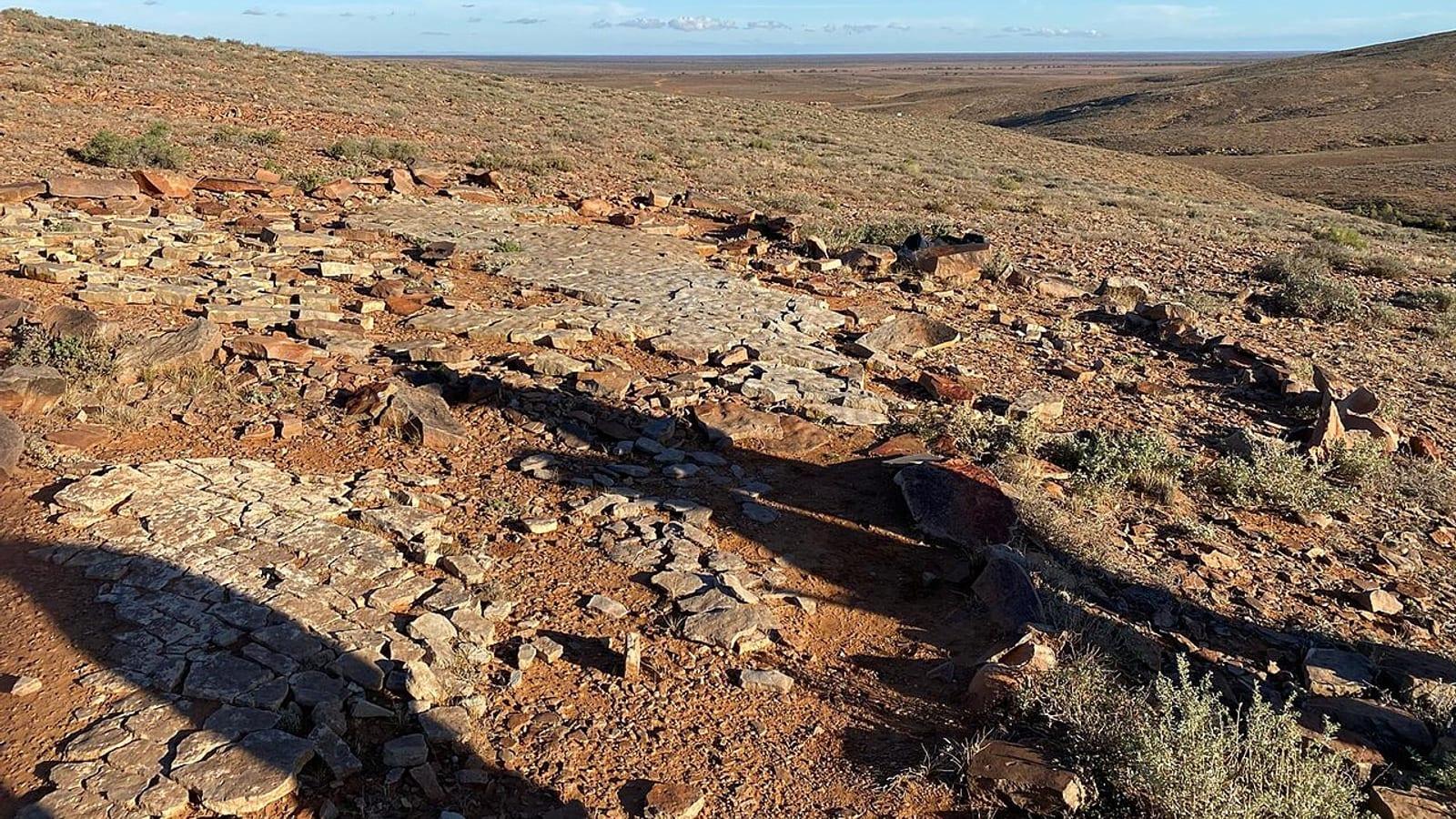
Image: Citronnel via Wikimedia Commons
Nilpena Ediacara National Park SA preserves 550-million-year-old Ediacaran fossils. Guided tours run April to October at $250 per person, booked via SA Museum.
Nilpena Ediacara National Park in the remote Flinders Ranges of South Australia preserves the world's most significant assemblage of Ediacaran fossils. The fossils here are approximately 550 million years old and record the earliest known large, complex multicellular organisms to appear in the Earth's fossil record. Before the Ediacaran period, life on Earth consisted largely of single-celled and simple colonial organisms. At Nilpena, entire bedding planes are covered with the body impressions of dozens of different species, many of which have no clear modern relatives. Specimens include Dickinsonia, a flat, oval organism that grew to a metre across, Spriggina, a segmented form that may represent an early step toward bilateral animal body plans, and Tribrachidium, a three-armed structure that has puzzled biologists for decades. These are not the impressions of shells or bones; the Ediacaran organisms had no hard parts. Their preservation in sandstone is the result of unusually rapid burial followed by particular chemical conditions in the sediment. Visits to the fossil beds are by guided tour only, managed by the South Australian Museum, and run from April to October. This guide covers the visiting logistics, what you will see on tour, the geological history of the site, and the rules that govern one of Australia's most protected palaeontological reserves.
 Fossil bed at Nilpena Ediacara National Park.jpg. Photo: Citronnel via Wikimedia Commons (CC BY-SA 4.0)
Location and Directions
Address
Nilpena Ediacara National Park, Nilpena Station, Parachilna, South Australia 5730. The park is located approximately 600 kilometres north of Adelaide in the northern Flinders Ranges.
Directions
From Adelaide, drive north on the Port Augusta Road and then north on the Princes Highway to Port Augusta, then north on the Highway One to Hawker, then north on Leigh Creek Road through Parachilna. The drive to the Nilpena Station entrance takes approximately seven to eight hours from Adelaide. Access is via unsealed roads from the Leigh Creek Road; a high-clearance four-wheel drive vehicle is required for the final approach and for movement within the park. Road conditions are variable and can change rapidly after rain; check current conditions with the South Australian Department for Environment before departure.
Tours must be booked in advance through the South Australian Museum. Accommodation is available at Nilpena Station. The park does not have a drop-in visitor function; all visits are pre-arranged guided experiences.
What Fossils You'll Find
The fossil beds at Nilpena preserve organisms from the Ediacara biota, the collective name for the soft-bodied multicellular organisms that lived during the Ediacaran period, roughly 635 to 541 million years ago. The Nilpena assemblage is the richest known occurrence of these organisms on Earth.
 Dickinsonia - Ediacaran Fossil from Flinders Range in South Australia.jpg. Photo: cprevot (https://www.geodiversite.net/auteur193) via Wikimedia Commons (CC BY-SA 3.0)
Dickinsonia is the most abundant large form. These are oval, ribbed, mat-like organisms that reached up to one metre in diameter. Biochemical analysis published in 2018 confirmed the presence of cholesterol-like molecules in a Dickinsonia specimen, providing strong evidence that it was a true animal rather than a fungus or plant. They are visible on the slab surfaces as flat impressions with a distinct central midline.
Spriggina is a small, elongate segmented organism named after geologist Reg Sprigg, who first identified Ediacaran fossils at the nearby Ediacara Hills in 1946. Whether it is an ancestor of modern animals remains debated, but its segmentation and possible head structure make it one of the more widely studied forms in the assemblage.
Tribrachidium heraldicum has three-fold symmetry and three curved ridges on its upper surface. It is one of the oldest known organisms with any kind of body symmetry and has no confirmed living relatives.
Other forms present include Charniodiscus, a frond-like organism anchored to the seafloor by a holdfast, and numerous unnamed or undescribed taxa. The density of preservation at Nilpena is exceptional: some bedding plane surfaces contain hundreds of individual specimens within a single square metre.
Geologic History
The Ancient Environment
The Nilpena fossils are preserved in the Ediacara Member of the Rawnsley Quartzite, within the Pound Subgroup of the Wilpena Group. The sediments were deposited during the Ediacaran period, approximately 550 million years ago, on the floor of a shallow, well-oxygenated ocean. The area was located on the margins of the ancient supercontinent Gondwana. The sediments were laid down in repeating cycles of sand, with each cycle potentially representing storm or flood events that rapidly buried and preserved the organisms living on the seafloor above. The preservation of soft-bodied forms without hard parts requires this kind of rapid burial; organisms that died normally would have been decomposed by bacteria before fossilisation could occur.
The Ediacaran period follows the end of the most severe glaciation events in Earth's history, collectively referred to as Snowball Earth. The thawing of global ice sheets introduced large quantities of nutrients and minerals into the shallow oceans, which may have fuelled the proliferation of complex multicellular life that characterises the Ediacaran biota. The Nilpena fossils date from a time very close to the end of the Ediacaran period and the beginning of the Cambrian Explosion, the rapid diversification of animal life that produced most modern body plans.
How Nilpena Became a Fossil Viewing Site
Ediacaran fossils were first identified by Reg Sprigg at the Ediacara Hills, in the northern Flinders Ranges, in 1946. Sprigg's discovery was initially met with scepticism but was eventually recognised as evidence of pre-Cambrian animal life, fundamentally revising the understanding of when complex life first appeared. The Nilpena site was identified later and proved to contain a richer and more accessible assemblage than the original Ediacara Hills location. The South Australian Museum established a research and management programme at Nilpena Station and developed the guided tour model to allow public access while maintaining strict controls on the fossil surfaces. The park was formally gazetted as Nilpena Ediacara National Park in 2021, protecting the fossil beds under national park legislation.
Visiting Rules and Regulations
Is Fossil Collecting Allowed?
No fossil collecting is permitted under any circumstances. The site is fully protected as a national park under South Australian legislation and all fossil material is the property of the state. Guided tours are the only form of public access; independent visits to the fossil beds are not available. The standard public tour, called The Ediacara Experience, runs for approximately two hours, costs $250 per person, accommodates a maximum of eight visitors per tour, and must be booked in advance through the South Australian Museum. Extended research tours are available for specialist groups by separate arrangement. The park is closed from 16 November to 15 March due to extreme summer heat, with temperatures in this area regularly reaching 45°C or above during those months.
Recommended Equipment
Sturdy closed-toe footwear is required as the terrain around the fossil beds is rough and rocky. Bring a hat, sunscreen, and at least two litres of water per person for the duration of the tour. Camera equipment is welcome; no flash restrictions apply in the open-air fossil bed setting. Ensure your vehicle has adequate fuel, water, and emergency supplies before leaving the sealed highway network.
Safety
The site is remote and the terrain is physically demanding. The South Australian Museum states that the tour requires a reasonable level of physical fitness. The walk between fossil bed sites involves uneven ground and some gentle climbing over rock outcrops. Visitors with limited mobility should advise the tour operators when booking so that alternative arrangements can be discussed. In the cooler visiting months from April to October, daytime temperatures are generally mild, but nights can be very cold. Snake activity is present from September onwards as temperatures warm. All guide instructions regarding proximity to fossil surfaces should be followed without exception.
Sources
- https://www.samuseum.sa.gov.au/nilpena
- https://www.environment.sa.gov.au/parks/find-a-park/Browse\_by\_region/flinders-ranges-and-outback/nilpena-ediacara-national-park
- https://en.wikipedia.org/wiki/Nilpena\_Ediacara\_National\_Park
- https://en.wikipedia.org/wiki/Ediacara\_biota
- https://en.wikipedia.org/wiki/Dickinsonia
- https://en.wikipedia.org/wiki/Spriggina
- https://en.wikipedia.org/wiki/Rawnsley\_Quartzite
Nearby sites
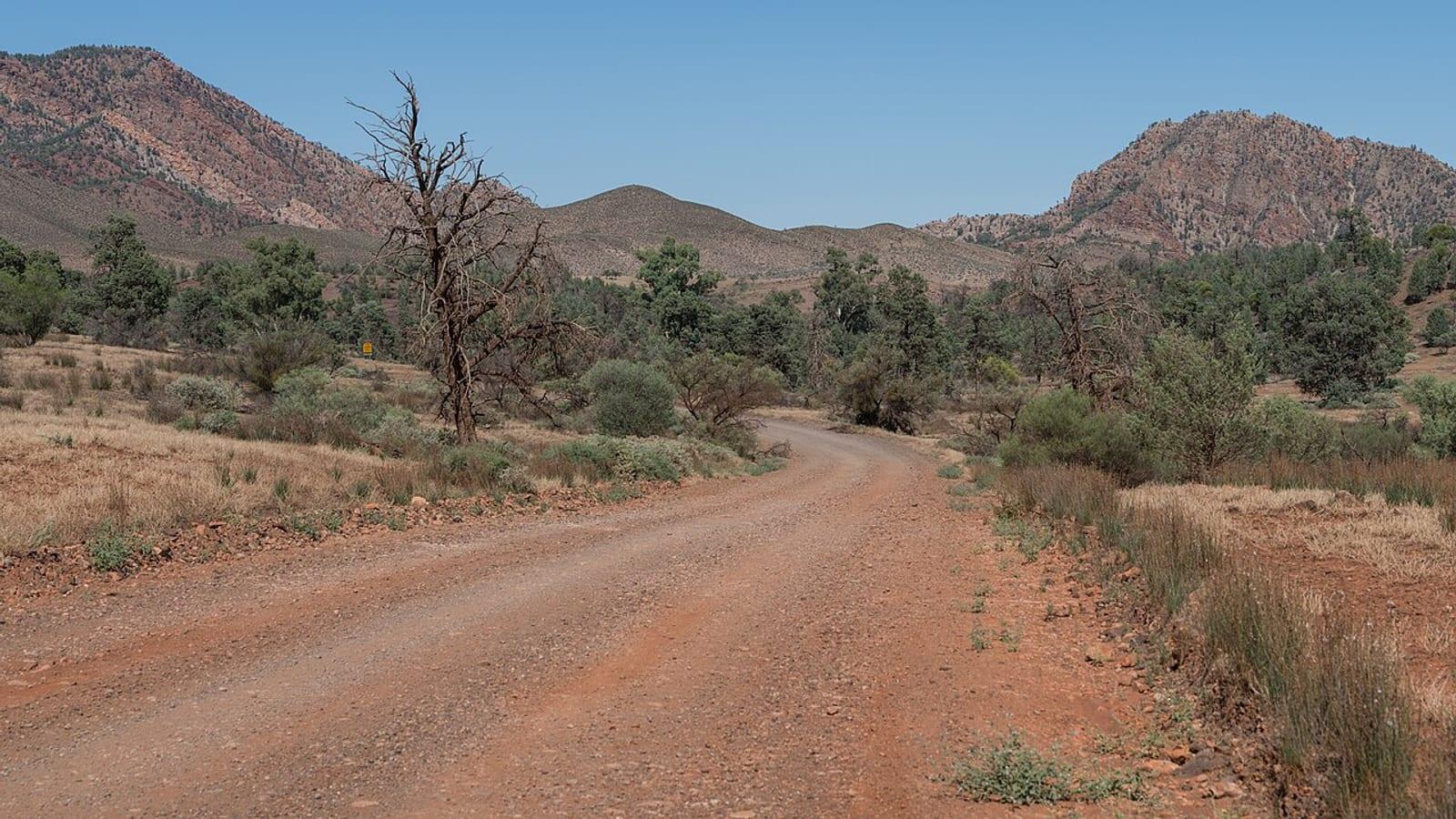 Brachina Gorge Geological Trail Fossil Hunting GuideBrachina Gorge Geological Trail, Ikara-Flinders Ranges National Park
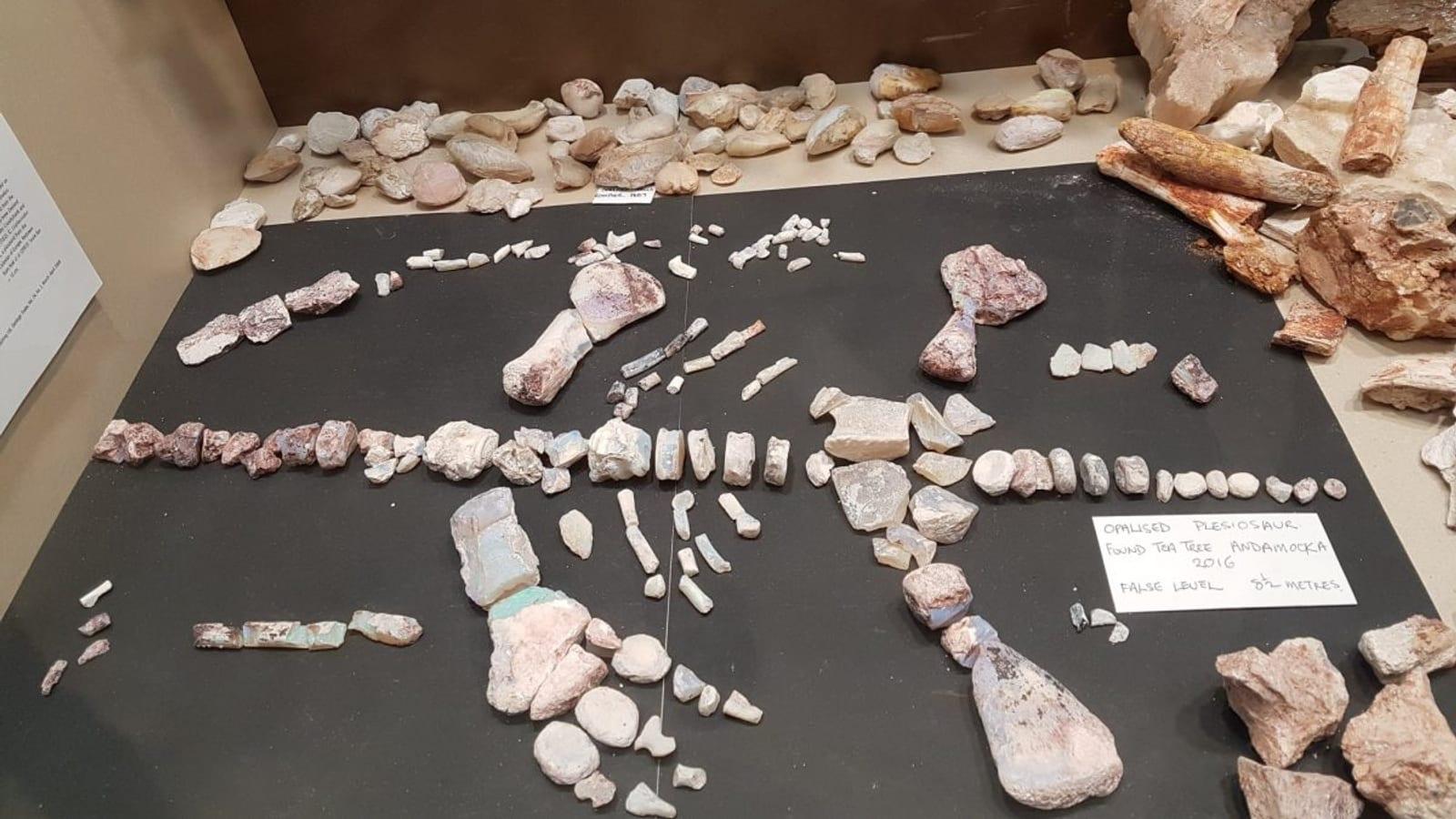 Andamooka Opal Fossils Fossicking Fossil Hunting GuideAndamooka, Addyman Plesiosaur
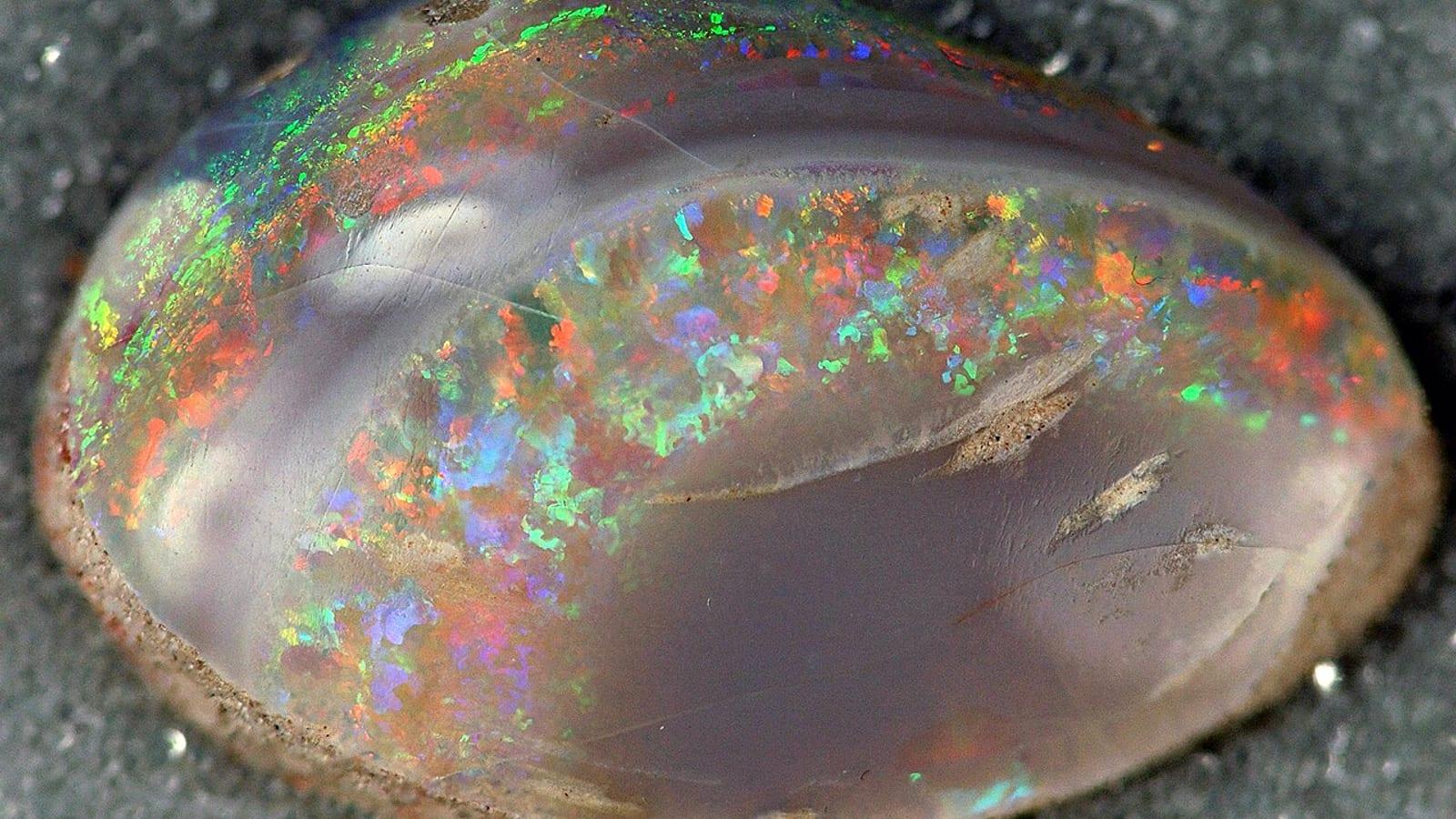 Coober Pedy Opal Fossils Eric Plesiosaur Fossil Hunting GuideCoober Pedy, Eromanga Sea
 White Cliffs Opal Fossicking Fossil Hunting GuideBivalve shells, Belemnites