Paleo Site Monument in Arizona Fossil Hunting Guide
Guide to Finding Fossils at Paleo Site Monument in Arizona
Submission from Adrian L. Thank you for contributing to Go Fossil Hunting! For viewers, please see the Submit page if you have a fossil site to submit.
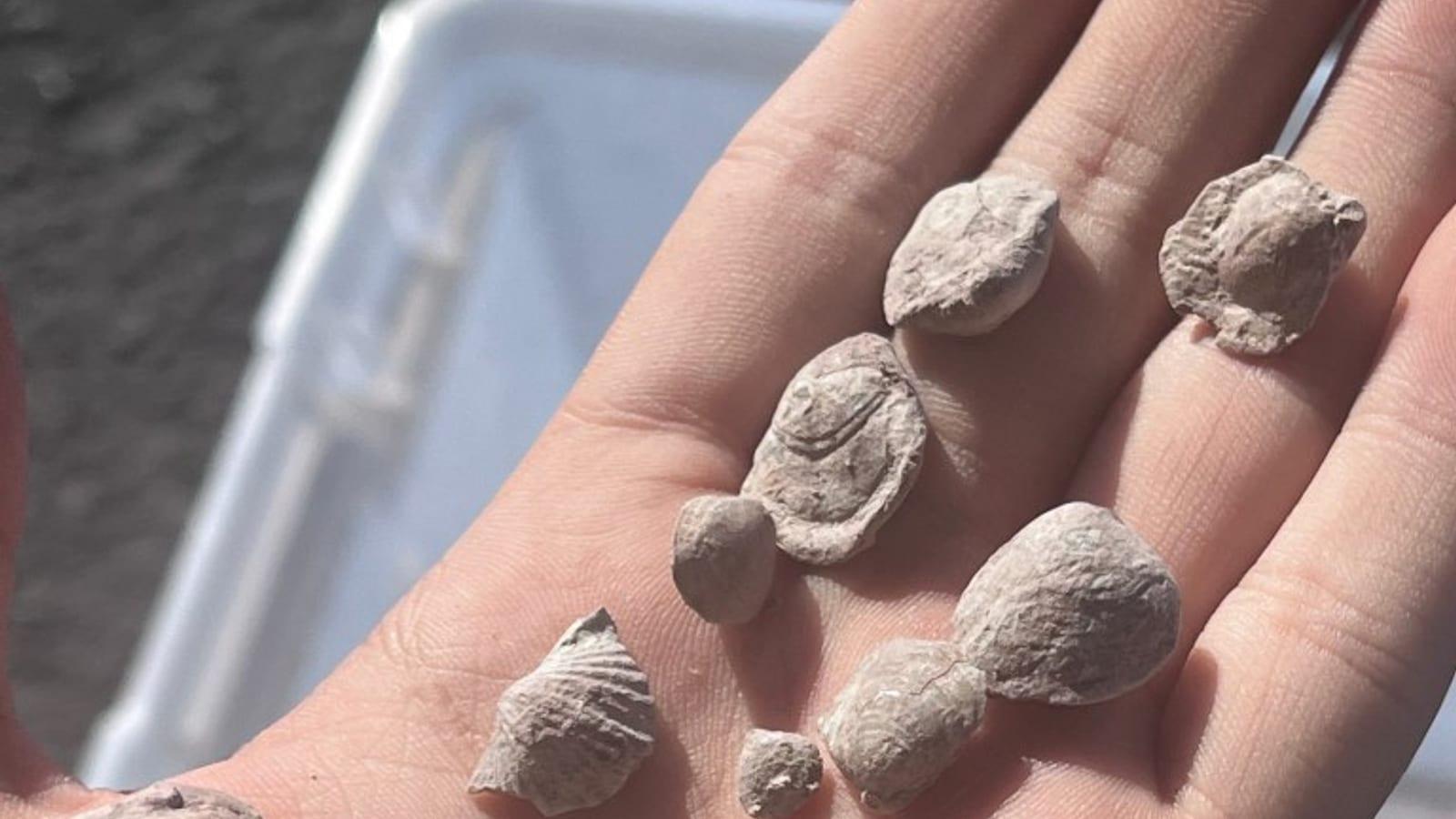
The main fossiliferous formation is exposed at Paleo Site Monument in Gila County. It is also known as the Kohls Ranch locality. The fossil content is wide, mostly composed of marine invertebrates from the Pennsylvanian sub-period of the Carboniferous. It is also known as another name, “Indian Gardens Paleo Site.” Its fossil content will be preserved in shale, limestone, and siltstone.


Would be recommended to bring a screwdriver, hammer, and a chisel to be in order to break some pieces for fossil hunting. Bring water, food and snacks to eat while you hunt there. Some decent hiking shoes is also heavily recommended as you can slip easily on the exposure like I have, lol. You can excavate from the main exposure itself but it can be quite dangerous while doing so, so it isn’t heavily recommended but you can do it if you want. When you enter there will be a narrow and tight entrance, be careful. The main exposure is on the right of the entrance when you enter. You can go around the hill by going straight and to the back of the main exposure to find some fossils on the ground. The fossils from the main exposure can be found from the ground as well. To find fossils you have to be looking for irregular looking rocks, rocks that look like mollusks. And or tiny little discs that are crinoids. Much of the fauna is composed of brachiopods. There are crinoids, bryozoan, bivalves, gastropods, cnidarians, Most of the brachiopods located there are in the genus Composita. There is a sign more further to the entrance with an identification of the fauna. The front of the monument has an introduction of the exposure, and the formation. The site has lesser known finds such as chondrichthyan teeth from the genus Cladodus, and dermal denticles. If you cannot find sufficient information to identify your fossils check out the following sites below:
Nearby sites
 Find Fossils in the Marble Mountains Fossil Hunting GuideTrilobites, Brachiopods
 Tule Springs Fossil Beds National Monument Fossil Hunting GuideMammoth, Ground Sloth
 Joshua Tree National Park Fossil Hunting GuideEchinoids, Plant Fossils
 Find Diverse Marine Fossils in Yuha Basin Fossil Hunting GuideResource 1