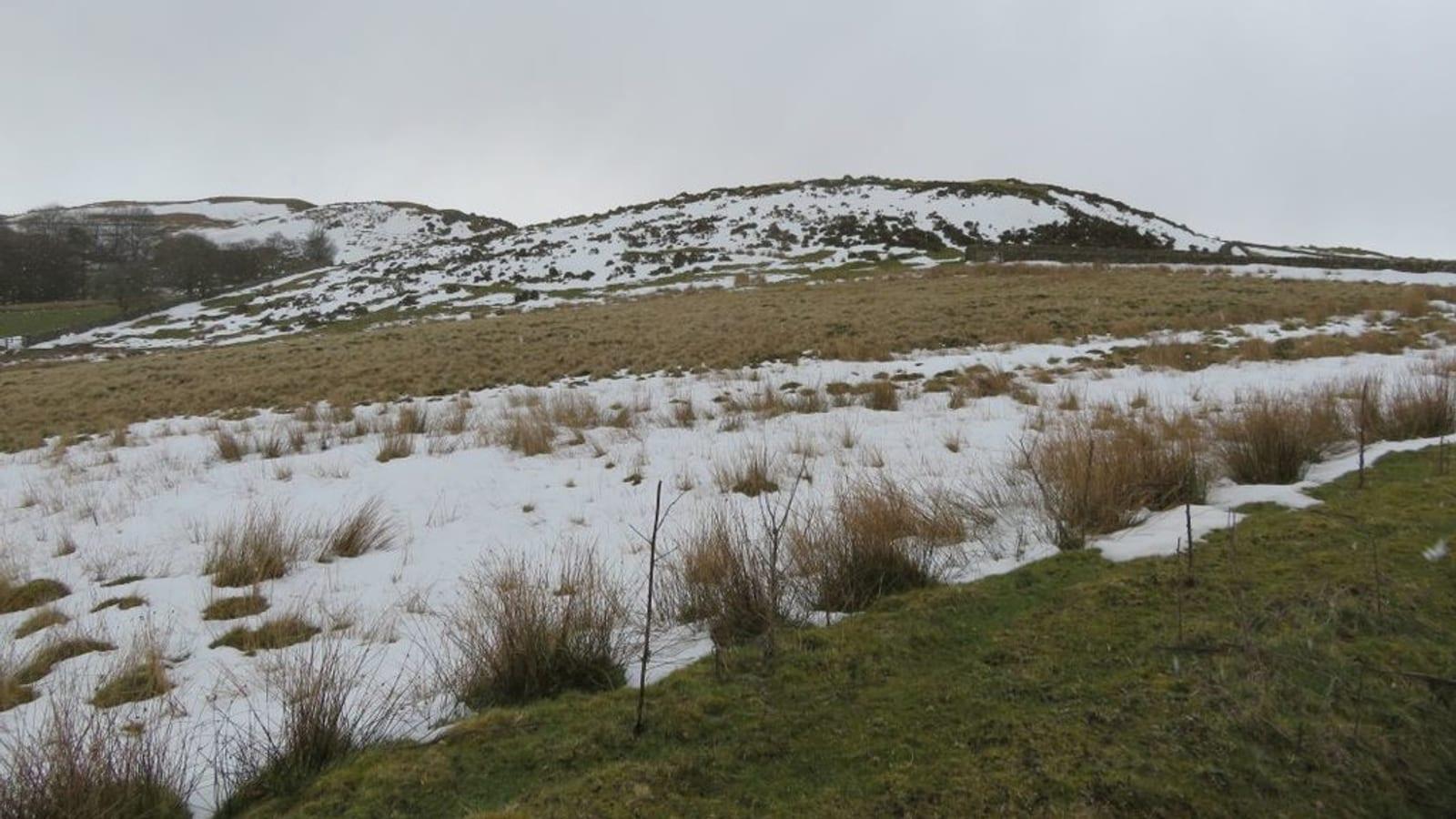
Upper Gilwern Hill Wales Fossil Hunting Guide
Image: Bill Nicholls via Wikimedia Commons
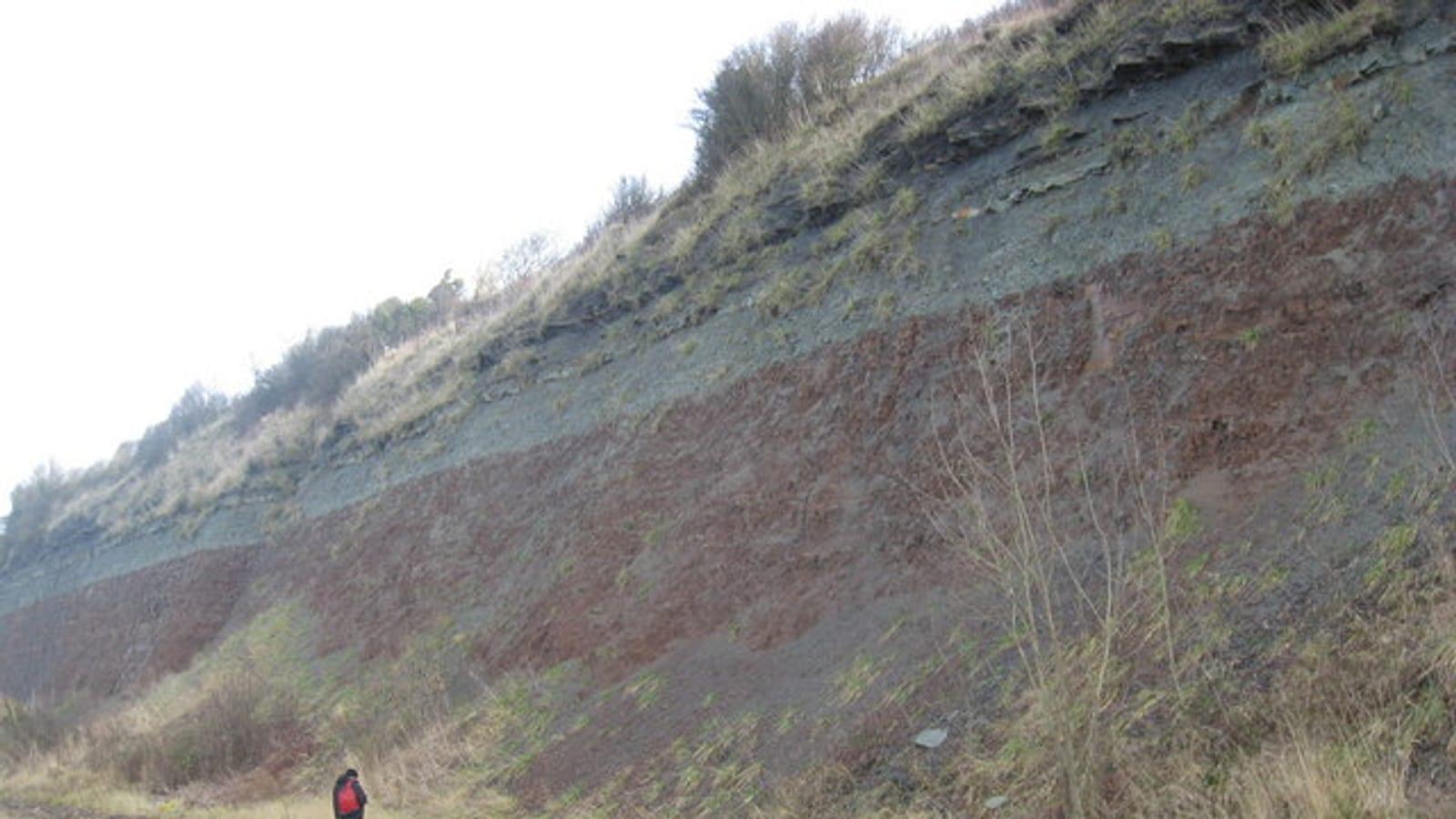
Upper Gilwern Hill in South Wales exposes Carboniferous Limestone with brachiopods, corals, crinoids, and bryozoans from a 340-million-year-old tropical sea.
Upper Gilwern Hill, located near Gilwern in the Brecon Beacons foothills of South Wales, exposes Carboniferous Limestone that was once the floor of a warm, shallow tropical sea approximately 340 million years ago. The limestones here belong to the Dinantian Series and contain a well-preserved marine invertebrate fauna: brachiopods, solitary and colonial corals, crinoid columnals, bryozoans, and occasional trilobite fragments all occur in the grey limestone beds.
The site is typical of the South Wales Carboniferous Limestone belt, which runs in a broad arc from the Gower Peninsula in the west through to the eastern valleys. These hillside exposures and disused quarry faces allow collectors access to fossiliferous limestone that is otherwise continuous beneath the Carboniferous coal measures. Upper Gilwern Hill provides a productive and accessible location away from the busier coastal sites, offering a different time period and a very different fossil assemblage from the Jurassic and Cretaceous sites that dominate most fossil hunting guides to Britain. This guide covers how to reach the site, what you are likely to find, and the geological story behind the limestone.
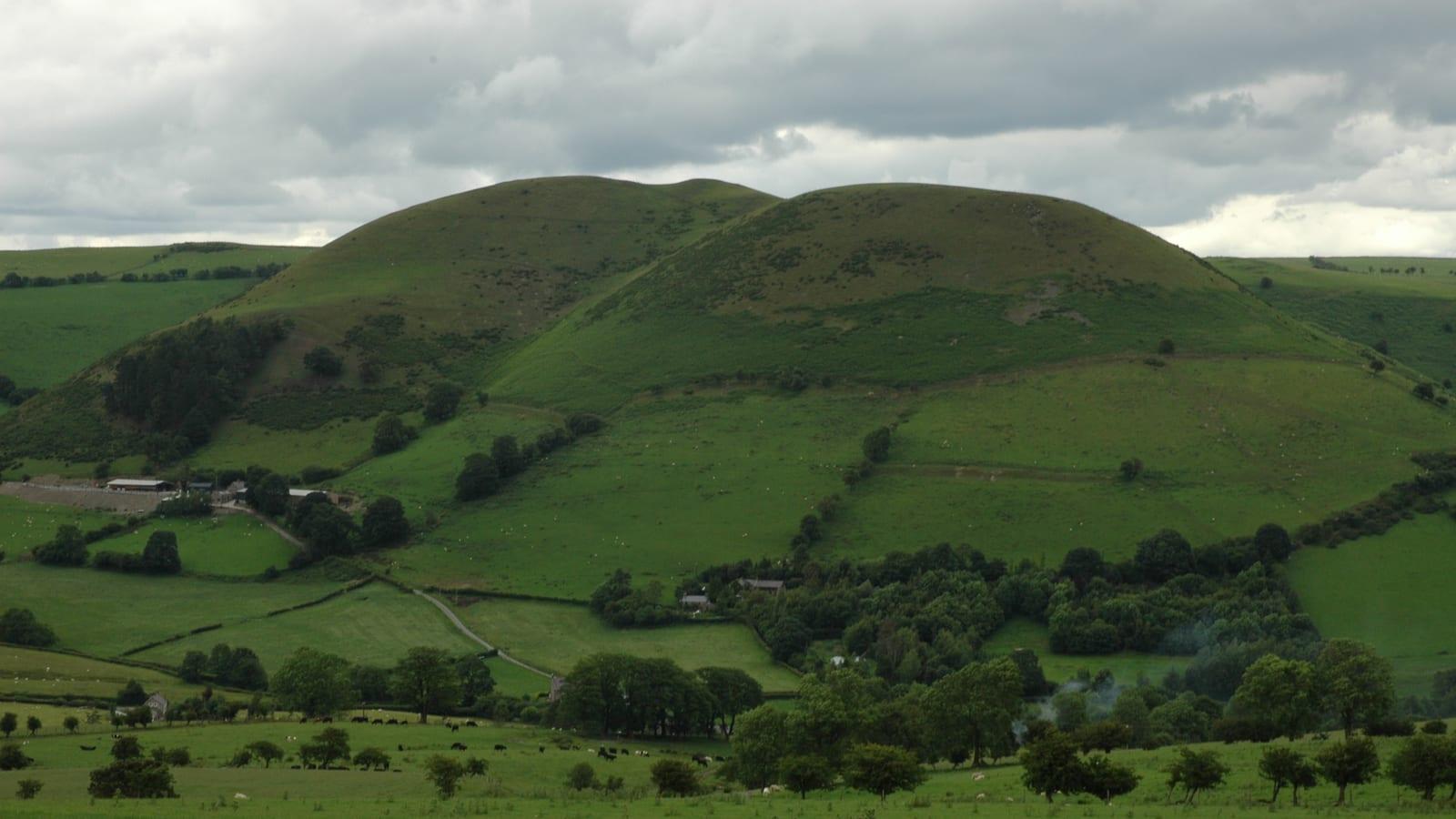
 Gilwern Hill - geograph.org.uk - 5852807.jpg. Photo: Bill Nicholls via Wikimedia Commons (CC BY-SA 2.0)
Location and Directions
Address
Upper Gilwern Hill, near Gilwern, Monmouthshire / Powys border, Wales. The site lies in the hills above the village of Gilwern, which sits on the A4077 east of Abergavenny in the Usk valley.
Directions and Parking
From Abergavenny, take the A465 east and then the A4077 south toward Gilwern. In Gilwern village, look for the minor road heading north and uphill toward Gilwern Hill. The road climbs steeply onto the limestone plateau. Park considerately at the side of the minor road near the open access land boundary, taking care not to block farm access gates. There is no dedicated car park.
From the road, the limestone outcrops and disused quarry exposures are accessible on foot across open moorland. The terrain is rough upland grassland with rocky outcrops. Walking boots are essential. The site is at moderate altitude, around 350 to 400 metres above sea level, and weather can change rapidly; bring waterproofs. Check Ordnance Survey 1:25,000 map OL13 (Brecon Beacons East) for the precise location of outcrops.
What Fossils You'll Find
Brachiopods are the most abundant fossils at Upper Gilwern Hill. These two-shelled marine invertebrates superficially resemble bivalve molluscs but are unrelated; they can be distinguished by their plane of symmetry, which runs down the middle of each valve rather than between the two valves. Species of Productus, Spirifer, and Rhipidomella are typical of the South Wales Carboniferous Limestone and occur here as both complete shells and fragments in the grey limestone matrix.
 21372 Grand Canyon Fossil Brachiopod in Kaibab Limestone (4748988369).jpg. Photo: Grand Canyon National Park via Wikimedia Commons (CC BY 2.0)
Solitary corals, particularly the horn coral Zaphrentis, are found as cylindrical or conical structures a few centimetres long, sometimes with visible septal plates preserved inside. These animals lived individually on the seafloor rather than forming reefs, though colonial corals such as Lithostrotion also occur in the limestone and form distinctive honeycomb-patterned masses visible in cross-section on weathered surfaces.
Crinoid columnals are extremely common, appearing as small, disc-shaped or star-shaped segments of the stem that attached crinoids (sea lilies) to the seafloor. They often occur in concentrations in the limestone, sometimes forming thin, crinoid-rich beds. Complete crinoid calyces (the crown) are much rarer but have been found at comparable South Wales Carboniferous sites.
Bryozoans, colonial filter-feeding animals, occur as lacy or branching structures in the limestone. They are often overlooked but are abundant in some beds, forming irregular masses or delicate fronds a few centimetres across.
Trilobite fragments have been reported from Carboniferous Limestone sites in this area. By the Carboniferous period trilobites were in decline and only a few families survived; fragments rather than complete specimens are the typical find. Look for the characteristic segmented thorax sections or the smooth, semicircular pygidium (tail plate).
Geologic History
The Ancient Environment
The Carboniferous Limestone at Upper Gilwern Hill belongs to the Dinantian Series (Tournaisian and Visean stages), deposited approximately 345 to 325 million years ago. At this time, what is now South Wales lay close to the equator, forming part of the southern margin of the Laurussian continent. The climate was tropical with warm, shallow seas covering a broad carbonate shelf.
The limestone was deposited in a clear, well-oxygenated shallow marine environment comparable to parts of the modern Bahama Banks or the Persian Gulf shelf. Water depths were probably 10 to 50 metres, warm enough to support abundant coral growth and diverse invertebrate life. Periodic influxes of slightly deeper or more turbid water interrupted reef development and created the alternating fossil-rich and fossil-poor horizons visible in the limestone succession.
The rock is a grey bioclastic limestone: a sediment composed largely of the broken skeletal fragments of the organisms that lived there, cemented together into rock over millions of years. The abundance of crinoid columnals, brachiopod shells, and coral fragments reflects the density of life on this ancient tropical seafloor.
How Upper Gilwern Hill Became a Fossil Collecting Site
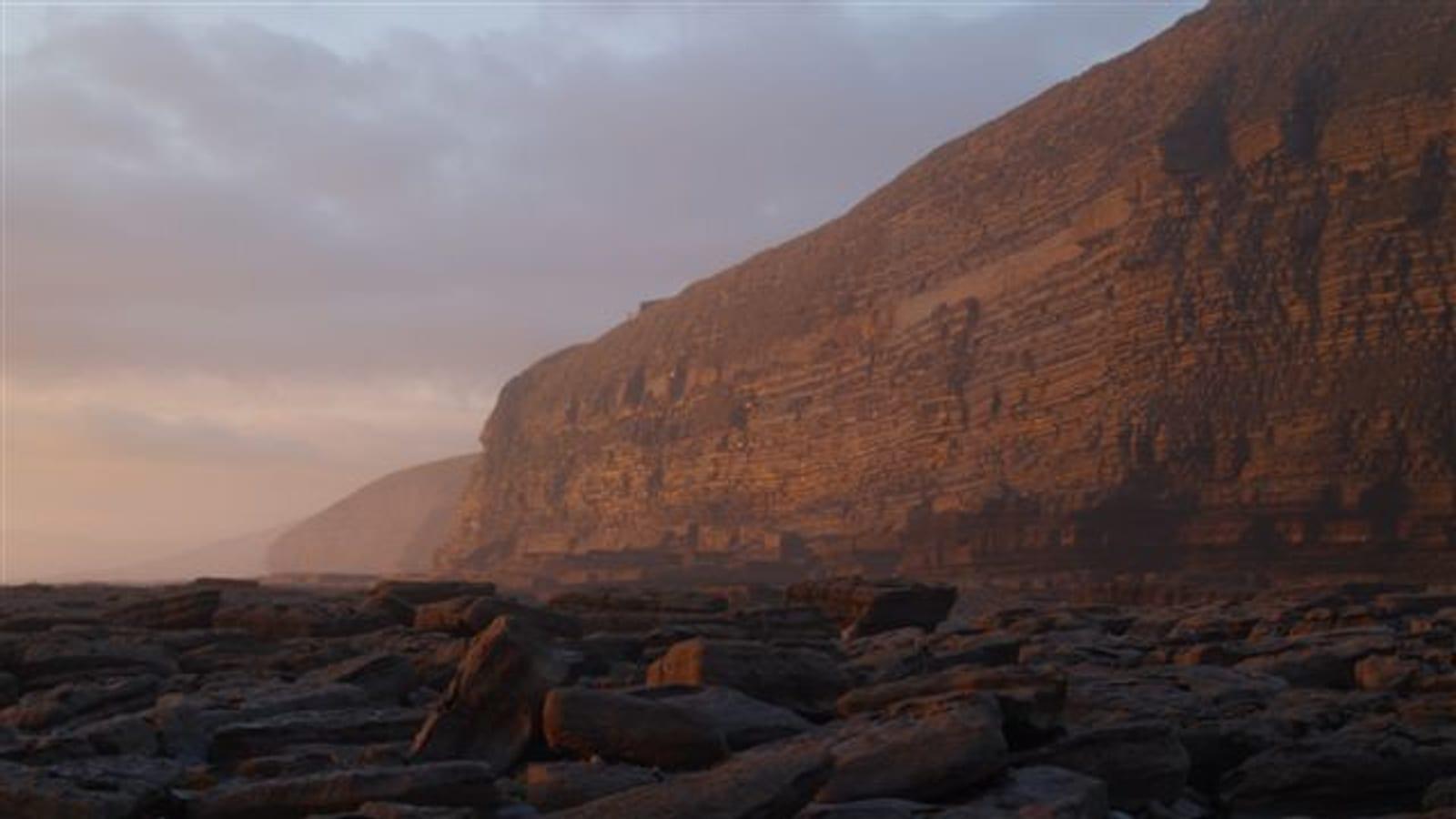
The Carboniferous Limestone of South Wales was quarried extensively throughout the 19th and 20th centuries for lime burning, road construction, and building stone. Disused quarry faces at Upper Gilwern Hill expose fresh cross-sections of the limestone that would otherwise be buried beneath soil and vegetation. The surrounding open upland also has natural limestone outcrops where weathering by rain and frost has broken down the surface, freeing fossil material. Both the quarry faces and the natural scree around outcrops provide collecting opportunities.
Collecting Rules and Regulations
Is Fossil Collecting Allowed?
Upper Gilwern Hill is upland open access land. Under the Countryside and Rights of Way Act 2000 (CRoW Act), walkers have a right of access on foot over registered open access land in Wales, but this right does not automatically include the right to collect rocks or fossils. If the land is owned privately, you would need the landowner's permission to collect. The disused quarry sections may be on private land; check with Natural Resources Wales or the local land registry if in doubt.
Parts of the South Wales Carboniferous Limestone belt are SSSI-designated for their geological and biological interest. If the specific outcrops at Upper Gilwern Hill fall within a designated SSSI, then collection must follow SSSI rules: surface collection of loose, detached material with hand tools only, no damage to in-situ exposures. Check the Natural Resources Wales SSSI database before visiting. As a general rule, collect only loose specimens from scree and talus, take a modest quantity for personal study, and leave the site as you found it.
Recommended Tools
A geological hammer, a masonry chisel, and a hand lens are sufficient for working the limestone. The grey bioclastic limestone splits reasonably well along bedding planes, often revealing cross-sections of brachiopod shells and coral structures. Safety goggles are recommended when hammer-splitting limestone, as chips fly unpredictably. Carry your specimens in a padded rucksack; limestone fossils are heavy and robust but sharp edges can damage soft specimens.
Safety
The quarry faces at Upper Gilwern Hill may be unstable; avoid working beneath any overhanging sections. The upland terrain is rough and the ground can be wet and boggy in places, particularly after rain. Boots with ankle support are essential. At altitude, weather can deteriorate rapidly; carry waterproofs and a map. This is not a site with facilities nearby; bring water and food. If visiting in winter, be aware that the limestone plateau can be icy and exposed.
Sources
- https://earthwise.bgs.ac.uk/index.php/Carboniferous\_Limestone\_of\_South\_Wales
- https://naturalresources.wales/guidance-and-advice/environmental-topics/geology-soils-and-minerals/
- https://en.wikipedia.org/wiki/Carboniferous\_Limestone
- https://www.ukfossils.co.uk/wales/
- https://earthwise.bgs.ac.uk/index.php/Dinantian