Altmannstein Schamhaupten Archaeopteryx Fossil Hunting Guide
Image: KBWEi at German Wikipedia via Wikimedia Commons
Tour the Schamhaupten quarry near Altmannstein where the 12th Archaeopteryx was found in 2010. Guided access to a Jurassic plattenkalk site in Bavaria's Altmühltal.
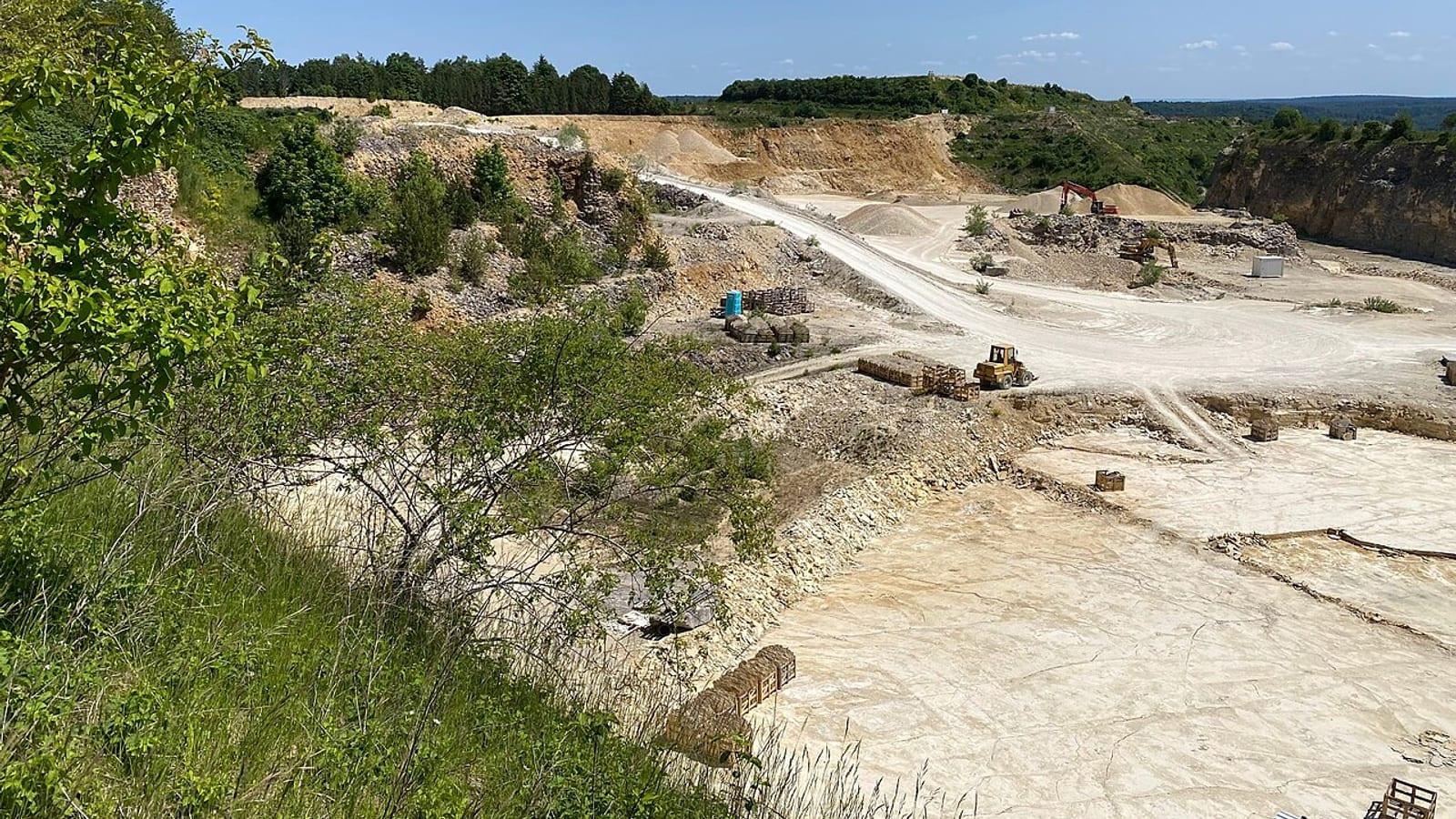
In 2010, amateur collector Raimund Albersdörfer was splitting limestone at the Schamhaupten quarry near Altmannstein when he uncovered the twelfth known specimen of Archaeopteryx. That find, now named Archaeopteryx albersdoerferi, is one of the best-preserved of all known specimens and currently stands on display at the Dinosaur Museum Altmühltal. The quarry where it was found sits within the Painten Formation, a lens of fine-grained plattenkalk limestone laid down in a tropical lagoon environment during the Kimmeridgian Stage of the Late Jurassic, approximately 152 million years ago. Unlike the better-known Solnhofen slabs a short drive to the west, the Painten Formation is less extensively quarried, which makes Schamhaupten a locality of continued scientific interest.
Access to the actual discovery quarry is not open-ended. Visits require advance arrangements with the municipality of Altmannstein, and tours are guided. This structure protects an internationally significant paleontological locality while giving visitors a direct connection to one of the great bird-evolution discoveries of the twenty-first century. This guide covers how to arrange a visit, what you will see, the geology of the Painten Formation, and the collecting rules that apply at this protected site.
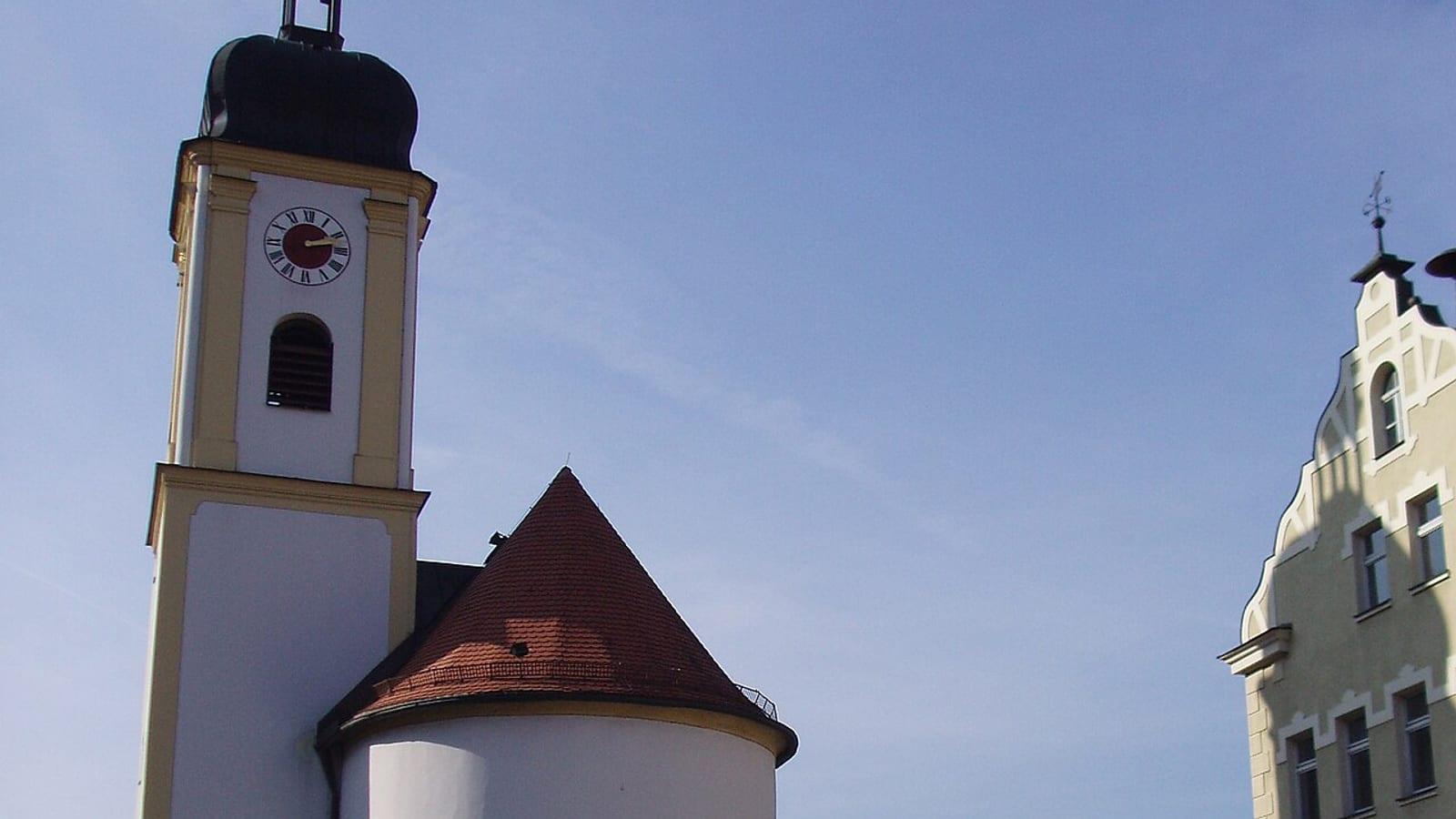
 Altmannstein, Pfarrkirche und Rathaus.jpg. Photo: KBWEi at German Wikipedia via Wikimedia Commons (Public domain)
Location and Directions
Address
Fossiliensteinbruch Schamhaupten is located in the municipality of Altmannstein, Landkreis Eichstätt, Bavaria, Germany. Contact the Altmannstein tourist office (Markt Altmannstein, Hauptstraße 1, 93336 Altmannstein) for the exact meeting point for your tour, as it may vary depending on tour logistics.
Directions
From Ingolstadt, take the B13 south toward Eichstätt. After roughly 20 km, turn east at the junction signposted for Altmannstein. The total distance from Ingolstadt city centre is approximately 30 km. Parking is available in Altmannstein village; your tour contact will advise on the specific assembly point.
From Munich, take the A9 north toward Nuremberg, exit at Lenting/Kösching, then follow the B13 south before turning east toward Altmannstein. Total distance is approximately 100 km and takes around 75 minutes.
From Nuremberg, take the A9 south, exit at Greding, then follow local roads southwest toward the B13 and on to Altmannstein. Allow approximately 70 km and 55 minutes.
The Altmühltal Nature Park is well signposted throughout the region. The nearest train station is Kinding (Altmühltal) on the Nuremberg-Ingolstadt main line, from which a taxi or pre-arranged transfer covers the remaining 12 km to Altmannstein.
What Fossils You'll Find
The Schamhaupten quarry is worked in the Painten Formation, a fine-grained plattenkalk limestone that was deposited in sheltered back-reef lagoons during the Kimmeridgian Stage. The formation yields a restricted but scientifically significant fauna.
 A Pyrite Ammonite on Charmouth Beach.jpg. Photo: Partonez via Wikimedia Commons (CC BY-SA 4.0)
Ammonites are the most regularly encountered macrofossil in Painten Formation rocks. Specimens typically measure 3–10 cm in diameter and display the characteristic ribbing and suture lines of Late Jurassic cephalopods. They occur scattered through the limestone beds and are frequently found as compressed, flattened impressions on split surfaces.
Fish appear as silvery impressions of scales and, less often, articulated skeletons. Complete fish are uncommon but not exceptional in productive horizons. Sizes range from 5 to 15 cm for most specimens. The lagoon environment supported small schooling fish that are found alongside marine invertebrates.
Belemnites and bivalves occur frequently throughout the sequence, often as isolated guards or shell fragments compressed into the rock surface.
The site's international fame stems from the 2010 Archaeopteryx discovery. The specimen, which shows feather impressions and skeletal detail, demonstrated that productive bird-bearing horizons extended into the Painten Formation beyond the classic Solnhofen localities. No public collecting of scientific-grade material is permitted, but the guided tour context allows you to see and understand the exact formation from which the specimen came.
Geologic History
The Ancient Environment
During the Kimmeridgian Stage of the Late Jurassic, approximately 152 million years ago, central Europe lay within the warm shallow epicontinental sea that geologists call the Tethys. The region that is now the Franconian Alb formed an archipelago of carbonate reef platforms and sheltered inter-reef lagoons. Temperatures were tropical year-round, and the absence of polar ice caps kept sea levels consistently high.
The Painten Formation records sedimentation within one of those sheltered lagoons. Fine carbonate muds settled slowly in calm, oxygen-restricted water. Periodic storm events swept material from the adjacent reef platforms into the lagoon, occasionally carrying terrestrial and semi-terrestrial animals such as insects, small reptiles, and early birds. Where oxygen at the sediment surface was low enough to deter scavengers, organisms were buried intact and preserved in extraordinary detail.
The resulting limestone is a micrite-rich plattenkalk, similar in character to the famous Solnhofen and Blumenberg beds to the west, though the Painten Formation occupies a stratigraphically slightly earlier interval. Over the subsequent 152 million years, the sediments were lithified, uplifted as part of the Swabian-Franconian Alb, and progressively exposed at the surface by erosion.
How the Schamhaupten Quarry Became a Fossil Collecting Site
Limestone quarrying in the Altmühltal has a history spanning several centuries, driven by demand for building stone and, in some localities, lithographic stone. The Schamhaupten quarry began as a commercial limestone operation extracting the fine plattenkalk for local construction. Workers were familiar with occasional fossil finds but the formation attracted less scientific attention than the richer Solnhofen beds.
That changed on 23 October 2010, when Raimund Albersdörfer discovered the twelfth known Archaeopteryx specimen during collecting at Schamhaupten. The specimen was subsequently described in 2018 by Oliver Rauhut and colleagues in the journal PeerJ (doi: 10.7717/peerj.4159), who established it as a new species, Archaeopteryx albersdoerferi. The find brought immediate international scientific attention to the Painten Formation and prompted a reassessment of its preservation potential.
Since the discovery, the site has been managed to balance ongoing paleontological research with educational tourism. The municipality of Altmannstein coordinates guided tours that allow visitors to see the discovery context while the scientifically sensitive beds are protected from uncontrolled collection.
Collecting Rules and Regulations
Is Fossil Collecting Allowed?
Access to the Schamhaupten quarry is by guided tour only. Independent, unaccompanied visiting is not available. You must contact the municipality of Altmannstein in advance to arrange a tour. The site is a scientifically protected locality, and unsupervised removal of material is not permitted under German paleontological protection regulations (Bavarian Natural Heritage Law, BayNatSchG).
During guided tours, the focus is on viewing and interpretation of the discovery site rather than personal collecting. Check with Altmannstein municipality when booking regarding whether any supervised surface collecting is included in your tour itinerary. The 12th Archaeopteryx itself is on permanent display at the Dinosaur Museum Altmühltal in Denkendorf, approximately 20 km to the east, and a visit there complements any trip to the quarry.
Contact: Markt Altmannstein, +49 9446 940-0, www.altmannstein.de
Recommended Tools
Because this is a guided tour site rather than an open Hobbybruch, personal collecting tools are not required. Bring a camera to document the geology and quarry context. A notebook is useful for recording observations during the tour. Wear closed-toe shoes or lightweight hiking boots, as quarry surfaces are uneven. Bring water, sun protection, and weather-appropriate layers.
Safety
Quarry environments involve unstable rock faces, uneven ground, and the possibility of falling material. You must stay with the tour group at all times and follow the guide's instructions without exception. Do not approach quarry walls or faces independently. Children must be supervised throughout the visit. Sun exposure can be significant in the open quarry setting during summer; bring adequate sun protection and water.
Sources
- https://www.altmannstein.de
- https://doi.org/10.7717/peerj.4159 (Rauhut et al., 2018 — Archaeopteryx albersdoerferi description)
- https://www.dinosaurier-park.de (Dinosaur Museum Altmühltal, display of 12th Archaeopteryx)
- https://www.naturpark-altmuehltal.de
- https://en.wikipedia.org/wiki/Archaeopteryx (general context; cross-referenced with Rauhut et al. 2018)
Nearby sites
 Fossiliensteinbruch Schamhaupten Fossil Hunting GuideAmmonites, Crinoids
 Dinosaur Museum Altmuehltal Fossil Park Fossil Hunting Guidefossil collecting area, Painten Formation limestone
 Fossiliensteinbruch Blumenberg Eichstatt Fossil Hunting GuideAmmonites, Fish fossils
 Steinbruch Schernfeld Jurassic Fossil Quarry Fossil Hunting GuideAltmühltal Formation limestone, Tithonian Stage of the Late Jurassic