Agate Fossil Beds National Monument Fossil Hunting Guide
Image: xiquinhosilva (CC BY 2.0)
Collecting is strictly prohibited. Viewing only. Excellent visitor center with fossil exhibits and displays. Interpretive trails lead to historic quarry sites where fossils remain visible in place. Rangers provide talks and educational programs. Free admission. One of the premier Miocene mammal l...
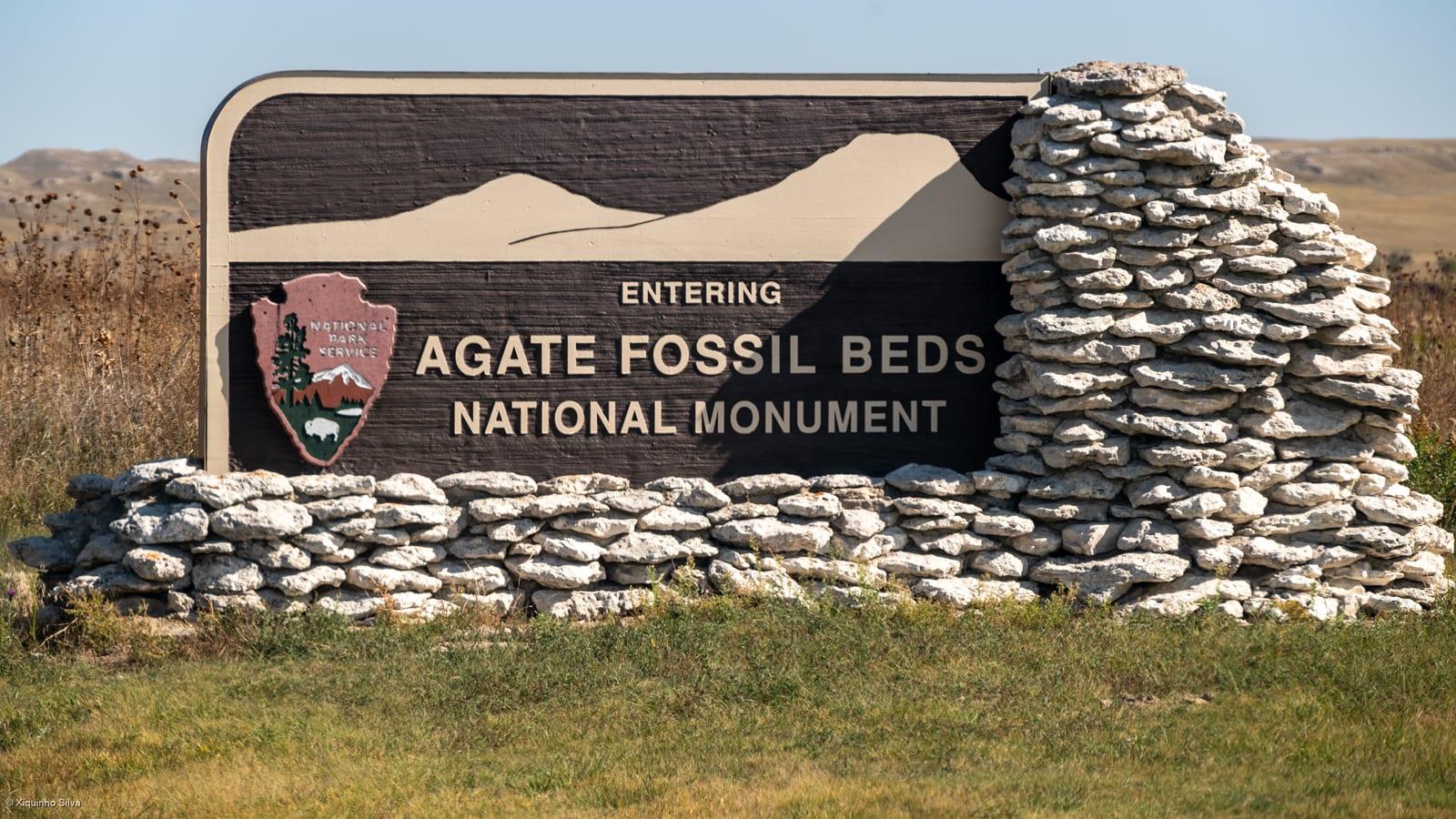
Agate Fossil Beds National Monument is a premier fossil viewing location in Box Butte County, Nebraska. The site exposes Miocene fossils.
Collecting is strictly prohibited. Viewing only. Excellent visitor center with fossil exhibits and displays. Interpretive trails lead to historic quarry sites where fossils remain visible in place. Rangers provide talks and educational programs. Free admission. One of the premier Miocene mammal localities in the world. Fossils include extinct camels, rhinos, horses, bone-crushing dogs, and unique animals like Moropus. The site has been studied by paleontologists for over 130 years.
Agate Fossil Beds National Monument preserves some of the most important Miocene mammal fossil deposits in North America. The quarries, particularly the University and Carnegie Hills, have produced thousands of specimens since discoveries in the 1890s. The site was established as a national monument in 1965 to protect these world-class fossil beds.
This complete guide covers everything you need to know about fossil collecting at Agate Fossil Beds, including directions to the site, collecting rules and regulations, the types of fossils you can find, and what to expect during your visit. Harrison provides the nearest services and amenities for visitors.
Location and Directions
You can find Agate Fossil Beds in Box Butte County, Nebraska.
Directions to Agate Fossil Beds
To reach Agate Fossil Beds: Find the national monument visitor center with interpretive trails to fossil quarries.
When you arrive, the fossil area is located at the visitor center and fossil bed exhibits.
What Fossils You’ll Find
Fossils at Agate Fossil Beds date to the Miocene. mammal fossils are the most commonly found fossils at this Harrison, Nebraska site.
Geologic History
Agate Fossil Beds exposes the Harrison Formation and Arikaree Group, a significant Miocene geological unit in Box Butte County, Nebraska.
Millions of years ago, the area that is now Harrison, Nebraska was an ancient river floodplain. The climate was temperate grassland savanna with seasonal rainfall, supporting diverse mammal populations including grazers and browsers.
As these ancient organisms died, sediments buried and preserved their remains. Over millions of years, geological processes transformed these sediments into the fossil-bearing rocks visible at Agate Fossil Beds today.
How Agate Fossil Beds Became a Fossil Collecting Site
Agate Fossil Beds originally operated as an industrial site where commercial activities exposed fossil-bearing rock layers. Quarrying, mining, or excavation operations removed overlying sediments and revealed ancient deposits that had been buried for millions of years.
After industrial operations ceased, Agate Fossil Beds transitioned to a location where fossil enthusiasts could legally collect specimens. The legacy of this industrial activity created the accessible rock exposures that make fossil collecting possible today. Many of the world’s most productive fossil sites share this history of industrial operations inadvertently revealing paleontological treasures.
Collecting Rules & Regulations
Is Fossil Collecting Allowed?
Collecting is strictly prohibited. Viewing only.
Sources
National Park Service Agate Fossil Beds documentation; University of Nebraska paleontological research; National Monument establishment documents